Home » Jazz Articles » Interview » Charles Pillow: Sound Crafter
Charles Pillow: Sound Crafter


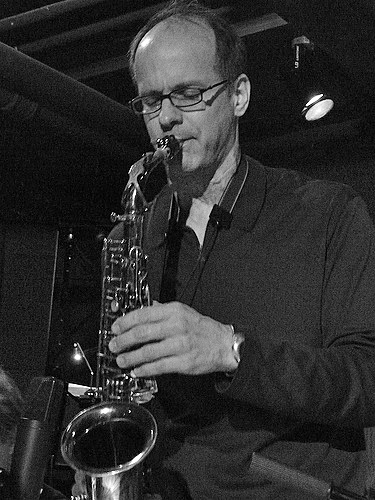
He has worked with groups, vocalists, and leaders as varied as Dave Liebman, Michael Brecker, Jay Z, Broadway pit orchestras, Mariah Carey and Maria Schneider. He plays soprano and alto saxophone as well as flute, bass clarinet and alto flute. He is one of a handful of reed players who have mastered the oboe as a jazz instrument. Musicians, listeners, and critics value Charles Pillow for his professionalism, skill, inspiration and creativity.
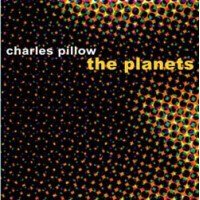
Pillow ventured into forming his own groups for recording with the 1997 release of Currents (Challenge Records), featuring Tom Harrell. In This World (Summit, 2001) provided hints of things to come with an inventive set of ensemble work that were striking in the way tunes were altered to suit Pillow's various creative purposes. Not long thereafter, he ventured into unique recordings in which he took extended compositions from the standard classical repertoire, such as Mussorgsky's "Pictures at an Exhibition" and Holst's The Planets deconstructed them, and constructed new improvised structures all his own. His way of composing is as old as antiquity and as new as postmodernism. Like a sculptor of sound, he takes whatever material is at his disposal and shapes it into a structure, which in his case also allows himself and his players to improvise at the moment of creation, which is the essence of the jazz tradition.
Pillow is a soft-spoken individual, a Thoreau-type figure, plying his trade, rowing his home-built canoe, and spending time in the library with his son and daughter, where his most recent project, based on Vincent Van Gogh's "Letters to Theo," was inspired. In a laid back way, Pillow is pushing the envelope of jazz by re-thinking the structural basis of the music.
AAJ: Let's start with the desert island question. What recordings would you take with you to that desert island?
CP: That always changes. I'd say Keith Jarrett's Nude Ants (ECM, 1979) is definitely one of them. Miles Davis' Bitches' Brew (Columbia, 1970). Anything by Wayne Shorter. In classical music, Mahler's Kindertotenlieder is one of my favorite pieces.
AAJ: I gather you grew up in the South.
CP: I grew up in Baton Rouge, Louisiana, that's about 80 miles from New Orleans.
AAJ: Are the two cities similar culturally?
CP: Yeah. Cajun French, Southern hospitality sort of vibe. New Orleans is a bit more cosmopolitan than Baton Rouge, which is a little more "country."
AAJ: Any Carribean influence?
CP: Not so much in Baton Rouge. More in New Orleans, as can be heard in the music.
AAJ: What were your early musical exposures?
CP: My high school band director, Lee Fortier, had been on the road with the Woody Herman band in the late '50s or '60s. He had a great program and made it somehow cool to be in the band. We had one of the first jazz bands in the state. And at the time, I was listening to some records, like Dave Brubeck's double album with "Blue Rondo a la Turk" (The Dave Brubeck Quartet At Carnegie Hall, Columbia, 1963), Paul Desmond was one of my first heroes. And right after that, I discovered Charlie Parker and John Coltrane, and it just blossomed from there.
AAJ: Was any music played on the radio or records in your home?
 CP: My parents had a record that I really liked called 101 Strings. It was really beautiful—Borodin, Tchaikovsky, and so on. There were a number of records they had that had an impact on me.
AAJ: So what happened after high school?
CP: I then went to Loyola College, where you have to study some classical saxophone as an undergrad. I ended up playing the soprano saxophone part on Ravel's Bolero with the New Orleans Symphony Orchestra, which was really great; but, actually, I wasn't into the classical repertoire that much, but studying it helps you become a better musician. I was exposed to a lot of music in New Orleans. There were, of course, a lot of clubs, and musicians from New York used to come down, like the Brecker Brothers, Dave Liebman, Tom Harrell, Eddie Harris. At that time, the Marsalis brothers were still down there, and Ellis Marsalis—Wynton's dad—drew some of the top jazz players down there.
AAJ: Can you give us a time frame for that?
CP: I was in New Orleans from 1978 to 1982. Then I moved to Rochester to go to the Eastman School of Music. I was there until 1986. Two years of school and then two years of just hanging around and practicing a lot.
AAJ: Did you study composition at Eastman?
CP: I took some composition and arranging classes. It was only later than that that composing became more important to me. At Eastman, I was mainly playing saxophone and oboe.
 AAJ: Did playing oboe help your chops with saxophone or make it more difficult?
CP: For me, it's all the same. What's important is that you're practicing.
AAJ: The embouchures are different for sax and oboe, right?
CP: The embouchures are different for every instrument, but the fingering and moving around the instrument is what's important. Lately, I've been playing a lot of flute, and it all comes down to the same thing: you're working on something, the overall thing is you're working towards making music, and the most important thing is that your head and your brain are working. And you're thinking of this note, this sound, this vibe, this idea, and so on.
But embouchure-wise, you do have to do a bunch of maintenance of your chops, and playing different reed instruments might make that task more difficult, but you do what you can.
AAJ: You're not one of the guys obsessed with the instruments themselves and all the nuances of the bore, the different mouthpieces, etc.
CP: It's very possible to be compulsive about it, trying every mouthpiece, but I'm not into that. My high school band director always told us, don't be a "tryer." Just stick with one thing. That is really great advice.
AAJ: Your resume is incredible and covers so much. Tell us about some of the highlights of your career thus far.
CP: Growing up in the 1970s and '80s, I've been fortunate enough to have played and recorded with many of my idols, like Dave Liebman. I discovered him in high school. Heard him on the radio, and thought "This is incredible!" Forgotten Fantasies (A&M, 1975), the duo album with Richie Beirach. I played with Michael Brecker on his next to last album. He was just unbelievable. David Sanborn was one of my idols, and I worked with him quite a bit. It's been my dream to play with some of these people, and it's been my good fortune to do so.
AAJ: You also have played with some pop stars.
CP: Yeah, those were great projects. The recording with Jay Z a couple of years ago was very interesting. His producer made a really imaginative use of the horn section. I've also worked recorded Mariah Carey and found that experience very interesting.
AAJ: Let's talk about your own groups.
CP: Well, I have the "Pictures at an Exhibition" band. We do my composition based on Mussorgsky's work, and I use pretty much the same personnel at each performance. My new "Van Gogh Project" also requires a different set of players, though.
AAJ: Are the same players on Pictures as on your version of Holst's "The Planets?"
CP: Well, some are the same: Jim Ridl on keyboards and Chuck Bergeron on bass, but it's different drummers. The two pieces were also recorded in different ways. The Planets was recorded more like a pop record, that is we tracked the drums and bass in one studio, and then did all the rest of the tracks/instruments somewhere else, adding all these layers. The guitarist did all his tracks at his apartment. I overdubbed my stuff, too. By contrast, Pictures was done live in a studio. We used two or three takes for each movement and that was it.
AAJ: Do you prefer either of those approaches?
CP: I like both ways, depending on the music. However the situation presents itself, you can make creative music either way. You can get the most out of the music whether you're playing live ensemble or not.
AAJ: How do you choose players for music that requires specialized talents or abilities? Do you have a list of people you know? Do you give a lot of forethought to finding someone?
 CP: You have some people that you already know are able to do certain things. For example, I knew the drummer for The Planets, Graham Hawthorne I knew he had a studio we could work with. I have a small circle of friends and colleagues I can reach out to and grab their talents. I work that way. There are so many fine musicians in New York anyhow, it's pretty astounding!
AAJ: You live in New Jersey and work mostly in New York, and yet you seem to know a lot of musicians around Philadelphia and Pennsylvania like Jim Ridl, who worked around Philly for several years, and Dave Liebman, who lives in the Poconos. Recently, I reviewed the Dave Liebman Big Band at Chris' in Philly, and you and I touched bases during the intermission. How did you get involved with that group, and what's it like working with it?
CP: I got involved with Liebman through his musical director, Gunnar Mossblad. He has a saxophone quartet group that did a project of Liebman's music called "The Seasons," based on a Liebman recording by that name, not the Vivaldi piece, but Lieb's original music. So we did some gigs in New York, and around that same time, Dave decided to form the big band. And it made sense that I should be in the sax section. That was around 1999 or so. That's also when I met Jim Ridl. He played in Liebmans' big band and I thought, "the next record I do, he's gonna be on it!"
 AAJ: What gives those band members such rapport, even the pickup sidemen who come in for a single gig, as some did at Chris'?
CP: The saxophone section was pretty much intact for that gig, but several of the trombonists were from Philly, and the same for the trumpets. They all did a great job, pretty much sight reading the charts.
AAJ: So what else are you up to these days, performance-wise?
CP: I'm doing a week at the Jazz Standard with Maria Schneider's band. She's been doing a week-long residence at the Standard every Thanksgiving week for seven years now. Looking forward to that, it's always a great week. It's a really fantastic band, and her music is quite incredible. It's really great when you can play five nights in a row, which doesn't happen that often any more. Also, I'll be working with John Fedchock's big band, and also with the big band of Charles Tolliver, a composer from New York. There's a whole bunch of leaders that have contacted me to play, so every month there's something creative happening. I also have a busy life as a Broadway musician.
AAJ: My trombone teacher from the 1960s, Alan Raph, still does a lot of work for Broadway musicals. In fact, I had a reunion with him a couple of years ago, and we met after a matinee there.
CP: Oh, I know Alan. In fact, Maria Schneider's band was up in Connecticut, near where he lives, and Alan came to the gig.
AAJ: Like yourself, Alan is an incredible musician, did some composing like you, and finds himself just about everywhere in the music business: union leader, studio work, symphony orchestras, Gerry Mulligan, Les Elgart, and Paul Whiteman bands, shows, whatever. Are there any particular shows that you're doing now?
CP: Right now, I'm doing The Adams Family. Doing shows gives me a good financial base for my other work. I also do some recording work in New York, did a session this week for a singer. To me, the name of the game these days is trying to be flexible. There are various circles of energy, and if you're known, say, as a tenor saxophonist, or a flautist, and so on, you get known in different circles. It can create problems in that if you're known as an oboe player, some people don't realize you can play saxophone as well, so you might lose some opportunities.
But that's OK. Liebman used to play flute, soprano and tenor. Then at one point, he just played soprano. Now he sometimes plays on wooden flute. But he has a strong voice that's recognizable immediately. So, even if you play several instruments as we do, you can still have a singular voice with the different sounds. And if people hear you enough, they start to hear who it is behind the instrument. So I'm not as concerned with it as others might be about having one sound.
For example, if a tune I'm writing calls for a particular sound, I'll play it on alto flute, oboe, or soprano sax, whatever is called for. I'm not worried about whether I'm recognized as the player.
AAJ: And as you say, the voice is heard regardless of the instrument. While I would imagine that it is a bit more difficult to have a distinct voice on the oboe than the saxophone, even then some oboe players, like Richard Woodhams of the Philadelphia Orchestra have palpably distinct voices. Let's now turn to your own CDs. Can you give us a rundown on each of your CDs, with the highlights and what you were striving for in each of them?
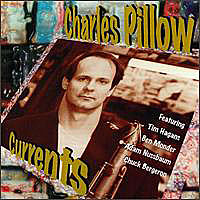 CP: The first CD I did was called Currents (1997), on a [Dutch] label called Challenge, and they asked me for a couple of standards and some originals. It's somewhat schizophrenic, and there's quintet stuff with trumpeter Tim Hagans, coming out of a Miles and Wayne bag, that was my take on that. And a rhythm section featuring Ben Monder on guitar. The schizophrenic part really came out on Coltrane's "Giant Steps," which I did on oboe in a duo with drummer Matt Wilson, who substituted for Adam Nussbaum for that number. I arranged a rubato intro, and then we played the tune.
That was a young record, and I was playing tenor sax mostly. After that, I did a recording that had a lot of oboe on it. That record was called In This World (2001), for the Summit label. It has more of a straight-eight feel, no swinging eighth notes on it. I'm on the oboe, bass clarinet, tenor soprano sax, and English horn in various tracks. You could say it has a world music flavor.
It was really fun to make that record, because Peter Erskine played drums. He was one of the guys whose straight-eighth playing I really liked. And he played very quietly, which was what I wanted, especially in the tunes with oboe. Peter can do anything, and it was really great to have him.
And that CD opened the door to do the following projects, like Pictures at an Exhibition (ArtistShare, 2001).
The way Pictures came up was from my idea of taking something familiar, and then "de-orchestrating" it. It's analogous to taking the parts of a car engine apart and putting them back together in a different way. Some of the melodies were used right from the score, but used as a bass line instead of a melody. So I deconstructed much of Mussorgsky's composition. However, some of it is recognizable from there.
AAJ: Is there any precedent for that in jazz?
CP: Well, Duke Ellington and Billy Strayhorn did their take on Tchaikowsky's Nutcracker Suite (Columbia, 1960). And somebody did a big band version of Pictures at an Exhibition. Miles Davis' and Gil Evans' Sketches of Spain (Columbia, 1960) adapted the work of the composer Joaquin Rodrigo. Jazz musicians of course are good at taking familiar melodies and doing something with them.
 AAJ: What made you choose Pictures and Holst's The Planets as your two pieces to deconstruct?
CP: With Pictures, the most recognizable melody is the "Promenade," which is basically in the pentatonic scale, which is often used in jazz, and I found it very adaptable. I had played in a concert band version of Pictures in college, on bass clarinet. Pictures has some really great bass clarinet parts and doing that made me aware of the piece. When you perform a work, it brings you knowledge that you wouldn't have just listening to it. So that was a real treat, even a band version was really cool. I studied the score, and took the melodies and played them on saxophone or oboe until I internalized the melodies to the point where it felt almost like I made them up, which makes it easier to re-orchestrate them. That's how I started to compose that piece.
The Planets was a little more difficult, because I didn't know the piece as well when I started as I knew Pictures. But I familiarized myself with it as much as I could, and I think my adaptation is even less recognizable than Pictures. I was very liberal with deconstructing it. I took just what I needed, a smidgeon of melodic material. Plus, with Planets, I used a production format more like a pop record, and I was using electronica at the time. I was interested in improvising over a beat or a vibe more than a set of chord changes.
Although there are chord changes in the piece, I was trying to reconcile a classical melody with what was basically an electronic beat. So I felt forced to strip all the harmonies away, and use almost a Schenkerian analysis of the melody. [According to Wikipedia, "Schenkerian analysis is a method of musical analysis of tonal music based on the theories of Heinrich Schenker. The goal of a Schenkerian analysis is to reveal the underlying structure of a tonal work; in fact its basic tenets can be viewed as a way of defining tonality in music." This approach has led to many changes in music that influenced the development of modern jazz.]
I stripped the music bare, and just tried to take the most important notes and start from there. Bare bones, like a skeleton of the melody. So people would ask me, "Is that really based on Holst's work?" However, some parts do bear a resemblance to Holst.
AAJ: I've noted in your recordings—and it's really a compliment—that it's hard to discern what is composed, arranged, and/or improvised, it's so continuous in its effect. What parts do you actually write out as opposed to what you give to the players to improvise?
CP: Are you talking about the Van Gogh Project?
AAJ: That's what brought the question up, but also Pictures and The Planets. All three are "composed" by you, yet there's significant room for improvising.
CP: That is a compliment, sort of what I was hoping for, especially in the Van Gogh, but also in The Planets. In the latter, nobody solos until about five minutes into the recording. I was trying to write more. I remember that in high school, reading a quote from Joe Zawinul, about Weather Report, which was fairly new then, and he said of that group, "We're always soloing and we're never soloing." That really stuck with me all those years, and I think about that whenever I'm putting a project together, to try to get away from the solo/ melody/solo type of format.
AAJ: Now, in the Van Gogh Project, you seem to have a lot of improvisation going on, perhaps in the same sense that Bach would routinely improvise parts when his works were performed. The Van Gogh has the quality of French impressionist music like Debussy perhaps, but I gather that a lot of it is improvised around your instructions. There are only three players in your composition, but I gather a lot of what they do is improvised.
 CP: What it comes down to is having little pieces of my own material that can change the direction of things. For me, that comes from listening to those Miles recordings of the late '60s, early '70s bands, where he would play a little signpost, and the band would change directions. They'd play medleys, several songs, and it always struck me how a little melodic phrase of six notes or even less would change the direction of the tune on a dime. Trying to write with that idea in mind, the Van Gogh is a little more put together than that. We did everything in my home studio, which was a new way for me to work, which gave me a lot of freedom to change things. I did some of the keyboard work, and then Jim Ridl came in and did solos.
So that created a whole different work flow for me. The melodies were sort of raw material. After doing Pictures and Planets, where I was deconstructing other composers' materials, I thought it was time for me to take the same process to my own melodies. Whereas before, I would write a melody and leave it there, and then harmonize it. But Pictures and Planets taught me to do more with the melody itself. So, for the Van Gogh Project, I decided to take specific sentences in the letters that Van Gogh wrote to his brother Theo about his life. I took some sentences that I was intrigued with, and tried, in a way, to play the sentence on oboe. I recorded myself speaking the sentence, and as played the speaking back, I played it on oboe, and recorded whatever I played without any tonal reference, key center, or anything. So I had about ten or twelve short melodies, each from a sentence that Van Gogh wrote in these letters. Oh, I should say, I read and used the English translation of the letters. They're in the titles of each song, "The Storm which Threatens" referring less to the weather than difficulties in his life; one about the sunset, and so on.
 AAJ: Those letters of Van Gogh are treasures and provided a basis for the book and film Lust for Life. I see from the pre-release CD that the track titles include sentence excerpts from the Van Gogh letters, such as "Painters love nature," "Did I tell you about the Storm," "My brush goes between my fingers like the bow on a violin," "At the Horizon, a streak of light," "My brush goes between my fingers like the bow on a violin," and "He who dances must pay the fiddler." These are very evocative motifs, and some refer to sounds like "the Storm," and also to the violin. For you personally, what made them a source of musical inspiration?
CP: Here's how it came about. I pick up my kids every day after school, and I take them to the library to do their homework, and I try to help them when I can. It so happened that we were in a section of the library with the art books. So, when I was hanging out, I'd look at these great art collection books, Rembrandt, Picasso. Every day I'd go look at a different one. When I got to Van Gogh, I just became fascinated with him. This quintessential tortured soul. So then I got the book of his Letters to Theo, his brother, and focusing on specific sentences, seeing the beauty in the things he noticed. He'd write to his brother about colors, money problems, women, attempts to make a living. I didn't know much about him, but some of his individual sentences really struck me. So that's how it started.
AAJ: Am I correct in perceiving a strong influence of the French impressionist composers like Debussy in the Van Gogh Project?
CP: Definitely. Right on. I was hoping to combine that French feeling with a little bit of electronica-ism. Some of it has an electronica mix to it. I wanted a lot of reverb, too, and an electronica vibe. Plus, it's primarily oboe and English horn, and I wanted these instruments to be featured in that kind of setting. In fact, the name "oboe" is French, so it makes sense to have it in that vein.
AAJ: What's the difference between an oboe and an English horn?
CP: The English horn has a longer, bigger, deeper bore. It's sort of the equivalent of the tenor saxophone as compared to the alto saxophone.
AAJ: And what made you decide to use an accordion? That's a rare instrument to use in any genre.
CP: Actually, it's an instrument that's used a lot in jazz these days. Gary Versace is one of the main players in New York. He also plays in Maria Schneider's band. The accordion was an afterthought on my part. The project started out as a duo, with me and Jim Ridl, and then I was going to add a cello. But the cello player bailed out at the last minute. So I scrambled around, and I decided to call Gary, because I always wanted to play more with him. So he just came over, and we recorded him right here at my place. He's an amazing musician. He read the stuff right away, and now it makes perfect sense to have used the accordion, even though I just stumbled on it.
AAJ: I understand the Van Gogh Project is going to be released on the ArtistShare label.
CP: ArtistShare is mainly designed so the fans can contribute to the process financially. That gives the fan an inside track on the development of the CD.
AAJ: Do the fans have input into the recording?
CP: They don't get input, but they get to see the process. When music downloads started with Napster, etc, a lot of music was "stolen" from the musicians. The founder of ArtistShare felt that the one thing you cannot steal is the artistic process. So that's the point. You announce you're doing something on ArtistShare. And you invite the fans to join you as you explore it. You update your fans on the website every week or month, and let them know what's going on. However, I should tell you that it turned out that this project is not going to be on ArtistShare. I started with that but then decided to self-publish it. We're just about ready to release the recording; stay tuned.
AAJ: There's a strong connection between the musician as a person, and the musician as a player and composer. Perhaps you can give us the flavor of your daily life these days.
 CP: Music is my business, my hobby, my passion. But for me, the kids come first. Right now my daughter is 13 and my son is 10. Their mother and I are not living together, so they live about 10 miles from me. The Van Gogh Project is dedicated to my kids, because it started when I was helping them with their homework at the library.
AAJ: So you're very dedicated to your son and daughter. And how else do you spend your time?
CP: I get the New York Times online every morning. The last couple of books I've read have been on music, one about Wayne Shorter, another about Miles Davis. My favorite book that I read recently was Nathan Stone's On the Water, about a guy who took a rowboat all the way up the East River, and up the Hudson, all the way to into the Erie Canal, the Ohio River, down the Mississippi, out into the Gulf, down around Florida, and all the way back up to Maine. That was a beautiful book just about being by yourself and witnessing things. I have a canoe that I built, my first construction project using wood. It's great to have a craft that you made and just be floating on it.
 AAJ: That's a great metaphor for the way you compose and perform; do you have any particular place you like to take your canoe?
CP: What's great about a canoe is that you hardly need any water at all. Sometimes I go along the Hackensack River or up in Harriman State Park, where sometimes the kids go out with me. I've gone to the Delaware Canal, and one time on the Erie Canal.
AAJ: Do they still have locks on those canals?
CP: Yeah, they have locks, and I went through a couple of them with the canoe. It's a fantastic experience. They open the gates, and the water rushes in. It's like being in a huge bathtub of bubbling water, and it floats you to the next level. I'm fascinated by the Hudson River and the Erie Canal, and the way they helped expand the country.
AAJ: Sometimes, driving along the Delaware Canal, I check out the signposts with the history of the region. At one time, before the railroads, those canals were the major means of transporting goods.
CP: Even George Washington got involved in building some of the early canals.
AAJ: What advice and guidelines would you give to up-and-coming musicians who strive for excellence and want to venture into new territory?
CP: The answer to that is: just experience life. Get out and see as many things as you can. They give you something to write about and perform, other than just the music itself. Go to museums, travel to places you haven't been before. Put yourself in unfamiliar territory, and see what you can make of it.
AAJ: Finally, John Coltrane said the music was his spirit. Dave Liebman, Sonny Rollins, and others pursue meditation. I'd like to ask you if you have some ideas about life and/or spirituality, some accumulated wisdom about the meaning of it all, that you can share with us? What makes it all come together in a meaningful way for you?
CP: That's a really tough question. No, I don't really have a spirituality that I adhere to. One thing I do that for me is spiritual is, I like to run. I've never run a marathon, but have run half marathons. And practicing and composing is spiritual for me.
AAJ: Have you been through anything difficult in life that made you wonder what it's all about?
CP: When I was 13, I lost my mother. That was a major thing for me. I've thought about that a lot, but I haven't come up with any answers. You know Coltrane lost his father at 12, Ken Burns lost a parent at 12, and they say that an early death of a parent makes you turn inward. I feel that for sure. But, no, I can't say that I have any answers.
Selected Discography
Dave Liebman Big Band, As Always (Mama, 2010)
Charles Pillow, Van Gogh Letters (ELCM Records, 2010)
Mike Holober, Quake (Sunnyside, 2007)
John Fedchock's New York Big Band, Up & Running (Reservoir 2007)
Charles Pillow, The Planets (ArtistShare, 2006)
Maria Schneider Orchestra, Sky Blue (Artistshare, 2006)
Maria Schneider Orchestra, Concert in the Garden (Artistshare, 2004)
Michael Brecker, Wide Angles (Verve, 2004)
Michael Holober and the Gotham Orchestra, Thought Trains (Sons of Sound, 2003)
John Fedchock's New York Big Band, No Nonsense (Reservoir 2003)
Charles Pillow, In this World (Summit Records, 2001)
Charles Pillow, Pictures at an Exhibition, (ArtistShare, 2001)
Maria Schneider, Allegresse (Enja, 2000)
John Fedchock, On the Edge (Reservoir 1998)
Bob Belden, Black Dahlia (Blue Note 1998)
Charles Pillow, Currents (A Records, 1997)
John Scofield, Quiet (Verve, 1996)
Photo Credits
Page 1: Courtesy of Watertown Daily Times
Page 2: David Korchin
Page 3: Giorgio Alto
Page 6: Courtesy of mpix464's Photostream
< Previous
Needs!
Comments

About Charles Pillow
Instrument: Saxophone
Related Articles | Concerts | Albums | Photos | Similar ToTags
Charles Pillow
Interview
Victor L. Schermer
United States
Dave Liebman
Michael Brecker
Maria Schneider
Tom Harrell
Keith Jarrett
Miles Davis
Wayne Shorter
Woody Herman
Dave Brubeck
Paul Desmond
Charlie Parker
John Coltrane
Brecker Brothers
Eddie Harris
Ellis
Richie Beirach
David Sanborn
Jim Ridl
Chuck Bergeron
John Fedchock
Charles Tolliver
Gerry Mulligan
Les Elgart
Paul Whiteman
Tim Hagans
Ben Monder
Matt Wilson
Adam Nussbaum
Peter Erskine
duke ellington
Billy Strayhorn
Gil Evans
Joe Zawinul
Weather Report
Gary Versace
Sonny Rollins
For the Love of Jazz
 All About Jazz has been a pillar of jazz since 1995, championing it as an art form and, more importantly, supporting the musicians who create it. Our enduring commitment has made "AAJ" one of the most culturally important websites of its kind, read by hundreds of thousands of fans, musicians and industry figures every month.
You Can Help
To expand our coverage even further and develop new means to foster jazz discovery and connectivity we need your help. You can become a sustaining member for a modest $20 and in return, we'll immediately hide those pesky ads plus provide access to future articles for a full year. This winning combination will vastly improve your AAJ experience and allow us to vigorously build on the pioneering work we first started in 1995. So enjoy an ad-free AAJ experience and help us remain a positive beacon for jazz by making a donation today.

Giveaway

Eligible winners: 15
Days remaining: 4
Days remaining: 4