Home » Jazz Articles » From the Inside Out » 40 Year Old Bitches, New MilesTones & Others, Too
40 Year Old Bitches, New MilesTones & Others, Too

 Antibalas
Who is This America?
Ropeadope Records
2010
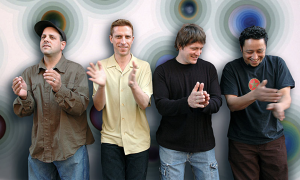
Few American bands have been more influential in the global Afrobeat movement than the Brooklyn collective Antibalas. Keeper of the African protest flame ignited by Nigerian musician/activist Fela Kuti in the 1970s, Antibalas' reach is expansive and impressive: it contributed to the Tony- nominated musical Fela!, their horn section won a Grammy for their charts on Angelique Kidjo's Djin Djin (2007, EMI), other members worked with the Sharon Jones & the Dap-Kings as the rhythm engine behind Amy Winehouse's breakout Back to Black (2006, Island), and altogether their rhythmically dynamic performances have danced through 35 different countries.
First released in 2004 but newly reissued with a bonus track, Who is This America? offers a brilliant tour through whirlwind Afrobeat. Every tune grows long and dense in organically joyous celebration of interwoven African rhythm and melody, with the joy of collective creation spreading like a warm campfire glow among Antibalas' 14 main musicians (not to mention guest players).
The new instrumental bonus track, "Money Talks" steps out with a torrid piano and horn groove that turns upside down and rocks hard across Afrobeat and New Orleans styles, a powerful show of Antibalas' instrumental prowess. "Pay Back Africa" chugs along Caribbean rhythms that set up a loose-limbed framework for the horn, keyboard, and drum soloists to blow through. The traditional Yoruba chant "Obanla'e" introduces "Elephant," a hypnotic reggae rhythm that ties together more Yoruba chanting, a horn chart that genuinely sings, dark shade of electric piano, and a masterfully segued horn solo which the trumpet player begins in Cuba and the trombone player ends in Jamaica. Like many of these tunes, this "Elephant" feels like it could stomp and rock on forever.
"Big Man" melts together from burning, multi-rhythmic interlocking parts with saxophone and keyboard solos boiling up through its thick broth, simultaneously a scathing anti-consumerism diatribe and call to abandoned dance. "Who Is This America Dem Speak of Today?" also mines a wicked, dancing Afrobeat groove, with keyboards, percussion and guitars shimmering together into a single rhythmic sheen. At the same time, it poses a profound question in a contemporary America built by immigrants and now seemingly locked in an intractable struggle over immigration. Who IS this America we speak of today—for real?
 Miles Davis
Bitches Brew: 40th Anniversary Collectors' Edition
Sony Legacy
2010
Historic debate over the relevance and merits of trumpeter Miles Davis' seminal jazz-rock fusion masterwork Bitches Brew (Columbia), especially upon this year's 40th anniversary of its original 1970 release, could fill every page of even a paperless internet jazz e-zine (a body of work to which Greg Tate's companion essay adds: "Bitches is a multi-clawed, multi-tentacled, multi-brained creature whose center of gravity never stays preoccupied with one body part for too long"). But one point seems certain: two live performances of this electrifying music—one from 1969 on a bonus DVD, the other from 1970 on a bonus CD—are the genuine treasure troves of this 40th anniversary Collectors' Edition.
The live CD features extended versions of "Spanish Key," "Miles Runs the Voodoo Down," "Sanctuary" and the landmark title track in a set recorded at Tanglewood (MA) in August 1970, after Bitches was released ("unleashed" may be more accurate), a rare recording of Davis' band with saxophonist Gary Bartz plus twin keyboardists Keith Jarrett and Chick Corea, with Dave Holland (bass), Jack DeJohnette (drums) and Airto Moreira (percussion) as Davis' whirling rhythm engine.
"Bitches Brew" begins like daybreak. Its instruments emerge as if illuminated by the dawn, with Davis' trumpet, like the sun, regally surveying and crowning the treacherous sonic jungle below. "Spanish Key/The Theme" is tethered to its bass pulse and dueling keyboards, while Bartz's soprano sax sometimes pierces and other times bounces off the dense cross- rhythms that churn into sonic tidal waves.
For its encore, the band tears off "Miles Runs the Voodoo Down," a serpentine, modernist blues that travels far out without ever venturing out of its thick, funky rhythmic pocket. Davis' trumpet thrusts and parries and dodges and weaves, twisting up this piece of "Voodoo" like origami. By the time you think you've figured this music out, it's already changed into something different: This recording somehow captures the musical sound of a state of continual becoming.
The previous year—in late 1969—Davis traveled to Europe for a two-week tour, introducing the music on his as-of-yet-unreleased double album with a mostly acoustic quintet (except for Corea's electric keyboard) that featured saxophonist Wayne Shorter. Recorded Live in Copenhagen during the second week of this tour, this bonus concert DVD provides a pristine document of a Davis band rarely if ever seen on video, and proves as stunning and majestic as the bonus live CD.
Upon DeJohnette's downbeat, "Miles Runs the Voodoo Down," his trumpet playing off the drums and keyboards with the best of bad intentions. Shorter and Davis intertwine lines to turn "Sanctuary" inside out with shrieks of primal—almost animal—anguish, scorched by the formative furnace of jazz fusion when it was still more jazz than fusion. "Sanctuary" morphs into "It's About That Time," where DeJohnette's drums beneath the trumpet and tenor solos sound like a series of city blocks exploding. It feels like Davis had just begun to determine how to (barely) harness the power of his raging grooves.
But Davis' (mostly) solo version of the ballad "I Fall in Love Too Easily" is the beautiful, crowning gemstone of Live in Copenhagen, his romantic trumpet a reflecting pool of eternity, profoundly calm and deep.
 Gerry Gibbs & the Electric Thrasher Orchestra
Gerry Gibbs & the Electric Thrasher Orchestra Play the Music of Miles Davis 1967-1975
Whaling City Sound
2010
Among other callings, drummer/percussionist and bandleader Gerry Gibbs serves as occasional "aural historian" of the mercurial music of Miles Davis. Gibbs' most recent tribute to one of the most controversial and notorious segments of Davis' career—fusion explorations that began to expand jazz with Nefertitti (Columbia) in 1967 and continued to stretch past even its most elastic points with Get Up With It nearly a decade later—honors Davis' artistic spirit, approach, and some of his most electrifying music.
Plays The Music of Miles 1967-75 was culled from four hour-long sets recorded during one 16-hour session, with Brian Swartz (trumpet and electric trumpet) and Doug Webb (soprano saxophone) admirably blowing the horn solos. "We began playing the song that Miles opened every single set with for many years" (Joe Zawinul's "Directions"), Gibbs explains. Other musicians include guitarist Mike Hoffman, whose resume includes a band led by Tony Williams, one of Davis' hardest-rocking drummers, and inexhaustible bassist Brandon Rivas.
Gibbs' arrangements—more than twenty Davis compositions arranged into two CDs, each CD a seamless, 13-song suite—seem to unify and contextualize Davis' already legendary body of work. They become even more astounding when you press "play." In "Bitches Brew," his rhythms alternate between sharp jabs and roundhouse wallops before simmering down into viscous, murderous funk. His shimmering cymbals and whippersnapper snare gallop alongside Rivas' walking bass to honor "Nefertiti," in an arrangement that doubles trumpet with soprano sax to honor the original's Shorter-Davis frontline. This quickly slips into the shockingly electric "Black Satin," a showcase for keyboard and guitar solos which his snare rocks hard but keeps the groove slippery.
Highlights of Gibbs' second suite include "Right Off," with staccato drum and rhythm guitar tickling its stuttering underbelly before the arrangement seems to turn the music in two directions at one time, guitar chords crashing hard down into the beat while the trumpet soars upward and out. "Pinocchio," "Sanctuary," and "Nem Um Talvez" string together more light and roomy jazz. But in another direction, "Inamorata" illuminates the psychedelic influence—across the spectrums of rhythm, volume, and sound—that guitarist Jimi Hendrix unmistakably had on Davis' music of this period, fueled by drums which Gibbs beats like they stole something from him.
 The Laya Project
A New Day—Laya Project Remixed
EarthSync India Pvt Ltd
2010
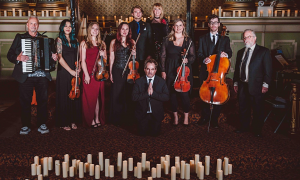
For two years, producers Sonya Mazumdar and Patrick Sebag journeyed throughout the coastal communities of India, Indonesia, the Maldives, Myanmar, Sri Lanka and Thailand, collecting field recordings of these nations' most respected folk, religious and national music. They compiled these recordings and released them in 2007 as The Laya Project (Earthsync) to honor how the region's cultural spirit steadfastly endured the wake and physical aftermath of the 2004 Pacific tsunami.
Suspecting that this could be just the beginning of their project, Mazumdar and Sebag released these tracks for DJs, remixers and producers in these countries to revision and remix according to their own unique global perspectives, and then turned the remixes over to producer Joshua Jacobson, who subsequently assembled them into A New Day—Laya Project Remixed. "Remixes, especially for Laya Project, allow the message of Laya and the sound of the villages in these six countries to reach new audiences and age groups," Jacobs explains. "This album will reach the dance floor, trance festivals, lounges, and even TV commercials and feature films, which will greatly expand awareness of The Laya Project and the people affected by the 2004 tsunami."
A New Day truly presents the sound and vision of a global music and beat. On disc one, a children's chorus singing praise to the "Glorious Sun," a Myanmar traditional that MC Yogi toasts Jamaica-style, is powerfully affecting in the way that only the voices of innocent children can be. Doubled strings and vocals slide up and down the Eastern scale of "Hai La Sa" cool and liquid, like refreshing water. For "Sunrise in Injumbakam," the music seems to rise and fall, ebbing and flowing like waves of heat and light radiating from the dawning sun.
Disc two of this Project continues to grow further out and yet deeper within. The soft jungle funk of "Sunset in Akkari" coolly complements the first disc's "Sunrise." Dub Gabriel layers looped congas, drums, and hand cymbals into the ancient/modern sounding rhythm track that drives "Tapatam." Two different takes on the traditional Indian Sufi chant "Ya Allah" move like spiritual panthers on big fat, padded beats (one version even gets tangled in thick Jamaican dub), vocals swirling together with strings to scorch your speakers, musical sandstorms in stereo.
A New Day is mostly—but not entirely—electronic alchemy. MIDIval PunditZ animate "Katala Talu" from its core pulse of acoustic guitar (or sitar) and human voice, and the traditional Indian melody "Going to Seville" sounds even more haunting and eternal when rendered on violin, and borne upward by shimmering harmony strings.
"'Laya' is a really resonant and rich Sanskrit word," Mazumdar says. "Along with many other things, it can mean fusion, union and embrace, all elements that echo in these remixes. It's the essence of what we and the remixers hope for."
 Organissimo
Alive & Kickin'
Big O Records
2010
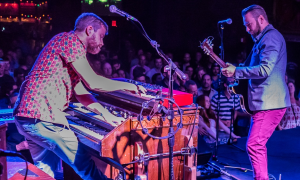
The title of Organissimo's first live recording, Alive & Kickin', is a great description of how a guitar/organ trio live record should sound. Just about everything on this set comes homegrown by this Michigan trio: organ player Jim Alfredson met guitarist Joe Gloss in a Michigan State University (MSU) jazz class; the duo eventually became a trio completed by drummer Randy Marsh, whose experience playing for organists Jimmy Smith and Shirley Scott proved invaluable to the band's soulful yet freestyle jamming sound.
Most of Alive & Kickin' was recorded at MSU, with two additional tracks recorded at one of Organissimo's favorite nightspots in Grand Rapids, MI. Even so, music from Louisiana—more specifically, from New Orleans—plays a prominent part in the opening "Stomp Yo' Feets," which combines with the subsequent "Clap Yo' Hands" to create complementary party jams of sophisticatedly syncopated Crescent City organ funk.
"Clap Yo' Hands" also serves to bridge the tail-whipping trilogy that closes this this set. "Jimmy Smith Goes to Washington" kicks it off: Alfredson's organ sound testifies to the power of gospel truth, and then paints this groove in bright splashes and waves of color using every shade in his pallet and every corner of his canvas; Gloss' guitar bridges that funky gap between soul and bebop, and Marsh tumbles through his own unaccompanied breaks. In "Clap Yo' Hands," Marsh pounds out a torrid go-go beat behind the organ break to further drive the trio to their final soul-jazz destination, "Grooveadelphia."
"Grooveadelphia," the title track of their 2008 release which spent several weeks atop the CMJ Top 40 jazz chart—and most likely titled to honor Smith, Scott, and other famous organ players from Philadelphia—proves to be one funky town. Alfredson finally turns out the lights by soloing with one hand while holding one long, screaming harmony chord with the other, that joyous sound that only organ players can howl.
The "encore," recorded at an earlier show, begins with a cover of Frank Zappa's reflective, almost floating waltz melody "Blessed Relief" ("Frank Zappa was such an influential musician in so many ways, and I don't think he's been given the treatment he deserves," says Alfredson) and ends with a hefty slice (18:40) of the band's signature fatback groove "Pumpkin Pie," which Marsh kicks out just behind the beat to spice up its undercrust with that sassy New Orleans party feeling.
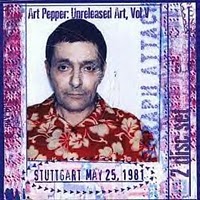 Art Pepper
Unreleased Art Vol. 5: Stuttgart May 25, 1981
Widow's Taste
2010
Recorded during a European tour by Pepper's "comeback quartet" with drummer Carl Burnett, bassist Bob Magnusson and pianist Milcho Leviev, Unreleased Art Vol. 5: Stuttgart May 25, 1981 is a genuine labor of love: Not only the performers' love of music but also the devotion of this alto saxophonist's fans, who sent their own recordings of this date to Pepper's widow, Laurie, who turned them over to producer Wayne Peet for remastering and sequencing into this two-disc set.
The leader aside, Pepper's support trio is one hell of a band; led by Leviev's sympathetic piano and Magnusson's sensitive bass, they play with all the intuitive communication of the great pianist Bill Evans' trios. Leviev unravels the melodic threads of the opening "True Blues" like he's untying a musical knot, then steps aside for the bassist's expressive soliloquy. Piano and bass interludes in "Over the Rainbow" are just as lovely, and their undercarriage to "Yours is My Heart Alone" floats like a soft Brazilian breeze.
But don't put the leader aside. Pepper demonstrates remarkable ability to exercise his alto sax in many different styles and sounds (not to mention his spotlight on clarinet, Al Jolson's "Avalon," which he pours out as crisp and dry as a Benny Goodman martini). "Straight Life," Pepper's most recognized tune (and the title of his compelling autobiography), sets up a modern jazz steeplechase and demonstrates Sonny Rollins' gravitational pull on Pepper, whose solo emerges from fragments of phrases that he geometrically builds into larger lines and shapes. Pepper ends this set with "Cherokee," one of his favorite workouts and concert closers. At first, he lightly glides as if ice skating on the rhythm, but then his alto grows more and more fractured, strafing the rhythm with scalding staccato runs, the consuming conceptual fires of Charlie Parker and Ornette Coleman.
Pepper and Leviev aim this 24-minute version of Pepper's "Make a List (Make a Wish" toward a completely different destination, the classic soul-jazz that saxophonist Eddie Harris recorded with pianist Les McCann. Leviev digs up from his lower register a simple but potent piano groove that sounds like both dirty and gospel blues, slamming down piano behind Pepper's freewheeling alto like a throaty beer chaser.
Tracks and Personnel
Who is This America?
Tracks: Who is This America Dem Speak of Today?; Pay Back Africa; Indictment; Big Man; Obanla'e; Elephant; Sister; Money Talks.
Personnel: Amayo: lead vocals, percussion; Ernesto Abreu: congas, lead vocals; Victor Axelrod: electric piano, organ, clavinet; Phillip Ballman: drums; Stuart Bogie: tenor saxophone; Dylan Fusillo: percussion; Aaron Johnson: trombone; Jordan McLean: trumpet; Nick Movshon: bass; Luke O'Malley: guitar; Martin Perna: baritone saxophone; Gabriel Roth: guitar; Del Stribling: bass; Fernando Velez: congas; Geoff Mann: shakere; Tom Brenneck: guitar; Alex Kadvan: cello; Entcho Todorov: violin; Mayra Vega: background vocals; Oguga Iwelu: background vocals; U Poppa Dobi: background vocals; Qua Toporovsky: background vocals; Veronica Cuevas: background vocals; Babatunde Adebimpe: background vocals.
Bitches Brew 40th Anniversary Collector's Edition
Tracks: CD1: Pharoah's Dance; Bitches Brew; Spanish Key; John McLaughlin. CD2: Miles Runs the Voodoo Down; Sanctuary; Spanish Key (Alternate Take); John McLaughlin (Alternate Take); Miles Runs the Voodoo Down (Stereo Single); Spanish Key (Stereo Single); Great Expectations (Mono Single); Little Blue Frog (Mono Single). CD3: Directions; Bitches Brew; The Mask; It's About That Time; Sanctuary; Spanish Key/The Theme; Miles Runs the Voodoo Down. DVD: Copenhagen Live 1969: Directions; Miles Runs the Voodoo Down; Bitches Brew; Agitation; I Fall in Love Too Easily; Sanctuary; It's About That Time; The Theme.
Personnel: CD1/CD2: Miles Davis: trumpet; Wayne Shorter: saxophone; Bennie Maupin: bass clarinet; Joe Zawinul: electric piano; Chick Corea: electric piano; John McLaughlin: guitar; Dave Holland: acoustic bass; Harvey Brooks: electric bass; Lenny White: drums; Jack DeJohnette: drums; Don Alias: drums, congas; Jim Riley: shaker; Steve Grossman: saxophone; Herbie Hancock: electric piano; Ron Carter: bass; Khalil Belakrishna: sitar; Bihari Sharma: tambura, tabla; Billy Cobham: drums, triangle; Larry Young: organ, celeste. CD3: Miles Davis: trumpet; Keith Jarrett: keyboards; Chick Corea: keyboards; Dave Holland: bass; Jack DeJohnette: drums; Airto Moreira: percussion; Gary Bartz: saxophone. DVD: Miles Davis: trumpet; Wayne Shorter: saxophone; Chick Corea: keyboards; Dave Holland: bass; Jack DeJohnette: drums.
Play the Music of Miles Davis 1967-1975
Tracks: CD1: Directions (Take 1); Double Image/Gemini; Masqualero; Little Church; Bitches Brew; Improv 1; Bass & Percussion Improv 1; Nefertiti; Black Satin; Miles Runs the Voodoo Down; Lonely Fire; Travere (Take 1); What I Say/The Theme. CD2: Vocal Improv; In a Silent Way; In Concert (Part III); Right Off; Bass & Percussion Improv 2; Pinocchio; Sanctuary; Nem Um Talvez; Calypso Frelimo; Travere (Take 2); Inamorata; Directions (Take 2); The Theme.
Personnel: Gerry Gibbs: drum, quicka drum, vocals, congas, balifon, slit drum, wood flute, vocal drums; Brian Swartz: trumpet, electric trumpet; Doub Webb: soprano saxophone, bass clarinet; Rob Hardt: bass clarinet, alto flute, flute, piccolo; Andy Langham: Fender Rhodes, mini-moog, synthesizer; Mike Hoffman: electric guitar; Brandon "Big Tastee" Rivas: electric bass; Essiet Okon Essiet: acoustic bass; "Brother" Gabriel Herrera: vocals; Dwight Trible: vocals; Felicia Nelson: gongs, African bells, chimes, rain stick, whispers; Chrissauna Chery: gongs, African bells, chimes, rain stick, whispers.
A New Day—Laya Remixed
Tracks: CD1: A New Day (Pitch Black Remix); Nium Nium (EarthRise Sound System Remix); Glorious Sun (Bhakti Brothers Remix featuring MC Yogi); Sunset in Akkari (Desert Dwellers Remix); Hai La Sa (Eastern Spirit Remix); Glorious Sun-Ya Allah-Muliya-Farihi (Ferenz Kallos Remix); Muliya (Shaman's Dream Remix); Sunrise in Injumbakam (Pathaan's Tribute Remix); Waterside Tales (Bombay Dub Orchestra Blade Runner Remix); Glorious Sun (Karsh Kale Brand New Dawn Remix). CD2: A New Day (Chris Zippel's Genuine Remix); Tapatam (Dub Gabriel Remix); Ya Allah (Sufi Dubstars Remix-Celt Islam & DJ Umb featuring Dawoud Kringle); Sunset in Akkari (Desert Dwellers Dance Remix); Touare (The Ambergris Remix-Cheb I Sabbah); Ya Allah (Please Wipe Our Tears Remix—Cheb I Sabbah); Rain Buddha (dimmSummer Remix); Katalu Talu (MIDIval PunditZ Remix); Going to Seville (Kaya Project Remix); Hai La Sa (Nickodemus Remix); Farihi (Fabian Alsultany Remix); Laya Mantra (Kartrick & Gotam Yalla Mantra Remix).
Personnel: Remixers: Pitch Black; EarthRise Sound System; Bhakti Brothers featuring MC Yogi; Desert Dwellers; Eastern Spirit; Ferenz Kallos; Shaman's Dream; Pathaan's Tribute; Bombay Dub Orchestra; Karsh Kale; Chris Zippel (Genuine); Dub Gabriel; Sufi Dubstars; Celt Islam & DJ Umb featuring Dawoud Kringle; Cheb I Sabbah; dimmSummer; MIDIval PunditZ; Kaya Project; Nickodemus; Fabian Asultany; Katrick & Gotam. Compiled and produced by Joshua Jacobs;
Alive & Kickin'
Tracks: Stomp Yo' Feets; Senor Buffet; Smokin' Section; If Not Now, When?; Jimmy Smith Goes to Washington; Clap Yo' Hands; Groovadelphia; Blessed Relief; Pumpkin Pie.
Personnel: Jim Alfredson: HammondSuzuki XK3/XK System, Leslie 3300, synthesizers; Joe Gloss: guitar; Randy Marsh: drums.
Unreleased Art Vol. 5: Stuttgart May 25, 1981
Tracks: CD1: True Blues; Yours is My Heart Alone; Landscape; Patricia; For Freddie. CD2: Straight Life; Avalon; Make a List (Make a Wish); Over the Rainbow; Cherokee.
Personnel: Art Pepper: alto saxophone, clarinet; Milcho Leviev: piano; Bob Magnusson: bass; Carl Burnett: drums.
Tags
From the Inside Out
Chris M. Slawecki
United States
Fela Kuti
Angelique Kidjo
Dap-Kings
Miles Davis
Gary Bartz
Keith Jarrett
Chick Corea
Dave Holland
Jack DeJohnette
Airto
Wayne Shorter
Brian Swartz
Doug Webb
Joe Zawinul
Mike Hoffman
Tony Williams
Jimi Hendrix
Joshua Jacobs
Dub Gabriel
Midival Punditz
Jimmy Smith
Shirley Scott
Frank Zappa
Carl Burnett
Bob Magnusson
Milcho Leviev
Wayne Peet
Bill Evans
Al Jolson
Benny Goodman
Sonny Rollins
Charlie Parker
Ornette Coleman
Eddie Harris
Les McCann
PREVIOUS / NEXT

Support All About Jazz
 All About Jazz has been a pillar of jazz since 1995, championing it as an art form and, more importantly, supporting the musicians who make it. Our enduring commitment has made "AAJ" one of the most culturally important websites of its kind, read by hundreds of thousands of fans, musicians and industry figures every month.