Home » Jazz Articles » Live Review » New Voices and the American Song Book
New Voices and the American Song Book
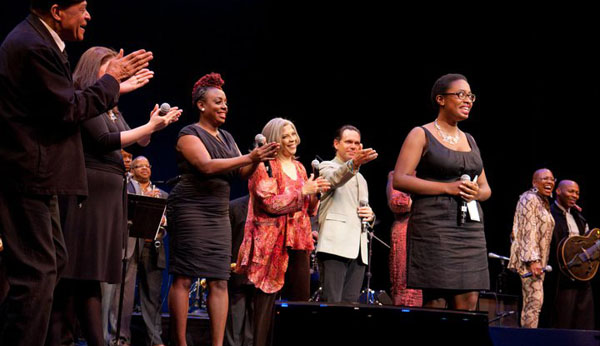

Kennedy Center
Washington, D.C.
October, 2010
One of the premier jazz events of the year, the annual Thelonious Monk competition rarely fails to deliver. Each year the jazz elite gather to celebrate the legacy of Thelonious Monk and to recognize up-and-coming talents of the jazz world via a competition that rotates among instruments. When hosted by the Kennedy Center in Washington, D.C., an aura of political weight is inevitably added to the evening as Congressmen—and this year, President Barak Obama together with Michelle Obama—affix their names to the list of honoree hosts and sponsors. The music is always top quality and the finalists often destined for recording contracts and popular recognition. Recent years, however, have left the competition a touch weighed-down by its own sense of import, the speeches gilded with pomp and the pace of the event stiff, like an ill-fitted suit. This may explain why the just-completed 2010 competition stood out as one of the most enjoyable competitions in recent years, due in no small part to the unaffected charm and unquestionable talent of this year's winner, vocalist Cecile McLorin Salvant.
Salvant's genuineness, however, was not the only factor at play in making the 2010 Monk Vocal Competition sweep along like a breath of fresh air. From opening number to closing speech, the evening was characterized by an almost familial quality as veteran performers, contestants, and hosts alike radiated a sense of loose fun and shared camaraderie. Hostess Phylicia Rashad certainly helped set the tone with her pitch-perfect mix of down-to-earth humor and good nature, as did the welcome segment of the night which focused admirably on the music and less on speechifying. In short, everything from the hosts to the line-up of supporting musicians, to the event's gently unfolding pace combined to create an inviting atmosphere that let the audience sit back, relax, and enjoy the show.
Following a sprightly version of "Better Than Anything" by Ledisi, George Duke, Terri Lyne Carrington, James Genus, Jon Irabagon, and Ambrose Akinmusire, the first half of the evening's show began. Dedicated to the vocal competition and the composer's award, this phase started with each of the three finalists taking the stage to perform two selections each.
The Finalists
The eventual third place winner, Cyrille Aimee, a native of Fontainebleau, France, opened with an unabashedly seductive rendition of "I Wish You love." Delivered in her native tongue, Aimee successfully imbued the tune with flirtatious allure, including a portion of French-tinged and understated scat. Aimee then turned to a less successful version of "Summertime," the risky R&B-influenced arrangement of which failed to convince.
Choosing a dramatically different approach, second-prize winner Charnenee Wade began with a powerful, modern take of Duke Ellington's "Mood Indigo." Serving up a generous helping of ambitious scat, Wade took significant stylistic risks, delivering a potent, unconventional version of the well-known tune. Wade also distinguished herself through her dynamic interaction with the supporting band, both on this tune and her follow-up piece "The Thrill is Gone."
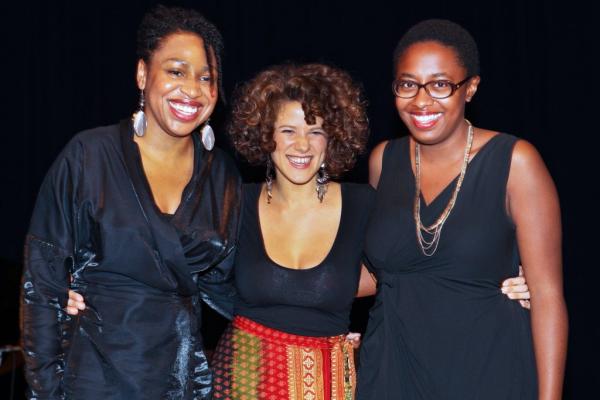
Taking first place, Cecile McLorin Salvant chose two contrasting selections: a humorously quaint take on "If this Isn't Love" followed by a subtle but powerful rendition of Bessie Smith's "I Wonder Where our Love has Gone." Salvant convinced rather than overwhelmed the audience with her subtle vocals and unexpected phrasing, the combined effect of which produced an unusual emotional clarity that moved the audience to shouts of appreciation and in the end earned her first prize.
Describing Salvant's performance, competition judge Kurt Elling articulated, "First of all, she is clearly a clutch hitter because she gave a hell of a performance. And she seems to know very clearly who she is and who she wants to be. Her voice is very beautiful and the material that she picked was tailor-made for her to be able to tell spellbinding stories."
As definitive as her performance was, Salvant's poise and unaffected sincerity was equally appealing. Reacting to the win as she signed autographs and shook hands with a string of appreciative audience members, Salvant expressed genuine surprise. "I don't understand what is happening to me! I have to remind myself where I am, what I am doing.... I have never experienced this...the first time I played with a band, a jazz band, was 3 years ago. Just seeing an audience respond the way they responded and come out here and have people even know who I am is overwhelming. Completely unexpected and surreal."
Asked about her choice of a Bessie Smith blues, Salvant went on to explain, "She is a great influence. It's music that is funny, it's sad...and it is extremely lyrically oriented. She drives it with the lyrics. I prefer something that is less technically oriented, more simple, but has an emotional driving force. All those who tell a story, joke around, that is what I like to listen to. That is what I try to give out."
Composers Award
Appropriately, the Monk competition also bestows an annual composer's award in order to recognize the important contribution of writers to jazz. Sponsored by BMI, the award this year went to pianist Vadim Neselovskyi. Born in Odessa, Ukraine, Neselovskyi began his musical studies at a young age at the Odessa Conservatory before moving to Dortmund, Germany where he gained experience in jazz performance. After attending the Berklee College of Music, he joined Gary Burton's band. He is also an alumnus of the Thelonious Monk Institute of Jazz Performance.
Garnering the $10,000 prize for his composition "Grust," which means "sadness' in Russian, Neselovskyi impressed with both the depth of his composition and a heartrending performance that stood out as an unquestionable highlight of the night. Playing with his trio, whom he met during his studies at Berklee, Neselovskyi was also greatly aided by his vocalist Amanda Basinsinger, whose ethereal, wordless singing sounded at times like the plaintive cries of a solitary wolf and seemed to distill into sonic form the pathos of human isolation.
, Nesolovsky explained the origins of the tune, "Many pieces actually I don't remember about the moment that I started a composition. But with this piece I really remember the moment. I was feeling low, as everyone sometimes does, and I sat at the piano and the melody came. From that point on, of course, the hell begins. Because I needed to work for three years just to find the perfect flow...to develop that idea that just came, this feeling of loneliness."
In keeping with the familial quality of the evening, Neselovskyi went on to emphasize the personal import of the night's victory and his reunion with trio-mates Amanda Baisinger and Oleg Osenkov. "We played constantly in Boston for no money. And because we played all those gigs I was hired by Gary Burton at a certain point...and I stopped playing with them. So now, this is a very special moment for me to reunite with musicians that are so dear to me, playing in the spotlight, to receive this prize. I hope this is a reunion that lasts and we get more chances together."
The American Song Book
The competition performances completed, the event then transitioned to its second phase, a celebration of the American song book consisting of performances by a veritable who's who of today's jazz singers, culminating in a surprise performance by Gladys Knight. (Graciously substituting for Aretha Franklin who was unable to attend due to a family emergency.)
One after the other, the esteemed line-up treated the audience to a panoply of styles and song selections. From Al Jarreau's smooth, swinging rendition of "I'm beginning to See the Light," to Bridgewater's version of the jazz classic "Surrey with the Fringe on Top," to Kurt Elling's coolly stylized "You Don't Know What Love is," the performers succeeded in painting a thorough portrait of popular jazz vocal history. The absolute highlight, however, was Clark Terry's spectacularly hilarious presentation of his self-penned classic "Mumbles." Performing from a wheelchair, Terry captivated audiences with his ability to bring to life an entire urban street scene, complete with old men complaining and bickering couples, through nothing more than scatted vocals and a brilliant sense of time. A tour de force, Terry provided everyone a lesson in how to hold an audience in the palm of your hands.
Both honoring the history of jazz vocals and shining a spotlight on its next generation, the 2010 Monk Competition struck just the right balance between seriousness and entertainment, humor and sincerity. While an impressive roster of jazz's greatest names were present, the evening appropriately belonged to the young performers only just now embarking on their careers. Not only were their performances made the centerpiece, but the older hands seemed more than willing to embrace their roles as teachers and supporters. Beyond the quality of the music, perhaps this sense of continuity and generosity is what lent the entire affair its undeniable appeal.
Photo Credit
Three Finalists: Steve Mundinger
< Previous
Bird Fly By
Next >
Public Domain
Comments
Tags
Thelonious Monk Instititue
Live Reviews
Franz A. Matzner
United States
District Of Columbia
Washington
Cecile McLorin Salvant
George Duke
Terri Lyne Carrington
James Genus
Jon Irabagon
ambrose akinmusire
duke ellington
Kurt Elling
Bessie Smith
Al Jarreau
Clark Terry
For the Love of Jazz
 All About Jazz has been a pillar of jazz since 1995, championing it as an art form and, more importantly, supporting the musicians who create it. Our enduring commitment has made "AAJ" one of the most culturally important websites of its kind, read by hundreds of thousands of fans, musicians and industry figures every month.
You Can Help
To expand our coverage even further and develop new means to foster jazz discovery and connectivity we need your help. You can become a sustaining member for a modest $20 and in return, we'll immediately hide those pesky ads plus provide access to future articles for a full year. This winning combination will vastly improve your AAJ experience and allow us to vigorously build on the pioneering work we first started in 1995. So enjoy an ad-free AAJ experience and help us remain a positive beacon for jazz by making a donation today.Near


Giveaway

Eligible winners: 15
Days remaining: 5
Days remaining: 5