Home » Jazz Articles » Interview » Eric Zinman: The Piano as Endangered Species
Eric Zinman: The Piano as Endangered Species
 For over twenty years, pianist/composer Eric Zinman has been crafting his own approach to his instrument, since meeting trumpeter Bill Dixon in the '80s. He views himself as an ensemble player, who plays to include; in addition to his own writing, his trio disc, Eric Zinman Ensemble (Cadence, 2006), features short pieces by John Voigt, Laurence Cook, Lowell Davidison and Ornette Coleman. Each composition feels lived with and explored thoroughly, while the music breaths and flows with a wide dynamic range. The interplay between piano, drums and bass is speech-like and unpredictable; the instruments seeming to merge their colors in a very unique way.
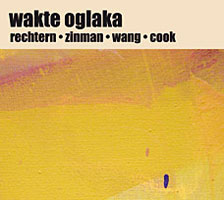
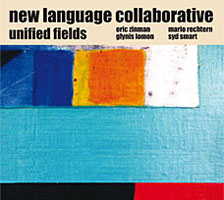
 More recent releases involve longer compositions, and larger ensembles also featuring undervalued master saxophonist Mario Rechtern. The compositional focus is less partitioned, with no repeating statements, while the solo concept is more orchestral. Since 2006, Zinman has been performing internationally, and has released two digital-only recordings on Ayler Records—New Language Collaborative/Unified Fields (2008), and Wakte Oglaka (2009). Several new recordings are scheduled to be released by Cadence, Ayler, and a new French label, Improvising Beings.
All About Jazz: While I enjoyed reading about your personal history in the brilliantcornersbostonjazzblog, where I first read about you, I wanted to ask about your perspectives on the piano, your music and some personal history. Outside of what was published there, are there other influences you would like to talk about?
Eric Zinman: Yes, there are a few things. I have not talked on my website about everything that influenced me. Everybody knows my biggest influences because it is stated on my recordings and on my CV, but there were two other influential people in my life that I was fortunate enough to have as roommates.
The first of those roommates was Marc Leibowitz. The first time I played with Laurence Cook was with Marc at his apartment in Sudbury. He had organized a music series at the Brandeis Radio station called The Joint, which was the best I had encountered in the Boston area where I lived. He was, at one time, the director of WBRS, the community radio station at Brandeis University. Marc hooked me up with the station and pushed to help me get a show which I called 20th Century Music, and I played the best of the best that I could find. The record collection was also quite good. Marc also ran an excellent show. Around the same time, Craig Schildhauer had a loft on Thayer Street, with his partner Yvette, where they ran another great music series called Playground. This was very influential to me as I took the name and ran with it, as Craig had asked me to do: Friends of Black Music , which was run by Syd Smart in the '70s; and also The Black Avant-Garde, run by Larry Roland, preceded me in the Boston area. I found that out later. My personal involvement was with The Joint and Playground.
The Joint ran live music many days of the week and featured some of the best of the avant-garde. I may not remember all the details, but I remember some: Zayne Massey, Karen Borca, John Voigt, Taylor Maclean, Denis Charles, Bobby Naughton, Zen Matsura, William Parker, Marc Leibowitz, Laurence Cook, Joe Maneri, Matt Maneri, Rashid Bakr, and many more.
There was a drum summit that I thought was unprecedented. It included Laurence Cook, Gerry Hemingway, Beaver Harris, Denis Charles. I'm not sure, but I thought Andrew Cyrille and Thurman Barker were there.
 I don't think that we were very compatible as players in some ways, as Marc's compositional ideas were in a different direction from the way I wanted to play the piano, but I think we made some very good music and played out a couple times with Laurence Cook. Marc had a lot of ideas about electronics that lately I feel were very influential to me in terms of color and timbre. The way Marc used to tune his lower strings to sound like a bass, which would create this shaking sound like an earth tremor and the use of an old Moog synthesizer patch, which could be triggered in many ways by strings, microphones etc. Marc also had ideas about what I would call sequences—repeating motifs, where he used a cheap Casio device. In the beginning, I couldn't stand them, but gradually Marc learned to use them in a very deceptive and artistic way.
 Marc is a great archivist and editor, and put together the best pieces of the bunch on a CD called Sinus Up, for which I have not yet been able to find a producer. I was very green on that recording and fresh out of school. I don't think my playing is particularly great on those recordings. I think Marc's duets with Laurence Cook are exceptional, and there are more documents of this available from Marc Leibowitz. Marc is a very accomplished guitarist, always striving to learn more and play better. I should also say that Marc Leibowitz was the best roommate I ever had. We talked and argued about music and had loads of fun in general.
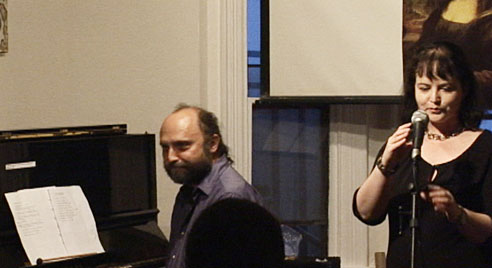 From left: Eric Zinman, Lo Galluccio
When I began to do these duets with Laurence Cook in 2009, I was using the Yamaha CP300 [electric stage piano]. All of these things that I had heard from Marc's work with Laurence came back to me and I realized then how influential they were. Perhaps this will influence people to contact Marc Leibowitz in Prattsville, NY, about his duets with Laurence and purchase them. My duet with Laurence Cook is soon to be released by Ayler Records—now a French label, curated by Stephen Berland.
Thousands of words have been written about Laurence Cook. Everybody knows he is a master of color and one of the most influential and original drummers to emerge from the '60s. When I met Sunny Murray in Vienna, I told him that Laurence sends his best and that Laurence speaks about his [Sunny's] influence on his work. Sunny's reply was, "We learned and worked out our ideas together."
I felt that my work actually began in my trio with Craig Schildhaeur on bass and Laurence Cook on drums. That was where I felt comfortable with the compositions I was trying to create. This became my first recording, which also never received distribution or production outside my hands.
The second influential roommate was Glenn Spearman, who Raphe Malik had recommended to me, as he was looking for a place. Glen and I performed in a couple large ensembles, but I was never in any group of his. We made some great sessions and by the way he played, my sound and energy changed completely. He taught me some pieces of his own, and some he had picked up from Jimmy Lyons. Glen made these shaking sounds in the low register and would play chords almost like Frank Wright; sometimes he had this Sonny Rollins kind of sound, but in the altissimo he reminded me of Jimmy Lyons. I had never played with such a powerful tenor saxophonist, though as a person he was a con man and a hustler, and left without paying his bills, which was a hard period in my life. But I learned a lot from Glen and will always remember his contribution.
AAJ: I have heard that your 2010 European tour went extremely well. I would enjoy hearing about that, but first I want to ask you some other questions. The piano seems largely ignored in much of the newer improvised music these days. Could you comment on that?
EZ: Yes definitely; we'll have time to talk about the tour, which has really been my best yet. Regarding the piano, there are still some musicians out there who appreciate the piano. Considering that the percussion instruments and their mysteries and history have been slandered in the west, it is no surprise that the piano would be included in that category. I say this because my approach to the piano is that of the trap set. I have worked with the drums since 1982, and most heavily since my work with Laurence Cook began in 1987. Laurence Cook is one of my mentors.
 AAJ: What slander do you refer to?
 EZ: Well I'm not an ethnomusicologist, but if you look at the social response in families to these instruments and how they are taught and which instruments people choose in the schools, I think you will find that percussion is rare. Of course there are always enlightened parents who will permit their children to play the drums but it's not encouraged in the same way as flute, violin, piano and guitar. My good friend and musical companion, Syd Smart, taught drums for the city of Cambridge [Massachusetts] for one year, and after that year they told him that they didn't need a drum teacher and asked if he taught another instrument. I'm guessing they also didn't realize what a master percussionist and great teacher Syd Smart is. People are not taught the history of the trap set drums, which is an American development.
It should be treated like the national treasure the music was declared to be by congress in 1987. But to stay on the subject of percussion instruments, with the gentrification of Roxbury in Boston, and Harlem in NYC, some musician friends of mine have noted a decreasing number of people playing percussion in the streets today.
AAJ: But how does this relate to the piano?
EZ: Well, perhaps it doesn't, but I believe that rhythm is still the unexplored territory in music. That's the way I approach the piano. I also do many pianistic things as well, but I view dynamics as rhythm and rhythm as form.
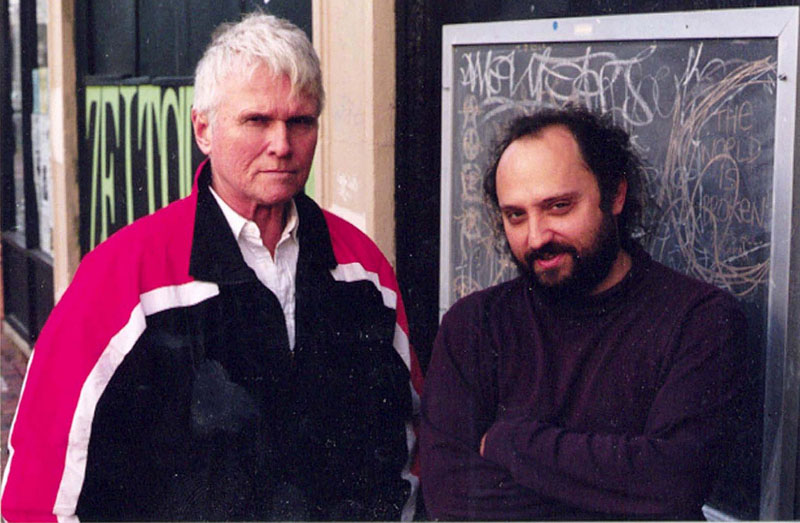 From left: Lawrence Cook, Eric Zinman
 The piano is an obsolete instrument. That's the reason you don't see it in the rock clubs today. In the '50s, the piano was the central instrument of that music, with Little Richard, Fats Domino, Jerry Lee Lewis etc. If you look at the manufacturing and service history of the piano since 1900, it's clear that the number of pianos produced and the number of people who service the instrument have been greatly reduced. Rebuilding is no longer a big business as it was in the '70s, and there are roughly one dozen concert tuners in Boston (those who service the best instruments at the biggest institutions in the city both private and civic), who belong to the PTG [Piano Technicians Guild], and even fewer rebuilders. So my argument here is purely pragmatic.
The other issue is that the piano was connected with the Tin Pan Alley revenue of ASCAP for many years. It spelled out each composition as no other instrument could. It was economical because before, during, and after the Big Band Era, it functioned as a reduced orchestra as in the boogie dance halls of NYC in the '30s. Obviously, in the hands of Ellington and Basie, the piano was made to do something else. In the '60s, when players said they were not going to play standards anymore, that became a radical shift, particularly for the piano, and the revenue that it earned. So that music was clearly a threat. Much of this was touched upon by an article in The Black Nation some years ago, where musician/composer Jimmy Stewart, the great composer from Philadelphia, wrote a review of Len Lyons' book, The Great Jazz Pianists. Stewart also pointed out, by the interviews in that book, that there was no doubt who the great jazz pianists were, and still are.
After the '70s we witnessed the strip clubs no longer supporting live blues bands and going for recorded music. Good cocktail pianists are rare now. You can still see one at the Carlisle in Manhattan.
AAJ: I would like to hear more about your particular interest and conception with the piano.
EZ: I want to create the drama, the variety of color and surprise within an orchestra. The piano plays vertically and horizontally, and a myriad of things in between. I try to do all these things.
I also want to get into the sound of the other players, their touch and dynamic. If you touch it right, you can sing with that instrument. Sometimes you don't even notice the attack. Of course the piano also has an amazing variety of attacks and duration, and often I work duets with the drums within the trio formations. Not everybody is sensitive to the tonal or pan-tonal aspect of the piano. I recently played with some musicians at a session in Vienna who did not want to tune with me; many newer musicians view the piano as a piece of furniture and don't know anything about what it can do. The piano also has many magical sounds which I cannot describe in words. I've thought for some time [that] if I could sum up what interests me in the piano, I would say it like this.
I have described, in the past, the saturation of sound between the pedaled and unpedaled sounds, and how that affects the sounds of the other instruments is something the pianist has to pay attention to.
 my point herI see the role of the piano as an integral part of the orchestras of the future, but, of course, I mean now also. The piano is not a regular part of the symphony orchestra; it is only invited to play as a guest. The first example I heard on a recording, of how the piano should be in the modern orchestras, was Ellington, and then I also heard the use of the piano in Charles Ives' 4th Symphony. So I emphasize the sound of the piano within these large masses of sound, its color relation to the other percussion instruments, because of the piano's vast registers—the way it can surround the other instruments and mark varying shifts in weight. Also the way the piano can move lyrically within the whole, from varying densities of sound masses to sparkling melodies spanning the whole keyboard.
 I do like playing the strings as, of course, that gives you a whole different color. I learned to do it so that it does not sound separate from the music but an organic part of it. Mainly this approach can give you good blends with wind, string and percussion instruments.
European pianos, like the Bosendorfer, sound more like a string instrument than, say, a New York Steinway, which has more of a percussion sound like bells and glass in the upper register. A large part of my interior piano playing is simply doing glissandos with two mallets, one wooden and one plastic. I like the way this matches the timbre of the cymbals. It feels like painting gestures, but I also play the strings vertically as well and hit the board sometimes. I am interested in the sensual nature of sound. With the piano that is, first and foremost, touch. Of course I'm a realist—the finger is either in the key, or it is not.
AAJ: Don't you think that the diatonic nature of the piano and the increased microtonal approach in the music has discarded the piano?
EZ: Well there has always been a microtonal approach in the music, possibly even more so in the early days of Black Music, like with the New Orleans bands and the travelling guitarists like Robert Johnson. And yes it may be true that the piano does not fit into all these situations. Don't forget that the so-called Ragtime music was, again, a reduction of the brass band, and we know they didn't play concert tuning. It depends what you mean by microtonal. If you are referring to Turkish or Greek music, the approach is quite different, and the piano has never been a part of that music; but in this music, the piano was often out of tune. Recently, I have been very interested in this Moroccan trance music which is quite microtonal, as is the Afghani shepherd music. Frankly, most music from the East would fall under the broad category of microtonal. Ornette [Coleman] probably dropped the piano for the reason you are stating, as he was quoted as saying: "Charlie Parker was the greatest diatonic player."
When the piano was dropped from the rhythm section, the music changed. Then a whole new generation of pianists after Cecil Taylor figured out how to play the piano in this new situation. But to get back to your point, yes, the piano is less popular these days in improvised music, or what people call it—though I still don't like calling it that. Some musicians have commented that Thelonious Monk's music implied a microtonal approach in the overtones and how certain clusters ring. The implications of Monk's music are still very strong, though I think misunderstood by many jazz aficionados.
AAJ: What in particular do you feel is misunderstood?
EZ: Well, first, you can't just play changes and a melody to do his music. The physicality of Monk's touch and sound remain unmatched. Anyone else trying to get Monk's sound on the piano generally sounds like a fool. I suppose that is the nature of any great artist, but you can't play Monk's music the way you play a composition by Harold Arlen. In light of this the music is very misunderstood with much praise thrown upon it. I might even go for a grander generalization and say that the music they are calling jazz was destroyed by academia and as a result popular music now has more soul; but I digress. To play this music is not even re-creative. It's nothing. You can't modernize Thelonious Monk or Duke Ellington. What they did is definitive. I say this because there is a lot of nostalgia these days.
 Part of my point here is the divide between creating music and interpreting music. In formal concert music the emphasis is on interpretation, so when I was in Europe and I saw these classical pianists improvising like Cecil Taylor as part of their concert, I realized they were interpreting his work the way they would interpret Beethoven. I'm not saying this is a bad thing, because it shows a certain respect that you would not see here in the US, but to create music requires a whole different thing. It's not just about this word, improvisation, which really doesn't tell you anything about the music. It's a whole point of view in the sound and physical approach to the instrument and organization of material that came out of Black culture in the US. But however you respond to it, it has to come out of your research, not necessarily through these older forms like Sonata Allegro or 12-bar blues. Of course, all the old music is great material to study but that's not how you create music. America, of course, is still very uncomfortable with the cultural identity of the music. Perhaps that's why, after Jaki Byard quit as director of the Afro-American music department at New England Conservatory, they changed the name to Jazz Department. To me that represented a change in the public and social view.
 AAJ: Wel,l I think I begin to understand what you mean by this aesthetic divide or "Great Divide," as you called it, on your recording with Blaise Siwula and Glynis Lomon.
EZ: Yes, exactly; actually, that is a quote from one of my heroes, Glenn Gould. He heard Cecil Taylor play piano in the '60s, and he said "That's the great divide." I accepted that comment as quite perceptive. Well, there is this chauvinistic tendency in Europe. When I spoke with Ivan Tcherepnin one day (who taught at Harvard) about Cecil Taylor (as Ivan's son took piano lessons with the same teacher I studied with), he said to me that Cecil listens to a lot of Markus Stockhausen. I haven't done research into people's listening habits, but I have no doubt they listened to each other.
I brought up the fact that Ellington was supposedly one of Stravinsky's favorite composers, in a music class in college and everybody looked very uncomfortable like I had overstated some point, and someone said, "You mean his favorite jazz composer."
 From left: Bill Dixon, Eric Zinman
 It reminds me of these academics who praise Monk and say that he had no technique. If the music isn't charmingly primitive it's a hostile cultural document. So even today academic composers refuse to recognize the aesthetic, but Glenn Gould was able to hear (even on a mechanical instrument like the piano) beyond the veneer of the music, a whole different set of vocalizations, nuances, physicality, weight, touch and sense of motion that were completely alien to him; in essence, another technique.
AAJ: Could you tell us more about your 2010 tour projects, recordings and plans in Europe?
EZ: Well I'm lucky right now because several labels have been interested in producing some recordings I have recently made, though the schedule on releases is extremely slow. Some of these recordings date back to 2007. I have an electronic duet with Laurence Cook scheduled to come out in September, 2010 on Ayler Records. It's an incredible mass of sound created by two people. It sounds like a large percussion orchestra with an endless palette of colors. One, on Cadence Records, called Rocks in the Sea, featuring Benjamin Duboc, Didier Lasserre, and Mario Rechtern, a duet with Mario Recthern, and another piano trio record with Didier Lasserre and Benjamin Duboc.
I am very proud of all these recordings—my playing is more focused and intense I think. I do like some cerebral music, but like a dancer, there has to be an element of sweat, physical weight and motion. That does not always mean cathartic; I do not play detached. Of course, I'm always offering to play certain festivals, and sometimes they ask me, but these politics would involve another discussion. Briefly, I would say that the European Union is more nationalistic these days, so to be an American over there, you have to be better just to be considered equal, and, most important, you have to have friends.
Among other festivals and performances, I recently played ARTACTS 2010 in Tyrol [Austria]. The American feature was Myra Melford. That was the American choice for that year for that festival. The ensemble I participated in (Rocks in the Sea) was a truly international group, with Benjamin Duboc and Didier Lasserre from France, Mario Rechtern from Austria, and myself from the USA. These crossovers are not so common these days, and I am not a choice of the American JJA [Jazz Journalists Association], so I still have to earn my way in. We were very well received, and people cheered after they heard us play in Tyrol. We were well received in Jaca and Huesca [Spain] as well. I also received much enthusiasm in Paris. There was also some acceptance in Vienna, with my participation in the Reform Art Unit led by Fritz Novotny, and an ensemble with percussionist Hannes Krebbs, bassist Kilian Schrader. I was introduced to all these situations by Mario Rechtern.
In previous years, I felt fortunate to play in Berlin with some of the finest musicians, and there was a real communication. I'm not sure what I will be doing next in Europe. Everything is too slow, and the piano thing is always a challenge, but I know I will be playing some festivals in 2011.
 I won't go into too much boring detail but these are very bad times for the music; the rise of nationalism in the EU; the politics of the strong and the weak; kicking to the down and praying to the up; the speculation on the efficacy of the product; and the collapse of financial markets. It has greatly undermined the quality of what is produced and promoted. Leadership has its own taste. It seeks to decorate its own ambitions to control its market. It becomes a breeding ground for nostalgia and schizophrenic disturbances. We are all herd animals. Musicians can be bet on like horses. We can all be surrounded by many writers who boast of our importance. Some record labels have teams of writers who they pay to write for them.
 AAJ: Is there any support for these projects in Boston and the US?
EZ: The short answer is: no. Just read the interviews with other creative players in the US. Of course that's a subject that could get me into trouble, because no one wants to hear the truth about this. The potential to get reviewed in any print media has worsened. Of course I'm not a chick, I'm not just starting out, and I play the piano, which you do not hear much about, and I'm not really an academic, though I teach privately.
There are a lot of fanzines still out there. Some of the better known ones are quite crooked. But you get the some of the same problems here that you get in Europe. It's been my opinion that the American writers prefer to write about you when you are better known, because in some way it is about them. As your work develops through recordings, rumors and innuendos surface, and people talk. Then, they might decide to write about you. There are very few writers and publications that write about music simply because they like it. You can't be in this music unless you are ready to face rejection. These countries and labels in the EU want to promote their artists. There is a quota for American artists. You have to accept that, and [that] people will try to manipulate you. You have to make recordings and they have to have distribution.
The Boston scene is good. There are some very good players. One of my local groups is the New Language Collaborative, with myself on piano, Glynis Lomon on cello and Syd Smart on drums. They are amazing musicians with long histories. There is no real support. At least nothing that I would call advocacy. I think the city would like to be proud of its artists, poets and musicians, but generally the money goes only to "culture." There is of course always some private, "hush hush" support, and perhaps that is the only way things will continue as [they did] in the past.
There does seem to be some changing of the guard, as certain musicians previously denied have been accepted at festivals like Newport. It's too early to tell what this might mean, but it stands to reason that you can't keep giving people the same crap year after year.
Selected Discography
Eric Zinman, Eric Zinman Trio (Studio 234, 2009)
Eric Zinman, Wakte Oglaka (Ayler Records, 2009)
New Language Collaborative, Unified Fields (Ayler Records, 2008)
The Great Divide, The Great Divide (Studio 234, 2006)
The Eric Zinman Ensemble, Live at Zeitgeist Gallery (Studio 234, 2006)
Eric Zinman, Eric Zinman Ensemble (Cadence Jazz Records, 2006)
Various Artists, Autumn Uprising (Tautology Records, 1997)
Photo Credit
Page 5: Eric Zinman with Bill Dixon: Stanley Jason Zappa
All Other Photos: Courtesy of Eric Zinman
< Previous
Generations
Next >
Reminisce
Comments
Tags
Eric Zinman
Interview
Brian Wrentham
Bill Dixon
John Voigt
Laurence Cook
Ornette Coleman
Karen Borca
Dennis Charles
Bobby Naughton
William Parker
Joe Maneri
Rashid Bakr
Beaver Harris
Andrew Cyrille
Sunny Murray
Glen Spearman
Raphe Malik
Jimmy Lyons
Frank Wright
Sonny Rollins
Little Richard
Fats Domino
robert johnson
Charlie Parker
Cecil Taylor
Thelonious Monk
Harold Arlen
duke ellington
Jaki Byard
Glenn Gould
Stockhausen
Myra Melford
Glynis Lomon
For the Love of Jazz
 All About Jazz has been a pillar of jazz since 1995, championing it as an art form and, more importantly, supporting the musicians who create it. Our enduring commitment has made "AAJ" one of the most culturally important websites of its kind, read by hundreds of thousands of fans, musicians and industry figures every month.
You Can Help
To expand our coverage even further and develop new means to foster jazz discovery and connectivity we need your help. You can become a sustaining member for a modest $20 and in return, we'll immediately hide those pesky ads plus provide access to future articles for a full year. This winning combination will vastly improve your AAJ experience and allow us to vigorously build on the pioneering work we first started in 1995. So enjoy an ad-free AAJ experience and help us remain a positive beacon for jazz by making a donation today.

Giveaway

Eligible winners: 15
Days remaining: 4
Days remaining: 4






