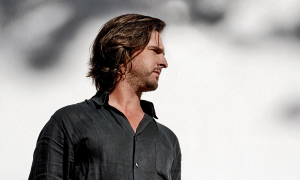
Home » Jazz Articles » Interview » Don Aliquo: The Man, The Music, The Journey
Don Aliquo: The Man, The Music, The Journey

All About Jazz: As a Professor of Saxophone and the Director of Jazz Studies at Middle Tennessee State University, you have become an adopted Tennessean, but your roots in Pittsburgh go back quite deep. Please comment.
Don Aliquo: Yes, I grew up in the suburbs of Pittsburgh and spent a good bit of my adult life there as well. The place has been an important part of my development, for sure. First of all, my father, Don Aliquo, Sr. [saxophone], has been one of the city's most popular jazz musicians over the past 30 years.
He really is quite amazing. At 77 years old, he is still very active playing and practicing (and playing well, I might add). And his support for the jazz scene and his mentorship of younger players is immeasurable. I sometimes have to remind myself that I have been extremely lucky to have such a great mentor. It's players like him who really keep jazz alive!
I also came up at a time where there was a lot of young talent in Pittsburgh: players like Frank Mallah [trombone], David Budway [piano, composer], Jeff Tain Watts [drums], Ned Goold [saxophone], and Andy Fite [guitar]—all of whom were playing great. It also seems as if there were lots of places where you could go to sit in and try to play some music. I think I caught the tail end of a vibrant club scene in the city.
Finally, Pittsburgh is a great place to live and work. The city has its own character and unique personality and I am happy to have been influenced by so many great artists who have lived there or grown up there. The list of those players would be a long one, for sure!
AAJ: The first thing one notices about your playing is the tonality—how did you develop that unique sound?
DA: Thanks for saying so. For me, it is the most important characteristic of an instrumentalist's playing. I have had some really great teachers who have preached a "sound first" philosophy that I try to adhere to and that I definitely preach to my own students! Those [saxophone/woodwind] teachers would be Don Aliquo Sr., Eric Kloss Joe Viola and Marino Galluzzo.
By "sound first," I mean that no matter what you are practicing—technique, scales, et cetera—you are always working on tone quality as well. I think it is a good philosophy. Actually, I really enjoy working on long tones and overtones!
Beyond that, though, I am really low-tech when it comes to equipment. I played two Otto Link metal mouthpieces for about twenty years on tenor, but a few months before [one of my] recordings I knew I was ready for a change. I knew I wanted a mouthpiece that would help drive the kind of ideas I had been hearing. I had been looking for a bit warmer tone that wasn't as piercing but was a bit more voice-like. The answer came when I played some saxophone quartet gigs in Nashville with friends. I was playing a Selmer C* and was amazed at how comfortable it was. I ordered a Selmer F [hard rubber] and two weeks prior to recording, switched to that one. And currently I am getting the same warmth with a bit more edge from a Vandoren V16!
Of course the sound doesn't come from equipment, but the equipment can help. In fact, I like to think of sound emanating from the heart first, the head second, and the body last!
AAJ: One of your key past gigs was with drummer Roger Humphries—please tell us about the man and the gig.
DA: Well, Roger is just a super guy and certainly one of the best drummers I have played with. To have the opportunity to play with him every week for several years was really a blessing. To say he is gifted is an understatement! He just has incredible ears and instincts for jazz. He has mentored so many jazz players in Pittsburgh through hosting jam sessions, hiring young guys for his gigs and just by playing his ass off consistently night after night! And he is still doing it! Since I have moved, I have a new appreciation for what he has accomplished.
I joined his group; it was a sextet consisting of Dewayne Dolphin, bass, Joe Barbato, piano, Delano Choi, trumpet, and Tony Campbell, alto. We were all about the same age and with Roger as our "straw boss." The gig was just a joy! We had regular gigs at the Too Sweet Lounge in Homewood and then the James Street Tavern on the North Side that were both so much fun. All of the cats that would come through the city would go there to sit in, including Eddie Harris [saxophone], Jimmy Owens [trumpet], Dave Liebman [saxophone], and Pittsburgh legends like Stanley Turrentine [saxophone] and George Benson [guitar, vocals]. That was a great time for me. I learned a ton!
AAJ: Would you say that coming up, you paid your dues by playing the small jazz clubs which used to be called the "chitlin circuit"—those small "back-alley" clubs which nurtured many a talent?
DA: I can remember George Heid [a jazz drummer and recording studio owner in Pittsburgh] talking about the real "chitlin circuit" of the past. According to him, my generation missed a lot of it. I do remember, however, all sorts of jazz activity in the black sections of the "'Burgh," especially as a very young man. Clubs like the Crawford Grill, the Crescendo, the Pyramid, Eileen's Zebra Room, and the Too Sweet Lounge were places where people were always playing. Of course, this is only a partial list! There were also a lot of places with jazz in other neighborhoods as well. Places like Lou's and the Encore, and later the Balcony in Shadyside, Walt Harper's various clubs, the Living Room in the South Hills—the list could go on and on. I am sure I made a pest of myself in every one of them, trying to play the music! (And often, I might add, not very well!) I am also sure people like organist Gene Ludwig and my Dad gigged in every one of them!
Basically, I think I caught the tail end of an extremely great jazz club scene in Pittsburgh. I had the opportunity to hear so many great players who were passing through in the clubs—people like Eddie Harris and Jimmy Owens. I remember my Dad taking me to hear [drummer and band leader] Chico Hamilton's group with Arthur Blythe [saxophone] when I was about 14. Man, I was just blown away not only by the music, but the whole scene! I also remember him taking me to hear Arnie Lawrence who was playing with a varitone [electric saxophone] at that time! Speaking of the varitone, I also heard Sonny Stitt twice in clubs in Pittsburgh. I remember him giving a young cat who wanted to sit in a hard time. He asked him, "How many keys are on the saxophone?" Of course everyone sat there and tried to figure that one out! He wouldn't let the guy play until he got the answer he was looking for. The second time, he asked for requests. I guess I was probably around 18 or 19, and I shouted back: "A Night in Tunisia." Then he shot back to us, "You ever been to Tunisia?" Then he proceeded to play the pop song "Mr. Bo Jangles" which to this day really cracks me up!
I remember playing in a concert with David Liebman at the Manchester Craftmen's Guild many years ago. After the concert I took him to the Too Sweet Lounge to jam with Roger Humphries. I will never forget what he said: "Man, neighborhood clubs like this don't exist anymore! This is incredible!" At that time, I didn't realize how right he was. Many of those clubs I've already mentioned were filled with the people of the neighborhood who loved hanging out with each other and were super supportive of the music and the musicians.
What I really remember and marvel at is how both the musicians and the patrons consistently gave me much love and encouragement in all the clubs. And I wasn't the only one. The sad thing for me as a teacher is the knowledge that my students don't have the same opportunities to be embraced and nurtured not just by fellow musician mentors and teachers, but by the whole community. Man, I was blessed!
AAJ: At any point in your career, were you able to sustain a living solely by playing the music only?
DA: From the time I left home for college the first time [1978] to the point in which I encountered my first teaching position [1994], I pretty much supported myself with gigging. That would include stints with The Tommy Dorsey Band, The Buddy Rich Band [briefly], The Keystone Rhythm Band [East Coast R & B] and Roger Humphries and RH factor. In addition, I did all sorts of other gigs as a sideman and a leader during this time—some jazz and, of course, some not! I did have some advantages, though. For instance, I could read pretty well for a kid, and as a result my Dad would send me on gigs that he didn't want or was too busy to handle. This started roughly during my junior year of high school. And by my senior year, I was gigging three to four nights a week with a show/dance band sponsored by the Dodge Corporation. It consisted of the top college (and sometimes high school) students and was led by a great traditional jazz trumpeter named Benny Benack. The band had a great book written by a gentleman named Joe Campus and was some valuable and practical gig experience, especially as it relates to jazz ensemble playing. As a result, I had a pretty healthy jump start into the commercial gig scene and the jazz scene in Pittsburgh after graduation.
AAJ: How did you get from point A to point B in your career—moving from Pittsburgh to Nashville?
DA: After getting a music education degree from Duquesne University, I decided to continue and get a Master's Degree as well. At this point, I wanted to further develop as a creative musician and to develop my teaching skills as well. After teaching at a summer jazz camp at Duquesne, I knew I could be good at teaching jazz. This led me to seek a college teaching position, which I obtained in 1999. The school, Middle Tennessee State University, is about 30 miles south of Nashville. I, along with pianist, Dana Landry, started a Jazz Studies Program here that has prospered. I should mention that Dana is a great pianist and friend and he was largely responsible for recruiting me. Dana and I have been playing together ever since, including my last two CDs and also his debut CD, recorded with Gary Burton [vibraphone] on the Summit Records Label. We have also been playing in Denver as our schedules permit. Dana moved there to take the Director of Jazz Studies position at the University of Northern Colorado and I became the director here when he split. Nashville is an interesting place to be a musician for sure. There are great musicians here however, just like there are great players everywhere. And I should say this gig has been a great opportunity for me in many ways.
AAJ: It is obvious just listening to your recordings—Another Reply (Consolidated Artists Productions, 2003) for example]—that you are an "inside" "outside" player. Would you say that approach was shaped in any way by your studies with George Garzone [saxophone] or Eric Kloss?
DA: I suppose that describes my style and approach to some degree. As a young player I definitely gravitated towards inside/out, high-energy players, most of whom had a lot of "edge" in their sound. Both George and Eric would fall into that category and others like [saxophonists] Jerry Bergonzi, who I heard a lot in Boston, and people like Steve Grossman and Dave Liebman as well. Actually, I think I probably learned more from listening to these guys play than in formal lessons. Of course, Coltrane was my main inspiration. I can remember my Dad playing the entire recording of Giant Steps (Atlantic, 1960) for me very early, as well as Sonny Rollins tunes like "Strode Rode" and "Pent-Up House." I was still in high school and really just listening to pop radio, although I had started to dig some commercial jazz [saxophone] players like Ronnie Laws, Grover Washington, Jr., and Tom Scott and the L.A. Express. To my Dad's credit, he never tried to squelch that, but he would play 'Trane for me and say things like: "Now that's the real deal there, not that stuff you're listening to!"
Over time, I became more and more enamored with my Dad's record collection, although I was still buying things like Return to Forever and the Mahavishnu Orchestra. Although I didn't really understand 'Trane's music at first, I was immediately drawn to the sound he produced. You could tell there was something happening on a much deeper level than with a lot of the other music I was listening to, and I wanted to figure it out! I really had a tremendous advantage having so much music in the house. I was able to check out players on record before I even knew who they were or what their contributions were to the music!
Later on, I also developed an affinity for the blues, partly out of necessity. I say that because Pittsburgh was [and still is] a heavy blues town. You had better be able to play some blues if you wanted to work! I also had the opportunity to hear and play with Stanley Turrentine a good bit and, I'm sure that didn't hurt either! When he was in town, he would always come out and sit in with Roger, and although I didn't know him well, he was always offering me words of encouragement. There is a video of Stanley and I playing "The Way You Look Tonight" floating around somewhere. Man, I would love to get a copy of that! He had such a great style; he could say so much with just the conviction of his sound alone! I remember playing with Roger at the James Street Tavern and thinking I was really playing my ass off, a real hot shit tenor player. In comes Stanley and he proceeds to play "They Can't Take That Away From Me." All he had to do was play the first couple notes of the pick-up into the melody for me to realize I still had quite a bit to learn! That was a lesson I have never forgotten!
I think I also gravitated towards players who created their sound with a lighter touch—players like Stan Getz, Lee Konitz and Joe Henderson. I really like the nuances of tone you can get by playing lighter—it can be really romantic and very personal. As a younger player, I probably "swept that under a rug a bit," especially during the '80s and early '90s, when everyone was into sounding like Michael Brecker [saxophone]. Oddly enough, I never really wanted to do that. I guess I didn't hear the sound that bright, and his playing was so beyond where I was, I came to an early conclusion of "Why bother?"
In some ways, he was the shit as far as inside/outside playing is concerned, though. I do love the energy, drama, and ambiguity (or whatever you want to call it) that that approach to harmony brings to the music.
AAJ: Although you somewhat downplay the importance of "formal" lessons, Eric Kloss is such an enigmatic figure in the music. What was studying with him like—particularly since he is visually impaired?
DA: I studied with Eric for two semesters sometime in the early 1990s while I was getting my master's degree at Duquesne University. I can only describe it as a joy. He is one of the kindest people anyone could hope to study with, and although his blindness made some aspects of formal study unusual, it really didn't present much of a problem. It wasn't like I went to Eric to play from an etude book or something! Actually, it was wonderful because it put the focus where it really belongs as a jazz player: on using your ears!
The lessons took place at his home, and most of the time was spent playing—either two saxophones or comping for each other on the piano. I especially loved when we would play tunes together and trade musical ideas back and forth. Inevitably, I would try and play the most outrageous stuff I could come up with and he would, time and again, either fire my idea back at me, or come up with something even more outrageous built upon my idea! He was all about stretching and being creative as a musician. He had a great spirit and was always positive—not an easy task for a teacher with a large private studio (now that I can say)! Of course, this was really good for me because I had a side of my playing that was more concerned with being "correct" than creative. Actually, I am always interested in how other players balance that issue. Getting back to Eric, however, I always thought of him in those lessons as being "the fastest alto in the west," a real gunslinger! His mind, ears and chops were at an equally remarkable level! I guess this is why I remarked that I learned more from listening to him than learning anything specific.
I do remember two specific things we worked on, however. One, he showed me the changes to "On a Misty Night" by Tadd Dameron, which I later recorded with organist Gene Ludwig. Secondly, at that time Eric was really into teaching improvisation using modes. This was new territory for me because I was really more of a chordal player at the time. I still have and treasure some of the material he shared from those lessons. I wish I had tapes of those lessons, actually, but I was never one to be that organized.
I don't think I have played with another saxophonist who played that fearlessly with such a command of the instrument until I met Jeff Coffin shortly after I moved to Nashville. Jeff and I have engaged in many a musical joust from time to time and he often reminds me of Eric. The fact that Eric more or less dropped out of the jazz scene is certainly a mystery to me. I never really talked to him about it, but my guess is it is complicated. Maybe because he began his career so young? His early career and recordings certainly were an inspiration to many.
AAJ: You mentioned the pervasive influence of Michael Brecker on tenor players; in some circles there is an equal criticism about jazz studies—that there is a "cookie cutter" approach to jazz education. Please comment.
DA: Yes, I have heard that concern/criticism many times. I have even shared that opinion myself at times.
I should also say that the way jazz musicians learned to play in the past in no way can be replicated by a university jazz program. The apprenticeship system, learning the craft on the bandstand and at the feet of the masters seems to have largely disappeared in America. And it is obvious that the club scene has dried up a lot. Young players have less opportunity to develop their chops on the bandstand. I can remember having four or five places that as a young player I could sit in on any given night. On Walnut Street alone, I could go and ask to play a tune at Lou's and then the Encore and then maybe the Raspberry Rhinoceros (although that would have been Blues). Then I could run over to the Pyramid in East Liberty or the Crescendo. If I got lucky, I might be able to play the same tune in a few places. Several clubs had weekly jam sessions as well. This just doesn't seem to be the reality in most cities today.
Combine that with the shrinking amount of big band, dance and/or show work, and you have a serious problem. Students are expected to learn how to read, play in a variety of styles, improvise in different genres, double on other instruments, and understand and perform Western European art music, all from participating in a university jazz program. I would guess that most players of my generation and older learned many of those skills outside the university setting.
From the standpoint of having the opportunity to develop skills on an institutional level then, we are often the only game in town. Having said that, in providing the skills we think students should have, we sometimes forget a few things. First, we might do a better job of stressing the importance of finding one's individual voice and sound on an instrument. We need to try and give the students the tools and make sure they realize they need to create something that expresses their own life with those tools. By staying active as a player myself, I am hoping I don't lose sight of this. I can remember learning about this from my Dad. He played a record of the tune, "Sentimental Journey," and said to me, "Learn the melody and then start playing around with it." His teachers told him, "Split your head in half and hear the melody in one half and the changes in the other."
The basic idea of being able to state the melody to a tune in an original way, and then to play choruses of basically melodic paraphrase is something that I think gets overlooked in jazz education. Maybe that is because it is such an individual process of discovery. I try to tell my students, "How do you hear that melody being played? Can you sing it?" My colleague, Jim Ferguson, has his students learn the lyrics, also a great idea! Listen to Freddie Hubbard [trumpet] play "You're My Everything"—enough said!
Of course, the counterargument is that we have over 100 years of jazz history to expose the students to. I might also ask, how many of the thousands of people who study jazz in and out of school are fully formed jazz artists who understand the tradition, and are ready to put their own personal stamp on the music, by the time they reach typical graduation age of 21 or 22 years-old? I know that certainly does not describe my experience!
With Tom Harrell and Jim Ferguson
Another thing we could do better is in exposing our students to all genres of the art form, not just our primary interest as educators/musicians. It would be great if my students could hear everybody from Lee Konitz to Ellery Eskelin [saxophone]—forget if I approve of it or not. They need to know the wide variety of thought that exists in jazz and make up their own minds as to what direction their heart leads them. Of course, the best students are students of the music and are making these choices anyway, which incidentally, is a great point: if you want it bad enough, you will find a way to learn the music and make it work! I remember reading an interview by Joe Lovano several years ago, in which he basically said if he wanted to continue growing as an artist, he had to create his own opportunities. That was certainly a revelation to me! The people who really want to play the music figure out a way despite the obstacles.
AAJ: Branford Marsalis had these remarks for the British publication Jazzwise (October, 2006): "There is a very famous saxophonist who I was talking to who said, 'Why are you studying classical music?'" Branford goes on to say, "Man, because it's hard—harder than anything you have done in your life." What are your thoughts regarding classical music being taught as opposed to jazz technique?
DA: Branford does have a point about the level of difficulty of some classical pieces! I didn't really get into playing any classical saxophone myself until my late 20s, early 30s. I had just gotten off the road with an R&B band, and my chops were pretty funky although I could play high, loud and fast! I just felt I had lost a certain amount of control and subtlety in my approach to music. So I sought out a classical saxophone teacher named Marino Galluzzo. I had studied a little classical as a freshman at Duquesne with a fine teacher, Nestor Koval, but that didn't go too well. I just couldn't get with the whole idea at that time. "How could anybody play alto with a better sound than Bird's?" was more or less my train of thought when I was 18. Anyway, after studying with Marino for a while I started to get more interested in learning some repertoire and I began to enjoy the challenge of it. He played me some recordings by people like Marcel Mule and Sigurd Raschèr and Jean-Marie Londeix, and I began to see that the level of artistry [of classical players] was great. I also remember a lot of jazz players whose musicianship I respected telling me, "Why the hell are you doing that for?"
I should say that I am always surprised at how closed-minded some folks still are about this issue on both sides of the aisle. There has always been a lot of controversy surrounding different styles of classical saxophone playing, and then you add jazz players with their individualized approach and tone and you have really stirred up the pot! It seems to me that musicians today are not limiting their options, but are open to both classical and jazz. I hope I am right! I think all jazz saxophone students should at least understand how to prepare a classical work technically and tonally speaking. If for no other reason, it brings another layer of musicianship to your career and certainly won't hurt your options for work! As I mentioned before, the nuance and technique required present a real challenge, although they do carry over well to jazz playing. If you think of your favorite saxophonist playing a ballad, for instance, you will hear shifts in tone color, a variety of articulation, expressive devices, dynamics, et cetera—all the things that are common to classical playing. Of course, it works both ways: I think all classically oriented saxophonists should understand how to play a jazz chart with acceptable tone and conception and improvise on a blues! I remember seeing the great classical player, Don Sinta, spending most of his master class trying to convince the students they needed to learn how to improvise. That was really refreshing, after seeing master classes where there was an undercurrent of disrespect leveled at the jazz saxophone.
Having said all that, it is extremely difficult for me to keep both oars in the water at an acceptable level. Both styles demand absolute dedication. Anyone who thinks otherwise is naive. The only way it could even work at all is if I practiced all day, every day! Actually, I have been dedicating a certain amount of practice time to studying my first instrument, the clarinet, and the bass clarinet. My goal is to be as proficient in those as I am with the saxophone, especially as a jazz musician! As far as Branford being able to perform difficult classical saxophone works, I say more power to him! If you got the chops to do it, do it!
< Previous
State of AAJ: July 2010
Comments

Tags
Don Aliquo
Interview
Ludwig vanTrikt
United States
Pennsylvania
Pittsburgh
Jeff "Tain" Watts
Eddie Harris
Jimmy Owens
Dave Liebman
Stanley Turrentine
george benson
Chico Hamilton
Sonny Stitt
Gary Burton
Jerry Bergonzi
Steve Grossman
Sonny Rollins
Ronnie Laws
Grover Washington, Jr.
Return To Forever
Mahavishnu Orchestra
Stan Getz
Lee Konitz
Joe Henderson
Michael Brecker
Tadd Dameron
Gene Ludwig
Jeff Coffin
Ellery Eskelin
Branford Marsalis
For the Love of Jazz
 All About Jazz has been a pillar of jazz since 1995, championing it as an art form and, more importantly, supporting the musicians who create it. Our enduring commitment has made "AAJ" one of the most culturally important websites of its kind, read by hundreds of thousands of fans, musicians and industry figures every month.
You Can Help
To expand our coverage even further and develop new means to foster jazz discovery and connectivity we need your help. You can become a sustaining member for a modest $20 and in return, we'll immediately hide those pesky ads plus provide access to future articles for a full year. This winning combination will vastly improve your AAJ experience and allow us to vigorously build on the pioneering work we first started in 1995. So enjoy an ad-free AAJ experience and help us remain a positive beacon for jazz by making a donation today.Near


Giveaway

Eligible winners: 15
Days remaining: 7
Days remaining: 7