Home » Jazz Articles » Unsung Heroes » Vic Damon, 30th Street Studio, Village Vanguard
Vic Damon, 30th Street Studio, Village Vanguard
Vic Damon Transcription Laboratory
In the early 1930s Vic Damon was working as a teller for Trader's National Bank in Kansas City, when he decided to enter the budding field of audio recording. Ignoring the disapproval of his peers, he spent his savings on a collection of costly Berliner audio recording equipment.Kansas City, in the 1930s, was a bustling scene for blossoming jazz. Union railroad station was the central hub of booming America. Railroad weary musicians from the South, were mingling with big band musicians from the North. The resulting music potpourri was undeniably rich, and Vic Damon was determined to preserve, on black celluloid records, the pulse of this newly birthed music.
Damon set up shop in 1933, and became the only audio transcription lab in the city. Soon most of the well known musicians in the region were pining to record at Damon studio. As a result, a large volume of Kansas City's formative jazz comes from Damon's studio, including early music from Charlie Parker, Tommy Douglas, Julia Lee, Sandra Steele, the Scamps, Jay McShann and Marilyn Maye.
Early Bird (2000 Spotlite Records), is a compilation of Charlie Parker's very first recording sessions from Damon's studio. Familiar standards like "Body and Soul," and "Cherokee," show Parker floating alongside the Jay McShann Orchestra, with an unmistakably familiar presence. Through the hissing and scratching on the recordings, the listener is whisked backwards into 1942, and is able to witness a brief exhibition of Parker's early musical genius, thanks to Damon's studio.
Columbia's 30th Street Studio
1949. New York City. An era when real men smoked Lucky Strikes, and wore suits baseball games. Bebop was blazing in it's adolescence, and musicians with high dreams were herding to the big city to test their grit. During this fertile period, Columbia Records released it's hottest innovation yet. The long playing record. And with the rise of the LP record, came the unavoidable demand for a New York-based recording presence.A massive, vacant Greek Orthodox building, perched on East 30th street, became the home of Columbia's new recording studio. The impressive Armenian room was large enough to accommodate huge symphonies for classical music, film score, and Broadway recording. The studio was equipped with cutting edge technology, and was destined to nudge American music forward into high fidelity sound.
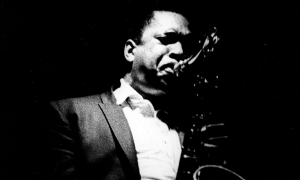
In 1959 Columbia's studio marched boldly into jazz history as producer of the bestselling jazz album on the time line. Kind of Blue (Columbia, 1959). The album's modal-music approach earned it a quadruple platinum ranking, and a permanent spot in history. This triumphant collaboration between Miles Davis, Bill Evans, Wynton Kelly, Paul Chambers, John Coltrane, Cannonball Adderley, and Jimmy Cobb, became a milestone for jazz modernism.
The 30th street studio served as a recording base for an ocean of music. Including the music of Louis Armstrong, Gene Krupa, Benny Goodman, Frank Sinatra, Teddy Wilson, and Leonard Bernstein. Columbia's studio swiftly raised the standard for sound quality, and spearheaded American music production.
Village Vanguard
No discussion on the subject of jazz recording would be complete without mentioning the Village Vanguard in New York City. Though the Vanguard is not exactly a recording studio, the club boasts more significant live recordings than any other. The Vanguard has been mightily present throughout every developmental phase of jazz, watching the tides continually change.The Vanguard has functioned as a live studio for almost 150 major artists. Sonny Rollins album A Night at the Village Vanguard (Blue Note, 1957). Bill Evans,' and John Coltrane's live Vanguard records, both recorded in 1961. The tradition continues into present day with recordings like Wynton Marsalis Live at the Village Vanguard (Sony, 1999).
Due to its sublime acoustics, there is something extraordinary about the music recorded in the Vanguard's small 7th Avenue South basement. Musicians and technicians alike praise the pie-slice shaped room as the ideal environment for sound purity.
Since its opening in 1935, the Vanguard has seen a slide show of American history roll past it's front door. Witnessing the great depression, the civil rights movement, and the bombing of the twin towers. The Vanguard has withstood every economic test with the support of a more than loyal following. To this day, the Vanguard is considered the ultimate recording destination for live jazz.
About Vic Damone

Tags
PREVIOUS / NEXT


Become a Sustaining Member

Since 1995, All About Jazz has championed jazz as an art form and supported the musicians who create it. Over three decades, it has grown into one of the world's leading jazz resources, serving hundreds of thousands of readers, musicians, presenters and industry professionals each month.
Help Build the Future of All About Jazz
Your support helps us continue building All About Jazz for the next generation—expanding our editorial coverage, preserving jazz history, developing new community features and creating better ways to discover the music and the people behind it.
Become a sustaining member for as little as $20 per year and you'll immediately enjoy an ad-free experience along with access to subscriber features and future articles for a full year.
Together, we're not simply sustaining All About Jazz—we're building its future. Thank you for being part of the journey.