Home » Jazz Articles » Interview » Sheryl Bailey: Homecoming
Sheryl Bailey: Homecoming

 Richard Bona, George Garzone, Jack Wilkins and Howard Alden, is a testament to the musicianship of this Pittsburgh native.
After recording four small group albums, the veteran picker chose to go in a different direction for her 2009 album A New Promise (MCG Jazz), by working with the Three Rivers Jazz Orchestra. The result is a hard-swinging, expertly arranged and entertaining recording that showcases the guitarist's versatility as she seamlessly steps out of the familiar confines of her working trio and into the realm of the large ensemble.
As has been the case with her previous albums, Bailey's maturity and heightened sense of melodicism ring through in her solos and melodic interpretations. Though she possesses lightning-fast chops, and the ability to use them at will, her playing is never over the top or cluttered with double-time licks. Instead, Bailey carefully chooses just the right moment to utilize her technique in order to raise the song to a new level of excitement, instead of running chops for the sake of running her chops.
With this high level of musicality, alongside her talent as a composer, bandleader and educator, there seems to be no end in sight for what Bailey can accomplish in her musical career.
All About Jazz: Over the years you've recorded with a number of different set ups—trios and quartets, for example—but for your record, A New Promise, you went with a big band lineup. What inspired you to record your first album with a large ensemble, as opposed to the smaller groups you normally work with?
Sheryl Bailey: Marty Ashby heard me in New York with my trio, he liked my playing and decided he wanted to do a project with me. He wanted to do something big but wasn't quite sure what that meant at the time. We were meeting together out there in Pittsburgh, he had brought me out to play at the jazz festival, and he came up with the idea of doing something with Mike Tomaro and the Three Rivers Jazz Orchestra. The project grew from that idea, of something that I haven't done before, something special and unique for the fans to enjoy.
AAJ: Since the guitar is often relegated to the background in a big band setting, serving a much different role than it does in a small group, did you have to change your soloing and comping approaches for this recording as compared to what you normally play with an organ trio or quartet?
SB: Mike was such a sensitive arranger in regards to that situation. He listened to a lot of my music and had a good understanding of how I play and his goal was to make it as effortless as possible—we did that recording in two days. It was so easy to just come in and do what I do because he had arranged the music in the way that he did. That was cool, in that he arranged the tunes specifically for the way that I play. I didn't really have to think about it, it just flowed naturally.
AAJ: Because of the size of the group big band albums are often recorded differently than a duo or trio record. How much of the album was recorded with you playing live with the band and how much had to be tracked because of the size of the ensemble and miking or room restrictions?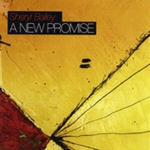 SB: We did the whole thing live; we did two takes of everything and that was it. Obviously, they're a working band so that made a big difference because they were so well prepared and really play well together. Actually, the title cut, which was one of my tunes, Mike wrote that arrangement the night before. So no one had played it before he brought it in that day to record. Basically, he talked us through it, we hit record and that was it. There was a lot of that spontaneous nature involved with this album and I think that creativity really comes across in the recording.
AAJ: How does that approach differ from your small-group recordings? Do you prefer to just hit record and lay down the tunes, or do you rehearse and perform those songs before bringing them into the studio?
SB: I really don't like to rehearse. We gig a lot so we've usually played the tunes a number of times before we lay them down. If we're going into the studio we might get together and make sure we're all cool with how the arrangements are laid out, intros and endings, that sort of thing. I think I really prefer to do live records anyway, because it's spontaneous and you get the energy from the audience. To me, that's what jazz is all about.
AAJ: Do you think that people can accurately capture that kind of energy on a studio recording? Even an album like Miles Davis' Kind of Blue (Columbia, 1959), which is an amazingly well done studio record, was probably a lot different energy wise than seeing that band perform live. What are your thoughts on this?
SB: I think it helps to keep things as loose and as fresh as possible. I think rehearsing something to death doesn't mean it's going to be a great performance. I've gotten into the habit of doing just one or two takes and keeping things moving in the studio. That way the music doesn't sound labored and has that fresh energy to it.
 AAJ: A New Promise, is a tribute album of sorts to the late, great guitarist Emily Remler. What does Emily mean to you as a guitarist and why did she inspire you to dedicate this album to her?
SB: She was such a strong melodic player, and such a strong swinging player. Obviously her early records had a big Wes Montgomery influence running through them, but her playing grew over time to become something different by the end of her life. She really came into her own as a player later on in her career.
You can hear a couple notes and know right away it's her—she really developed her own unique sound. I saw Joe Pass as a kid and that's what he was all about, developing one's own sound. I think that's what was great about her. She was always about the music feeling good, about swinging, grooving and being melodic with everything she played and nothing was sacrificed to get in the way of those musical ideals.
AAJ: Being one of the first truly successful female jazz guitarists she paved the way for people like yourself and others to enter the field without going through a lot of the same trials and tribulations that she experienced. Did that side of her, as a sort of standard bearer in the world of female jazz musicians, have an influence on you as well as her playing?
SB: It's interesting—I think at the time, I didn't put any importance on it but in doing this record I went back and checked out some old interviews with her, and it really gave me a good sense of the struggle that she went through as she was coming up. She was a pioneer and she opened a lot of doors so that I didn't have to go through all of that stuff with my career. I never really realized that and looked at that side of her career before this album.
I had a lesson with her when I was at Berklee; she spent a lot of time with me and was very encouraging. I think because of her experiences, of having to fight for things and be tough all the time to be recognized and accepted, she really conveyed to me that I shouldn't stop. No matter what anybody says, don't stop pursuing the guitar and what I love. That really meant a lot to me. At the time I might not have given it that much thought, but in retrospect I can see how much of an impact that side of her really had on me and my career as a jazz guitarist.
AAJ: Do you feel that society has moved on and gotten over a lot of the issues that Emily had to deal with as far as being a female jazz guitarist, or do you have to deal with those same situations even today?
SB: I think it's still an issue on a lot of levels. I mean a lot of times in touring bands guys just want to go out and hang with the guys. I've been really lucky with my work as a sideman because the people that have hired me just love my playing and want to make music with me. It doesn't matter if I was a man or a woman to them, all that counts is the music. To me, it's about not focusing on that side of things but focusing on what's positive in those situations. It's also about focusing on making my own way; about not waiting for the phone to ring but going out there and making things happen for myself.
AAJ: The album is a tribute to Remler but all of the tunes weren't written or performed by Remler, as is the case with a number of other similar projects. Why did you decide to include some of your own tunes on the album along with the other material? SB: I mostly perform my own music, I write a lot of my own music, and Marty wanted to present that side of me as an artist. I sent him a bunch of my material and he picked a set of tunes that resonated with him and that he felt would be good for the project. I certainly had a ton of material for him to choose from and I left it up to his discretion as to which tunes he included on the record. The standards were all tunes that I normally play with my trio, so he knew that I was comfortable and very familiar with those songs, so those were easy choices. It just kind of came together very organically, with Marty choosing tunes that reflected the different sides of my performing career.
AAJ: Since the record was made in Pittsburgh, with the Three Rivers Jazz Orchestra, and you're from Pittsburgh, did that make the project special to you, since it was a homecoming of sorts?
SB: Yeah, it was a very special event. My first jazz guitar teacher, John Maione, was there and he was like a father to me because I didn't really have a father growing up. Since my family doesn't really live there any more, they all moved to upstate New York, he was like my family there, beaming from the control room. I felt like he was proud of me and it was a very good feeling, without a doubt.
AAJ: Because Emily and others were very influential to you as you were learning to play the guitar, have you ever gotten to the point where you've had to stop listening or studying a certain player because you felt you were sounding too much like Wes, or Joe Pass, or whomever at a certain point in your development?
Sheryl Bailey, A New Promise (MCG Jazz, 2009) Photo Credit
Though, if you're going to record a Wes tune then there's a certain expectation of how that song should be played. It's daunting to try and live up to those expectations, but if I'm playing my own tune I'm the only one that has an expectation of what it should like. Doing that over the years has played a key role in developing my own sound, and allowed me to be confident in my own style of playing the guitar.
AAJ: It seems like the players that you've mentioned as being influential, guys like Wes and Joe Pass, even Pat Martino, who hasn't really come up in this conversation was a big influence for you, are all from that late '60s era crowd of players. Is this the type of jazz that really speaks to you as a player and lover of the genre and do you spend time checking out the more modern players as well as the classic artists?
SB: I would have to say I really love that '60s vibe, but I love the modern thing too. What am I going to pick to listen to when I'm hanging out? Probably a Horace Silver record or a Chick Corea, late '60s, recording, that's the music that really speaks to me on a very personal level.
AAJ: One of the things that really stands out in your playing on this album, and everything that you do, is your tone. What guitar or guitars did you use to record the album and do you tend to use the same guitar for studio work as you do on the bandstand?
SB: The guitar I used to record A New Promise was built for me by Ric McCurdy. It's sort of a scaled down ES-335 and I just love that guitar. I was given a gift from Jimmy Wyble, a newer version of the same model, which is currently my favorite guitar. The one I used on the album was the very first one that Rick made, and the one that Jimmy gave me was a newer version of it, and it's just amazing how much he has perfected his craft just between those two guitars. It's really amazing; he's such a talented builder and I'm glad to be playing his guitars. I also have a Parker Fly that I use for fusion or rock stuff, but I'm mostly playing Ric's guitars these days.
AAJ: I'm glad you mentioned Jimmy Wyble, who passed away recently and who is somewhat of a guitarist's guitarist, though not a lot of people outside of the guitar community are really familiar with his work and the impact he has had on so many players. Could you comment on what he meant to you as a player and person for those of us who didn't really get a chance to know him while he was alive? SB: I really only got to know Jimmy in the last few years. I went out to L.A. in 2007 and he came out to a few of my gigs. To be honest, I wasn't really familiar with his playing at the time, so it was just fate that really brought him into my life. As a person, I can't even begin to describe what an angelic and positive force he was in my life. At the time I met him, I was going through a rough time and really questioning what I was doing with my music and my career. When he gave me that guitar it was his way of saying, "Don't stop doing this."
Every day I play that guitar and I'm filled with so much love and appreciation for that gift that he gave me. Everyone who's met him would say the same thing, that he touched them in a very personal and deep way. If I could ever be a quarter as generous and compassionate as he was I could live a very happy life. Beyond his personality, as a musician, he was just so open to new ideas and concepts. For a man in his 80s to tell me to write my own scales to use in my music, he was just so open to new ideas, it really blew me away.
As a guitarist he had the most impeccable sound, it was wonderful to listen to. I could just go on and on about Jimmy, he was one of a kind.
Selected Discography
The Sheryl Bailey 3, Live @ the Fat Cat (PureMusic Records, 2006)
The Sheryl Bailey 3, Bull's Eye (PureMusic Records, 2004)
Sheryl Bailey, The Power of 3! (PureMusic Records, 2002)
Sheryl Bailey, Reunion of Souls (The Orchard, 2001)
Sheryl Bailey, Little Misunderstood (PureMusic Records, 1995)
All Photos: Courtesy of Sheryl Bailey
Comments

Tags
For the Love of Jazz
 All About Jazz has been a pillar of jazz since 1995, championing it as an art form and, more importantly, supporting the musicians who create it. Our enduring commitment has made "AAJ" one of the most culturally important websites of its kind, read by hundreds of thousands of fans, musicians and industry figures every month.
You Can Help
To expand our coverage even further and develop new means to foster jazz discovery and connectivity we need your help. You can become a sustaining member for a modest $20 and in return, we'll immediately hide those pesky ads plus provide access to future articles for a full year. This winning combination will vastly improve your AAJ experience and allow us to vigorously build on the pioneering work we first started in 1995. So enjoy an ad-free AAJ experience and help us remain a positive beacon for jazz by making a donation today.

Giveaway

Days remaining: 7