Home » Jazz Articles » Interview » Eddie Marshall: Search and Recall
Eddie Marshall: Search and Recall


The biography and resume of this versatile drummer helps one to understand the whole evolution of modern jazz. Unlike some other veteran jazzmen, Eddie Marshall has proved to be an open-minded person interested in old folk music from different country traditions. Capable of overcoming serious illness (he required coronary bypass surgery in 1984), Marshall shows effort, gratitude and joy for doing what he most likes. On top of that, Eddie Marshall is a charming, pleasant man who enjoys talking about music and his career, with a great sense of humor.
All About Jazz: First of all, how's the tour going?
Eddie Marshall: Well, actually I had only two jobs here. I came here primarily to visit my stepson and grandson. They live in Vendrell, near Barcelona. Usually when I come here, my wife and my son put me together with some guys and we do gigs. We had one gig in Terrasa, and that was very, very good. I had just met these gentlemen who I was playing with. We wanted to get a quartet together and they e-mailed some videos of them playing. I just liked the way they played and it was really great. If you're there tonight, you'll see.
AAJ: So you're playing with the same guys tonight?
EM: You know, I've been coming to Europe for years. I've been playing music for a long time. I think I started coming here during the early '60s, to different parts of Europe—mostly Italy, Germany a lot, England, Madrid—but I never stayed too much. And then, the musicianship of European musicians is not the thing where they say: "Oh, the American comes here and plays really good music." It's just like playing with people in the States, except that we don't speak the same language. We speak the same music language.
AAJ: In Holy Mischief you have composed most of the themes. It's is not very common to combine rhythmic and melodic instruments, but you have played both drums and recorder. How do you approach new compositions?
EM: Well, my first instrument was the piano because my dad was a pianist. I studied classical piano by the time I was ten till I was about 14, but I didn't like it. I wanted to play R&B—Rhythm & Blues—you know, the '50s. My hero was Little Richard, but I'd be practicing Beethoven and Bach... My dad was a pianist. That was not his total job, but he was a professional pianist. He played mostly dance music, he loved jazz and swing music and we always had rehearsals at our home. Like most kids, when the drummer got off the drums, I jumped on the drums until they told me to get off. In those years I learned how to play a bit. I knew how to keep the beat and how to play the brushes 'cause I was just watching them all the time. My dad and mum would take me and my brothers to see Count Basie or Duke Ellington in the cities. They had these big theatres where big bands played. The show would first start off with a movie and in the last part, by ten o'clock, the big band would play. It was beautiful. The theatre curtains would open up real slow and you'd see the big band with all the light and the music. Even before they played a note, you were spellbound. I really liked that.
AAJ: Let's go back to that time. In your website you recall the time you were listening to—among other things—R&B and jazz by people like Louis Jordan and Earl Bostic.
EM: [Surprised] Yeah, you like that? AAJ: I like it very much, although it's not very common.
EM: I know! Nobody really knows who Earl Bostic is, but for me and you! [Laughs.]
AAJ: They were both considered to be jazz and R&B, weren't they? How do you remember those days?
EM: Yeah yeah, and that's a style I played. What happened is that I didn't play drums professionally until I was 14. Daddy rehearsed on a Friday and the job was gonna be Saturday night, but the drummer had a telephone call and he had to leave. He was divorced and he didn't pay his alimony. So he left, and my dad was on the phone trying to call everybody, but it was a Friday night and the job was gonna be on Saturday, and everybody was working, so I said: "Dad, I can do this job! Trust me!" He really had to hire me; there was no other way. That's how I started playing drums. Daddy's band was really tuxedo [sings a little tune]. It was like a dance band. But my uncle Cookie had a band called Cookie and the Seven Sharps, and they played R&B. In those days, everything was segregated and there was a white part of town and a black one. I was 14; I think I was still in middle school. I started with that band and I played with them until I graduated —well, I didn't graduate. I quit high school and I moved to New York!
AAJ: And when you moved to New York, which drummers influenced you?
EM: I just loved Art Blakey and Max Roach.

AAJ: People always talk about them, but what did they have in their playing that made them so special?
EM: Well, first of all, when I was playing R&B, it was more like Latin music. You played the same beat over and over again, right? I really did love that R&B music, but then my uncle Roddy—I still have my uncle Roddy—got drafted into the army and he was a big jazzman. He loved jazz music. I didn't really like jazz music that much. I wasn't around it that much because my dad played sort of pop music of the day and I was in Cookie's band. So Roddy gets drafted and he leaves me his albums, and he had Charlie Parker With Strings, Max Roach and Clifford Brown and Miles Davis. When I heard that, I was gone! So there I am playing in an R&B band [plays rhythm with his hands] playing all those rhythms, and then I was suddenly listening to that bebop shit [sings a tune].
Then I got to high school, and there was a saxophonist called Casano. We got together and we got a quartet and started playing jazz music. The only pianist we could get was a guy named Jimmy I. Joe, who played the accordion. He was a real good accordion player, but he didn't know how to play those buttons. And then we had a bassist called David Soha, and he played in polka bands. He didn't know how to play 4/4, and so he'd play every note twice and made it 4/4 [laughs], but we managed to make some songs.
AAJ: So, you've gone through many different styles, like jazz and R&B. What are the differences between playing in groups of different music genres?
EM: Well, the thing is that with modern jazz, bebop or fusion style, you don't have to keep a constant beat with the foot. What you do with jazz music is that you have a conversation between your left hand and your right foot [demonstrates]. Instead of going: [keeps the beat and shows the differences], in jazz you're free and you're not just thinking in a constant beat. Which I still love; that's really good. You know, I also like hip-hop music—I like the rhythm. But that's the basic difference.
Funk and stuff like that is really interesting. I played with Dionne Warwick for two or three years, and it was mostly R&B, and it was really great music. R&B is more like church music—black church and blues. It's really wonderful music.
AAJ: You've also spoken several times about West Coast and East Coast jazz. Was there a real separation in music and between artists?
EM: Well, in the '50s, there was. The West Coast music was more like Cool Jazz, but I loved that. I grew up on the East Coast. I lived in New York till I moved to California, and I moved to New York from a town called Springfield, Massachusetts when I was 18. New York and Springfield may be like 150 miles apart, so I was always in New York when I was a kid. But I liked West Coast music because it was subtle. New York was on fire, so I really appreciated these guys playing cool. The amazing thing is that most of the musicians that I hung out with in New York, that were really good musicians, were all from someone else.
AAJ: So sometimes the same musicians recorded in New York and Los Angeles?
EM: Yeah, most of the times they would start off in Los Angeles, like Dexter Gordon, Billy Higgins and Charles Mingus. Then they would leave California—it was rough and racist actually—and they would move to New York and they wouldn't go back except for gigs. Then, nobody would leave New York to go anywhere! AAJ: During the '70s, you formed part of the San Francisco scene. You were playing in The Fourth Way, and that was more like fusion, wasn't it?
EM: Yeah, it was fusion. I tell you, when I moved to California I was playing with Dionne Warwick and I just decided to stay for a while. But I was in LA and really I did not like it, so I was gonna go back. The pianist and I started off playing together in New York. He got the job with Dionne, and he got me on it. Then when he quit, I quit also. Do you remember that song "Do you know the way the way to San Jose"? It was this corny song, and she had a hit record for that. I told her, "If I have to play this every night, I'm quitting!" But I didn't think it was going to be a hit. It was so silly, and she sang really good music.
Then I moved to San Francisco and we started this band, The Fourth Way, and it really took off. San Francisco in the '60s was the place to be! You wouldn't believe it, people were just so friendly! New York was a tough place, and these people were like, "Hey dude!" You walked down the streets, and they were just giving you joints and shit. So I said, "I ain't going anywhere!" Our music was really hitting it.
AAJ: Was it really atmospheric?
EM:Well, the atmosphere was good but it was more like rock 'n' roll and jazz together. I was really happy.
AAJ: By that time, jazz turned into what was called jazz-rock. Miles Davis recorded Bitches Brew (Columbia, 1969) and he got really criticized for that. Do you think that jazz can form part of popular music—like it was in the '30s, '40s and even '50s—or is it more likely that it will maintain a certain elitism? EM: No. You know, jazz is already international. The old-timers —people my age—are mostly playing bebop music. They never liked Miles. They hated Miles Davis, and that's like hating Picasso. Picasso was the same way. He changed, and he said, "I'm not gonna do this thing anymore. This is boring." Right now the world has changed, and you can hear music from all over the world. All you European people, you have history and you have your songs that are maybe three or four hundred years old. You know, folk songs. The world is like that. There's a strong West African and Middle-East influence in jazz—I'm talking about the jazz that young people play. So it will never go back to pop music. Most jazz players, especially bebop players, use the chords or the melody sometimes of songs that were really popular in the '40s or '50s, but before that they were songs. Now there's rap music! I like the beat, although I don't write music with just one chord and somebody singing nasty words, but I love the rhythm. I've got grandchildren and children that are totally into rap music.
AAJ: So if during the '30s and '40s, jazz was music for young people, has hip-hop taken that place?
EM: That's right. Although teenagers were never too much into jazz.
AAJ: Here in Europe, jazz has a certain elitist tradition.
EM: Well, in America not so much. A lot of clubs are failing because there's not an audience. There's audience for certain groups, though, like Roy Hargrove the trumpet player, and Branford Marsalis, saxophonist. That's the jazz of today. A lot of the young kids are playing really good jazz music, but they don't get recognized. Recording companies still want to push Cool Jazz. They want something that they can control, and so a lot of the clubs are not doing very well.
AAJ: After playing with so many musicians, you're now playing with Nir Naaman in what you've called Jazz Without Borders. You seem to be a very open-minded person, both in music and human terms. You really seem to appreciate different cultures and believe that they can enrich jazz tradition.
EM: Yeah! Well, it does. I enjoy playing old music and searching. I love people from other parts of the world—not just copy their music, but get the idea, talk about things and really being part of the music. I can't really be part of every language. I can barely speak English! But I can relate to their music, especially with what the younger people do. My wife and I were in Kosovo because we had a son who teaches English as a second language. That's the main reason why we're here now, to see him and his baby. By that time, he was in Kosovo and I did the same thing. I got a bunch of guys and played jazz music. I wanted to hear what they play, and their music is more like Weather Report. The pianist had gone to Berklee College of Music and he came back and formed a band, but their folk music has all these different times...six, seven, nine...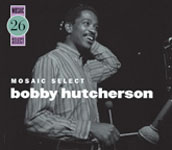 AAJ: That's also part of the gypsy jazz.
EM: Yeah. Exactly. It really makes your body move.
AAJ: You have combined your experience as a musician with teaching in several places including The Jazzschool in Berkeley, California. What's the best experience you get from teaching?
EM: The first thing is that I haven't thought about that in a while. I was always teaching a class and then doing a job, leaving and going to Europe or China. I couldn't really be there always, and I was a disappointment when I couldn't be there for an assignment or so. When I grew up, there were all kinds of clubs and jam sessions you could go to, and now that doesn't happen. There's hardly any small club for these kids to play, and so what I would do was that I taught a combo class. In the class, I try to make them come there with their own ideas. I would start off writing simple arrangements for quartets. I would write the music for myself without books, and they sort of like them. Then I will get them to write- -if a drummer can write music! I'd just like to have a nine-week course and see how they start and progress.
One time, my wife and I started teaching in a poor neighborhood, to children who couldn't have instruments because the older boys just stole them. I taught drums and keyboards, and Sue taught guitar and bass, and finally we had a garage band. These kids had never touched an instrument, and now they had electric instruments. They would go into the classroom, and even before they played they were: "Oh my god!" We didn't teach them how to read music, we just taught them how to play the instrument, and within a month they could play a blues. When we got them to play the first chord, E Major chord, they didn't want to go any further. With a chord, they would just start rapping!

AAJ: Finally, can you tell us something about any future projects, or would you like to add something more?
EM: Well, I'm doing this thing with Nir, and that's my private project. To make money, I work with top really good jazz players. So when I go home, I'll start playing with Bobby Hutcherson, vibe-player. We're going on tour starting next month, actually. In fact we're coming back here in June, to Barcelona and hopefully Europe. That's what I'm doing now. We've got a quartet and we have to learn the music. That's my project for the next two months.
Selected Discography
Bobby Hutcherson, Wise One (Kind of Blue, 2009)
Bobby Hutcherson, Mosaic Select 26 (Mosaic, 2007)
Jackie Ryan, Passion Flower (Openart, 2002)
Kenny Burrell, Stormy Monday Blues (Fantasy, 2001)
Eddie Marshall/Holy Mischief, Eddie Marshall and Holy Mischief (Independent Productions, 2000)
Eddie Marshall, Cookin' for You (Songosaurus, 1997)
Kronos Quartet, Monk Suite (Landmark, 1984)
Eddie Harris, A Tale of Two Cities (Sin-Drome, 1983)
Eddie Marshall, Dance of the Sun (Timeless, 1978)
The Fourth Way, The Sun and the Moon Have Come Together (Harvest, 1970)
Mike Nock, Almanac (Improvising Artists, 1967)
Photo Credits
Page 2: Josep Pedro
Page 4: Curtis Thomson, Courtesy of Eddie Marshall
< Previous
Outlaw Tractor
Next >
Five on One
Comments

Tags
For the Love of Jazz
 All About Jazz has been a pillar of jazz since 1995, championing it as an art form and, more importantly, supporting the musicians who create it. Our enduring commitment has made "AAJ" one of the most culturally important websites of its kind, read by hundreds of thousands of fans, musicians and industry figures every month.
You Can Help
To expand our coverage even further and develop new means to foster jazz discovery and connectivity we need your help. You can become a sustaining member for a modest $20 and in return, we'll immediately hide those pesky ads plus provide access to future articles for a full year. This winning combination will vastly improve your AAJ experience and allow us to vigorously build on the pioneering work we first started in 1995. So enjoy an ad-free AAJ experience and help us remain a positive beacon for jazz by making a donation today.

Giveaway

Days remaining: 6