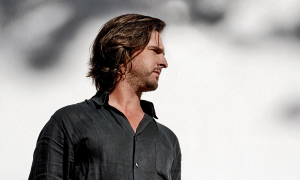
Home » Jazz Articles » Interview » Jeremy Pelt: A Man of Honor
Jeremy Pelt: A Man of Honor

Just like Nicholas Payton before him—who had to hear the endless comparisons jazz critics and fans kept throwing at him with Louis Armstrong (a New Orleans association of ideas, since Payton never phrased like Pops, nor did he ever need to) and even Clifford Brown—Jeremy Pelt has had his share of endless name throwing as well, as if his breathtaking creativity wasn't enough to satisfy the soul, and his music needed to be explained in terms of old glories and their innovative times; when the truth of the matter is that listening to him is almost like listening to jazz for the first time. Yes, the influence of others never goes unnoticed; but rather than listening to a new version of Freddie Hubbard or Lee Morgan , we are faced with perhaps the way any of them would have been able to sound, had they the ability to beat time and old age, and grow with the music that gave them their immortality. Jeremy Pelt is Jeremy Pelt, and he is here today. As simple as that.
The idea of a lasting quintet lineup is almost like a thing of the past today, and yet Pelt can't wait to demonstrate that jazz can still rely on chemistry and mutual understanding to create a sound, unique in its form and recognizable to the ear—not to mention what that can do to the spirit that listens, amazed and speechless. Tenor saxophonist JD Allen, bassist Dwayne Burno, pianist Danny Grissett and drummer Gerald Cleaver are Pelt's Men of Honor (HighNote, 2010)—possibly the best excuse we may find to embrace the way jazz sounds today, without ever denying the fascination we will always feel for the way it sounded yesterday.
Allen's "Brooklyn Bound," Cleaver's "From a Life of the Same Name," Grissett's "Without You" and Burno's "Backroad" complement Pelt's own compositions for this album to an extent that allows the album to be enjoyable without a willing interruption, with an energy that is in constant rotation. It's a classic feel, a beautiful experiment of sounds and feelings ("Milo Hayward") that co-exist and travels from point A to point B without messing up the vibe. Pelt's phrasing is clean and direct, and reaches the height of greatness more often than not, blessed as he is with the certainty of doing what he is supposed to be doing in life. Grissett's piano keys are alive ("Illusion"); Allen's tenor sax sounds are beyond gravity, as if his notes were meant to survive away from the instrument ("Backroad"); Cleaver's drums are a perfectly balanced, elegant and sophisticated addition to the band ("From A Life Of The Same Name"); and Burno's rhythmically delicate bass playing approach is rather breathtaking ("Without You").
Five men of honor and a common ground made out of imagination and music. The rest is called jazz.
All About Jazz: Talk about the beginnings.
Jeremy Pelt: Well, I didn't start with the idea that I was going to be a classical or a jazz musician, or any other kind of player. I was just playing instruments that you were required to play. But then I started to really get into it, and I suppose it started off with classical music. As far as I can remember, and I have to go back about 27 years, I've always wanted to do it; I've always wanted to play music. And I was very interested in getting better at it, but not in a competitive way. I was never a competitor. I just did what I did, and usually I was among the best in the class. But as far as the instrument is concerned, it wasn't until I got into high school, because they had a jazz band. I remember quite vividly wanting to do jazz but it was not a devastating kind of happening. It's not like, "Oh man, jazz is coming now, classical is gone!" I still love listening to it.
It was just that I really felt like putting my all into jazz at that point. So what I mean to say is that there was nothing devastating that happened, to where it was such a radical change. Plus I had at that point decided to really make a full commitment: I wanted to play trumpet. I was really into classical music, but jazz, when it came around, it was something that it appealed more, something that took all the excitement right away.
AAJ: Is there a change in musicians today, as opposed to 60 or 70 years ago?
JP: Well, I think they studied the music even more back then, from an analytical point of view. If you look at players like Charlie Parker, they were studying a lot of classical composers. If you listen to Pops, one of his earlier solos, "Potato Head Blues," he was quoting "Nutcracker." It's not such a strange thing.
From left: Dwayne Burno, Danny Grissett, Jeremy Pelt Gerald Cleaver and J.D. Allen
AAJ: But they were not scholars going to Berklee College of Music or Julliard...
JP: No, in that capacity, no they were not.
AAJ: Why trumpet?
JP: Trumpet looked the easiest [laughs]. And really, almost through high school, I had a nearly perfect attendance record in school, and I was absent the day that the students got to choose their instruments, so by the time I came back the next day, everybody got their instrument, and I basically got a choice of either the clarinet or the trumpet. And that's what I mean by the trumpet looks the easiest because I was looking at the trumpet and it had three keys on it, and I looked at the clarinet and had so many keys on it, and I was like "I ain't gonna play that, let me get the trumpet... ," and the rest is history in the making.
AAJ: Did your family have an influence in you as a musician?
JP: Not directly, I come from an actor's family. But my uncle played the trumpet in the military band and he was really into jazz. But I didn't grow up with that side of the family, so I didn't find this out until like maybe four years ago, so it wasn't really an influence.
AAJ: So why Berklee and not Julliard?
JP: Well, because at that particular point in time Julliard didn't have a jazz program. There were only a couple of schools that did that I was interested in going to, and I should clarify that I didn't go to Berklee for jazz; I went for film scoring. I still have reservations just about jazz education in general and the collision with the environment, but that wasn't what I went to Berklee for.
AAJ: So why not for jazz?
JP: Ah... because I was just really interested in film scoring, real simple. I knew that I wanted to play, first and foremost, but I wasn't sold on the concept, "Oh, I can learn to play in this school and I can be a master in four years... " It takes a lot of time, so that wasn't convincing enough for me but what was convincing enough was being able to go some place where it had a curriculum that I was very interested in.
AAJ:Why aren't you doing film scoring?
JP: Well, it's not like I said, "You know what? I am much more interested in being a musician. I don't want to do film scoring anymore," that's not the process. The process in being a film composer is even more difficult than trying to make it on the scene as a jazz musician. But it is not like you just wake up one day and say you don't want to be something. You have to really be in an environment, number one, and immerse in the environment for that to happen. For the record, I haven't given up on hope on doing some films—that's still in there—but my main focus was on being a jazz musician when I moved to New York. And I knew I wasn't going to move to L.A., I never want to live there again! I'm a person that feeds off of the energy of the music and being surrounded by it, and the vitality of the city and everything, and L.A. doesn't have any of that.
Sometimes you have some energy out there and the weather is good, but I've never been too concerned about weather either way. So as far as my profession and what I do and accessibility, New York was the place and still is even though clubs are closing down and it would seem like such a sad state. There weren't even as many clubs as there were when I first moved in, but still, by large, it is the place you want to go. If I was going to do film scoring and I was just interested in doing that 100 percent, then I would be living in L.A.
Film scoring, like with any kind of creative art where you feel like you want to be in a certain class of the art itself, definitely is going to take a lot of time and a lot of patience and a lot of development. Of course, there are occasions like in jazz where somebody might get signed to a big label, and they get all the money and all the label support, and they're stars within a year or two, you know what I mean? But it may not be as plentiful to the next person. That's just the way it is. Perseverance is important, more than anything. You get into film scoring because you love it but you have to find somebody that is able to work on several scores a year.
AAJ: What has changed since "The Mingus Big Band," as a musician and as a man?
JP: Why the Mingus Big Band in particular?
AAJ: Because when it comes to your career, the MBB always seems to come up.
JP: I think this band was one wild involvement and I gained a lot of experience, traveling and playing that music. The thing about the Mingus band, which was so great, was that you had a lot of different cats in the band that were obviously more advanced in years and also more connected in the scene, just by the fact that had been there longer. So once they heard me, a lot of cats were able to link me to other gigs. So the thing about it was that the Mingus band was like a link, kind of responsible in a six degree separation sort of way, of me being in Louis Hayes' band, so it is an interesting concept. I knew I was supposed to be doing that. I have never been in a situation where I was nervous, or scared because I was playing with such and such. I always knew that if I was there I was supposed to be there.
I remember the first gig I got when I moved to New York. I was playing with the The Skatalites, and I never even heard of it until I got called for the gig ... and that was nerve wracking because you're playing with the band that started that kind of music, number one, and then they have a dedicated fan base that gets younger, so it's not even like you have a bunch of old people that'll forgive you if you miss the part because young people, they get really angry if you're messing up the groove because you're screwing up the music ... So that was nerve-wracking for like two weeks, because I was trying to internalize the music but as far as jazz is concerned, every gig that I was on it was cool to be there.
AAJ: Freddie Hubbard.
JP: It goes without saying... I mean, he influenced my playing and some of my writing, too. I met Freddie for the first time in 1998 and that was right around two or three months after I moved to New York, and he was in town, and I remember talking to him. He was really cool, really down to earth... I had heard that he was like, "What you playin'? You playin' trumpet? Oh, let me hear you. Oh, that's so sexy!," like that ... so, I was on my p's and q's about meeting him but I found that he was really down to earth. I didn't get tight with him to the point where we were able to correspond with each other all the time until much later, only because at that point he hadn't really heard me play because I hadn't done any records.
So after the record I did in 2000, called "Class of 2000," that came out in 2001, that's when people were starting to say to Freddie, "Check this cat out." So from there I started to have a good foundation for him to actually have anything to say to me since he had heard me. And every time he came in town I would see him. Now that I think about it, the first time I saw him was in 1996 in Boston. I was in college but that was forgettable because I just shook his hand and spoke very little [laughs]. "Oh man, it's so great to meet you," and I was gone. So moving on, I became good friends with Freddie because I just called him all the time and Freddie loved to talk, you know?
Well, there were times when he didn't feel like talking but there were times when we were on the phone and he talked forever. I was one of those people that if I wanted to know anything, I would just rather be around that person and just listen to whatever they wanted to talk about. And that's how that was with Freddie. I would just call him and say "hey, what's going on?" and I might introduce a topic, "Hey man, I was just checking you out on that record with Art Blakey," and he would just go on and on, or something like that. It was very nurturing in that respect. There were times when he would just come to New York and I would go and visit and see him play. A couple of times he called me after playing because at that time his chops where not in the best of shape. You know, there were times through it all when he was able to play two or three courses of a solo that would be so smoking hot that you would think "damn, he's coming back," but most of the time it wasn't like that; sometimes he could rip off something...
But he would call me and would talk about it and I could tell that he dug me, and he's mentioned it in interviews, too. I remember one time that he called me and said that really dug my writing; he said it was unique. I was completely blown away because he didn't have to tell me anything. And he was just that type of person; that was Freddie for you.
AAJ: Who do you look up to as far as trumpet playing?
JP: It's undeniable; I can't sit here and, after telling you this whole story about Freddie, then say that he wasn't an influence. Especially after listening to some of the early records that I have done, on other people's and on mine, and clearly hear the influence there. It's there. I think less now than five or six years ago, but it is still there. It will always be there because he has been one of my most important influences. Same with Miles Davis, same with Lee Morgan, Kenny Dorham, Fats Navarro; I'm not going to deny it.
AAJ: So how do you feel about the comparisons that I've heard, and I'm sure you have to, that some people have compared your sound to Clifford Brown's, or Lee Morgan's, Hubbard's ... ?
JP: Well, a lot of times critics are just fishing for things to say, you know what I mean? I sound like Clifford Brown? I love Clifford, let that be in print, I got all his bootlegs and he is the most inspiring of them all, but I don't sound like Clifford at all. So it always tickles me when somebody says, "Oh, man, it sounds like Clifford Brown." Oh, you're just looking for something to say. And same with Lee Morgan; as much as I love Lee Morgan, I don't sound like him. I just feel like ... it always weirds me out that people are always making comments like that. When I read other people's reviews, they don't compare them with Miles or Freddie, or anything like that.
And then you get to my reviews and it is always consistently going to be like "yes, he's got the tone of Freddie Hubbard; and the vibe of this record feels like that record of the Jazz Messengers, J.D. Allen sounds like Wayne Shorter, and this and this... ," and it goes on and on with these dumb ass comparisons instead of just talking about the music. So it's like, when does it end? And I am not going to sit here and say that this music sounds exactly likes Miles' 'cause it doesn't! Is there an influence? Yes. Does everybody have influences? Yes, even trumpeters that are younger than me. Sean Jones, for example, you could say "okay, I can hear some Wynton Marsalis, some Woody Shaw ... " and it's not a bad thing but they don't get it as much. And it's hilarious because that can't be denied and it's not a bad thing. But I feel like the critics, especially the ones that think they know enough to be able to dictate what's going to be new, and what's not. So what they do is put you in a place and say "Well, this sounds like that," which is not a bad thing, it's great, but it's almost like saying "I'm not prejudice, my best friend is black" [laughs].
Just give it a rest. If you're going to critique something, not everything has to be on that kind of scale. Now it would be a different thing if it was "Jeremy Pelt plays the music of Miles Davis" or "plays the music of Freddie Hubbard," playing their songs, then I could see you having a base for comparisons. But if I am sitting here playing music by Jeremy Pelt, you just wasted a whole column talking about how this music sounds like Miles and how Gerald Cleaver sounds like Tony, and stuff like that, because you are just fishing for something to say, like the band sounded like the Miles Davis Quintet. It's stupid!
AAJ: Maybe they are afraid of you.
JP: Well, I don't know about that. It's an interesting concept but I think everybody's got a stock. I'm not one of those people that walks around trying to figure out whose original, I'm just trying to play music. That's for people that don't have anything better to do. And the sad thing is that there are musicians that get caught up, some young cats, and even some older cats that should know better; they get caught up in a game that they shouldn't be in. So then they start going around thinking that they're original. Are you kidding me? And they start coming up with these silly ass theories because you know, people are starting to not listen and starting to act like they are smart. And they have acquired all this knowledge and come to these conclusions, all at the record age of 30, you know?
The thing is that if anybody wants to listen to what I do and have an opinion, there are close to a hundred records out there, and they are all completely different records. Like when you heard me with Jowee Omicil, you actually had the courage to dig deeper because that is not all that I do.
AAJ: And then there are things like "Scorpio"—that's the fear factor, you do different things. Electric versus acoustic?
JP: My vision is to put different projects out there, why not? Dave Douglas got a bunch of bands. I feel like I just want to do stuff that is a representation of what I deal with when I am not playing what everybody is expecting me to play. In other words, if I am in New York and I am playing an experimental gig with some electric stuff, people might think that I just burst out of nowhere with that, when the truth is that we've been doing that stuff since 2002. That's why I named that record "Shock Value" (Max Jazz Records, 2007). So I mean, same thing with Nicholas Payton. A lot of people, especially writers, talked a lot when he came out with "Sonic Trance" (Warner Bros/Wea, 2003) and started to play with his electric band but he had been doing that for a while in New Orleans. So I guess I just mean to say that there is a lot of different things that we as musicians do, that might be different from the perception of what's out there, which is what writers focus on. When I did the electric band, it was a whole different pattern all together that I decided to do.
AAJ: So if you had to choose, would you go acoustic or would you go electric?
JP: I guess I'd choose... It's a hard question... But yeah, I guess I would choose acoustic just because that's the music that drew me in first, and that's what I always come back to and it's a good feeling to come back to it.
AAJ: What makes you feel more like you?
JP: Both of them, you know why? 'Cause I'm playing the same shit [laughs]. I'm playing the same whenever I play but there'll be some songs that obviously if I play them with the electric band you are going to hear some different textures, as far as the band is concerned but I'm still playing the same solos. It's all me, even if it's going through a processor.
AAJ: What makes Jeremy Pelt different?
JP: What makes Jeremy Pelt different? Aahhh... different from anybody else? Well, I'm just me. I'm definitely not of the competitive variety. That could be a "two-fault question" because you could say what makes Jeremy Pelt different from the whole jazz scene, or from my immediate generation of players around me. I feel like in the latter, the fact that I'm a bit more studied, if I may say, not so much as in transcribing wise, but in terms of music. I am more musically aware. I have had more music opportunities that a lot of young cats probably won't have and maybe because a lot of young cats don't actually seek them, you know what I mean? And even if they did it, sometimes it could be too late, like playing with some historical cats. And that's not to say that I'm pointing fingers, "ha-ha, you didn't do it," I moved to the scene 10 years too late to play with Art Blakey! Somebody else did get a chance to play with Blakey, I didn't. They were here; I wasn't. The same with me 10 years later. And that experience makes you stronger and more aware as a musician.
AAJ: So do you wish you would have been in this world earlier sometimes?
JP: Well, I don't make it a point to sit and beat myself over the head over it, I don't wish that was born in 1920-something, but every musician my age would say, or should say, that they wish they could have been around to see their favorites in their prime, of course. We are at a good place creatively right now; there are a lot of things happening. It is an exciting time to be in the music, creatively. Definitely not exciting from the business aspect, but I feel like it is definitely a great time for cats to be here on the scene.
Today also we have CD burners and Internet, and you are not going to make that much money on any kind of music. More people buy pop or hip hop than jazz but all the record labels are losing money. We don't even have as many record stores. Now we're starting to come to a world where the new generation of kids that are coming out right now, all they know is the computer. So now it is easier to get the music without purchasing it; record stores and CDs are almost becoming obsolete. Now we have royalties for downloads and for the younger people, that's all they know. For me, the first time I heard Miles Davis, I went to the store and I got a tape, because CDs just got out and were expensive and I didn't have a CD player! But here's the thing: I don't really even see it as sad thing. I wish I could but I don't.
As long as the music is out there, no matter what the media is like, I'm cool. I have a lot of CDs and now you are telling me that I can put every CD I have on a hard drive that has over 500 GB? I like that. I got a son and he's going to grow up and he'll see some CDs laying around, and he won't know what that is. And I can sit there and explain to him 'til I'm blue in the face that back in my day we used to have tapes—but now we have to pretty much go to the Smithsonian to see what a tape looked like. I think history is an important thing and now you can see what the advancement has been, so I can't be sad about the CDs being gone.
AAJ: Men of Honor—talk about the band.
JP: These are guys that I wanted to work with. J.D. Allen and I met back in 1996 when he was with Betty Carter, and I always liked his playing. I got a chance to record in his CD back in 2001, a long time ago now and I liked his compositions. And I learned something from him on one of those rare opportunities, where you learn something from somebody on your age range. I was very happy about that; just the way that he plays, what he stands for, sometimes his solos are brief but always well thought out. They are never flashy at all and that's one of the things that I took of that, while doing his record. So when I did that I always kept him in the back of mind—"I definitely want to play with this cat again." And we had other opportunities to play—"I want to call this cat for a couple gigs," but there was always something that came up and he couldn't make it.
So right about the time that I started to put a band together, Gerald Cleaver, the drummer, called me, and Gerald is somebody that has been on the international scene for a long time but he just moved to New York, like in 2002, so I say that to say that I hadn't really heard him play, although I heard the name. But he reached out to me and I'd never even met him. And he sent me an email telling me that he really liked my playing and that he wanted to see if I could come and do one of his gigs, so I did that. Right away I was stoked by how insight his music was. I really dug where he was coming from, because as much as his shit is insight, it also had a lot of different properties to his music that wasn't just straight-ahead but you know, the spirit of what was coming out was really in the pocket. Then he called me to do his record, called Detroit (Fresh Sound New Talent, 2008), a couple of years ago. There was one time that we were recording one of his songs, I think it's called "Found," and at the end of the song it was just this system of chords that just kept repeating, and it was a sextet line, so it was me, J.D. and this cat named Andrew Bishop, who played soprano, tenor and then bass clarinet.
So Andrew and I were playing these background parts, and it was time for J.D. to just go ahead and wail, and boy, when that guy started to play it was like the sky was open! I was like "man, this mother fucker is bad! This ain't funny, this ain't even cute!" So I heard him and I said, well... you know I always wanted for J.D. to be in my band, so I gave J.D. a call, and I called Gerald, and he was actually stoked that I called him, because really to tell you the truth, and I hope he doesn't get offended if he reads this, and I say this because he is from Detroit, and Detroit is a very musical town, and he's also quite older than me, about 13 years older, he is the oldest person in the band, and I am sure he played a lot of straight-ahead with the cats in Detroit but I know what's perceived of him on an international setting. So I think this is pretty much the first band that kinda presented him in a straight-ahead manner that was visible. So that's why I chose J.D. and Gerald.
Now, Dwayne Burno is somebody that is always around, he is somebody that you call a "cat in the trenches," that's what some call me, too. You're a soldier in music. He's a true soldier of the music in the scene since 1991 or something like that. He's got a lot of knowledge and his playing just gets richer as years go by, so he is very valuable as a band member and as an anchor. So it was really important for me to want to get him in the band and I'm glad he agreed to do it.
Then Danny Grisset is also new to the city—he moved to New York probably in 2003 and I got a chance to get him on a gig. I have watched him grow in his playing. His playing hasn't changed, it has been tweaked. It's like my playing, I still basically play the same type of way but my playing has been tweaked by experience, and it's the same way with Danny. I've watched it and his playing kinda got that tweak.
And so, the big thing about bands is that everybody comes equipped with a generous amount of experience, it's not like I'm holding anybody's hand. It's not like I have to say much, which makes a difference because then it makes it easier for people to play well with each other and listen. That is why we don't even really rehearse that much because we know the music that we all write, and this is going to sound very new age or whatever, but it really does kind of chill after a certain amount of time. Some people love to rehearse, I can't stand rehearsing. You do it because you don't want to mess up somebody's music, so you get somebody that respects to rehearse. But if it's a band setting, man, I'm not going to get in the rehearsal studio for five hours going over this shit! That's what a band is. You may ask me how long it took to do this record: we got in the studio by twelve, and we were done by five. That's a band.
November (MAXJAZZ, 2008) was the first time that we got together, and we did that in two days. But I'm old school in the way that basically every record date that I get, it is all basically done in one day. But since you get signed to labels and sometimes labels have more money to spread out things, we can do things in two days. Sometimes it does come in handy, like when I did the strings record—you definitely needed two days set on that one but everything else, oh, I could have done that in one day but it was just a luxury. But I'm very committed, I like doing one day record dates. And I like to record all in the same moment. The thing is that I tell cats how we record and they are all stoked because we don't record in isolated rooms, we record all in one room, just like we're playing a gig. So therefore if there is a mistake that somebody made, it's not like we can go back and try to fix it with Pro Tools and slice this and slice that and insert and all that..No, it's just what it is. So everything you hear is very honest. There was only one edit, on "Milo Hayward," where I messed up the very last note. So we just took it from another take and that was it. We were able to get through these things because we work it. That's why if you read the liner notes, I talk about that and I say it anytime.
A lot of people think, "So what?," and they are right because if you think about the old mentality, so what? You are a band, you are supposed to be that, you are supposed to sound this good, you are supposed to work together. But nowadays there is not much opportunity for that to happen. People get so consumed in different projects that they want to do. Every single record is a different project with different everything, and some of it works, some of it doesn't. But if you want to add something that's going to make it, and I will say this, we've talked about this maybe 30 minutes ago, when I was telling you that I'm not one of those people that is trying to change the music or trying to be new or be hip or anything like that, but I say this: I do want, if I had one wish, I want for this band to go down in history as a formidable aggregation and to have people remember it fondly. Just like I hear stories, "Oh, man, I used to go see Miles Davis' group... " You don't see that anymore.
In the '90s, I could say that about Nicholas [Payton] and his band, for example. That's what I want—I want to be able to have a band, and this one has been together for three years already, I don't want to ever be asked the question "so, who's in your band?" And that is the norm now and it pisses me off every time. I hate it that it's the norm because it's so spread out that people are just so used to musicians having a different band all the time. Well, I don't want that. It's going to be the same band: J.D. Allen, Danny Grissett, Gerald Cleaver, Dwayne Burno. And of course, there's times when somebody can't make the gig, but the band's still the band. You can't create a sound if you change all the time.
< Previous
How High The Moon: Hits & Rarities Fr...
Next >
Emma's Groove
Comments

Tags
Jeremy Pelt
Interview
Esther Berlanga-Ryan
United States
Nicholas Payton
Louis Armstrong
Clifford Brown
Freddie Hubbard
lee morgan
J.D. Allen
Dwayne Burno
Danny Grissett
Gerald Cleaver
Charlie Parker
Mingus Big Band
Louis Hayes
Art Blakey
Miles Davis
Kenny Dorham
Fats Navarro
Wayne Shorter
Sean Jones
Wynton
Woody Shaw
Jowee Omicil
Betty Carter
Myron Walden
John Mayer
Dizzy
Concerts
Jun
28
Fri

Jun
28
Fri
Jun
29
Sat
Jun
29
Sat
For the Love of Jazz
 All About Jazz has been a pillar of jazz since 1995, championing it as an art form and, more importantly, supporting the musicians who create it. Our enduring commitment has made "AAJ" one of the most culturally important websites of its kind, read by hundreds of thousands of fans, musicians and industry figures every month.
You Can Help
To expand our coverage even further and develop new means to foster jazz discovery and connectivity we need your help. You can become a sustaining member for a modest $20 and in return, we'll immediately hide those pesky ads plus provide access to future articles for a full year. This winning combination will vastly improve your AAJ experience and allow us to vigorously build on the pioneering work we first started in 1995. So enjoy an ad-free AAJ experience and help us remain a positive beacon for jazz by making a donation today.

Giveaway

Eligible winners: 15
Days remaining: 5
Days remaining: 5