Home » Jazz Articles » Book Review » In Search of the Blues
In Search of the Blues

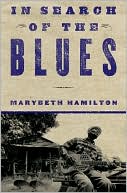 In Search of the Blues
 Marybeth Hamilton
Hardcover; 320 pages
ISBN: 0465028586
Basic Books
2010
Blues scholarship and archive documentation has undergone an important and much needed evolution since the 1990s. Hints of this renewed but different emphasis appeared in Stephen Calt's I'd Rather Be the Devil: Skip James and the Blues (Chicago Review Press, 1994), where the focus began turning from the artists themselves to the people seeking out the artists and spearheading the scholarship that lead to the blues revival of the early 1960s. It is a case where the quest for the subject becomes part of the subject.
Most recently, this new scholarship has begun fully emerging with Elijah Wald's Escaping The Delta: Robert Johnson and the Invention of the Blues (Amistad, 2004) and further amplified in Ted Gioia's Delta Blues (Norton, 2008). Marybeth Hamilton's In Search of the Blues shines a brighter, if imperfect light, on the study area.
Hamilton devotes the majority of her attention to the earliest writing about the indigenous music of the Mississippi Delta, beginning with the much covered story of W.C. Handy meeting the blues at the Tutwiler train station in 1903, as recounted in Handy's autobiography, Father of the Blues (Da Capo Press, 1985): "A lean, loose- jointed Negro had commenced plunking a guitar beside me as I slept...'Goin' where the Southern Cross the Dog.'"
Hamilton story tells of one Howard Odum, who, when studying at The University of Mississippi, was perhaps the first researcher to conduct field recordings in the Delta area. She spends a good deal of time on the interesting, if forgettable, Dorothy Scarborough and her quaint research into the African- American folk song. A large part of the book is dedicated to telling the story of John and Alan Lomax and the work they did recording for the Library of Congress in the 1930s and 1940s and the discovery and ultimate exploitation of Huddie "Lead Belly" Ledbetter after his release from Angola Prison in Louisiana.
After a short discussion of the early, hot jazz record collecting trio of Frederic Ramsey, Charles Edward Smith and William Russell and their love affair with pianist and bandleader Jelly Roll Morton, Hamilton finally gets down to business introducing her Robert Johnson of record collectors, one James McKune. Like the majority of Johnson's, the facts of McKune's life were at best sketchy. He was an impoverished record collector who lived for about 25 years in the Williamsburg YMCA on Marcy Avenue in New York City.
McKune was all but unknown except to a group of like-minded record collectors eventually dubbed "the Blues Mafia," who went on to set up record labels, assemble anthologies, author liner notes and blues histories that would ultimately define the blues as we understand it today. This group (and others after them) became instrumental in the rediscovery of many of these artists and the resultant blues revival of the early 1960s. It was among this important group of amateur researchers that McKune became a combination prophet, expert and madman of blues anthropology.
All that seems to be known of the early McKune is that he had a passing interest in music that eventually evolved into record collecting, specifically "race" records cut in the 1920s and 1930s. He possibly crossed paths with John Lomax's research and Alan Lomax's "List of American Folk Songs on Commercial Records." From this McKune was introduced to Robert Johnson, whose music moved McKune to seek out Black on Black Vocalion 78s with San Antonio master numbers (the same studio recording Johnson in 1936).
McKune haunted used record stores, flea markets and the Salvation Army looking for old blues recordings. He came upon a tattered copy of Paramount 13110, "Some of These Days I'll be Gone," recorded by Charlie Patton in 1929. Unable to listen to the disc in the record store, as was his customary practice, McKune purchased the platter and took it back to his room at the YMCA and listened to it. In that scratchy den of history, spiraling conically from his record player, McKune heard what he thought he had been looking for: the undiluted and unadulterated source of African American music—the original American Negro voice. And in Hamilton's estimation, "it was there at the Williamsburg YMCA, in a single room sometime in the mid- 1940s, that the Delta blues is born."
That is certainly provocative considering all that has been written about blues music between Samuel Charter's The Country Blues (Da Capo Press, 1960) and Hamilton's current offering.
McKune would go on to become the Blues Mafia's Svengali figure, known not for having the largest record collection—McKune's collection numbered about 300, all his room and the Y could accommodate—but the best, most thoughtfully assembled collection. It was McKune's taste that made him unique and he was respected for that. The majority of this biographical information was culled from interviews with members of the Blues Mafia years after McKune's death with precious little published material left by McKune. All this phantom left in print were letters with the Blues Mafia and contributions to record collecting magazines like The Record Changer and the British VJM Palaver.
This situation further endorses the vision of McKune as Hamilton's record collecting Robert Johnson, both phantom and flesh. Like those 29 sides recorded by Johnson in 1936-37, all that exists for McKune are a few cryptic words in dusty, defunct periodicals devoted to musical minutia and the slightly (and sometimes not so slightly) romanticized recallings of acquaintances. McKune's death is one of the only things known of him and it, like his final years, was sordid, mirroring Johnson's own demise in 1938.
Sometime after 1965, McKune moved out from the YMCA and became essentially homeless, often seen walking the streets of Lower Manhattan, "sockless...and seemingly brain damaged from alcohol." He bounced from hostel to hotel until September 1971, when his naked body was found bound and gagged in a Lower East Side flop-house, the victim of an apparent sexual liaison gone horribly wrong. Some stories simply could never be written as fiction.
It is after her discussion of McKune that Hamilton begins her most penetrating analyses of blues scholarship and, indeed, the anthropology of racial thought. She deftly integrates the early voices of blues scholarship, tying them in the observation that:
"Out of that journey of the imagination was created what we know as the Delta blues, the music of archaic and uncompromised voices captured on commercial recordings and yet—magically, paradoxically—pristinely untouched by the modern world."
Students of quantum mechanics know that the mere observation of a system essentially changes the system. In this case, it is impossible to record music without changing it, thus the germinal essence can never be captured regardless of what McKune thought he heard on that old Charlie Patton record in the mid 1940s.
Hamilton explains that as late as 1993, in Alan Lomax's crowning achievement, The Land Where The Blues Began (Pantheon), Lomax abandoned any focus on the academic, instead promoting the romantic ideal of the Negro bluesman, the rootless drifter, the rural Ulysses in search of self. She summons the research of Barbara Ehrenreich's male "flight from commitment" as an explanation for the phenomena, already magnified by years of romantic consideration. She even calls upon Norman Mailer's notorious "White Negro" as a social justification for the bluesman's ostensible search of the seminal life source, only then to shoot these and the revivalists following the Blues Mafia down with:
"Revivalist channeled that search for life sources into the blues and in the process remade the tradition. At their most positive, they enriched the understanding and broadened white horizons. At their worst, they fed on a faintly colonialist romance with black suffering [after William Nye's "Imperialist Nostalgia"], an eroticization of African American Despair."
Hamilton's book would have been more informative and valuable had it begun with McKune and went on to capture the influences of Nick Perls, John Fahey, Stephen Calt, Gayle Dean Wardlow, Joe Brussard, Steve Lavere, Mack McCormick, Jim and Amy O'Neal, Phil Spiro, Alan Wilson, Dick Waterman and John Hammond, Junior and Senior, in the development of our image of the blues. This is the book that remains to be written, hopefully by the likes of a Peter Guralnick, Elijah Wald or Ted Gioia.
< Previous
Brazil Confidential
Next >
Ways
Comments

Tags
robert johnson
Book Reviews
C. Michael Bailey
United States
W.C. Handy
Alan Lomax
Leadbelly
William Russell
Jelly Roll Morton
Robert Johnson
For the Love of Jazz
 All About Jazz has been a pillar of jazz since 1995, championing it as an art form and, more importantly, supporting the musicians who create it. Our enduring commitment has made "AAJ" one of the most culturally important websites of its kind, read by hundreds of thousands of fans, musicians and industry figures every month.
You Can Help
To expand our coverage even further and develop new means to foster jazz discovery and connectivity we need your help. You can become a sustaining member for a modest $20 and in return, we'll immediately hide those pesky ads plus provide access to future articles for a full year. This winning combination will vastly improve your AAJ experience and allow us to vigorously build on the pioneering work we first started in 1995. So enjoy an ad-free AAJ experience and help us remain a positive beacon for jazz by making a donation today.

Giveaway

Eligible winners: 15
Days remaining: 5
Days remaining: 5