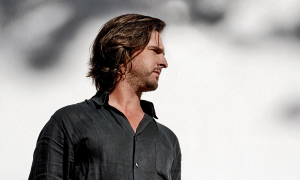
Home » Jazz Articles » Record Label Profile » Resonance Records: Non-Profit Jazz Label with a Mission
Resonance Records: Non-Profit Jazz Label with a Mission


The festival scene is certainly alive throughout the world, with jazz often welcomed as a "safe" alternative to hazardous, messy rock-fests or stuporous exhibitions of high culture. But like the aspiring young author who can't get published without an agent and who can't get an agent without being a published author, the festivals tend to be incestuous, closed circuits, unwilling to risk money on untested talent or, especially, on performers of insufficient renown to guarantee significant ticket sales and gate activity in advance.
In retrospect, the 1990s can be seen as representing a cheering resurgence of interest in mainstream jazz, with major labels like Sony (Columbia), Universal (Verve) and EMI (Blue Note) investing hundreds of thousands in seminal reissues as well as producing a continual stream of albums by deserving new artists, all of it culminating in Ken Burns' remarkable PBS series on the history of jazz. But who could foresee what was just around the corner for the music? With the new millennium came not only a faltering economy but a sea change in consumers' listening habits, along with disappearing profits in the music business and seemingly irreparable damage to the art itself.
Chapter Index
Resonance Founder, George Klabin
Clearly these are tough times calling for unusual leadership. A courageous soul has recently stepped forward in the person of George Klabin, the President of the Rising Jazz Stars Foundation and pro-active head of the new, Los Angeles-based jazz label, Resonance Records, billed on its website as "A Non-Profit Jazz Label with a Mission." Given the present abundance of small, independent recording studios and the "democratization" of music production (by now, doesn't everyone have Garage Band or their favorite DAW on their laptop along with a decent Shure microphone or two?), readers unfamiliar with Resonance Records and its visionary leader may be inclined to dismiss the news of the fledgling label as of little import to the music in general or to themselves personally.
That could be a big mistake. Klabin's credits go back to the 1960s and 1970s, when he was partial owner of one of the best-equipped studios in New York City and partly or fully responsible for recording—often supervising and engineering—sessions by artists such as singer James Brown (five albums altogether), trumpeter Thad Jones' and drummer Mel Lewis' Big Band, pianists Bill Evans' and Keith Jarrett's trios, saxophonists Albert Ayler, Charles Lloyd, Dexter Gordon and Sonny Stitt, and a number of releases for Strata East, trumpeter Charles Tolliver's jazz collective organization's label, which recorded one of the inarguable masterworks of the 1970s, saxophonist Clifford Jordan's Glass Bead Games (Harvest Song, 2006).
 Resonance Records President George Klabin
With Resonance Records, the idealistic yet savvy Klabin is once again committed to recording and producing the artists he believes in—under optimal conditions and using state-of-the-art equipment, while paying attention to critical details ranging from full-scale orchestrations, rehearsal time sufficient to assure a polished result, programs and repertory with the prospective listener as much as the creative artist in mind, even album notes written by recognized authorities in the field. But with the perspicacious, decisive Klabin nothing is as perfunctory as anything suggested by the preceding. From the words he shared here as well as the interview on his website, two primary goals for his present dream child, Resonance Records, emerge: aesthetically, to "capture brilliant and passionate, magical moments that rise above the average jazz heard on most CDs" and, on a more personal level, to be that missing agent for those deserving artists who simply had not received that serendipitous break, leading to proper publication and promotion of their best work.
Rather than a mere technological wizard serving the practical needs of already established names in the field, Klabin is a far more hands-on musical arbiter than most producers, not to mention recording engineers, and is fully involved in the selection of artists and their supporting personnel as well as program material. Besides being open to undiscovered talent, he knows what music he wants to record—from styles and idioms to specific composers and songs. Most importantly, at least for the artists chosen to appear on a Resonance release, Klabin is continually keeping his ears open for exceptional talent (the "cream of the crop," he has said), outstanding but largely unrecognized or underrated artists whom he believes in strongly enough to invest his considerable resources in recording and producing.
The resources at his disposal comprise not merely cutting-edge recording equipment (which Klabin's early experiences, beginning with two-track recording in the 1960s, enable him to employ toward the end of the warm sound and natural presence associated with the best analog and "live" recordings), but a well- maintained seven-foot Fazioli grand piano along with optimal studio conditions that make the "commodity" of time a secondary consideration to the music itself. In addition, Klabin is keenly aware of the potential of high definition video and to that end is acquiring the equipment for professionally produced DVDs while already making available, at least with select CDs, supplementary and complementary DVDs as part of the handsome packaging distinguishing a Resonance release.
If the bonus to followers of the music is not yet apparent, it will be upon entering the label's website. Not only does Resonance provide generous samples of recorded tracks, but it goes the extra mile, ensuring the ready availability of photos and videos of the performers as well as offering free downloads of entire tracks from the foundation's 19 (and counting) albums. If it's not yet clear what distinguishes this indie label from the rest of the pack, the curious need to direct their attention back to the brains and heart of the operation, Klabin himself, whose fascinating and eventful story, though well-covered on the Resonance site, deserves some additional highlighting.
 Resonance Records recording artist Claudio Roditi
In brief, Klabin's take on recent jazz history, and even his choice of role models, is at variance from many of the accounts that have passed for "received wisdom" since the 1980s. He views the 1970s, a decade when he was extremely active in the field of jazz recording, not as an electronic musical wasteland favoring fusion over more traditional or mainstream jazz, but as one of the most dynamic and productive times for the music. Following from this point of view is special praise set aside for producer Creed Taylor and his once maligned (by many mainstream followers) CTI records, which for Klabin represented a practically exemplary, golden period for the music rather than the sell-out to flagrant commercialism portrayed by others.
In 1981 Klabin would sell out his interest in his biggest and busiest music studio—on New York's 46th street and in a space formerly occupied by Capitol Records before Klabin, along with violinist Harry Lookofsky, took up residence in 1973. Though he would remain away from the "business" of jazz for over 20 years, he now looks back on the early years preceding his sabbatical with justifiable satisfaction. It was a vibrant time when he was producing "the very first multi-track digital recordings in the world" while hosting labels such as ENJA, ECM and A&M as well as making his studio available for regular visits from Japanese engineers who had come to NYC to record their favorite American artists. But ironically the digital technology that had at first helped distinguish his recordings became a liability with the sudden proliferation of small private production studios and the drastic undercutting of the rates required to run a first-class operation. Moreover, Klabin saw the rise of "smooth jazz" as a threat both to mainstream and to the discovery and documentation of new, potentially seminal jazz voices such as those—Jarrett, trumpeter Freddie Hubbard, pianist Herbie Hancock, vibraphonist Gary Burton—he had once produced and recorded prior to their acquiring international renown.
But the lessons he had learned were invaluable, staying with him until he would move to the L. A. area and in 2005 start the Rising Jazz Stars Foundation, and along with it Resonance Records. With the latter, Klabin is convinced that his years of engineering in the 1960s and 1970s will serve him well: "I know how to get the best out of a jazz musician," he insists. "First by careful song selection...choosing songs that have enough chordal and harmonic interest so that the musicians can create interesting solos." In making those choices, he reveals some suspicion of originals, especially if the primary reason for recording them is publishing revenues or the placation of the artist's ego. If the visitor to the website observes that a number of Resonance releases do in fact have programs with no small number of originals, this material no doubt first met with Klabin's approval as songs that would be as much in the public's as the composer's or performing artist's interest.
A Commitment to Music and Magic
Not that Klabin is looking for the low and broad common denominator, such as artistic compromises in the form of highly accessible riffs or repetitious, reductive "hooks" for the sake of greater audience share. As he acknowledges, "Ultimately, this company is a reflection of my own tastes." And he's reasonably confident that, given his experience and access to limitless successful recordings from the past, his tastes happen to coincide with those of a large base of jazz listeners who have become indifferent to much of the new music they've been hearing of late—not the memorable melodies and engaging harmonies characteristic of the best material from the American Songbook and not the lyrical and passionate statements by artists who have as much consideration for their audience as for their own musicianship and technical progress. Perhaps the Creed Taylor influence is especially noteworthy in Klabin's statement that "many musicians, as talented as they are, have little to no sense of the wider audience for this music. They get completely caught up in playing for other musicians—for their 'buddies.'" Klabin adds, "That's not the kind of jazz we can afford, especially at this time. It's not only a disservice to the potential audience for this music, but in the long run it hurts the aspiring, young musicians themselves."
 Resonance Records recording artist Cathy Rocco
Besides repertory, equipment and the importance of a producer's experience and guidance, respect is another theme running through much of Klabin's discourse. First, there's the respect the artist must have for the producer's decisions as well as that which the producer has for the musician, by virtue of choosing to take on an artist he can "believe in"—a musician whose "passion and brilliance....will move and excite listeners." Second, is the respect for the music. What counts is not the monetary cost of studio time but the quality of the music—above all, those shining, magical moments that distinguish a mundane from an exceptional recording. The "good jazz producer," Klabin suggests, is the one who recognizes such moments for what they are. He uses his considerable listening experience (over 40 years in Klabin's case) to know when a recording is "it." That ability to evaluate the best performances of an artist, Klabin maintains, is one of the producer's primary challenges—along with balancing encouragement with objective criticism, and sensing the moment to move on when something isn't working and when to return it.
Asked what distinguishes the "Klabin sound" from that of another professional recording, the veteran producer expressed distaste for on-location, or "live," recordings, especially those that introduce crowd chatter and room ambiance at the expense of the music itself. He made it clear that he prefers closely-miked recordings, performed and captured as flawlessly as humanly possible, and that, even with his many duties as head of the Rising Stars Foundation and Resonance, he would remain closely involved in the details of the recording process—as producer and engineer—to ensure releases that meet the label's, and his, high standards. But above all it comes back to capturing those "magic moments," and incorporating them into recordings of consistency and distinction. Documenting the artist's legacy through recordings representing the highest level of the musician's ability remains the primary objective at Resonance Records, always secondary to any profit motive.
The tangible rewards, Klabin is convinced, will come of themselves if, even apart from the scintillating new talent on the label, the name "Resonance Records" is eventually seen by listeners—from newbies to aficionados and, most importantly, festival organizers—as a guarantee of the best music and highest production values. Simply appearing on a Resonance recording will amount to an imprimatur, preparing the listener to expect the kinds of unique programs, projects of scale and exceptional performances that—with today's cost-cutting priorities and widespread streaming of short, profitable internet files—are in increasingly short supply. Of course, it doesn't hurt that Klabin has an embarrassment of riches to work with—musicians who, obscure or not, comprise a killer cast of players.
Representative Releases
 Resonance Big Band
Pays Tribute to Oscar Peterson
2009
Judging from the 19 releases (and counting) currently (in early 2010) in circulation bearing the Resonance rubric, Klabin would appear well under way toward realizing his dream. Although many have already been reviewed at All About Jazz, some of the projects, even given the remarkable consistency of the catalog, must be considered exceptionally "magical moments" captured under Klabin's guidance and worthy of extra emphasis. Certainly The Resonance Big Band Plays Tribute to Oscar Peterson falls into this category, not simply for the extraordinary performance by pianist Marian Petrescu, who "plays the role" of the late jazz giant, whose virtuosity might at first seem unapproachable, but for the project's production values—from musical arrangements to supporting musicians to well-rehearsed execution to pristine audio reproduction.
As remarkable as is the Romanian pianist's artistry—which provoked even respected jazz pianist Bill Cunliffe to exclaim, "He's better than Oscar Peterson"—is his comparative obscurity in this country. If this recording does nothing more than introduce Petrescu to an audience worthy of his talents (see the video clip following this article), it must be seen as a resonant success. Fortunately, there are signs the album has already caused a stir, leading to Cunliffe himself winning a Grammy award for best arrangement. But Petrescu's and Cunliffe's contributions must be set alongside the equally inventive arrangements of veteran Claus Ogerman (with whom Klabin worked in the mid-1970s) and frequent Resonance contributor Kuno Schmid, whose settings favor the head-spinning pianisms of Petrescu and simultaneously evoke and celebrate the memory of Peterson's genius, through a program of carefully selected Peterson originals along with familiar standards that Klabin sensed would catch the public's attention no less than his own.
Indeed, the recording's very scale distinguishes it from most other current releases. If the major studios haven't abandoned jazz altogether, they're prone to saddle that ever-diminishing part of their catalogs with bare-bones budgets that would never be sufficient to produce, say, singer Shirley Horn's and arranger and composer Johnny Mandel's miraculous collaborative triumph, Here's to Life (Verve, 1992) or to reconstruct Ellington at Newport 1956 (Sony, 1999), one of the costliest and most important reissues before the decline of CD sales.
In the same spirit, Klabin has assembled and covered rehearsal time for a juggernaut band to support Petrescu in a blow-out tribute clearly worthy of Peterson himself—the Resonance Big Band, which is an 18-member aggregation of some of the best players on the West Coast. Finally, in a take-no-prisoners move practically daring the consumer not to pick up this potentially landmark album, the producer has made it a two-disc package consisting of a CD with 60-plus minutes of music along with a DVD of the proceedings. Some might call it overkill, but with a player as extraordinarily gifted as Petrescu, the extra help might be viewed as essential to dispelling inevitable suspicions of multi-tracking or of similar technical legerdemain that has become commonplace since the proliferation of consumer digital technology.
 Andreas Oberg
My Favorite Guitars
2008
Along with Petrescu, Klabin is equally high on the prospects of Swedish guitarist Andreas Oberg, whom he considers "potentially one of the five best guitarists in jazz." Listeners to his Resonance debut, My Favorite Guitars (2008)—designed to display the virtuosity of the young, blonde Stockholm native—may quickly concur with the evaluation of his singular talent and unlimited potential. Having established himself on the festival scene as a player fully at home in the Hot Club tradition of guitarist Django Reinhardt and violinist Stephane Grappelli, My Favorite Guitars reveals a mastery in styles ranging from bebop and bossa nova to hard-driving swing and fusion.
Numerous guitarists acquire reputations for doing certain things well—whether single-note velocity, playing octaves, negotiating chordal passages or, like the late Wes Montgomery, executing all of those facets with a rich, fat, "fleshly" tone. Oberg seems to have acquired all of these skills by listening attentively to the masters—George Benson, Pat Martino, Pat Metheny and Montgomery—all of whom he pays tribute to on this break-out album, another two-disc package with CD and complementary DVD. As an added inducement, if one is needed, visitors to the Resonance website will have an opportunity to see Oberg performing with the aforementioned piano prodigy, Marian Petrescu.
Two other musicians being served by Klabin's promotional and production resources are veteran trumpeter and flugelhornist Claudio Roditi and pianist, arranger and composer John Beasley. The producer, who has family in Brazil and speaks the language fluently, is strong in his conviction that the former is one of the major voices on his instrument if not in jazz, working to frequent critical acclaim but in relative obscurity since coming to the U.S. in 1970 to study at the Berklee College of Music.
 Claudio Roditi
Brazilliance x 4
2009
The neglect the patient and thoughtful, full-toned and warmly melodic Roditi has heretofore experienced (he's been called the present-day Kenny Dorham, the brilliant trumpeter whose last name, jazz critic Gary Giddens once said, is "synonymous with 'underrated'") may be lessening since his first Resonance album, Brazilliance x 4 (2009), closely overseen by Klabin and featuring Roditi in the company of a crack, sympathetic Brazilian rhythm section. The album, which includes four fresh originals by the featured artist along with the Miles Davis/Eddie "Cleanhead" Vinson jazz standard "Tune-Up," has not only received high praise and a Grammy nomination but is already being talked about as a classic of its kind, representing the state of the art in Brazilian jazz of the new millennium.
 Claudio Roditi
Simpatico
2009
Roditi's triumph clearly called for a sequel, and a recent Klabin-Roditi project, Simpatico (2010), is a worthy successor but far from a duplication. Employing the same wonderful rhythm section, the latest venture adds, in addition to the trombone of Michael Dease and the guitar of Romero Lumbambo, a scintillating and sensitive arrangement, by Kuno Schmid, of Roditi's exquisite "Slow Fire."
Despite the title of this all-original Roditi program and the expectations of listeners all too familiar with the still-popular Getz/Gilberto (Verve, 1963) blockbuster boss nova album, it's not a misrepresentation to suggest that Sympatico is a frequently grooving album, with the trumpeter as adept at evoking the playfulness of Dizzy Gillespie as the focused intensity of Miles Davis. Especially delightful is the fiery "How Intensitive" (an original with a personality practically opposite to Jobim's "How Insensitive"), and there are welcome bonuses, such as Roditi's picking up a piccolo trumpet (for "Alfitude") and even taking a turn at some pleasant singing (on "Waltz for Joana"). It's no mean feat to maintain the excellence of a truly shining accomplishment like Brazilliance, but Roditi has managed to pull it off, practically guaranteeing the appearance of another offering to complete the hat trick.
 John Beasley
Letter to Herbie
2008
John Beasley has the playing, directing, arranging, composing and even producing experiences of industry giants who were active before Beasley had been born. Intent on bringing his talents into sharper, more exclusive focus for a larger audience, Klabin has produced two albums by the multi-talented musician, whose artistry has too frequently been overlooked or constrained because of the overt commercial nature of many of his previous assignments. His first Resonance release, Letter to Herbie, showcases virtually all of Beasley's talents in an inspired ten-song tribute to Herbie Hancock.
For the occasion, the featured performer has assembled a cast of jazz all-stars, including bassist Christian McBride, drummer Jeff Tain Watts and trumpeter Roy Hargrove. With such a can't-miss ensemble of creative, innovative musicians, listeners should not expect copycat transcriptions, nor will they receive them. From seven Hancock compositions to Wayne Shorter's "Diani" to two original contributions by the leader, this early entry in the Resonance catalog manages to bring back the infectious magic of its subject's music while calling forth fresh imaginative sparks through reinterpretations and inventive, passionate playing that eschew nostalgia in favor of new-millennium freshness.
 John Beasley
Positootly!
2009
Beasley's follow-up release, Positootly!, brings both his compositional and pianistic strengths increasingly to the forefront, with seven originals alongside standards such as Jobim's "Dindi" (a potentially limpid bossa nova piece resuscitated by the hot spices of Beasley's fresh arrangement) and Bobby Timmons' "So Tired," which could describe the state of the listener who can't help but dance to the leader's re-invigoration of the hard-bop classic. As on the Hancock tribute, the cast of musicians for Positootly! is alone likely to attract listeners' interest. Yet the two virtual legends on the date—tenor and soprano saxophonist Bennie Maupin and trumpeter Brian Lynch—don't for a moment rest on their laurels, both complementing the composer's conceptions while contributing solo statements that are practically matched stride for stride by the leader, whose attention this time out is primarily on acoustic piano.
As the very name of the Rising Jazz Stars Foundation would suggest, Klabin is keenly aware of the importance of nurturing young talent, not to mention the marketing value of a youthful image to the major labels. Nevertheless, he refuses to allow such commercial considerations to exclude from his purview older, more mature, musicians whose efforts, though in some cases already well-documented on recordings, have tended to fall below the radar screens of many followers of the music. A case in point would be the well-traveled pianist, Mike Garson who, like Klabin, is in his early sixties.
 Mike Garson
Conversations with My Family
2009
Recognizing the singular virtuosity and conceptual genius of Garson, a pianist and composer equally proficient in jazz, classical and rock, Klabin commissioned the protean performer to compose an ambitious, large-scale work of 20-plus tracks, Conversations with My Family. The finished product, which has received high praise in publications ranging from Downbeat to Keyboard Magazine, could have been merely eclectic and self-indulgent were it not for the composer's knack of lending to the most personal experiences resonances that are deeply and universally felt. What listener can resist intimate, superbly played meditations and relived memories with titles like "Child Within," "Lullaby for Our Daughters," "Blues for the Terrible Twos" and "Play Nicely Together"?
Although the latter title thematically references the challenges and satisfactions of parents, children and siblings getting along together, it's no less applicable to the musical conversations occurring on this remarkable programmatic work. The narrative, in the form of a musical suite based on Garson's recollections of his family's conversations, owes much of its success to the conversations of a number of the rising stars in the Resonance family. Kuno Schmid's sensitive orchestrations invest the individual episodes with poignancy and significance while the guitar of Oberg and trumpet of Roditi along with the flute of Lori Bell and violin of Christian Howes represent musical "family voices" that are at once unique and recognizable.
 Lori Bell
The Music of Djavan
2008
In the case of Bell and Howes, each of whom is featured on a separate Resonance release, Klabin reveals another facet of his musical interests: while he judges both as the very best on their respective instruments despite the lack of recognition approaching their talent, he also sees the instruments themselves as "underdogs" on today's music scene. In Bell's case he points to a paucity of jazz flautists conspiring with her many years of experience as strikes against her—she isn't the glamorous or vivacious kid with which the big labels like to grace their covers.
Bell's Resonance debut, consisting of 11 numbers by the prolific Brazilian composer Djavan, on which she is assisted by Israeli-born pianist Tamir Hendelman, is testimony to Klabin's good judgment on many levels—the appealing quality of Djavan's songs, the artists' understanding of and deep commitment to his compositions, and finally the expressiveness of the flute itself.
 Christian Howes
Heartfelt
2008
Then there's the violin, viewed by Klabin as one of the most expressive and versatile instruments despite the resistance it has traditionally met with in jazz. Klabin's answer is a Resonance release featuring Christian Howes—in the producer's words, "the best jazz violinist I have ever heard." On his Resonance debut, Heartfelt, Howes strikes magic and exudes with the passion prized so highly by Klabin on all of his projects. For good measure, Klabin has enlisted the musical support of a personal friend of 40 years, pianist Roger Kellaway, along with arranger Kuno Schmid, in one of the catalog's most spirited, most appealing sessions, the program ranging from Benny Goodman and Woody Herman chestnuts to Brazilian and Italian standards by Eliane Elias and Ennio Morricone respectively.
Klabin also professes an interest in female vocalists, insisting that the attractive body image that has undeniably been a boost to numerous vocalists including (Diana Krall and Norah Jones) is of little to no concern to him compared to the artist's chops, expressiveness and, of course, passion, along with perhaps that extra little bit of "magic." Thus far Resonance has released three albums by three vocalists who either remain relatively obscure or are largely unknown beyond their local working territory.
 Cathy Rocco
You're Gonna Hear From Me
2008
Perhaps the least documented prior to her Resonance debut, and therefore an undeniable sleeper among the threesome, is Cathy Rocco. Her initial offering for the label, You're Gonna Hear From Me, again benefits from the presence of some of the stallions in the Resonance musical stable, namely Kuno Schmid, Tamir Hendelman, John Beasley and, as a special bonus, the brilliant, late bassist Dave Carpenter. But the date inarguably belongs to Rocco, who sings with impressive power, conviction and, yes, passion. Anyone who views her performance of Bill Withers' "Hello Like Before" should have no difficulty subscribing to Klaburn's comparison of her to Nancy Wilson.
 Greta Matassa
I Wanna Be Loved
2009
Greta Matassa is another powerhouse singer who, in fact, already enjoys a fairly large and enthusiastic following in the Pacific Northwest. Fully aware of her versatility, elocutionary skills and strong projection, Klabin has helped her develop a diverse, ceaselessly engaging program on her 2009 debut, I Wanna Be Loved (in addition to the title song Bob Dorough's "Nothing Like You" is a highlight), while expressing faith in her ability to deliver the goods by providing her with a large ensemble (including Howes on violin) and rich tonal textures that would represent a potential barrier to singers of inferior lung power.
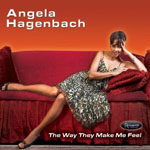 Angela Hagenbach
The Way They Make Me Feel
2009
Finally, Angela Hagenbach, from Kansas City (also home to jazz singer Karrin Allyson), has a timbre that's highly individual and personal, possessing sufficient grain to resist overused epithets such as "sultry," "silky" and "smooth" ("smoldering," or "incendiary" seem more appropriate). She's also blessed with an unusually low range (easily extending down to low C below middle C), practically recalling the late Sarah Vaughan (who complemented the low end with an equally stratospheric extreme). Her Resonance debut, The Way They Make Me Feel, is at times reminiscent of the Shirley Horn/Johnny Mandel Here's to Life collaboration, both in terms of song selections shared by the two dates and in the nuanced orchestral voicings of Kuno Schmid's arrangements, which utilize full orchestra as well as the tasteful fills of veteran accordionist Frank Marocco.
If the balance between the orchestra and solo voice is occasionally a bit one-sided, favoring the orchestral arrangement over Hagenbach's unique interpretation of a song, the whole project nevertheless represents the kind of ambitious effort that has become increasingly rare in recordings of the present millennium and, moreover, is sure to make a larger audience aware of the distinctive sound and approach of Hagenbach, a successful professional model as well as experienced jazz singer. Listeners wishing to hear her stretch out in a somewhat looser, hard-swinging context might check out an earlier release, Weaver of Dreams (Amazon, 2001).
 Bill Cunliffe
The Blues and the Abstract Truth, Take 2
2008
Although the highly-in-demand pianist, composer and arranger Cunliffe doesn't quite fit the mold of Resonance Records as a launching pad for undiscovered or obscure talent, his The Blues and the Abstract Truth, Take 2 was no doubt a plus for the label's need to make its presence felt as quickly as possible. Moreover, Cunliffe, or for that matter few other musicians, have had an opportunity at once so attractive and daunting: to do a remake of Oliver Nelson's, to use an overused epithet, "classic" album The Blues and the Abstract Truth (Impulse!, 1961), for which Nelson himself even supplied a sequel, More Blues and the Abstract Truth (Impulse!, 1964).
Chances are that listeners sufficiently impressed by the original to pick up the sequel will be delighted by Cunliffe's release, The Blues and The Abstract Truth, Take 2. They should feel doubly rewarded upon recognizing the familiar strains of "Stolen Moments" and "Hoe Down," as Cunliffe has managed to capture much of the poignancy and playfulness of the originals while imbuing them with personal hues that are as fresh and creative as their sources. Along with Cunliffe's piano, the Duke Ellingtonian trombone of Andy Martin is a key element in the success of a venture that, in the minds of many listeners, still echoes with the vivid original contributions of Bill Evans, Freddie Hubbard and reed player Eric Dolphy.
No attempt to represent the breadth and depth of the Resonance catalog would be complete without reference to two posthumous releases, one a first-time issue of two on-location albums by pianist Gene Harris, the other a tribute album to bassist Scott LaFaro, centered largely on five previously unissued tracks.
 Gene Harris Quartet
Live in London
2008
Harris, who during the 1950s and early 1960s, was as busy and influential as pianists Red Garland and Wynton Kelly, dropped out of the music scene until being lured back in the early 1980s by bassist Ray Brown.
Shortly after demonstrating that he had not lost a step musically—if anything, the new emphasis on extended live recordings seemed to bring out his unbounded passion and swing to a degree not present on the once-popular Three Sounds recordings—he was awarded leadership of the Count Basie band.
 Gene Harris Quartet
Another Night in London
2010
But as the two Resonance releases—Live in London and Another Night in London (2010)—readily show, Harris was above all a pianist closer to Monty Alexander or even Oscar Peterson than Count Basie, not simply in terms of chops and swing but imaginative humor, dynamic change-ups capable of keeping an audience on the edge of their seats, and ballads that could be nuanced and lyrical or bluesy and funky. The presence of British drummer Martin Drew, an Oscar Peterson favorite, all but guarantees two sets of explosive piano playing that can't help but swing.
As with the Harris albums, which are tie-ins with a biography co-authored by Harris' wife Janie and Bob Evancho—Elegant Soul: The Life and Times of Gene Harris (Caxton, 2005)—Pieces of Jade, the Resonance recording of previously unissued Scott LaFaro recordings, coincides with a biography, Jade Visions: The Life and Music of Scott LaFaro (University of N. Texas, 2009) by noted author-jazz critic-song lyricist Gene Lees.
 Scott LaFaro
Pieces of Jade
2009
Although LaFaro is arguably the most influential bassist in jazz since Jimmy Blanton, Pieces of Jade will understandably be welcomed by bass players and a limited, specialized audience. Yet it provides approximately 30 minutes worth of previously unreleased music from 1961 by LaFaro with pianist Don Friedman and drummer Pete LaRoca—five songs that would once have been considered a program of adequate length by LP standards.
The audio, though hardly up to Klabin's standards, is acceptable, and the Resonance producer takes pains to assure that no space is wasted by including: an amateur recording of a practice session between LaFaro and Bill Evans working on alternate chord changes to "My Foolish Heart"; a 1970s interview of Bill Evans (who focuses on LaFaro) by Klabin; and a musical meditation, "Memories of Scotty," composed and performed by Friedman and recorded by Klabin.
One of the revelations for some will undoubtedly be the strength of LaFaro as a "walker." (In addition to the present album, curious listeners may wish to check out the albums LaFaro recorded, with pianist and vibraphonist Victor Feldman, on The Arrival (Contemporary 1958), and especially pianist Hampton Hawes' For Real! (Contemporary 1958), on which engineer Roy DuNann manages to capture the authoritative attack, powerful sound and propulsive swing of LaFaro's walking bass lines with stunning verisimilitude).
As the heart and soul of Resonance Records and head of the Foundation of Rising Jazz Stars that it serves, George Klabin must take satisfaction in the knowledge that, after so little time, he's accomplished his goals of capturing many magic moments while uncovering some exceptional talent—performers whose previous lack of recognition and monetary rewards did not lessen their passion for the music. But it's also likely that for all of his idealism, he's enough of a realist to sense that jazz may be a dying art, beyond the heroic resuscitation efforts of any single individual. As he has said, a good producer must know when, during the course of a recording session, it's time for another take of a difficult number and when it's time to cut losses and move on. From a listener's perspective, we can only hope that the last few years represent no more than a birth and a beginning for the embryonic label. Look for many more magical moments to follow.
Photo Credits
Page 1, George Klabin: Patrick Schneider
Page 1, Claudio Roditi: Guy Fonck
Page 2, Cathy Rocco: Courtesy of Cathy Rocco
< Previous
Barb Jungr: Smart, Sassy, Sexy
Next >
Pastorale
Comments
Tags
Resonance Records
Record Label Profiles
Samuel Chell
DL Media
United States
James Brown
Thad Jones
Mel Lewis
Bill Evans
Keith Jarrett
Albert Ayler
charles lloyd
Dexter Gordon
Sonny Stitt
Charles Tolliver
Clifford Jordan
Creed Taylor
Freddie Hubbard
Herbie Hancock
Gary Burton
Bill Cunliffe
oscar peterson
Shirley Horn
Johnny Mandel
Andreas Oberg
Django Reinhardt
Stephane Grappelli
Wes Montgomery
george benson
Pat Martino
pat metheny
Claudio Roditi
John Beasley
Kenny Dorham
Miles Davis
Eddie Vinson
Dizzy Gillespie
Christian McBride
Jeff "Tain" Watts
Roy Hargrove
Wayne Shorter
Bobby Timmons
BENNIE MAUPIN
Lori Bell
Christian Howes
Tamir Hendelman
Roger Kellaway
Benny Goodman
Woody Herman
Eliane Elias
Diana Krall
Norah Jones
Cathy Rocco
Dave Carpenter
Nancy Wilson
Greta Matassa
Bob Dorough
Angela Hagenbach
Karrin Allyson
Frank Marocco
Oliver Nelson
Ellington
Andy Martin
Eric Dolphy
Gene Harris
Scott LaFaro
Red Garland
Wynton Kelly
Ray Brown
Count Basie
Monty Alexander
Martin Drew
Jimmy Blanton
Don Friedman
Pete LaRoca
Victor Feldman
Hampton Hawes
For the Love of Jazz
 All About Jazz has been a pillar of jazz since 1995, championing it as an art form and, more importantly, supporting the musicians who create it. Our enduring commitment has made "AAJ" one of the most culturally important websites of its kind, read by hundreds of thousands of fans, musicians and industry figures every month.
You Can Help
To expand our coverage even further and develop new means to foster jazz discovery and connectivity we need your help. You can become a sustaining member for a modest $20 and in return, we'll immediately hide those pesky ads plus provide access to future articles for a full year. This winning combination will vastly improve your AAJ experience and allow us to vigorously build on the pioneering work we first started in 1995. So enjoy an ad-free AAJ experience and help us remain a positive beacon for jazz by making a donation today.

Giveaway

Eligible winners: 15
Days remaining: 6
Days remaining: 6