Home » Jazz Articles » Interview » Ben Goldberg: Clarinet Communion
Ben Goldberg: Clarinet Communion

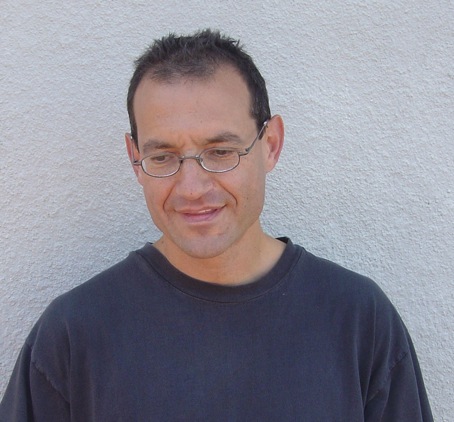
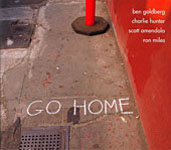
Since then, he has worked with musicians as influential and eclectic as Andrew Hill, Bobby Bradford, Bill Frissell, Vijay Iyer, Myra Melford, Nels Cline, John Zorn, and the genre-mashing Tin Hat outfit. Today, he is an integral part of the West Coast scene, and leads groups including the Ben Goldberg quintet, which crafted a deeply personal dedication to Steve Lacy with The Door, The Hat, The Chair, The Fact (Cryptogramophone, 2006). 2009 saw the release of Speech Communication (Tzadik, 2009), the first release from a version of the New Klezmer Trio in nine years. Goldberg also started his own record label to put out Go Home (BAG Production Records, 2009), an album of his heavily grooving compositions played by a quartet with Charlie Hunter on guitar, Ron Miles on trumpet, and Scott Amendola on drums.
All About Jazz: Did you grow up in a musical household?
Ben Goldberg: Well, my mother actually played the clarinet in high school and college. When I was little, she had pretty much stopped playing, but once in a while, she would take the clarinet out and play for us. I used to beg her to do that. I remember telling her, "Get that black thing out of the box!" I loved the smell of it, the sound. So, from a very early age I was focused on the clarinet.
AAJ: And your father worked in linguistics?
BG: He was in the area of what they call speech communication, or human communication studies.
AAJ: So that must have informed your development, too.
BG: Definitely, and one thing I remember my father doing when I was little: When he would prepare his lectures at home, he'd be sitting in a chair in the study or on the couch, and as he wrote down notes for his lecture, he'd kind of mumble the words to himself, like, "Meh- meh-meh. Meh- meh-mah." And then, later on, I noticed that that's a big part of my style, my way of playing music— that kind of rhythm, that speech-like something.
AAJ: What were the first records that got you interested in music?
BG: When I was really little, we listened to a lot of Pete Seeger in my house. The next thing I remember was the Beatles. The White Album (EMI, 1968) and Sgt. Pepper's Lonely Hearts Club Band (Capitol, 1967) had a huge influence on me when I was young, about nine or whatever. After that, I got interested in jazz. I still remember, and I still have, the first jazz records I ever bought, and I was kinda lucky. I think the first jazz record I ever bought was Art Pepper Meets the Rhythm Section (OJC, 1957). I didn't know anything about anything, so to me, that's what jazz sounded like. And that's a great record, a really great record, and I really studied it.
Then I picked up two other jazz records that had a really good impact on me. One was by Cannonball Adderley, a record called Inside Straight (OJC, 1973) with Hal Galper and Roy McCurdy, and Nat Adderley of course, so it's a really beautiful, really funky album from the early '70s.
 Then another one that I got ahold of by chance—well, two others I have to mention. One is a Sonny Stitt record that I just happened to buy because who knows why; I didn't know who Sonny Stitt was. And it still kills me. It's this one called So Doggone Good (Prestige, 1972), and it has Hampton Hawes playing the piano. So sweet. It's unbelievable. And the other one—this is kind of weird, but I walked into the record store and I stumbled into this unbelievable solo Thelonious Monk record. I don't know why I bought it. It was on this label called GMP; it might just be called Thelonious Monk. It's solo piano, and it's just so pure—even for Monk it's so pure. With songs like "Eronel" and "Evidence." It's so cool.
AAJ: It's interesting that the first three albums you mentioned are anchored by major alto sax players. Were you playing alto at the time?
BG: I was already playing clarinet in the concert band, but in those days if you wanted to be in the jazz band, you had to play the saxophone, so they put me on alto. That was probably part of it—I wanted to learn the alto.
AAJ: Was there one that you wanted to play more at the end of the day?
BG: Well, I wanted to play jazz, but it took me quite a while to figure out that I wanted to play jazz on the clarinet. Clarinet wasn't really thought of at that point as a jazz instrument. It was the past.
AAJ: So what was the first non-school band that you played in?
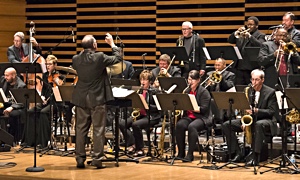
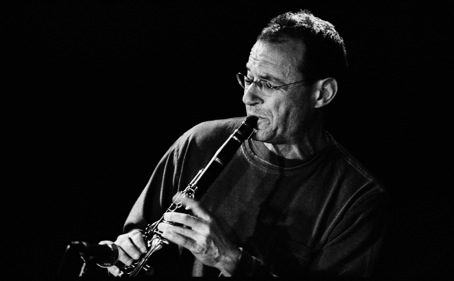 Ben Goldberg in Concert, February 2009
BG: Probably musical theater. I think I played in some kind of Gilbert and Sullivan. Actually, the first paying gig I ever had was subbing for some people that were in my high school, who had a band that played once a month at this local German beer hall, playing polkas. It was a polka band. They got, I don't know, five dollars or something for playing a whole night of polkas for people who were drinking a pretty amazing amount of beer.
AAJ: That sounds like it could be awesome, actually.
BG: No, it was terrifying! The main players got sick, and they asked me on very short notice. I didn't know what I was doing. I was terrified, but I got through the gig somehow. [Laughs.] That was my introduction to the world of professional music.
AAJ: Was there a particular point where you decided that you wanted to be a professional musician, then?
BG: I always knew that that was what I really wanted, but I wasn't sure exactly how one did it. In some ways, I didn't exactly have too many good models for it. I just kinda hoped that it would work out.
AAJ: So you kept doing it?
BG: I kept doing it, and I studied music in college [at UC, Santa Cruz]. That's when I got more serious about the clarinet, and I did two things. I hooked up with a really good clarinet teacher [Rosario Mazzeo], the guy whose students were the clarinet players in the major orchestras all around. Then I really learned to play the clarinet, finally. The other thing I did was I started playing klezmer music.
AAJ: What was it that really got you into klezmer in the first place?
BG: Well, for one thing, it was just a way to make some money playing music at weddings and stuff like that. But there's something about the music that grabbed me, too. I mean, for one thing, it had a virtuoso clarinet tradition, so that if you wanted to play klezmer clarinet there was a lot to learn, and that was fun. So you really had to study and I dug that. But then, I don't know, man, the music started speaking to me more, and it's certainly full of interesting sounds. Harmonically and melodically, it's put together in a different way from the music that I was playing.
AAJ: So from the Klezmorim, you started composing your own klezmer tunes. How do you go about that, composing within a tradition? Where do you begin to build from?
BG: We're talking about the time when I first began to write any music at all. That really was the question, like, "What am I trying to do?" In some ways, like a lot of people, at first I was just trying to sound like something. Somebody who starts off by writing jazz tunes— they're just trying to have them sound like jazz. For me, I was dealing with this thing called Klezmer music, which was, in a sense, well defined or had a certain feeling to it. I wanted to write something that had a feeling that felt like all those other songs that I played. I don't know if there was anything too original about all of it, but in some ways that wasn't necessarily my goal. In some ways, I just wanted to see if I could conjure up that sound.
AAJ: So it was sort of an attempt to evoke the same emotions that you felt in hearing it?
BG: For me, it wasn't so much about emotions; it was much more about the mechanics of it: how do they do this, how do they put the chords together, and that kind of stuff. So no, it was much more nuts and bolts. Then trying to do something personal with it, but still my goal was just to find out how they put it together.
AAJ: Then when you start the New Klezmer Trio you're moving to something more personal. With a lot of John Zorn's "Radical Jewish" music, a lot of the music on the Tzadik record label, one wonders at what point music no longer becomes 'Jewish,' whether that's a matter of the artist's perception, or something else. What is your opinion on that?
 BG: Yeah, that's a tricky question. But, honestly, it's a question that hasn't really concerned me for 20 years or so.
AAJ: Did it ever concern you?
BG: Well, yeah, it did. It did concern me, and I was very explicitly interested, like when we first had New Klezmer Trio, in being able to say explicitly that that was Jewish music.
AAJ: New Klezmer Trio seems like an unusual setup for klezmer. You don't have a chordal instrument, no accordion. It's bass, drums, clarinet: very jazz-like. So did that change your approach, or was that part of the fun of exploring?
BG: Well, I always liked that type of instrumentation, based off that Sonny Rollins trio from Live at the Village Vanguard (Blue Note, 1957). For one thing, it gives you more rhythmic and harmonic freedom. Because one thing that had to be done away with, honestly, was the rhythm— not the rhythms, but the rhythm section approach, like chugging accordion or drumming that's going, "Chukka-chukka- chukka-chukka." You can't deal with that. It's locked you into a certain thing, and I wanted to do something different. And I could tell there was no way to do anything different unless there was more space in the rhythm section.
 AAJ: That's a big feeling you get out of these recordings—the atypical use of space for klezmer or even jazz. So, how did it start? How did the band come together, and how did you start composing tunes for the Trio?
BG: I just had this feeling, like I wanted to do something that felt more personal and more like me, more modern or more avant-garde. And I started to see the possibilities, where you could do that using the klezmer material. And I had put so much work into it—I knew [the music] backwards and forwards, I knew how the melodies worked and everything. So I was just dying to try something that stepped beyond the usual thing. Plus, you know, if you're playing music and it's being presented to the audience and being talked about amongst the musicians as a faithful recreation of something that people used to do 60 years ago—that's not something I really wanted to be doing.
I started feeling funny on stage. To me, music was something that people were doing right now and making something new out of. So I really didn't feel good about being part of an operation- -more generally a music community or movement—that held that as its highest ideal.
AAJ: How did you go about breaking free from that?
BG: The ingredients were all right there. All I had to do was step into it. I had musicians I could work with [in Kenny Wollesen and Dan Seamans]. I had the repertoire at my fingertips: the articulations, the ways of playing the melodies, and stuff like that. And I had the energy. You see, this energy had built up, and it just needed to be released because it had built up to such an extent that it's like there was no way that I could have not done the New Klezmer Trio. That's another thing—that style of music and playing has a lot of compressed energy. It has a lot of starting and stopping, and stuttering phrasing, and stuff that keeps dwelling in the same place over and over. That stuff builds up a lot of internal pressure, and it just needed to be released. So that was the easy thing. There was nothing else to do at that point.
AAJ: When you look back on composing these tunes or playing them from the first time, what are your impressions? Was it a kind of blur coming out?
BG: No, I definitely remember the work that went into it. Composing the music. I remember a lot of the rehearsals, how we figured out what we were doing, and rehearsing the hell out of it. We had some hard songs. If you listen to that first record, there are songs like "Masks and Faces"—I couldn't play that song today. We could play it then. We could land on the right place together, which is quite an accomplishment.
AAJ: How essential is improvisation in relation to the compositional elements in New Klezmer Trio or other Jewish music that you've done?
BG: Well, the idea the whole time with the New Klezmer Trio was to improvise. That was part of the impulse, because in the more traditional klezmer settings, if you had a chance to play a solo, it might be 25 seconds—a few bars or something. So part of what we wanted to do—I needed to play something that lasted ten minutes.
AAJ: Is Speech Communication, (Tzadik, 2009) your last New Klezmer Trio album?
BG: Oh, I don't know. Every time I do one I think it's the last one. In September, I was in New York and I recorded a record of [John Zorn's] Masada compositions [with the Trio and Jamie Saft]. And now in February, I'm going to make a duo record with Jamie.
AAJ: Do you notice a difference in how you approach the music when playing your tunes, playing with the more traditional bands, and playing Masada tunes, or playing your own music with New Klezmer Trio?
BG: Well, whenever I play my own music—whether it's something like Speech Communication or it's Go Home or my quintet—that's as personal as it gets. Those are my tunes. I know all the places that I want to get to and where I want to hang out. That's why I wrote those songs.
 AAJ: A lot of your albums have an element of tribute in them.
BG: There's often a dedication—in fact, I think there's always a dedication. I'm not crazy about the word "tribute." To me, a dedication is something that can call forth something from you, towards the spirit of the person you're dedicating it to. Like The Door, The Fact, The Chair, The Hat (Cryptogramophone, 2006)—that's dedicated to Steve Lacy. I really tried, within that music, to deal with the questions about who am I in relation to Steve Lacy, because here was a guy who was so important—so important. The fact is that if I could have learned how to play exactly like Steve Lacy, I would have. That's how important he was to me.
AAJ: That's an important person, definitely.
BG: Definitely, but that brings up some questions. If you're dedicating music to somebody who's that important to you, what are you going to do? Make a record that sounds exactly like it could have been a Steve Lacy record? To me, that's not in the spirit of what I learned from Steve Lacy. For one thing, it's impossible. For another thing, I don't think that the meaning of a guy like Steve Lacy is: everybody should sound like me. When someone's that important, I think the deeper message is: you better sound like yourself.
 AAJ: You first met him in Paris, when you pestered him into a lesson. What was that like? Were you nervous approaching someone like that?
BG: Oh yeah, I was terribly nervous. I'd already written him a letter telling him he was my hero! I was nervous to ask him, and plus he told me no! Finally, I asked him again, and he said, "Okay, come on over." Yeah, it was scary, but it changed my life. That one meeting changed my whole life.
AAJ: What was it that drew you to him in the first place? Was it the sound, the conception?
BG: The sound! And his way of phrasing. That just killed me. Because after all I had ever listened to—Charlie Parker, Sonny Stitt, Art Pepper—when I heard Steve Lacy it sounded kind of backwards. It was backwards, but it made so much sense. So it just grabbed me, like I couldn't figure out what was going on. Plus that sound. Plus, the first record of his that I ever bought was that one called Evidence (OJC, 1961).
You gotta check that record out. For one thing, it's got tunes, a couple of Monk tunes and a couple of Ellington's. And it's got Don Cherry and Billy Higgins. Then, somehow, it's also extremely well recorded. Especially Lacy—the sound they got on that record—his saxophone is so delicious, it's all you ever want to hear. That was the record that just blew my mind. So when I got the chance to get together with him, he just gave me all this stuff to work on, and it kept me busy for ten years.
AAJ: Have you finally completed it then?
BG: I think I completed the course in a certain way. I still go back to it, but at this point it's more in the background or the foundation.
AAJ: So, what were the things that you really wound up learning?
BG: Well, there are two aspects to it. One was something that I'd already been introduced to by my clarinet teacher, and that was that you can really find a whole new way of taking music apart—of finding the fundamental building blocks, and then studying those. That's really a revelation. Not everyone gets to that place, and [Steve] showed me the way he had done that. As far as the larger lesson, that was finding my own way of finding what are those building blocks and finding a way to actually work on that.
AAJ: Do you think different people in their conception of music identify different building blocks which have a personal impact to them?
BG: If you're really talking about that, then I think you have to realize that they've got to be the same. Otherwise they're not building blocks, there's something beneath that. If you do your research, you're going to get down to something. It's not that you're going to experience it the same way as someone else. What I learned from [Steve] is that you want your style, the way you play or the way you write, to be the thing that you can't decide about.
If you're really contemplating the building blocks of it, then it's all going to come together in a personal way, despite what you might want and what you might think. It's like if I give the same box of crayons to 50 children—they're all going to take the same crayons and make something that's completely unique. That's just the way it works. You're a different person than I am, your perception is different from mine, and the way that you hear things, whether you understand how they're put together, that's going to be your thing. If you're getting down to the fundamentals of it and you're actually dealing with the lowest common denominator, then whatever reveals itself to you, that's going to be the real thing.
AAJ: How much weight do you give instrumentation when you're putting together a project or a set of compositions?
BG: It's really more a matter of the person, more a matter of who they are, not what they're playing. Obviously that comes into it. When I play with Carla Kihlstedt, that's who I want to play with. If she played the tuba, I probably would want to play with her.
 AAJ: So it's fair to say you compose more for the people than for the instruments?
BG: I think so. The kind of musical situations that I'm putting together—you've got to have the right people. It all depends on that—trust, understanding, intuition—and it depends on what areas you have in common with people. It's like, who do you want to invite over to your house to hang out with? You know who it is because you feel comfortable with them.
AAJ: How did you get involved with Tin Hat, which started out as the Tin Hat Trio?
BG: I've been friends with those guys for a long time. Rob Burger, the accordion player, left the band, so Mark Orton and Carla Kihlsted decided to invite me to join them, along with a fourth person, which is more of a rotating chair at this point.
AAJ: There's such an interesting blend of folk music, jazz, rock—everything seems to be going on in there.
BG: Everything's going on, yeah, and they're such amazing musicians. They have a beautiful dedication to composition and song form.
AAJ: That band also got you playing more contra-alto clarinet. Had you played that much beforehand?
 Tin Hat, from left: Ben Goldberg, Carla Kihlstedt, Mark Orton, Ara Anderson
BG: Not so much; I was thinking of it as of a novelty when I started playing with Tin Hat, and then I started realizing what you can do with it. I'm playing it with Myra's group now and others, so I've started to find what the voice of that instrument is.
AAJ: There aren't too many contra-alto soloists out there.
BG: No, I don't think so. I've nearly got the market cornered. [Laughs.] It's more flexible than the contrabass, so it's more fun to play, but it's definitely has those low notes that have that amazing sound, like the contrabass. It's perfect for me.
AAJ: Do you find that you have a distinct voice apart from the contra-alto to the regular B flat clarinet?
BG: There wouldn't be any way not to. It's just such a different sound, a different voice. There's barely an overlap.
AAJ: What brands of clarinet do you play?
BG: For the B flat, the Buffet. And the contra-alto is a LeBlanc, what they call a "paperclip."
AAJ: Did you play bass clarinet for a time?
BG: Yeah, I did. In the New Klezmer Trio, I played a lot of bass. But the funny thing for me is that since I started playing the contra-alto, I really don't play it anymore.
AAJ: Let's talk a little bit about Go Home (BAG Production Records, 2009). How did that groove and funkiness come into your music?
BG: Really, I wanted to make a record with Charlie [Hunter]. That's where Charlie lives, that's all Charlie and Scott [Amendola]. The groove is very deep.
AAJ: It seems like it hearkens back to your love of the Beatles, or to R&B. Was that something you set out to do?
BG: It's more like, that's just something that might be at work for a lot of musicians. Something hits you about music when you're little. It hits you for a reason, for the right reason, and then you get involved in music. For me, a lot of other concerns then got pretty big, like complexity, sophistication, whatever. And at a certain point, I started asking myself, "What happened to me? What became of all that music that I still like to listen to? Where is that in my own thing?" Not "How come I'm not playing in a Beatles cover band," but "Those pleasures, where are those?" If there's something I love to hear when I put on a record, then when I make a record, am I giving somebody else something they love to hear. That's the real question.
Honestly, I don't just want to give people something that they can appreciate or understand, or that makes them think, or something like that. I used to kind of feel that that's what I wanted to do, but that's not what I want anymore. I want to give people something that they can love.
 AAJ: Do you think this album or this band, is a turning point for you, then?
BG: I don't know. Again, I don't really want to think of it in terms of style, like: "Now my style is to be funky." I don't think that's really the point of it. It's more like my life is opening up to wider possibilities. And there's a lot of different things that I feel like doing. There were some times where I wasn't aware that there were a lot of things that I wanted to do. And one of the reasons that I wasn't aware of that had to do with feeling like my musical mission or goals were fairly well-defined in terms of what world I lived in—what musical world, who were the people that I wanted to play with, et cetera.
AAJ: So the walls have broken down a little bit?
BG: The walls have broken down, yes, and it's opened up some constrictions and possibilities. And after playing with Charlie Hunter, I just want to say one thing: Charlie Hunter is one of the greatest musicians that have ever lived. I knew that I loved his playing and that I enjoyed listening to him, but until I started playing with him, I didn't quite understand the immensity of his accomplishment. I sent him a note the other day saying I was going to write an essay comparing him to Vladimir Horowitz or Glenn Gould. Those guys are thought of as having achieved a monumental musical and technical achievement. But in a lot of ways people that are doing something like what Charlie has done—other people don't recognize that the exact same level of technical mastery in the service of musical understanding has taken place there.
AAJ: Why do you think it is that your average listener, or even someone who follows a particular musician, isn't able to see that? Is it a matter of not being able to play with them, and see what's going on?
BG: Well, it has to do with the cultural world that surrounds us. Horowitz or Jascha Heifetz—they were operating in a certain context that understood what the repertoire was, that had an appreciation for how difficult it would be to not just learn the repertoire and the instrument but master them, and had an appreciation for the fact that, if somebody could deliver the goods in that kind of spirit, what kind of gift that was to the listener.
And in the world of popular music, that framework—it's not that people don't enjoy it (I think people enjoy the hell out of what they listen to) but there's not this kind of erudite, educated, well-informed listener who knows something about the degree of difficulty or the level of accomplishment that it takes for a guy like Charlie Hunter to sit down with his instrument and give you what he gives you.
AAJ: Do you see any signs of change in that regard?

BG: Oh, I don't know. It's the same story over and over. People play music because they have to. You're not going to get rich or appreciated doing it. It's life.
AAJ: Let's talk about your label BAG. What led you to start it, and what are you hoping to do with it?
BG: Yes, BAG Production. You know, the name comes from a Beatles song ["Come Together"]. I kind of got forced into it because I couldn't find a label to release the Go Home record. It was astonishing, but finally I realized, "Okay, I've got to do it myself." I began by thinking I was only going to pretend to have a label. But as soon as I started working on it, I realized that's the way I want to do it, anyway. It's a lot of work, but it's all up to me. And I can do the work. I can work on publicity if I want, or on finding distributors for my music.
Anyway, I've had enough experiences with record labels—all of whom have been run by the most well- intentioned people—but I've had enough experiences where you release a record on somebody's label and not only does it not get publicized, but it's like they enlisted the CIA to make sure that nobody would ever hear a word about it. It's an incredibly frustrating experience. So for me, running my own record label is just like, well, it's all up to me. I'm going to make sure that I do whatever I can to help put the music out there, and that's a good feeling.
The first whole record that I really decided to put out was the Tin Hat record [Foreign Legion (BAG Production Records, 2010)]. That's when I realized that it's actually a real record label. And I've got things lined up, like a beautiful record that I made with Joshua Redman.
AAJ: What advice would you give to someone starting out as an instrumentalist?
BG: Yeah, I think it's a good question. You've got to know your instrument. There are no shortcuts. Actually, when you get right down to it, the classical (what they call pedagogical) approach for instrumentalists—you can't beat it. No matter what instrument you play, that's where it all at. After that, you can do whatever you want, but it takes a long time.
AAJ: One last question, and this is entirely optional: Could you put together an ideal band for yourself from out of history?
BG: It's like, people are in history for a reason. They did what they had to do, and I love them. I mean, how much time could I spend with Louis Armstrong? He's my absolute favorite musician in the whole world, but would I want to play in his band? That I'm not sure of.
What Steve Lacy said to me once was, "Your home living room can be the jazz center of the universe." That was cool advice. And I finally learned what he meant by that.
Selected Discography
Ben Goldberg Quartet with Jamie Saft, Baal: The Book of Angels Vol. 15 (Tzadik, 2010)
Myra Melford's Be Bread, The Whole Tree Gone (Firehouse 12 Records, 2010)
Tin Hat, Foreign Legion (BAG Production Records, 2010)
Ben Goldberg, Go Home (BAG Production Records, 2009)
Ben Goldberg, Speech Communication (Tzadik, 2009)
Scott Amendola/Ben Goldberg/Devin Hoff, Plays Monk (Long Song Records, 2007)
Tin Hat, The Sad Machinery of Spring (Hannibal, 2007)
Nels Cline, New Monastery (Cryptogramophone, 2006)
Ben Goldberg Quintet, The Door, The Fact, The Chair, The Hat (Cryptogramophone, 2006)
New Klezmer Trio, Short for Something (Tzadik, 2000)
Junk Genius, Ghost of Electricity (Songlines, 1999)
Ben Goldberg/ Michael Sarin / John Schott, What Comes Before (Tzadik, 1998)
Junk Genius, Junk Genius (Knitting Factory, 1995)
New Klezmer Trio, Melt Zonk Rewire (Tzadik, 1995)
New Klezmer Trio, Masks and Faces (Tzadik, 1991)
Photo Credits
Pages 1, 6: Adam Goldberg, Courtesy of Ben Goldberg
Pages 2, 3: Peak Page 5: John Spiral, Courtesy of Ben Goldberg
About Ben Goldberg

Tags
PREVIOUS / NEXT
Ben Goldberg Concerts
Become a Sustaining Member

Since 1995, All About Jazz has championed jazz as an art form and supported the musicians who create it. Over three decades, it has grown into one of the world's leading jazz resources, serving hundreds of thousands of readers, musicians, presenters and industry professionals each month.
Help Build the Future of All About Jazz
Your support helps us continue building All About Jazz for the next generation—expanding our editorial coverage, preserving jazz history, developing new community features and creating better ways to discover the music and the people behind it.
Become a sustaining member for as little as $20 per year and you'll immediately enjoy an ad-free experience along with access to subscriber features and future articles for a full year.
Together, we're not simply sustaining All About Jazz—we're building its future. Thank you for being part of the journey.