Home » Jazz Articles » Album Review » Anthony Braxton: Creative Orchestra (Koln) 1978
Anthony Braxton: Creative Orchestra (Koln) 1978

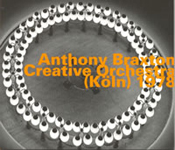
The program parallels Braxton's 1970s Creative Orchestra work for Arista Records, re-released by Mosaic Records as an eight-CD boxed set in 2008. Ultimately, the artist's creative persuasions instill a seat-of-the-pants type of entertainment factor. The orchestra sheds new light on the oft-used, "cutting- edge" descriptor. And, given the time frame, the music holds its weight 30 years after its initial release.
Braxton's compositions contain odd-metered developments as he amalgamates the grand schema with avant expressionism amid unorthodox treatments by synth ace Bob Ostertag and angular electric guitar parts by James Emery. On "Language Improvisations," interweaving horns, touched with a semi-classical tone, give way to a symphony of abstracts, hued by percussionist Thurman Barker's vibes work and Wheeler's blaring solo. The multi-part framework elicits asymmetrical doses of emotive aspects, including loneliness and tumult, emphasized by Ostertag's streaming synth maneuvers.
Braxton's overall muse consists of densely populated mini-motifs, offset by intricately executed bop choruses, wily soloing spots, and pungent accents by the horn section. He also injects a festive aura into various movements, yet does so in non-traditional formats. It's all about synchronicity and balanced approaches, to complement the occasional free-form breakouts. Braxton's piece "Comp. 59" is embedded with start-stop passages, booming punctuations, and Ehrlich's whirlwind sopranino solo. Here, the artists fuse a contemporary classical vibe with misty dreamlike intervals and gobs of impressionism. Essentially, (Köln) 1978 looms as a monumental work, highlighting Braxton's striking ingenuity, acute vision, and nouveau concepts by transforming jazz music into an illimitable vista.
Track Listing
CD1: Language Improvisations; Composition 55; Composition 45. CD2: Composition 59; Composition 51; Composition 58.
Personnel

Anthony Braxton
woodwindsAnthony Braxton: composer, conductor; Dwight Andrews: flute, clarinet, bass clarinet, soprano and tenor saxophones; Marty Ehrlich: flute, clarinet, sopranino, alto and baritone saxophones; Vinny Golia: piccolo, bass clarinet, tenor and baritone saxophones; J.D. Parran: flute, clarinet, nagaswaram, tenor saxophone; Ned Rothenberg: flute, ocarina, bass clarinet, alto saxophone; Rob Howard: trumpet; Michael Mossman: trumpet; Leo Smith: trumpet; Kenny Wheeler: flugelhorn, trumpet; George Lewis: trombone; James King Roosa: trombone; Ray Anderson: trombone, tuba; Marilyn Crispell: piano; Birgin Taubhorn: accordion; Bobby Naughton: vibraphone; James Emery: electric guitar; John Lindberg: bass; Brian Smith: bass; Thurman Barker: percussion, marimba; Bob Ostertag: Serge synthesizer.
Album information
Title: Creative Orchestra (Koln) 1978 | Year Released: 2010 | Record Label: Hat Hut Records
Tags
PREVIOUS / NEXT

Support All About Jazz
 All About Jazz has been a pillar of jazz since 1995, championing it as an art form and, more importantly, supporting the musicians who make it. Our enduring commitment has made "AAJ" one of the most culturally important websites of its kind, read by hundreds of thousands of fans, musicians and industry figures every month.