Home » Jazz Articles » Interview » Craig Handy: The Busiest Man In Jazz
Craig Handy: The Busiest Man In Jazz
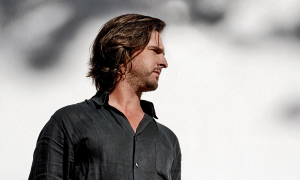
In addition to John Coltrane and Wayne Shorter, there are touches of Frank Wess, Dexter Gordon, George Adams, Gene Ammons, even Ben Webster in Handy's playing. Rooted in unmistakable originality, Handy's distinctive style has his personality written all over it. And whether it is in New York, Japan, or Europe, Handy is always working—with the Mingus Big Band, Conrad Herwig's Latin Side All Stars, or David Weiss's various projects like The Cookers or The New Jazz Composers Octet. With a strong, full body of work already behind him, this is one busy musician.
An extremely satisfying player, Handy exhilarates in taking the constant chances required by a jazz solo, and he conveys the glee of that challenge. A contemporary mainstream hard-bopper, capable of screaming climaxes when required, he reveals a solid familiarity with both the inside and outside. His tone is big and disciplined, tender on ballads, bluesy, and his own—and he can testify. He's a master at starting off solos with an arresting, original ploy to garner some attention. The tenor solo on "Donkey Dust," on pianist Kirk Lightsey's Lightsey To Gladden (Criss Cross, 2008), is a good example. He begins off high—almost skronky—but soon brings it down and sets into an easy groove. On Ray Drummond's 1,2,3,4 (Arabesque, 1999), Handy's workout on "Going Home" reveals how far he can take things, with more than a nod to Rahsaan Roland Kirk, without veering off into the meaningless. Then there's the lovely pacing and varied, considered phrasings of his tenor solo on the Essence All-Stars' version of Oliver Nelson's "Stolen Moments."
And, most importantly, Handy is always emotional, moving. His solos are touching, rarely made up of empty, predigested runs and scales. Rarely exercises in mere facility, Handy is always putting together carefully constructed, but spontaneous, musical statements, appropriate to the context—a maddeningly difficult thing to do, which has been done by only a select few musicians in the past century. Be skeptical when someone tries to convince you that jazz has turned into imitation, or become cold, postmodern, conceptual posturing. Listening to Handy demonstrates that the state of jazz is more than just healthy, it is exciting and vital; it continues to operate, as it always has, within the parameters of significance, using the same language, however extended, that it has always used: the language of the human heart and soul.
He's been in the movies, playing the part of Coleman Hawkins in Robert Altman's 1996 jazz film Kansas City. He's served as music contributor to The Cosby Show. He's been Musical Director for the Mingus Big on and off for a good part of the last twenty years. And he has been reedman of choice for countless recording dates by both contemporaries and elder statesmen. He's one of the few outstanding tenor saxophonists of his generation, but he is just as in demand as an alto saxophonist and flautist—a changing of musical hats difficult to pull off successfully. And while it is truly puzzling why he has only a handful of CDs under his own name, already, in his mid-forties, he's recorded more than most performers do in a lifetime.
Lightsey To Gladden
Not long ago Handy had a pleasant surprise. Nearly two decades after it had been recorded, the Dutch Criss Cross label released Lightsey To Gladden, a CD Handy had been part of in 1990. On that date he plays three of the eight tunes on tenor and five on flute. "I was totally surprised when I heard that it came out after so long," Handy says, and then adds, "I played a lot of flute on that recording, and I didn't realize I could play the instrument that well in 1990. I was 27 or 28 then. I played more flute then than I do now."The release has garnered accolades. Among the high level performances, one track in particular stands out. Lionel Hampton's balladic "Midnight Sun" features Handy on flute, accompanied by pianist Kirk Lightsey. The track is eight minutes long, all gorgeous flute with no piano solo. "When I listened to that I thought 'Man, what was the matter with me? I was with Kirk Lightsey, and I didn't even give him any solo space. And it was his record.'"
Such are the idiosyncrasies of the recording industry, that a gem like Lightsey To Gladden would have to wait nearly two decades to see the light of day. The CD, with trumpeter Marcus Belgrave also in the front line, sounds as if it had been made right now. At the time it was recorded, after featuring so much of his flute playing, you'd think Handy would have given even more emphasis to the wind instrument, but shortly thereafter he quit playing flute. "Yeah, at around that time, I got disgusted with my flute playing and I stopped playing the instrument for ten years. I didn't pick it up again until I was around 37."
The Original Mingus Dynasty
This was after Handy had been in one of the early incarnations of The Mingus Dynasty alongside one of America's most acknowledged flute masters, James Newton, in addition to such veteran Mingus luminaries as Roland Hanna, Dannie Richmond, and Jimmy Knepper. Handy hadn't known Newton back in California, their home State. "The minute I met him I just felt a kindred spirit in him. He was like the big brother I never had; such an amazing flautist. He definitely inspired me."The group's recording with Handy on tenor and Newton on flute, Mingus' Sound of Love (Soul Note, 1987) was made in Milan for the Soul Note label. One highpoint is "Celia," where Handy, preceded by Hanna and followed by Newton, takes a fine tenor chorus full of unexpected trills and deep lyricism. "Yeah, that record came about when Giovanni Bonandrini of Soul Note was running Umbria. I remember being in Italy for a good amount of time then. We played Umbria, Ferrara, and other festivals. Then we went to play the North Sea Festival on an infamous wind-whipped tour in which we all caught pneumonia, basically, because it was some promoter's desire to save a buck and put us on a train from Italy to the North Sea. Myself, James Newton, and Sue Mingus were in a car with this guy who would not stop smoking cigars. All night long the window was cracked and it was like 20 degrees outside. So we all got sick and it kind of snowballed and the whole band got sick from us. It wasn't funny then, but we used to laugh about it later."
Handy was back, on tenor and flute, for the Mingus Dynasty recording Next Generation Performs Charles Mingus Brand New Compositions by Mingus Dynasty (Columbia, 1991), this time with tenor legend George Adams on board. Though three tenor saxophonists participate on the date, (Alex Foster is the third), Handy is the only soloist for the opening "Sketch Four," which he takes on tenor. On the fine ballad "Portrait," he is the flute soloist. And on "Opus Four," it's the two tenors of Handy and George Adams, while "Opus Three" gives space to all three tenor saxophonists.
George Adams
George Adams comes in for special mention when the subject of the early Mingus Dynasty comes up."George Adams was in the cleanup position in that band. The front line was myself, George, and Jack Walrath for at least two or two and a half years. And George was the original tenor player in The Mingus Big Band when that started in 1991."
In the first incarnation of The Mingus Big Band, Adams held the reed section's "blues chair," while Handy played in the lead chair, "where it was probably more important to have the eyes," he says. "I was the guy who could read all the notes. But George got lots of solo space, and George is always going to play George."
Handy claims that he must have absorbed the equivalent of 15 gigabytes of information from George Adams. "He was an amazing, amazing, amazing performer."
Listening closely enough, Handy can be heard playing a George Adams line from time to time.
Handy makes an important point about how this music is sometimes handed down. "That's the beautiful thing about it. While you live, while you're here on this planet, there are certain people around you who, once they're gone, you carry bits and pieces of them into the next generation. It's like the oral tradition, and George Adams would be the equivalent of the modern day Griot in the tradition that was passed on from all the way back to Coleman Hawkins. It isn't done because you listen to a record and transcribe something. It's done because there was a guy sitting next to you who was playing some shit and you got burned from the heat and the heat left a mark on you. That's the stuff that doesn't wash off."
Roy Haynes
The first group Handy worked with steady when he came east to New York was The Roy Haynes Quartet. "I think I kind of started out pretty much at the top," Handy comments.It wasn't until '92 that Handy recorded When It's Haynes It Roars (Dreyfus, 1992) with the Roy Haynes Quartet. That date was followed up by Haynes' Homecoming (Dreyfus, 1994). Handy played mostly tenor and soprano with Haynes' band.
Handy learned a crucial lesson from Haynes, one which he seems to have kept in mind over the years: always remember who you're playing for. No matter how great you are, you can't get so self-absorbed that you forget you're playing for an audience. "Roy used to tell me that when he went out with Coltrane, sometimes at the end of the night, the help would be packing up and 'Trane would still be playing. 'Trane would close his eyes and be playing solos for 15 or 20 minutes, and the song would go on for a half an hour. Roy remembered playing somewhere in Chicago and the audience had already left. They were putting the chairs on the tables and cleaning up the place, and 'Trane was still playing. His eyes were closed and he was sweating and Roy was hittin' and they were all hittin,' and everybody else had already gone home."
Haynes taught Handy that you have to learn how to keep the listener's attention. This is surely one reason Haynes has been a successful leader for so long, and, as an octogenarian, is still leading his own groups, playing contemporary music with players less than half his age. Handy has said elsewhere in All About Jazz that Haynes is "like a cat in the jungle. He judges very carefully that moment when he can capture an audience, then, at just the right time, he pounces."
New York Early Days
On arriving in New York in the late '80s, one of the first things Handy realized was that his rhythmic concept wasn't as sophisticated as players like David Murray and George Adams. "My thing was smoother; less funky in a way." He was determined to figure out how to bring more rhythmic depth to his playing. This led him to seek out players like Irakere's Orlando "Maraca" Valle, when the Cuban band would play in New York. "When I listened to Maraca playing, I learned basically that everything goes back to the drum. Not the snare drum from Scotland, but back to Africa—the Djembe. Everything in this music comes from there. I understood why it is I like certain kinds of music and why I like certain kinds of players—because they either have that sort of understanding of the rhythm, or they don't. I began to understand how important that is. You listen to guys like Billy Harper, especially his compositions, and man he's dealing so much with traditional rhythms. His use of them is absolutely brilliant." Handy actually had the chance to tour the States with Maraca in '06 and in '08, but sad to say, there are no recordings of that band.Handy, the California native, obviously thrives on the energy of New York. "There's so much to glean from hanging out in New York with good musicians. It's like, if you want to ski, you hang out with the cats who know how to ski."
When he goes back home to Oakland, California he can sometimes get too comfortable. "I mean, I love California—the climate, the food, the lifestyle, it's great. But at some point I have to come back to New York, because I feel like I begin to lose that edge that I need; that pushing myself. I've got to get up and practice. I can go for days in California without touching my horn. Then I have to leave and get back into the belly of the volcano."
Mingus Big Band
On first joining The Mingus Big Band in the '90s, Handy played tenor and flute. Then suddenly, within the last five years or so, Sue Mingus switched him to the alto chair. "Alex Foster was playing lead alto, and Steve Slagle also played lead alto for awhile. Gradually, Alex and Steve fell out of the rotation. Alex became very busy with Saturday Night Live, and Steve Slagle had gigs with his band with Dave Stryker and other people."So at one point, they needed an alto player. Sue moved me over one day. After maybe a week, she said 'Wow, you sound really good on alto.' Of course, I knew the music already, and so it just kind of stuck. I'd been playing tenor all the way up until after I came off the road with Herbie Hancock."
Handy's longest hiatus from The Mingus Big Band turned out to be the three and a half years he spent on the road with the Herbie Hancock Quartet.
Herbie Hancock Tour
"For me," Handy says, "Herbie was like your best uncle who comes over and takes you to the ball game."At the time, The Herbie Hancock Quartet was basically covering The New Jazz Standard (Columbia, 1996). "Herbie had a really big hit with that record," Handy says. The New Jazz Standard had been recorded with guitarist John Scofield, saxophonist Michael Brecker, drummer Jack DeJohnette, bassist Dave Holland and percussionist Don Alias. "It sold well over 200,000 copies in a very short amount of time. And Verve was impressed. They decided 'Wow, let's get these guys on the road.'"
But, with all those leaders, the band turned out to be expensive. "I think they did at least one big tour and then everybody got busy with their own stuff." Hancock decided to continue the run, so he hired Handy to replace Brecker, and brought in drummer Gene Jackson, who had already been playing with him for a number of years. Holland stayed for six months, and when he left, he was replaced by Kenny Davis on bass. "So that quartet went out and we continued touring. They promoted that record for a long time. I don't know if that record ever went gold, but it sold a lot of copies."
Unfortunately, Handy never got the chance to record with Hancock. "Herbie was trying to figure out what he wanted to do next," Handy says. "To this day one of my biggest regrets is not having put more of my music in front of him. That's what he did when he was with Miles Davis, and that's what Wayne Shorter did." Handy felt he had an obligation to do the same while working with Hancock. "But I had a really hard time coming up with original music, because I'd been listening to Herbie probably since I was eight years old. I'd been so influenced by his tunes, and music, and the sound he would get out of the piano, plus all his different groups like Thrust and Headhunters, the Miles Davis Quintet, and the things he did on Blue Note with Dexter [Gordon] and Freddie [Hubbard] and others—I just had Herbie on the brain." When learning to play in high school, Handy used to transcribe Hancock's piano solos onto flute. "That great solo on "Seven Steps To Heaven." I still think that is one of the best solos on record. It's something that Bird [[{Charlie Parker}}] could have done."
The entire time they played together, Hancock's sound was so strong and so powerful, Handy couldn't hear anything else. "I did end up putting a couple of tunes in front of him, but some of the stuff I had was really overwritten and too complicated. We worked on it in rehearsals; he was very gracious with his time and help, but that's as far we got."
Though Handy never recorded in the studio with Hancock, he was surprised to learn that Hancock recorded all their concerts. "He always has his soundman set up a tape recorder. Herbie's been doing that since he was with Miles. After the Miles concerts, Herbie, Wayne, and Tony would get together and listen all night to the playbacks to hear what they'd been doing. Herbie must have a ton of amazing stuff recorded."
First Recordings as a Leader
After playing and recording with Haynes, The Mingus Big Band and Dynasty, and Betty Carter among others, Handy released the first CD under his own name: Split-Second Timing (Arabesque, 1992). With bassist Ray Drummond, drummer Ralph Peterson, pianist Edward Simon, and guest trombonist Robin Eubanks, it is one of those debuts that causes jazz fans to salivate. Here was a charging, explosive, up to the minute group that didn't seem content to simply rehash the past. Bringing forward the mainstream with a tough, two-feet on the ground approach, Split-Second Timing served in part as an antidote to much of the conventionalism of the '80s—where, for some, it seemed as if musicians were stuck in a time warp with too much rehashing of the Miles Davis/Wayne Shorter band of the '60s. "The Immediacy Of Hardcore," a trio piece, tackles the demanding confines of the tenor trio—long before it became fashionable. Now, every self-respecting saxophonist has to prove him/herself in the bare-bones setting. In contrast, Handy meanders through a lovely exploration of the original "Tori" on alto.Split-Second Timing was followed up the next year by another forward-looking set of music. Taken all on tenor, Introducing Three For All + One (Arabesque, 1993) was, as the title indicates, a trio with bassist Charles Fambrough}} and drummer Ralph Peterson. Pianist David Kikoski, Handy's band mate from The Mingus Big Band, sits in on piano for a few numbers. Handy covers Joe Henderson's "Isotope" as another trio rave up. And Peterson's "E Racer X," a dedication to George Adams, is fast and complex enough to require seat belts.
Both these Arabesque dates stand out as harder and more explorative than much of jazz of the period, and they still sound as fresh now as when they were first recorded.
Other Sessions
1993 was a momentous year in jazz in that it saw the release of the first Mingus Big Band recording, Nostalgia In Times Square (Dreyfus, 1993). This was new and eventful—and a recording by the band New York music cognoscenti had been talking about. The group had been playing Monday nights at the Time Café in the Village. Handy has a number of features on "Open Letter To Duke," and "Ecclusiastics." His tenor solo on "Weird Nightmare," is especially noteworthy in bringing out the tune's mystery.Another highpoint of this period is the Lenny White-produced Acoustic Masters II, (Atlantic, 1994); a dream band with vibraphonist Bobby Hutcherson, pianbist Mulgrew Miller, bassist Ron Carter and drummer Lenny White, on drums, plus trumpeter/percussionist Jerry Gonzalez on a few tracks.
Created by such a group of warmly compatible musicians, this often overlooked and largely modal date holds up beautifully. In what amounts to an all-star session, the CD features plenty of prime Handy, and two of his best tunes: "Wayne's World" and "Concrete Blues." Handy sounds jubilant and confident in such company. Hutcherson's "8/4 Beat" is a particularly intriguing workout, as is Miller's unforgettable "Second Thoughts." Acoustic Masters II came as the second in a series of recordings White produced for the label. The first—Acoustic Masters I—was a 1994 date featuring saxophonist Charles Lloyd, pianist Cedar Walton, bassist Buster Williams and White, and has been even more difficult to find over the years than Acoustic Masters II. There were hopes that more would be heard from this band with Hutcherson, but the release received little attention and quietly slipped into that realm where a session is more talked about than actually heard.
Handy was always on call and in demand during this period, and 1995 turned out to be another banner year due to the release of numerous recordings on which he played a seminal part. The Mingus Big Band followed up with its second CD, Gunslinging Birds (Dreyfus, 1995), which turned more heads, and definitively put the band on the map and in the polls as one of the top big bands in the country. There was Grand Central, a tribute to the music of Hank Mobley that, as a two-tenor group with Ravi Coltrane, recorded Tenor Conclave (Evidence, 1995). For Handy, Mobley is an interesting figure, another of the Blue Note tenor masters to whom he has paid particular attention. Like Mobley, Handy calculates, but his soloing does not come off as calculated. His passion is clear, and there is always melodic content, in addition to an often laid-back reserve, or cool, to his playing. Arguably, the most effective tune on the date is Handy's personal tribute to Mobley, "Hanksville."
In the same year, Essence All Stars—Handy once again with Ron Carter and Lenny White, plus guitarist Kenny Burrell, pianist Cedar Walton, and trumpeter Tim Hagans—recorded Primal Blue (Hip Bop, 1995). Another Lenny White-produced date, the regard in which Handy is held by his elders can be sensed. Carter's "For Toddler's Only" lets Handy loose, a trio feature backed by the bassist and drummer. White's "Uno Dos Adios," a marvelously infectious 6/8 arrangement, incorporates tasty horn riffs behind the soloists, and features Handy stretching out on tenor. Handy's lovely single chorus on Oliver Nelson's "Stolen Moments" is the essence of one aspect of what he does best. Opening up in one of the tenor's higher registers, in the 'Trane/Wayne realm, he walks a tightrope of poise with his carefully-paced, strategically-balanced lines.
1995 also saw the formation of The Chartbusters, yet another all-star band featuring Handy with Dr. Lonnie Smith and, once more, Lenny White. They recorded two CDs: The Chartbusters, Vol. I (1995), on vibraphonist Mike Mainieri's NYC Records label, consisted of jazz hits from the Blue Note label including Horace Silver's "Tokyo Blues," Mobley's "No Room For Squares," and Kenny Dorham's "Una Mas." The follow-up, Mating Call (Prestige, 1995), contained popular jazz standards associated with the Prestige label, like Sonny Rollins' "Mambo Bounce," Rahsaan Roland Kirk's "Kirk's Work," plus a Handy-penned tribute to Gene Ammons, "Juggsville."
Two Ray Drummond-led dates from the '90s also contain exceptional Handy: Excursion (Arabesque, 1993), and 1, 2, 3, 4 (Arabesque, 1999). On the former, Handy shares the tenor duties with Joe Lovano, and their contrast in styles is highly instructive, with Handy having the harder edge, tighter embouchure, and more direct lines. 1, 2, 3, 4, is a straight quartet date with pianist Stephen Scott and drummer Billy Hart. Perhaps the highpoint of this date is the treatment of "Goin' Home," in which an infectious Handy gets extreme, but always manages to rein himself in for the save. He takes the first solo on tenor, and then, after the piano solo, he comes back in for even more time—as if he can't be contained and hadn't gotten it all in during his first solo. It's a joyous romp on a somewhat hoary tune. With two Wayne Shorter tunes—"Ana Maria" and "Nefertitti"—plus Ellington's "Prelude to A Kiss," Carter's "Little Waltz" and Coltrane's "Mr. P. C.," the date contains a tasty set of song choices.
Ballad Playing
"The reason I play saxophone," Handy explains, "is because when I was young, I heard Dexter Gordon playing 'Body and Soul' on the radio one day. Man that hit me. His sound just went right into my chest, and I was like 'Woh, what is this?' It warmed me, and I knew that's what I wanted to do." In tribute, Handy dedicated the ballad performance ''You're Blasé," on Split-Second Timing to Gordon.Betty Carter confirmed to Handy that he had a gift for ballads. When he was playing with her in the '90s, "she told me I can fire it up when I want to, but that I also have the tone and sensibility to play pretty." Handy is on Carter's excellent Droppin' Things (Verve, 1990), with Freddie Hubbard, and its follow-up It's Not About The Melody (Verve, 1992).
Ballads, Handy says, come easily to him. "From the moment my parents gave me a saxophone, I was practicing scales and playing constantly, running up and down the horn. I was around 14 years old, and at one point my father came in to me and he said 'Man, what about a ballad? Can you slow down and play pretty, and say something that's not just running up and down the horn?' I looked at him and thought to myself 'Yeah, that's easy.' This is the hard stuff I'm practicing. I don't think he understood it. I know I didn't understand it. Now I do.
"To play slow and in a languid, lush kind of style, for me that's like rolling out of bed in the morning. That's where I live. The hard part is the actual thought process of trying to connect chord changes and play a melody through chord changes and play fast; I find that more difficult. To play a simple melody, that's like 'OK, I can do that.' I love thematic development, and I think that if I had never been exposed to John Coltrane or Charlie Parker, I might just be like a balladeer or something."
Reflections on Change and Flow
Handy's next two dates under his own name—Reflections in Change (Sirocco Music, 1999) and Flow (Sirocco Music, 2000)—reveal a growing maturity, depth, and confidence. On the earlier CD, Handy is fully in charge of an excellent quartet with pianist Geri Allen, bassist Rodney Whitaker and drummer Ali Jackson. Handy and Jackson each contribute four originals, in addition to Mingus' "Eclipse." Most arresting may be "Adona's Song: Prelude" and "Adona's Song"—reflective, almost classical pieces. They are arranged for a larger ensemble by Sy Johnson, who had worked as an arranger with Mingus, and had also been doing arrangements for The Mingus Big Band. Exemplary orchestrations, they become lessons in how not to interfere with the beauty of the original composition. Leading up to these timeless performances, the bulk of Reflections In Change showcases Handy's capacious blowing, and he sounds relaxed, unfettered and elated.Flow is, perhaps, an even more felicitous and fully realized date, with Handy composing the majority of the eight tunes, with one contribution from Ali Jackson, one Hancock/Stevie Wonder piece ("Chan's Song") and a notable treatment of an old standard associated with Sonny Rollins, "Just One Of Those Things." On the latter, Handy provides such an eye-opening, clever introduction that it's curious why he didn't do a "KoKo" and simply state the introduction, jettison the tune, and head right into the improvisations.
As these releases reveal, Handy started off the millennium with a bang.
More Mingus Big Band
The Mingus Big Band remains an ongoing project, with Handy returning to the fold for its two most recent recordings. On I Am Three (Sunnyside, 2004), his flute is featured on "Free Cell Block F.," while on Live in Tokyo (Sunnyside, 2006), his alto dominates on "Celia" and reprises his flute on the live version of "Free Cell Block F." His treatment of "Celia" harkens back to his 1987 Mingus Dynasty performance where he took the tune on tenor. He still has that lyrical sensibility, only more so, his alto exuding all the slinky, noir sound he is capable of bringing to ballads. The Mingus Big Band still performs every Monday night, now at New York's Jazz Standard. In the past year or so, Handy relinquished musical directorship to bassist Boris Kozlov. "Boris has been leading the band now," Handy says. "I haven't been involved as much lately. I've been freelancing and doing other projects. Boris' knowledge of the music from the vantage point of the bass is great. He came along at a really perfect time and stepped up to the mike, literally, and has taken a lot of control. He's doing a fantastic job leading The Mingus Big Band, and he's been coming up with nice arrangements."New Jazz Composers Octet
In the past decade, Handy has been an important element in many of trumpeter/arranger David Weiss' projects—on Weiss' own recordings and in recordings under the name of The New Jazz Composers Octet. The earliest was the Freddie Hubbard release New Colors (Hip Bop 2000), which Weiss produced and arranged with Hubbard. Hubbard was near the end, and his playing was spectral at that point, but it's a worthwhile record for the kickass arrangements of great Hubbard tunes, and the exuberance of the band including Handy, pianist Xavier Davis and alto saxophonist Myron Walden. Their high level soloing is more than enough compensation for the weakened Hubbard performances.From the same period comes Weiss' Breathing Room (Fresh Sound, 2001). Here Handy plays alto saxophone foil to Marcus Strickland's tenor. "I replaced Walden's alto in that date," he says. Pianist Xavier Davis delivers another exceptional performance, swinging as much as he is lyrical. Back at North Texas States University, in the eighties, Weiss had formed a band with fellow-student Handy which focused on playing Wayne Shorter tunes. Breathing Room features Shorter's "Armageddon," and "Those Who sit And Wait."
One of the highpoints of the next New Jazz Composers Octet's Walkin' The Line (Fresh Sound, 2002) is another in Handy's bag of significant compositions: "Abdullah's Demeanor"—dedicated to Abdullah Ibrahim, a past employer—features a heartfelt, reflective tenor solo that builds to a peak of intensity and then calmly eases back into the head. Chick Corea's "Inner Space" contains two fine sax solos, one by Handy on alto, preceded by Jimmy Greene on tenor.
Dee Dee Bridgewater
During the last quarter of 2009, Handy worked with singer Dee Dee Bridgewater. Subsequent to Bridgewater's release of her Billie Holiday tribute, Eleanora Fagan (1915-1959): To Billie With Love From Dee Dee (Emarcy, 2010), they have been touring again at the beginning of 2010. "She has a great band," Handy says, "with Edsel Gomez as pianist and musical director, Ira Coleman on bass, and Gregory Hutchinson on drums."Handy thoroughly enjoys working with Bridgewater. "She's more than a singer or vocalist. She's like an instrumentalist, a musician. She tells the group, 'Think of me as being like the trumpeter player in the band.' Traditionally, when you play with a singer, you don't want to cover them up. My training was that you don't play when the vocalist is singing. You play behind the singer, not at the same time. But, with Dee Dee there's nothing I can do that she isn't right there harmonically, rhythmically—in any way. She picks it right up." The New York Times' Stephen Holden commented on the February, 2010 New York City appearance of the group: "Mr. Handy was the other key player. Throughout the show he exhibited a combination of sensitivity and audacity that suggested a telepathic connection to Ms. Bridgewater, as he explored the timbral limits of the flute and saxophones in much the same way that she used her voice."
Conrad Herwig's Latin Side All Stars
Handy has taken over the reed spot vacated by the late Mario Rivera in Conrad Herwig's Latin Side All Stars band. "Mario was sick for the last year and a half of his life. As his replacement, I joined the group a little over two years ago." Handy brings a healthy blues-inflected grounding to the band, and his relationship with Latin music goes way back. "I've always been passionate about Latin music. I grew up listening to a lot of Salsa, like the records on Fania and other labels. The sound has always been with me." Handy says Herwig's group "is a great concept; one of those concepts that's solidified. Conrad's been doing it for 14 years now."The band's latest recording, scheduled for 2010 release, is The Latin Side Of Herbie Hancock (HighNote, 2010). Handy waxes enthusiastic about the CD. "Wait till you hear 'Toys,' and 'Maiden Voyage.'" The band—with trumpeter Randy Brecker, pianist Bill O'Connell, conguero/vocalist Pedro Matinez, bassist Ruben Rodriguez and drummer Robbie Ameen—has been working frequently. At a January, 2010 gig at The Blue Note in Greenwich Village, the band—vigorous and self-assured—showed what it could do. The music works as jazz, as Latin, as Latin jazz, as world music, as dance music...whatever. It's exciting and vital. Handy is the perfect front-line foil for Herwig, who keeps pushing himself beyond what seems capable on the trombone.
The Cookers
Another major contemporary ensemble in which Handy plays a crucial part is The Cookers. A David Weiss project, the Cookers is a super group made up of tenorist Billy Harper, trumpeter Eddie Henderson, pianist George Cables, bassist Cecil McBee and drummer Billy Hart, with musical director Weiss on trumpet and acting as producer. Handy has replaced James Spaulding and plays alto and flute with the group, which has been together for two years.Having toured Europe and the United States, there's a bit of footage on YouTube, and in January 2010, the group recorded its first CD for the Jazz Legacy (Prod) label. "People are going to love this record" Handy enthuses. "We just recorded for John Lee in New Jersey. It's a band that's taken its title from the Night of the Cookers, the [1973] Blue Note Freddie Hubbard and Lee Morgan live date."
Revealing awe for frontline mate Billy Harper, Handy says, "I wish I could figure out how to play like Billy Harper. We played in Detroit last week and everybody knew Billy and his compositions. He's been there before. There were some serious, diehard, hardcore jazz fans there. It wasn't like playing some of the clubs in New York where you see all these people dressed beautifully in this beautiful room with the skyline of Central Park and the city in the background. I've always felt, in places like that, that people are overwhelmed by the sheer beauty of the surroundings, and they're like 'Let's clap politely because this is such an elegant place.' The Detroit experience was exactly the opposite. There was one guy in the audience who would not shut up. People were screaming 'Yeah.' It was really intense how people were digging the music on that level. I was kind of like 'What America is this? Where has this America been for the last twenty years of my career?'
Comments

Tags
Craig Handy
Interview
Robert Dugan
United States
John Coltrane
Wayne Shorter
Frank Wess
Dexter Gordon
George Adams
Gene Ammons
ben webster
Mingus Big Band
Conrad Herwig
David Weiss
Kirk Lightsey
Ray Drummond
Roland Kirk
Oliver Nelson
Coleman Hawkins
Lionel Hampton
Marcus Belgrave
James Newton
Roland Hanna
Dannie Richmond
Jimmy Knepper
Alex Foster
Jack Walrath
Roy Haynes
David Murray
billy harper
Steve Slagle
Dave Stryker
Herbie Hancock
John Scofield
Michael Brecker
Jack DeJohnette
Dave Holland
Don Alias
Kenny Davis
Miles Davis
Betty Carter
Ralph Peterson
Edward Simon
Robin Eubanks
David Kikoski
Joe Henderson
Lenny White
Bobby Hutcherson
Mulgrew Miller
Ron Carter
Jerry Gonzalez
charles lloyd
Cedar Walton
Buster Williams
Hank Mobley
Ravi Coltrane
Kenny Burrell
Tim Hagans
Dr. Lonnie Smith
Mike Mainieri
Horace Silver
Kenny Dorham
Sonny Rollins
joe lovano
Stephen Scott
Billy Hart
Freddie Hubbard
Geri Allen
Rodney Whitaker
Sy Johnson
Stevie Wonder
Boris Kozlov
Xavier Davis
Myron Walden
Marcus Strickland
abdullah ibrahim
Jimmy Greene
Dee Dee Bridgewater
Billie Holiday
Edsel Gomez
Greg Hutchinson
Mario Rivera
randy brecker
Bill O'Connell
Eddie Henderson
George Cables
cecil mcbee
James Spaulding
lee morgan
Johnathan Blake
lew tabackin
Hubert Laws
For the Love of Jazz
 All About Jazz has been a pillar of jazz since 1995, championing it as an art form and, more importantly, supporting the musicians who create it. Our enduring commitment has made "AAJ" one of the most culturally important websites of its kind, read by hundreds of thousands of fans, musicians and industry figures every month.
You Can Help
To expand our coverage even further and develop new means to foster jazz discovery and connectivity we need your help. You can become a sustaining member for a modest $20 and in return, we'll immediately hide those pesky ads plus provide access to future articles for a full year. This winning combination will vastly improve your AAJ experience and allow us to vigorously build on the pioneering work we first started in 1995. So enjoy an ad-free AAJ experience and help us remain a positive beacon for jazz by making a donation today.

Giveaway

Eligible winners: 15
Days remaining: 4
Days remaining: 4