Home » Jazz Articles » From the Inside Out » Seven Steps to Soul
Seven Steps to Soul

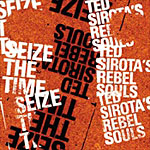 Ted Sirota's Rebel Souls
Seize the Time
Naim Jazz
2009
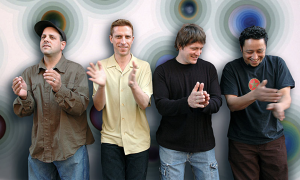
"Seize the Time is dedicated to the many musicians who stood up boldly in the face of oppression and injustice and refused to surrender or back down despite harsh consequences," says drummer, bandleader and composer Ted Sirota. "With the world sinking deeper and deeper into crisis each day we should forever remind ourselves that in crisis there is opportunity—seize the time!"
Seize the Time is a remarkably well-sequenced, cohesive package that fits together from its opening rework of The Clash's "Clampdown" to its finale "The Keys to Freedom," as Sirota and his Rebel souls venture through space and time to gather anthems for the beat down and pushed around. "Clampdown" is more than a new version—it's a new vision that does not mute its rebellious mood and fiercely independent spirit. The anger in Charles Mingus's content and breadth of his musical vision make "Free Cell Block F, 'Tiz Nazi U.S.A." perfect for Sirota's ensemble and thematic approach; as it wobbles through its ending, it opens the moan of "Hard Times (Come Again No More)," composed by Stephen Foster and published in 1855.
Sirota serves "Polo Mze," written by South African activist Miriam Makeba, in two parts: He hammers cowbell and other percussion sounds into a tribal background of part one while horn players wail on top, a potent mixture of African and jazz streams that would make even Pharoah Sanders smile; part two updates this jungle funk from rural Africa to urban America and rages in much more strident tones. "The Keys to Freedom" is the obvious musical and thematic culmination, a sharp and incisive romp through post-bop modern jazz.
As for the leader, Sirota consistently demonstrates his affection for his professed instrumental inspiration, Max Roach. Sirota's drums rush above and below the rhythms and tempos of "Clampdown" to create more waves and pulses than articulated beats, shaping an elastic space between his drums and Dave Miller's guitar that suggests Paul Motian's supple relationship with Bill Evans' piano. In his spaced-out reggae original "Killa Dilla," Sirota taps out almost imperceptible beats within the beats that you feel more than you hear. His solo improvisational tribute "Viva Max!" overspills with snare rolls and bass bombs and explodes with the bright sound, crisp articulation, and sharp funk so characteristic of Roach's legendary attack. "Max was one of the main reasons I wanted to become a jazz musician, and my biggest influence as a young drummer," Sirota verbally explains, but on Seize the Time, his music does the talking.
Seize the Time musicians: Geof Bradfield: tenor saxophone, soprano saxophone, bass clarinet; Greg Ward: alto saxophone; Dave Miller: guitar; Jake Vinsel: acoustic bass, electric bass; Ted Sirota: drums.
Seize the Time song titles: Clampdown; 13 de Maio; Free Cell Block F, 'Tiz Nazi U.S.A.; Hard Times (Come Again No More); Killa Dilla; Tollway; Viva Max! (Improvised Drum Solo); J.Y.D.; Polo Mze Pt. 1; Polo Mze Pt. 2; Little D; The Keys to Freedom.
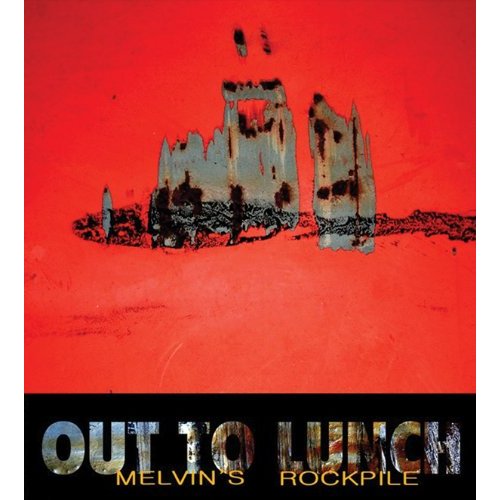 Out to Lunch
Melvin's Rockpile
Accurate Records
2009
Very few journalists could resist the lure of a band whose music has evoked the hallowed names of Eric Dolphy and James Brown in the same descriptive sentence, which The Village Voice did to praise the "improvisational acumen" and "rhythmic genius" of reed player David Levy.
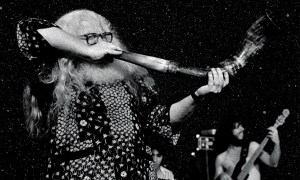
When he's "Out to Lunch," Levy leads this extraordinary exploratory improvisational funk-rock band from their base in NYC, the biggest and funkiest rock of all. Because Levy's Lunch-men combine a rhythm section, horn section, and electronics, there's almost no instrumental jazz, funk, pop, or rock style from the past half century that they're not equipped to play. This makes it even more rewarding when saxophonists Levy and Petr Cancura and trumpeter Josiah Woodson break so much of Melvin's Rockpile into refracted jazz styles.
The passion and vision with which Levy and Cancura respectively play alto and tenor make it difficult if not impossible to distinguish who plays what. What sounds like tenor in "Little Neddie Knickers" builds, reshapes, and then rebuilds a few small phrases into expansive new ideas, a trademark of classic traditional Sonny Rollins jazz. Off-center and slippery, "To the Queen" at first sounds like The Mothers of Invention freely honking through "Cold Sweat," until Woodson's trumpet solo simultaneously cuts through and yet unifies the rhythm section behind him—the sound of jazz, but delivered more like rock 'n' roll.
When we reach "Sunday in Sausalito," those horns come unhinged, raging and screaming for freedom. "The Diminutive Swashbuckler" breaks its hard funk groove down into one of those gargantuan blues outer-space walks that Miles Davis favored late in his career, that frozen and icy sound bound together by the slightest of blues rhythmic threads. "Captain Stilts" picks up its pieces, and then shatters them into bits with an explosive, apocalyptic sound. "Black Tea on Francis Street" serves the requiem, warm and soft and bittersweet.
(Extra special bonus points for the big fat hip-hop organ groove "Dr. Dre's Bar Mitzvah," too.)
Melvin's Rockpile musicians: David Levy: bass clarinet, alto saxophone, bansuri flute, Ableton Live; Petr Cancura: tenor saxophone; Josiah Woodson: trumpet, flute; Eric Lane: piano, keyboards; Matt Wigton: electric bass, upright bass; Fred Kennedy: drums.
Melvin's Rockpile song titles: Song for the Solstice; Little Neddie Knickers; To the Queen; Dr. Dre's Bar Mitzvah; Skip; Sunday in Sausalito; The Diminutive Swashbuckler; Captain Stilts; Black Tea on Francis Street.
 Funkasaurus Rex
Etched in Stone
Self Produced
2008
Joey Berkley wears many different musical hats: Tenor saxophonist (with "no end of idiomatic facility," enthuses The Toronto Globe & Mail); leader of the Four Good Reeds saxophone quartet; leader of the straight-ahead, acoustic Joey Berkley; and, for the past five years, leader of the horn-stoked soul-funk nonet Funkasaurus Rex, whose collective credits include Miles Davis, James Brown, and the Count Basie, Tommy Dorsey, and Duke Ellington orchestras.
On Etched in Stone (which was on the 2009 Grammy ® nomination entry list in FIVE different categories), Funkasaurus Rex stomp and rip through several varieties of classic '70s soul in tunes originally written and performed by soulful rock 'n' rollers (John Fogerty's "Proud Mary"), soulful jazz players (Les McCann's "Samia"), and soul chart-toppers such as Earth Wind & Fire and The Spinners.
John Tropea nails each tune down with guitar hooks so tight and mighty—even though they can sometimes sound lost in the swell of multiple horns—that they provide the pivot point from which these songs swing. Tropea and drummer Chris Parker whipcrack "But It's Alright" (by J.J. Jackson, who worked as an arranger for Jack McDuff and Jimmy Witherspoon while laboring to launch his own singing career), and you just can't lay a melody down more sweetly in the pocket than Tropea in "Can't Hide Love," which smartly showcases the guitarist's bop licks as the first solo, and Chris Coogan's electric tribute to pianist Ramsey Lewis (one of Maurice White's most trusted collaborators) as the second.
But, my, how these horns blow! Berkley's tenor sweetly reaches out for the spirit of Eddie Harris to counterpoint his arrangement of McCann's "Samia." "P.M.S." ("Proud Mary Suite"?) opens in a slow big-band movement, then crashes through several wild moods (including a piano that plays "I Got Rhythm" then proceeds to tear that rhythm down) until you can barely see Fogerty's original left in the distance behind you.
It all closes in a celebration of Berkley's "Mighty Love" for soul music that honors not only the sound of The Spinners but The Sound of Philadelphia, too. Etched in Stone carves out a magical intersection of soul, jazz, blues, and funk styles, and is one of those party-time blowing sessions that seems to rock your house just a little bit harder on a Saturday night.
Etched in Stone musicians: Joey Berkley: tenor saxophone; Bill Harris: alto saxophone, flute; Tony Kadleck: trumpet; Brian Pareschi: trumpet; Jens Wendelboe: trombone; Chris Coogan: piano, keyboards; John Tropea: guitar; Seth Glassman: bass; Chris Parker: drums, percussion.
Etched in Stone song titles: But It's Alright; Can't Hide Love; Tachedogbe; PMS; Samia; If I Ever Lose This Heaven; Six Beauties on a Rooftop; Mighty Love.
 Mario Adnet & Philippe Baden Powell
Afro Samba Jazz: The Music of Baden Powell
Adnet Music / Adventure Music
2009
Brazilian composer and guitarist Baden Powell (1937—2000) is a critical yet relatively uncelebrated figure in the evolution (some would say explosion) of Brazilian classical and popular music in the 1960s and '70s, an important and effective bridge between the classical and popular music of Brazil.
Writers, when we're lucky, can encounter music that expresses vision and depth that overwhelm our ability to describe and critique it. Afro Samba Jazz: The Music of Baden Powell, a tribute led and arranged by guitarist Mario Adnet and pianist Philippe Baden Powell (Baden's son), truly honors the spirit and vision of this composer. This music is so much more broad, wide, colorful, and deep than words; you almost need to write your own music to represent or express it.
The opening "Canto de Xango" seems to ask more questions than it answers: How did Powell knit together horns and pianos and guitars and drums and cymbals and melody and rhythm and harmony so tightly, and yet allow the song to breathe into its own life and shape? How does this melody float so naturally and yet carry itself with the enduring gravitas of the eternal? For your answers, simply listen.
Powell's reverence for the natural, organic beauty of his native Rio de Janeiro shines through the devotional wonder of "Canto de Ossanha" and "Sermao," as well as "Cando de Yemanja," where, beneath soft shadows, the rhythm section rolls with all the mute and immutable power of the Amazon River.
His melody in "Caxanga de Oxala" seems to chase itself across the accordion, flute, and clarinet that play it in sections, the sound of a bright round passed around smiling Brazilian gypsies (with horn counterpoint that sounds just like squeals of laughter!). "Berimbau," perhaps Powell's most famous tune here, opens in splashes of cymbals and drums to introduce jazz-oriented solos by tenor saxophonist Eduardo Neves (who plays with the sharp soulfulness of Wayne Shorter) and Powell's pianist son, who whirls together Debussy-like swirls full of color and imagination.
Afro Samba Jazz quietly closes on "Domingo de Ramos (Palm Sunday)," as flute, accordion, acoustic guitar and other strings usher in the melody with the warmly satisfied spirit of a church processional on a bright Easter Sunday morning. It's a simply, perfectly beautiful way to close this entirely gorgeous set.
Afro Samba Jazz: The Music of Baden Powell musicians: Mario Adnet: guitar; Philippe Baden Powell: piano; Marcos Nimrichter: piano, accordion; Jorge Heider: bass; Jurim Moreira: drums; Armando Marçal; percussion; Ricardo Silveira: electric guitar; Henrique Band: alto saxophone; Eduardo Neves: tenor saxophone; Teco Cardoso: baritone saxophone, alto flute; Jessé Sadoc: trumpet, flugelhorn; Everson Moraes: trombone; Phillip Doyle: French horn; Andrea Ernest Dias: flute, alto flute; Vittor Santos: trombone; Cristiano Alves: clarinet, bass clarinet; Hugo Pilger: cello; Joana Adnet: clarinet; Aquiles Moraes: trumpet; Carlos Negreiros: vocals; Antonia Adnet: seven-string guitar; Monica Salmaso: vocals; Maucha Adnet: vocals.
Afro Samba Jazz: The Music of Baden Powell song titles: Canto de Xango (Song for Xango); Ritmo Afro (Afro Rhythm); Caxangá de Oxala (Oxala's Game); Nhem nhem nhem; Lamento de Exu (Exu's Lament); Canto de Ossanha (Song for Ossanha); Lamento de Preto Velho (Lament for an Old Man); Sermao (Sermon); Canto de Yemanja (Song for Yemanja); Pai (Father); Alode (Mermaid's Lament); Berimbau; Yansan Suite; Domingo de Ramos (Palm Sunday).
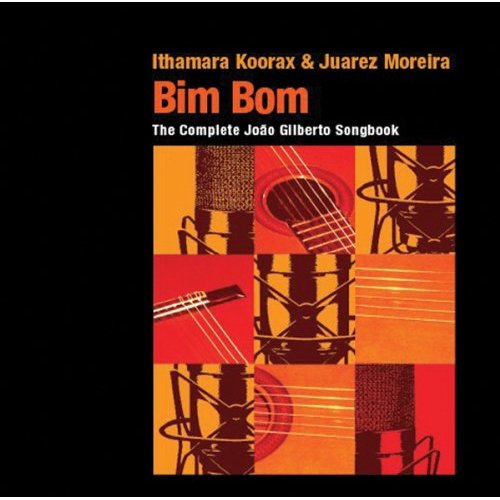 Ithamara Koorax & Juarez Moreira
Bim Bom: The Complete Joao Gilberto Songbook
Motema Music
2009
The recently departed 2009 was heralded as the fiftieth anniversary of such landmark jazz albums as Kind of Blue and Time Out. But the 50th anniversary of the debut album by one of Brazil's most famous and enduring composers, Joao Gilberto—Chega de Saudade, which announced the birth of bossa nova to a world in aching need of its brightness and warmth—was more quietly celebrated. In Gilberto's honor, top contemporary Brazilian vocalist Ithamara Koorax teams with top contemporary Brazilian guitarist Juarez Moreira for the first recording of all Gilberto's compositions under one cover, an intimate "live in the studio" performance produced by Arnaldo de Souteiro, one of the reclusive composer's closest confidants.
The smallness of the duet format heightens the delicacy, intimacy and romance of these gorgeous compositions and the many moods they invoke. In the musical company of only one companion, Koorax fully explores every brassy edge, percussive jolt, and mysterious whisper in her voice, and gives Moreira the chance to sing with her through his guitar. In the ballad "Ho-Ba-La-La" and the title track, they twirl and intertwine together like lovers locked in embrace.
They saunter carefree through sunny "Acapulco," where Moreira stretches out an electric solo that sounds like Pat Metheny vacationing on a Mexican beach; in "Glass Beads," Koorax bubbles out her voice into flawless crystal spheres, strung together by Moreira's guitar. Moreira extends "An Embrace to Bonfa" as an acoustic guitar solo, with strumming that makes those strings seem to sing, while Koorax finds her spotlight in "Valsa (Bebel)," a wordless vocal that floats and bounces warm and soft.
Their mutual journey through "Forgotten Places" reveals that elusive, nearly perfect combination of composition, arrangement, and performance.
Bim Bom is the second release in Motema Music's "Jazz Therapy" series. Its proceeds benefit the Dizzy Gillespie Memorial Fund of Englewood Hospital & Medical Center, which partners with the Jazz Foundation of America to provide free medical care to musicians who need it.
Bim Bom: The Complete Joao Gilberto Songbook musicians: Juarez Moreira: acoustic guitars, electric guitars; Ithamara Koorax: vocals.
Bim Bom: The Complete Joao Gilberto Songbook song titles: Bim Bom; Ho-Ba-La-La; Forgotten Places; Minha Suadade; Voce Esteve Con Meu Bem?; Valsa (Bebel); An Embrace to Bonfá; Glass Beads; Joao Marcelo; Undiu; Acapulco; Ho-Ba-La-La (English lyrics).
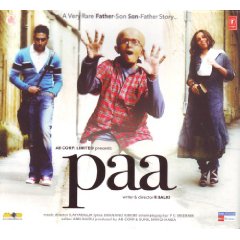 Maestro Ilaiyaraaja
Paa: Music from the Film
T-Series
2009
One of the most prolific and important composers in the history of India, Maestro Ilaiyaraaja has scored nearly 900 films, composed more than 5,000 songs, and has released several instrumental albums—including an original symphony by the London Royal Philharmonic Orchestra, the first for a composer from India. He possesses legendary dexterity for synthesizing different sounds and styles—not only traditional and contemporary vocal and instrumental music from India, but from European and American popular and classical traditions—into new music that flows very naturally.
Of two recent soundtracks that demonstrate this synthesis, Paa is more contemporary while Kerlavarma Pazhassiraja uses more traditional Indian music and devices. Paa opens with the bright and colorful "Mudhi Mudhi Ittefaq Se," the sound of internationally-contemporary jazz—jazz that sounds at home in any nation—painted in colorful strokes behind a female vocalist who chases its light melody the way that a kitten chases a kite tail. Both "Udhi Udhi Ittefaq Se" and, on the wings of heaven-bound electric guitars, "Gali Mudhi Ittefaq Se," echo this melody. These reprises give Paa a solid sense of symmetry and structure.
Throughout his compositions, Maestro Ilaiyaraaja introduces unaffected moments of beautiful, quiet clarity and of clattering digital lunacy. "Gumm Summ Gumm" contemplates the piano solo in the middle of its arrangement like a reflecting pool, while the sharp, vocal consonant sounds in "Hichki Hichki" bounce off of electronic percussion, beeps, and blips. In "Mere Paa," a solitary male voice wobbles and wanders through the melody while percussion and string ensembles take turns blossoming and then wilting behind his voice.
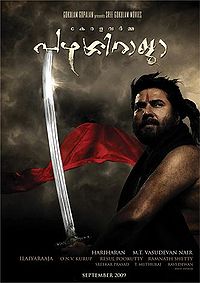 Maestro Ilaiyaraaja
Kerlavarma Pazhassiraja: Music from the Film
Think Music
2009
Ilaiyaraaja's soundtrack for Kerlavarma Pazhassiraja synthesizes more indigenous music from India; its opening "Maathamganana Mabjavasa Rananeem," for example, a male vocal chant in tones that dovetail into the sonorities of the sitar drone upon which it floats. The female vocal in "Kunnathae Konnakyum Ponmothiram" flutters like a bird that guides its loping and deep percussion, quivering strings, and other orchestration. His attention to detail, in the quiet stroke of a solitary triangle on one of "Kunnathae"'s upbeats, once more proves exquisite.
The Maestro's swirling, thunderous orchestral visions of "Aadhiyushassandhya Poothathivide" and "Ambum Kombum Komban Kattum" are epic and vast, triumphant, and no less brilliant. "Ambum" swells from shouts and chants of children into an adult chorus; later, the children and adults swap choruses, vocally "trading fours" against the orchestration. "Odathandil Thalam Kottum Kaatil" nimbly strolls a soulful shuffle brightened by smiling African kalimbas.
"Aalamadankala Mythavanalle" brings the curtain down on Kerlavarma Pazhassiraja with all the power and majesty of traditional Indian strings, drums, chants, and rhythms, and ends in a percussion thunderstorm that leaves the listener feeling wrung out and dripping wet.
Paa performers and musicians: Shilpa Rao, K. Bavatharini, Shravan, Sunidhi Chauhan, Shaan, Amitabh Bachchan, unidentified chorus. Other musicians: Attila Lazlo, Bela Lattmann, Janos Nagy, Suresh Peter. Shyam Raj: saxophone; Karthik Raja: programmer; Purushottam: second programmer.
Paa song titles: Mudhi Mudhi Ittefaq Se; Gumm Summ Gumm; Udhi Udhi Itefaq Se; Hichki Hichki; Gali Mudhi Ittefaq Se; Halke Se Bole; Mere Paa; Paa Theme (Vicky Goswami Remix).
Kerlavarma Pazhassiraja performers and musicians: Padmashree K.J. Yesudas, Chitra, M.G. Sreekumar, Dr. Ilayaraa, Manjari, Kuttappan Master, Chandraekar, Sangeetha, Vidhu Prathap, Ashraf Thayinari, Edavanna Gafoor, Faisal Eleittil, Krishnan Unni, unidentified chorus.
Kerlavarma Pazhassiraja song titles: Maathamganana Mabjavasa Rananeem; Kunnathae Konnakyum Ponmothiram; Aadhiyushassandhya Poothathivide; Ambum Kombum Komban Kattum; Odathandil Thalam Kottum Kaatil; Aalamadankala Mythavanalle.
Tags
PREVIOUS / NEXT


Support All About Jazz
 All About Jazz has been a pillar of jazz since 1995, championing it as an art form and, more importantly, supporting the musicians who make it. Our enduring commitment has made "AAJ" one of the most culturally important websites of its kind, read by hundreds of thousands of fans, musicians and industry figures every month.