Home » Jazz Articles » Interview » Forbes Graham: Magenta Haze
Forbes Graham: Magenta Haze

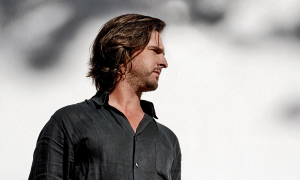
Then again, a sterling tone like Louis Armstrong's, a sense of stride and a sidewinder sleekness position him to do so. He brings spot-on timing, inherited from his key precursor, Don Cherry, into the icy age of post jazz—and swings, too, situated comfortably within the classic idiom.
It is a prismatic phenomenon, his playing. Shades and tints channel through his trumpet, an ever-shifting panoply—not so much of influence, as inflection and deflection.
Jan. 6, 2008: The feature, a small venue in Cambridge, Mass., a tenor saxophonist from Chicago. He had a big, glittering sound, so big he didn't always know what to do with it. The pianist that night engaged him in some excellent free- form dialogues, and these were highs.
It was Graham, with his style of staccato stuttering and rabbit punches, who got the ensemble out of ruts and corners, tethering the tenor, and tempering the tone overall. This is a trademark scenario.
Another night, in a gallery above a subway station in Jamaica Plain, Boston: Dave Gross' all-free large ensemble, Grizzler, struggling to catch a groove. Discordant drama came and went, as the musicians found common entry points into the abstract flow but nothing coalesced. Suddenly, Graham's trumpet, lifted high, shouted out a soulful held blue note, coming up and down in gold cadences leading the band with a spirit or spell he was later to call "magenta haze."
Sterling, gold, blue, magenta—the prism. Graham has vision and a deft grip on structure and synchronicity, skills acquired through 24 years of practice, beginning with lessons at age nine and through his junior high school ensemble, where he crystallized his vision by way of Bach chorales.
"These taught me the disciplines of listening and staying in tune in the midst of complex polyphony," he said. "I learned balance."
Later he found a counterpart to Bach in The Birth of the Cool (Blue Note, 1957), still his favorite Miles Davis record.
The jazz beacons he's played with include Darius Jones, Raqib Hassan and Wadada Leo Smith. The list could be rolled out like a red carpet. He has appeared on close to 40 recordings. Rarely has he presumed to lead, however, adopting the role of game saver instead.
But this is changing: he is poised to make a mark as a leader. A new CD with percussionist Tatsuya Nakatani, Essences (Blaq Lightn, 2010), signals a new boldness; and two new groups, Wild May (centered in Boston) and Violetville (Brooklyn), foreshadow an imminent, inevitable tumble into the limelight.
All About Jazz: What was your childhood like? Your family? Did your parents play instruments? Listen to jazz?
Forbes Graham: My childhood was pretty typical middle-class suburbs. I'm from Silver Springs, Md., which is right outside of Washington, D.C. Our lifestyle wasn't exciting. I didn't get everything I wanted materially but I had more than enough of what I needed. My mother is a retired teacher and my father is retired from law enforcement. My stepfather is retired, too. He had some sort of office job. I come from a family of a lot of teachers. Both my parents were born in D.C., but my mom spent her early childhood in Philadelphia. My parents don't play music. When I was a kid in the house, I heard singers like Lionel Richie and Jeffrey Osbourne (who is still a big favorite of mine).
My dad used to listen to jazz when he was younger but as he got older he kind of went in more of the smooth jazz direction. But it turned out he had some cool records lying around, for example High Blues Pressure (Atlantic, 1967), by Freddie Hubbard. My parents definitely encouraged me to do whatever I wanted, interest-wise.
AAJ: What happened later?

FG: You know, I'm not sure if things have really clicked for me yet. I'm still working on the instrument. But I do have the certainty that I'm going to be true to myself. That happened quite a while ago, but overall, it's a process.
AAJ: How are your audiences?
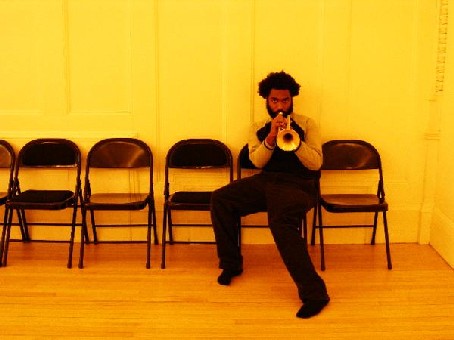
FG: My gigs have been mostly the same since I've been in college. Playing to around 10 to 20 people! The difference is the style of music, and I don't play in basements nearly so often anymore. Also, I never have to worry about a fight breaking out, which is great.
AAJ: I know you think about things quite theoretically. What reading informs this philosophical bent?
FG: I think about things theoretically to help me organize my own music/compositions into something resembling a coherent unity. In that regard, I'm most often inspired by numerology, particularly prime numbers, the Fibonacci sequence and magic squares. I'm really impressed by poetry as well. My favorite poets are Afaa Michael Weaver and Gwendolyn Brooks. Poetry just takes me so many places, and I love feeling the rhythm of the words and the lines.
AAJ: What will you do when you're in the limelight?
FG: I'm not into shameless self-promotion. I don't want to end up being in a flavor-of-the-month situation—I'd rather have five real fans than 50 fake ones. I've become more introverted over the years. Sometimes it gets hard for me to put myself out there. I just want to play music and work with great artists. I want to meet creative people. I want to do things the right way, and I want to show respect to the people that came before me. I certainly would like to get more recognition, though.
AAJ: Now I know your wife, Lillian, is a creative person, a photographer. What is her role in your creative life? First, how did you meet? I noticed in her photography, she is very minimalist but full of moods, in the same way you are. I see in her work what I see in your playing.
FG: We met in Vermont and we met at a show. I was playing with Kayo Dot, and she was taking pictures of the band.
AAJ: Kayo Dot, to be reductivist, is a rock band?
FG: Yeah, to be reductivist. We were playing at Marlboro College where she went as an undergraduate.
AAJ: I know she also does some beautiful photos of children and of interiors.
FG: The thing she did for her senior project was to do these constructed realities and photograph them. When I saw her artwork, that was when I really began to feel attached to her. This was around 2006. I think what she does has the ability to say a lot.
AAJ: What does she listen to? She's often at your shows, so she likes what you do?
FG: She does like it but it's not something she pursues, although she was the one who introduced me to Money Jungle (Blue Note Records, 1962) by Duke Ellington.
AAJ: The one with Charles Mingus.
FG: We definitely have some intersections, like progressive rock, a good deal of hip-hop. She's more into the jazz oriented stuff of what I do than the free improv and kind of sound art. That stuff is not—she doesn't enjoy it as much.

AAJ: That's great.
FG: And I didn't study jazz privately with a teacher, or in school, or in college or anything. That was all classical and concert music. So everything I learned about playing jazz from Ray Harry, the teacher of the Montgomery High School jazz band. And when I was in high school, we used to do Real Book jam sessions at somebody's house, and play for eight hours! And the funny thing is, I'm not even that good at that stuff anymore, but we would do that. That was our idea of fun—we'd go to somebody's house, we'd have our "Real Books," and we would play for eight hours.
We'd play one tune for like 20 minutes, and we'd play it eight different ways: we'd play it with a Latin feel, play it with all the different stuff—and this was stuff we were doing on our own. But we did want to get gigs. We did get a couple, and they did pay alright but it wasn't like—a lot.
AAJ: This may be jumping ahead a bit, but how did you take a radical shift to the left, or whatever direction, to go into thrash metal?
FG: All of that stuff happened starting in junior high and in high school. I had a friend, Gabe Shapiro, who was into Iron Maiden and Metallica. This was MTV generation, and I saw Aerosmith and Living Colour videos on TV, and thought that was kind of cool, and it kind of went from there.
AAJ: Yeah, I think music is a very social phenomenon: You listen to what your friends are listening to.
FG: Sure. And Gabe was one of the few people who didn't just listen to what was popular. It wasn't like I had a lot of friends who were really into music, who were like, "Oh, you need to check out Houdini," or, I was into this guy, Kwame the Polka-Dot King. He was a rapper. Gabe was like, "Here. You give me this and I'll give you that."

AAJ: Was he the guy you started the band with?
FG: Well, he had a band and I tried to get into it, but my father wouldn't let me. So we kind of had some music and we had some lyrics— but I wasn't really there. He did some of the "Real Book" jams, too.
AAJ: Stepping back a bit, did your teachers encourage you to listen to, say, Miles or Dizzy Gillespie?
FG: No. This is what's weird: I didn't have a bad musical education but I didn't have a good one, either. The guy I took music lessons from, trumpet, was very strict. So they were all very strict. They all had very high standards, but they didn't tell you what to like or anything. My private teacher, Mr. Phillips, he told me to buy a CD of Gerard Schwartz playing Herbert L. Clarke, concert band stuff. Nobody told me to listen to Miles or Dizzy Gillespie or Louis Armstrong, I just kind of did it here and there. There was kind of a weird circle around, though, because when I started doing the "Real Book" stuff, there was this one guy, Sam Hilmer, who I was in jazz band with, and he was the one who hit me with Cecil Taylor and John Zorn and stuff.
AAJ: What age was this?
FG: About 16.
AAJ: That's pretty early for that.
FG: To me, it was just music. It's not that I was hip to every little thing, at that age, but I was checking it out. There were lots of little connections. Back then, everybody knew who John Zorn was, his records were in all the stores.
AAJ: The Naked City (Elektra Records, 1990) period, with the popular songs he was doing.
FG: And I was into Napalm Death, and Zorn was in that band with the drummer from Napalm Death; and I loved Buried Secrets and I loved Justin Broadrick from Godflesh. And Zorn's kind of a funny bridge for a lot of people, and in some ways he was a funny bridge for me.
AAJ: An interesting way of putting it.
FG: I do think of it as sort of a weird funny bridge- -and not in a bad way. But it was a weird process of checking stuff out, and then stepping back a bit, and then saying, "OK," and for me, to a certain extent it's been a very casual thing. And I remember when I got to college, they had a music library. So I listened to some [Karlheinz] Stockhausen—and I liked it. But even to this day I've never been a big Stockhausen person. But I listened to it...They had so many Anthony Braxton records there.
 AAJ: Julius Vasylenko recently told me about Braxton's influence on him.
 FG: He's absolutely been a great inspiration to me. The idea of being a real robust composer with his own ideas, and being like "I'm a black intellectual, and I'm a composer, and I'm a performer." It's just great. You can listen to so much and just barely scratch the surface of his recorded output.
AAJ: Ten CD-sets and such.
FG: Yeah, I've heard bits and pieces of certain stuff and it's just amazing. And I've had a chance to work with him a bit here and there, and he's really nice. He's humble.
AAJ: Have you played with him?
FG: I've never played with him, but I've played one of his compositions. He wrote a piece for seven trumpets back in the '80s, "Composition 103 for Seven Trumpets," and I've performed it twice—one of the three times it has ever been performed. First of all it's a great piece, and secondly—well, the last time we performed it was in Philadelphia. Someone was asking me about it, and I said, "It's complicated and technical and all that stuff, but in the end you just have to feel it." And that's what's great about my perspective on his work. I won't say that's what's great about his work, but that's what's great about my experience of it.
AAJ: When I was 15 or 16 I bought Cecil Taylor's Dark to Themselves (Enja, 1978), at a used record store. When I first heard it, it was all Greek to me. But I listened to it and listened to it, until I practically had it memorized. And that's how I came to appreciate it, not by identifying structures, but by ingraining into my brain.
FG: I'll tell you, Wadada Leo Smith and Bill Dixon are people I really look up to now, but when I first heard them, they were all Greek to me...When I first heard Wadada, I was like, "Wow, what is this? He really sounds bad!" The different kind of palette of the texture—I didn't like that! So it took me a while to get hip to that.
AAJ: It makes me think of the first time I saw you perform, solo, lower-case, and I just wondered, "What's this all about?"
FG: Yeah, I remember. That was a bad night anyway. I had an infected tooth, so I was running on half-steam.

AAJ: Then I saw you with Dave Rempis, from Chicago, at The Lily Pad. And it was like you were in a corner, and you punched him back in.
FG: He's loud! I really do like to hear everything. I don't like to go out there and just blurt. And I'm not saying that was what he was doing, just that I don't like to do that. We did some studio work with that band, and I'm starting to get in lock-step with [pianist] Pandelis Karayorgis.
AAJ: He's got kind of a "Blue Note" feel.
FG: I don't even know what I would say about his playing that makes him so interesting to work with, but I feel like when he's playing there's this big thing, and then a lot of little sub-things, and he'll hit certain things, and give you the little bubbly hints right along with it. It gives you a lot of nooks and crannies to jump right in.
AAJ: So he helped you in your two-pronged attack against Dave Rempis!
FG: [laughs] I wouldn't say it quite like that.
AAJ: Rempis is a very gifted player.
FG: I feel like there's a lot of mobility there in a way that's stimulating, 'cause not everybody does that and that's OK.
AAJ: Also in your playing, I hear Ted Curson, maybe Art Farmer—you seem to have heard all these people.
FB: Art Farmer I've listened to not so much, but Ted I know about. In the beginning, I was like, "Don Cherry, Don Cherry..." and I don't think that will ever go away. I won't say I've listened to a lot of trumpet players but I'm trying to appreciate each player's contribution. I find that things happen through osmosis in a lot of ways. Sometimes I don't listen to a lot of trumpet, but others I'm like, "I need to listen to this." Even if I just listen to a good trumpet player for a little while, I play better. It just happens that way.
AAJ: Recent performances: how was The Stone [New York City, Jan. 5, 2010]?
FG: Awesome. A lot of fun. We played really well, had a really good time. I'm looking forward to the rent benefit I'm playing in there later this month, with Matana Roberts [Jan. 24].
AAJ: Another highlight for you must have been your "Variations on the Fibonacci Sequence."
FG: Oh yeah, Festival of New Trumpet. Definitely. That was the FONT Festival (of New Trumpet Music) [held in New York City in October 2008].
AAJ: The Fibonacci Sequence—my understanding is that it's a sequence where there are two numbers, and the third is equal to their sum, and the next is equal to the prior two numbers.
FG: Recreational math is fun for me.
AAJ: It applies to Sanskrit poetry, I have read. Which was interesting to me, because both music and poetry involve phrasing; and within music, yours in particular.
FG: Absolutely. One thing about the Fibonacci sequence, it's got these units already built into it, where it's sort of self- referential, and it's very rhythmic. It's got a soaring aspect to it ... When I was in college I took one art class. And they're always talking about unity in a work of art. That wasn't something I was taught in music.

FG: That's really important to me because when you're playing with other people, the whole thing is to try to add something that makes the whole thing make sense. My job is to, "Let me help you help me help you." From there, we can spring off into some other stuff. We can spring off into wild forces really good or play really well. But my first number one thing is, "Me help you help me help you." Because when you go to a concert, you want to feel something's really there. What I'm doing is mostly in the realm, 70 percent, of free improvised music. Everybody has their own kind of personal narrative, maybe, but that narrative gets unraveled by life. My narrative is people getting along. I like to see conflicts getting resolved.

title="Forbes Graham—Copyright © Dave Fischer">
AAJ: What are the ethics of aesthetics?
FG: I'll answer it in three branches. First, for example, I'm a vegan; but I don't really express that in my art. But let me tell you: when I was in the hardcore scene, there was a lot of that. And so when I was there I wrote about feminism and things, but then I stepped back from that ... The other part is, if there's one thing artists could do, it is to try to improve the conditions each other is working in. An artist should try to make it a little easier for the people who come after them; or, at least try to improve the quality of the conditions the community is dealing with. That may be little or none, but they should do something.
I think one reason we're not where we should be is—playing the type of music we should be playing—is we're just not that great with organizing and coming together. And when it happens, everyone's got their narrative and sooner or later everyone kind of fissures. And I don't want to deal with everyone's ego.
Another part, I do think artists speaking out on social and political issues has helped me and in a way is good, but you can't boil down complex issues to three of four paragraphs. You have to go beyond and do research. I've always thought that the hardcore scene is like the Cliff's Notes of music. You go to a show and it's like, "OK. I've written a song about the environment." That's cool, but you don't really become a learned person because you've heard a song about an issue.
On the other hand, I remember buying a record by a hardcore band in high school, and it was about how it wasn't wrong to be a homosexual. And I've never felt that it was, but I'd never been presented directly with the idea that homophobia is wrong. So it's like, Bam! Here's this idea, now deal with it.
AAJ: But music can be free, free jazz can express freedom.
FG: Sure. Music can express freedom. Robust thought. And we've got the expression of not doing what you're supposed to do. And I don't mean that in the sense that, "I'm a rebel," but just in the sense of just what I said. People can do just what they're supposed to do, and end up shortchanging everything. And even within any given cultural paradigm, or sub-cultural paradigm—or anything—I don't want to do that.
Selected Discography
Tatsuya Nakatani/Forbes Graham, Essences (Blaq Lightn, 2010)
Jacob William Quartet, Secondary Deviations (Ayler, 2009)
Walter, Graham, Kelley, Flaherty, End Of The Trail (ugExplode, 2008)
Calliope Quartet, Musike Techne (Self Produced, 2008)
Forbes Graham, I Won't Stop (Blaq Lightn, 2008)
Forbes Graham, Everybody's Gone (Self Produced, 2006)
Forbes Graham, Invocation of a Quadrilateral (Insectfields, 2006)
Kayo Dot/Bloody Panda, (split 12") (Holy Roar, 2006)
Kayo Dot, Dowsing Anemone With Copper Tongue (Robotic Empire, 2006)
Interdimensional Science Research Orchestra, Tones of Creation (Self Produced, 2005)
Interdimensional Science Research Orchestra, Suns of Ra (Self Produced, 2004)
Interdimensional Science Research Orchestra, Gifts of Creation (Self Produced, 2004)
Forbes Graham, Join Me (self-released, 2004)
Forbes Graham, In The Game 2 Win The Game (Soundeternalsound, 2004)
Forbes Graham, Absolute Terror Field (Self Produced, 2004)
Pay The Price, s/t (Self Produced, 2003)
Alex Nagle/Forbes Graham, Cyan (Ricecontrol, 2002)
Dysrhythmia/Thoughtstreams, (split 10") (Ricecontrol, 2001)
Various Artists, World Hardcore Vol. 4 (HG Fact, 1998)
Amalgamation/Left In Ruins, (12") (Ricecontrol, 1996)
Various Artists, The Snowman (Pep-o-mint, 1995)
Photo credits
Pages 1, 2, 4: Lillian Schrank Graham
Page 3: Stewart Mostofsky
Page 5: Dave Fischer
All Other Photos: Courtesy of Forbes Graham
Comments

Tags
Forbes Graham
Interview
Gordon Marshall
United States
Louis Armstrong
Don Cherry
Miles Davis
Darius Jones
Wadada Leo Smith
tatsuya nakatani
Freddie Hubbard
duke ellington
Charles Mingus
Dizzy Gillespie
Dizzy [Gillespie]
Cecil Taylor
john zorn
anthony braxton
Julius Vasylenko
Bill Dixon
Dave Rempis
Pandelis Karayorgis
Ted Curson
Art Farmer
Matana Roberts
For the Love of Jazz
 All About Jazz has been a pillar of jazz since 1995, championing it as an art form and, more importantly, supporting the musicians who create it. Our enduring commitment has made "AAJ" one of the most culturally important websites of its kind, read by hundreds of thousands of fans, musicians and industry figures every month.
You Can Help
To expand our coverage even further and develop new means to foster jazz discovery and connectivity we need your help. You can become a sustaining member for a modest $20 and in return, we'll immediately hide those pesky ads plus provide access to future articles for a full year. This winning combination will vastly improve your AAJ experience and allow us to vigorously build on the pioneering work we first started in 1995. So enjoy an ad-free AAJ experience and help us remain a positive beacon for jazz by making a donation today.

Giveaway

Eligible winners: 15
Days remaining: 4
Days remaining: 4