Home » Jazz Articles » Interview » Mike Mainieri: Man Behind Bars
Mike Mainieri: Man Behind Bars

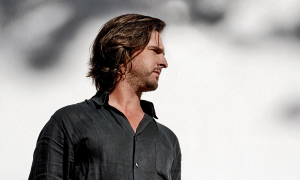
Mainieri may not have the instant name recognition of peers like Gary Burton, or even younger players like Joe Locke, Stefon Harris or Steve Nelson, but you can be sure that if you asked any of them who was registering on their radar as they were coming up, Mainieri's name would be high on the list. Rather than being pigeonholed into any particular style, Mainieri— whose unorthodox four-mallet grip allows him a flexibility few others can match—has done it all. Fusion, funk, straight-ahead, world music, free improv ... these are all but a part of Mainieri's seemingly encyclopedic purview. And while others stay away from innovations going on elsewhere in the world, Mainieri regularly collaborates with artists from Spain, Italy, Holland and Norway.
He continues to tour with Steps Ahead, his longstanding group with a membership that reads like a who's who of New York jazz from the past three decades, including saxophonists Michael Brecker, Bob Berg and Donny McCaslin, pianists Don Grolnick, Eliane Elias and Warren Bernhardt, guitarist Mike Stern, bassists Eddie Gomez, Daryl Jones and Marc Johnson, and drummers Steve Gadd, Peter Erskine and Steve Jordan. He's worked with some of Norway's most intrepid innovators on Northern Lights (NYC Records, 2006), a seamless blend of technology and conventional instrumentation featuring trumpeter Nils Petter Molvaer, guitarist Eivind Aarset, keyboardist Bugge Wesseltoft, live sampler Jan Bang, saxophonist Bendik Hofseth and turntablist DJ Strangefruit. And he's reformed one of his earliest collectives, L'Image, with Bernhardt, Gadd, bassist Tony Levin and guitarist David Spinozza, for a long overdue first album, 2.0, and a series of tours that will ultimately yield a live CD and DVD.
After a couple years' break to take care of a family health crisis, Mainieri is back and busier than ever. But before getting a big picture of what the vibraphonist has in mind for the future, a look at how he got here in the first place is in order: growing up during World War II in the Bronx, getting his first break with drum legend Buddy Rich, and becoming a hippie during the 1960s, at a time when most artists his age were striving to retain purity in jazz.
Growing Up in WWII New York
Mainieri's early days sound like the stuff of a Martin Scorsese film. "I came from a family of jazz fans," explains Mainieri. "A family that listened to opera and classical music. I had aunts and uncles that were show biz wannabes, not really professionals, but they were into the Big Band era. We were very poor, so there was the radio—and a phonograph, when I was older. But I did have an opportunity to go and listen to Broadway shows; when I was a kid in the '40s, you'd go and it was 75 cents. So that was me hearing music for the first time as a little kid. We had a small piano, half a drum set, and my step-grandfather's guitars (he was also a good bebopper), and I was plunking around. My grandmother gave me piano lessons, and I started playing music when I was eight or nine, and later went to a private music school."Most artists have a story about how they came to their instrument, usually being moved by hearing someone else play. But then—as now—the vibraphone wasn't exactly a popular instrument, and in Mainieri's case, the story goes a little deeper. "My mom was instrumental in my playing the vibes," he says. "I had heard Lionel Hampton playing with Benny Goodman, and Red Norvo, along with Bags (Milt Jackson). I loved the Norvo trio with [guitarist] Tal Farlow and Charles Mingus, and my grandfather was a big Tal Farlow fan. My mom heard Marjorie Hines; there's a great photo of her on 52nd street playing with Bird [Charlie Parker], I'll always remember that. My mother liked the sound of the vibes, and she said, 'I want you to play this instrument,' and I said, 'Yeah I'd like to have a vibraphone.' But, of course, we couldn't afford it, it was too expensive. So she went to work for two years in a sweatshop, because my dad said, 'No way can we afford this,' so my mother said, 'I'm going to do this for Michael.'
"She went to work, and I remember sitting underneath in the sweatshop, maybe 30 women in a basement," Mainieri continues. "They were putting beads and all sorts of stuff on dresses. It was really hard work, and I would sit underneath the frame they had for each woman, and there were all these conversations and gossip and stuff, and I realized how hard she worked. Then my father found my first set of vibes, and he tried to track down a jazz teacher."
From the earliest days with the instrument, Mainieri's approach to four-mallet playing was unconventional. "Through a friend," the vibraphonist explains, "my mom found this terrible alcoholic, and he taught me this weird grip. I don't use the Burton grip or any of the common grips; [instead] I put the outside mallet between my pinky finger and my ring finger," rather than between the index and ring fingers. "Which is treacherous," Mainieri continues, "it doesn't belong there. The most powerful grip is [one mallet] between the thumb and index finger, [and the other] between the index finger and middle finger. But it's a static grip; you have to move your elbow when you're playing. With the grip of the pinky, you're moving the inside of your hand. The mallet acts as an extension of one of your fingers. You can move chromatically very quickly with very little movement of your elbow; with any tight interval [you can move] up and down the vibraphone quite quickly.
"So," Mainieri continues, "my mom would bring a bottle of wine and two dollars for the lesson, take three trains to the Lower East Side where all the hobos lived, where he [Mainieri's teacher] lived in the tiniest room you could imagine, with a cot and a set of vibes. I remember he used to be a stamp collector, and she'd wake him up—he was completely drunk—and give him some liquor, I'd wait outside, and he's tried to feel her up or something [laughter]. She'd go through terrible abuse and she'd give him the two bucks and say, 'Give my son a lesson.'
"My mother is still alive, she'll be 101 in November [2009]," Mainieri concludes. "She made sure I didn't wind up in a gang or in jail—a lot of the kids wound up in trouble in my neighborhood, it was a gang-infested area. My brother and I played guitar a long time—he went into business, he never played professionally, he would be my accompanist when I practiced, he and my step-grandfather. So we had this close family, where we would gather every weekend and put on these sort of radio shows, as if we were really recording. I had an uncle, who'd be the emcee, and everyone in the family performed. So I was 12 and already playing, already improvising."
Twelve and improvising may not seem like much these days, but 14 and gigging was no mean feat then, nor is it now. More than that, Mainieri also began taking the reins as leader at an early age. "I started to play some local gigs," Mainieri explains, "and when I was 14, I put together this trio with a 16-year-old bassist and a younger girl on the guitar. We entered a contest on Paul Whiteman's TV Teen Club in Philadelphia, and we won. I started playing the usual weddings and dances but always as a bandleader. I realized at an early age that, as a vibraphonist, to be successful, you had to be a bandleader. If it was quartet or quintet, you would hire a drummer, bassist, pianist and saxophone, or maybe guitar."
Mainieri's First Big Break
Mainieri eventually began studying privately to prepare for enrolling in Juilliard, playing all mallet and percussion instruments including snare drum and full drum kit. But it was an unexpected break, at the end of the 1950s, that pushed Mainieri's early career into high gear. "I happened to run into a drummer who followed Buddy Rich and big bands. Buddy used to come up to his house in the Bronx, and his mom was a great cook. He was telling Buddy about me for years, back when I was a kid. And finally I got to audition at the end of the third set at the Village Gate one night. Buddy introduced me: 'We've got some kid, it looks like he's wearing his father's suit.' I was just a skinny little kid, I looked like I was like 15 years old. So I get up onstage and he called the first tune, 'Cherokee' or something like that, unbelievably fast. And he let me play something like 40 choruses, to see if my arms would drop off. The audience got up, which was rare in those days, and I got a standing ovation."These days, it seems de rigueur to applaud after every solo, but back in the day, applause was something that performers had to earn. "I was doing a short interview the other day," Mainieri says, "[talking about how] everybody hoots and hollers after everyone plays a solo these days, I hate that. It wasn't [like that] back then. After a drum solo—Buddy Rich, Art Blakey or Max Roach would play an amazing drum solo—they'd get some applause from the audience, but people didn't applaud after a Lee Morgan solo, there was [only] a smattering of applause. I think it was the combination of pop music becoming popular in the late-'60s and early-'70s—those fans crossing over to fusion—and groups playing in concert settings, where there was a sense of freedom to express yourself. Now it's gotten to the point where it's really over the top.
"Nowadays, with young musicians, I think it [applause after every solo] affects their playing," Mainieri continues, "how could it not? Your ego is pretty strong when you're young, and most of the older guys, they're used to the applauding. But when you're younger and people don't applaud—even if they're not supposed to because [the music is] moving to a different section—the musician thinks, 'Oh, I'm not playing well tonight.'"
The dynamic between artist and audience isn't the only thing that's changed. "The music young musicians are listening today is at such a high level," Mainieri explains. "They're surrounded by all these cultures—kids from Cancun, from France, from Greece—and they're really comfortable with a lot of material. There's so much there for them—written out, studied and transcribed—there's the body, but is the soul there? You have to search for it.
"A facet of the business that has changed dramatically is that you used to play in a club for four weeks, maybe Birdland for four weeks, then Philly, then St. Louis and then Chicago," Mainieri continues. " You played from 8 p.m. to 3 a.m. The group was always playing, not just traveling. Nowadays, you spend most of the time traveling, you're exhausted, there's a different kit, a different vibraphone, and they say, 'OK, you've got 45 minutes [to play].' Times have changed. It's only when we play in New York for four or five nights, where we play two or three sets a night, that we can really get into the music."
Even how musicians write has changed. "I was checking out some music by Donny McCaslin lately," Mainieri says. "He played with me in Steps in the '90s. He's a great guy, someone you want on the road with you during a bitch of a tour, when you only have two hours of sleep, and then he goes and plays his heart out. I was looking forward to his new record because he was writing it when we were on the last tour. He had it on Sibelius and he was writing up horn parts and he would ask, 'What do you think about this trombone part?' And I would say, 'Yeah, great.' I was very happy to hear his record the other night, it's a great record."
Plenty has been written about the lack of mentorship in jazz today, and Mainieri's experiences with Buddy Rich make even clearer just how much is missing in a jazz scene that's now top heavy with education, but lacking in the kind of ground-up lessons that can only be learned on the road with older, more experienced musicians. "There are the Buddy Rich stories, tapes—and comic books, too, probably," Mainieri says, chuckling. "Playing with Buddy was a snap—you played your ass off and he didn't bother you. I saw a fair number of his tantrums, but he and I never got into it until the end—and that was only about money. I had a blast, the time I was with him—I was young and he took me under his wing."
Rich not only pushed Mainieri as a player, he gave him the opportunity to hone his arranging chops. "I was thrown into the fire because he'd let most of the band go. He said, 'OK, kid, can you arrange?' and I said, 'A little.' We were a sextet and he said, 'Let's make it sound like a big band.' They've recently released an eight-CD box set of those small group Buddy Rich recordings on Mosaic, that I helped Michael Cuscuna put together. I had a ball playing with Rich because his friends were Frank Sinatra, you know, the Rat Pack—Jerry Lewis, those Hollywood actors. Lenny Bruce was one of his best friends. There was one time he took me to the Playboy mansion in Chicago, and I don't have to tell you what was going on over there. I drove his 300 SL Mercedes around the country, and one of his sports cars. The social life I enjoyed separate from the band, but I also enjoyed playing with him; the thrill of playing with Buddy, he was a marvel to watch. And we always played opposite Miles Davis, or Art Blakey—amazing musicians; it was thrilling."
Dropping Out, Tuning In and Turning Up
Working with Rich led to gigs with Sonny Stitt and Kenny Burrell, amongst others. He met bassist Eddie Gomez, who was playing with Bill Evans, and who would figure prominently with Mainieri soon enough. At the same time in the mid-1960s, everything was changing. The British Invasion and the emergence of the Haight-Ashbury district of San Francisco were but two signs of the massive import of pop music that was changing the musical landscape. It was around that time that Mainieri hooked up with flautist Jeremy Steig and his group, The Satyrs. "I'd quit the band [Buddy Rich] in 1964, when I got married for the first time and we got pregnant with our first child. I decided I wanted to stay closer to home and not travel as much," Mainieri says. "I started hanging out in The Village. I met Donald McDonald and Eddie Gomez."Jeremy and the Satyrs started around 1965; I joined a little later," Mainieri continues. "They were backing Tim Hardin, so we were playing The Electric Circus [New York] and The Fillmores [New York and San Francisco]), opposite Jimi Hendrix; this was pre-Miles. It was like a renaissance in that period, the goals weren't the same—the marketing has changed everything. Cross-pollination is still there, though. That I'm going on tour with Richard Bona, that my bassist is from Cameroon, reminded me of the '60s because back then you were playing with guys like our guitarist in Jeremy's band—he was a blues singer, his background was Howlin' Wolf. He would sit out when we were doing our jazzier stuff, but it was also a blues/rock/folk band.
"That was the milieu of that day," Mainieri concludes, "and I feel that's happening again now. I'm encouraged by the collapse of the major labels. I saw what the major labels were like in the '90s—it was the beginning of the end. I saw the marketing budgets, and they had to grease this palm, that palm—a lot it of was smoke and mirrors. I'm glad that it fell apart; you put out a jazz album and the company had to put out $100,000 to compete with some smooth jazz guy. So the leveling of the playing field and the feeling that I'm going to do my record is a big change."
Not that there wasn't divisiveness in jazz of the 1960s. "There were camps," says Mainieri. "Free music was popular in Europe. There were some cats that played straight-ahead—that was their love and they looked upon our music experimentation and said, 'What the fuck is this?' And we got fired [Jeremy and the Satyrs] from The Village Vanguard (New York) one night. We were playing opposite of Rahsaan Roland Kirk because he refused to play on the bandstand with us. He thought the music we were playing was a disgrace."
Hard to imagine, now, that Kirk was the voice of conservatism. "It was a big deal," says Mainieri, "we had a two-week stint there and it really hit home. It wasn't what Gary Burton, Paul Motian or Steve Swallow were playing, it wasn't that kind of a band. It was screaming. We had a blues singer, Jeremy with his Echoplex, Warren [Bernhardt] with his pedals, and by then I had amped the vibes. It was like, 'What the fuck?' [Jeremy & the Satyrs bassist Eddie] Gomez had played there; Warren played his last set with Bill Evans. There were camps, but I couldn't help myself. So people moved to Woodstock and I did, too. You were surrounded by rock and folk musicians. Mingus and Sonny Rollins lived up there, too. There was a great club called the Joyous Lake, and everyone came there. That was the place everyone hit, Pat Metheny and Gary [Burton] played there a million times. It was a great club to play in. L'Image played there a lot after the White Elephant experience.
Despite the purist backlash, the late-1960s and early-1970s remains something of a Golden Age, where artists began to fuse all kinds of musical elements into jazz, most notably the energy and pulse of rock music. The emergence of jazz-rock fusion may be attributed by many to Miles Davis and two seminal 1969 albums on Columbia—In a Silent Way and, especially, Bitches Brew, but the trumpeter was hardly the only one experimenting with the combination of rock's power and the improvisational freedom of jazz. Mainieri had been involved in the nascent fusion movement long before 1969 with Jeremy and the Satyrs, but it was with White Elephant that the vibraphonist dove head-deep into finding ways to bring jazz and rock together. A large collective of nearly 30 musicians, including Gomez, Spinozza, Bernhardt, Levin, McDonald and Gadd along with Michael and Randy Brecker, Joe Beck, Lew Soloff and Jon Faddis, White Elephant was effectively a hippie commune of emerging musicians. That Mainieri—and Bernhardt—was nearly a decade older than most of White Elephant's members didn't matter. "Guys that I've known all my life will ask me, 'What are you, 62?' Mainieri explains. "I've always had a youngish face and I'm kinda thin. Even amongst guys who never asked, they always thought I was their age."
Mainieri had, by this time, released a few albums under his own name—his straight-ahead debut, Blues on the Other Side (Argo, 1962), the equally mainstream Insight (Solid State, 1967) and the more adventurous Journey Through an Electric Tube (Solid State, 1968), which included the 13-minute, completely free "Allow Your Mind to Wander." "It was pretty wild," Mainieri says with a chuckle. "I wish you could have seen the look on the face of the engineer after that long, free piece. He was used to recording straight-ahead, George Shearing type of jazz, and it ["Allow Your Mind to Wander"] ended with the drummer throwing his cymbals against the wall, which scared the hell out of Chuck Rainey, who was an R&B bassist. I remember Chuck played the bass, and then unplugged his bass and left the room, leaving this hum, like mmmmmmmm, which was great, because it was at this amazing crescendo. I put my bottom bars on top, you know, like the naturals on top of the sharps, and I was banging on them; we were totally stoned, and we thought that it was the greatest thing we had played all week. We looked up at the booth, and I knew that was the end of my recording career on that label."
But it was out of Journey Through an Electric Tube that White Elephant emerged. "There used to be a dark studio on Broadway," says Mainieri, "where they used to let me jam, and it was whoever showed up—we'd just jam and get high and play. It'd range from five musicians to 35 musicians, and girlfriends and wives; it'd just be this big hang. "
The farm from which White Elephant ultimately emerged, however, was Mainieri's; even at this early stage in his career, he understood the value of diversification. "I was raising seven children," says Mainieri, "and I was also a weekend farmer. I bought a 100-acre fruit farm with eight acres of grapes for $45,000. Everyone from White Elephant knew about the farm. I used to make wine there, too. I had the farm until about 1979. It wasn't a lot of work, not like what Joe Beck did, which was to drop out completely and become a dairy farmer, which he did twice in his life. I was a weekend farmer; you harvested in late September, and then you did nothing until the next harvest.
"I was a hustler," Mainieri continues. "I went to the city and roomed with Spinozza as I couldn't afford an apartment in New York. I was making enough money to raise a family that large. My overhead was low; I had a little Volkswagen Beetle. We didn't even have a TV at the farm. We were hippies, living off the land. The farm had a lot to do with the record. We believed in hope and helping the environment and your neighbor. But we were fractured then too. "
White Elephant, a double-LP, was released in 1972 on Just Sunshine Records. "It was actually released by one of the promoters of the Woodstock festival," Mainieri says, "who had a big deal with Paramount. He heard the band live and he said, 'Yeah, what have ya got?' I said I had a bunch of tapes, and then there were jam sessions and arrangements. I think I played vibes on one tune, but mostly I was singing, playing piano, and organ, and just fucking around. A lot of it was for fun."
"But it was not to last. After the record company fell apart, White Elephant disbanded," says Mainieri. "Gadd, Levin, Bernhardt and I spent six months practicing in my barn, every day. That was the beginning of L'Image. We played Rochester, Boston and New York, and then Steve Backer came along from Arista and said, 'I love this band.' It was a fusion band, rockin,' and I had some video of the band and tons of tapes. It was '73 or '74. But then, as soon as we got the record deal, the band split up. We were devastated because we'd put years into playing with L'image and people were going nuts, and here we had a chance to record. That's when I made Love Play (BMG, 1977), with a few tunes from L'Image. I recorded the song 'L'image,' which we used to play, on my next record, Wanderlust (Warner Bros., 1981). So there were bits and pieces, but I ultimately made a commercial record for Arista that [producer/label head] Clive Davis wanted me to do. I lost some steam from that experience. All of us did. And then we all went our own way, although we joined forces later on."
White Elephant, and ultimately L'Image, germinated the uptown New York scene that, while considered a part of the fusion camp, was more informed by funk, soul and R&B than higher-octane groups like Mahavishnu Orchestra and Return to Forever. The Brecker Brothers, most notably, garnered considerable attention with albums like its self-titled 1975 Arista debut, as did guitarist Steve Khan for his string of Columbia albums beginning with 1977's Tightrope. But in many ways, Mainieri was a seminal figure, almost a lightening rod around which much of the New York uptown scene coalesced. Like many of his friends, Mainieri had become, by this time, a busy session player as well, performing on pop/rock albums by artists ranging from Paul Simon to Billy Joel, and on jazz albums by George Benson, Pat Martino and Bob James.
Seventh Avenue South and the Emergence of Steps Ahead
It was an especially fertile time for music and for live performance. There was so much cross-pollination amongst musicians that it was almost a full-time occupation to keep track of who was playing with whom and on what sessions. The Breckers had opened Seventh Avenue South, a club which, from 1977-1987, provided an important breeding ground for new projects. One of the longest-lasting and most important groups to emerge from Seventh Avenue was Steps Ahead, a group that began as a collaborative effort but, over the years, ultimately became Mainieri's flagship vehicle. Initially named just Steps until a naming conflict with a pop group forced it to become Steps Ahead, the group later released albums that weighed heavily in the arena of fusion and electro-centric jazz, but began as something else entirely. "It was basically the Mike Maineri Quintet," says Mainieri. "I asked Gadd, Gomez, [Don] Grolnick and Mike [Brecker] if they wanted to play at the club. I had written some music—for Love Play and some newer stuff—and we also played some straight-ahead bebop stuff. It started developing a pretty ridiculous crowd; there were huge line-ups of people waiting to get in."But while Steps was acoustic and funky, Mainieri's fingers were in other pies as well. "I was also playing in a more electric group with Warren [Bernhardt], [Bob] Mintzer, [Omar] Hakim and either Eddie [Gomez] or Marcus [Miller]," Mainieri continues, "that played music from Wanderlust."
But it was Steps that got recorded first—albeit in Japan. "There was a woman who recorded the band with Gadd," explains Mainieri, "which was funkier; she was doing radio shows in Japan, and invited us to record. I couldn't record as the Mainieri Quintet because I was signed to Warner Bros. So that's why we made a different band name. Stupidly, we could've released the album [Smokin' in the Pit, first released in 1980 by Nippon Columbia in Japan] here, but we didn't own the rights."
Mainieri also recorded the electric group that played at Seventh Avenue—Mintzer, Bernhardt, Gomez and Hakim—but that album wouldn't see the light of day until 1996, when he released it on his own NYC Records label as the Mike Mainieri Quintet, Live at Seventh Avenue South. Despite the differing approaches of the two groups, there was plenty of common ground. One only has to look at the track listings of Smokin' in the Pit and Live at Seventh Avenue South, to find both groups playing Mainieri's up-tempo "Tee Bag" (for keyboardist Richard Tee), the funky "Sara's Touch" and the more-balladic "Song for Seth."
With Steps selling plenty of records in Japan and playing there to thousands of people, Mainieri continued to fight the good fight in the US, releasing the sadly overlooked Wanderlust (Warner Bros., 1981), an eclectic album that, coming as it did on the cusp of the neo-con movement in the early 1980s, never found the audience it deserved. "When I did Love Play, there was a single released as well," says Mainieri. "I met with Clive [Davis], and he wanted me to be more commercial, more R&B, more smooth jazz. I actually sang on a tune that they put out as a single from Love Play; it was kind of embarrassing. Here I am on the jazz subsidiary of Arista, and I get a call from Clive Davis, who didn't really care who was on the jazz side of it. He said, 'Just don't lose any money,' and suddenly it's playing on the radio, and he's like, 'Who is this?'
"I'll never forget the meeting with him," Mainieri continues. "We sat down and he said, 'Here's what I want you to do, what the cover is gonna look like, and I want it to be R&B-ish.' I said, 'Clive, you don't even know what I play.' He said, 'Of course, you play the xylophone, right?' And that was it for me. I went with Tommy [Lipuma] at Warner Bros. and made Wanderlust. Tommy was under pressure at that time, and he left Warner Bros.; I signed with him and then he started his own label at A&M, and that's when I made The Cat and the Hat (A&M, 1979), with Ben Sidran. Tommy was in business for about a year-and-a-half and then he went back to Warner Bros. Wanderlust simply didn't have a niche; it didn't fit in anywhere. I always wanted my albums to be eclectic, but that didn't go down with the labels back then. They wanted horns on it and I said, 'No, no.' Ultimately, I was very proud of Wanderlust, but it was just too eclectic. Still, it was the disc I was trying to make over the previous 15 years or so. The record company just didn't get it."
Less overlooked were the two albums that Mainieri released as part of the Arista All-Stars in 1978—Blue Montreux (Arista, 1978) and Blue Montreux II (Arista, 1978). In addition to the core group of uptown stars—Mainieri, Michael and Randy Brecker, Steve Khan, Tony Levin and Steve Jordan—guitarist Larry Coryell guests on several tracks. "Most people knew me from Blue Montreux, says Mainieri. "It was kind of an inside album that seemed to influence some people; I remember Joe Locke used to come hear us. I put the band together with Jordan, and a lot [of the players] were on Arista. I'd played with Jordan in the studio, and had put together an album with [guitarist] Kazumi Watanabe that sold 300,000 records in Japan.
Synthi-Vibes and The New Sting
Stylistically, Blue Montreux ran the gamut from Brecker Brothers material like the fiery "Rocks," with an equally burning solo from Coryell, to the title track from Love Play, a lyrical piece that also featured Mainieri's electric and synth vibes, perhaps the first vibraphone-driven synth on record, though it actually first showed up on Love Play. "The back cover of Love Play is me lying on it. It was an instrument built by a friend of mine who was living up in Woodstock," Mainieri explains. "He brought this little suitcase synthesizer called EMS, as big as a computer. It had a painted keyboard on it that was powered by static electricity from your body. It had dials and oscillators, and I was looking at it because this guy was messing around with electronic equipment."I said to him, 'Imagine if we could build something like this that looked like a vibraphone,'" Mainieri continues. "So we went out to the hardware store. But it started getting complicated; we went to Amherst College and it became a project in the department up there. I said, 'I want a five octave instrument.' It was huge, but light; there was nothing inside of it. We took the EMS synth apart and put the guts inside the synth-vibe, so when I put it on a rack I could turn around and play it. I started playing with my hands, and I realized I could buy a metallic cloth that was used in mufflers so I could play with mallets. I spray-painted the mallets with paint, and they triggered the electric pulses from my body, so I could play with mallets.
"I'd take to the synth-vibe to Europe with me," Mainieri concludes, "but then I came back from one of the Montreux tours and someone walked away with it at JFK [Airport]. The funny thing about it was that I eliminated the EMS and was using a Minimoog with me, so whoever stole it opened it up, tried to play it, but probably ended up using it as firewood."
While Steps—now Steps Ahead—released its first albums in Japan, Mainieri secured a deal with Elektra Musician, a Warners subsidiary that emerged in the early 1980s and run by Bruce Lundvall. Steps Ahead, released in 1983, was the group's by now overdue North American debut, and it retained the acoustic yet funky flavor of earlier albums, despite the presence of Mainieri's electric and synth-vibes, which created a definitive, sometimes floating and ethereal quality. By this time the group's original lineup—Mainieri, Michael Brecker, Don Grolnick, Eddie Gomez and Steve Gadd—was long gone, and membership would gradually become something of a revolving door group, with Mainieri's leadership the singular defining characteristic. For Steps Ahead, Eliane Elias was the first of many pianists to fill the chair vacated by Grolnick, and drummer Peter Erskine was already in place from Paradox (Nippon Columbia, 1982). But the group's acoustic focus didn't last long, and following Modern Times (Elektra Musician, 1984), on which Bernhardt assumed keyboard duties and additional guests provided keyboard sequencing and drum machines, Steps Ahead became increasingly electrified.
The aptly titled Magnetic (Elektra Musician, 1986) was a significant departure, not just in its greater reliance on electric instruments, but in its more decidedly fusion nature. The opening "Trains," in fact, would have fit easily onto a Weather Report album of the time, no surprise given Steps Ahead's bassist for the album was Victor Bailey, who was also a member of the Joe Zawinul/Wayne Shorter} super group, and Erskine was a WR alum from its glory days with bassist Jaco Pastorius. Still, unlike Zawinul's "everybody solos and nobody solos" ethos, Steps Ahead was still about muscular soloing, though it was largely left to Brecker, with Mainieri focusing more on synth-vibes and keyboards. There were even vocals on the album, with Dianne Reeves singing "Magnetic Love," a drum-machine driven track more suited for the dance floor than the concert hall.
With Erskine leaving New York for the west coast, Mainieri recruited Steve Smith for a tour that was later documented on the video-then-CD, Live in Tokyo 1986, another first in its inclusion of a guitarist as a full-on band member, Mike Stern. "That was balls-to-the-wall electric drums," Mainieri says. "I had like five synths and that's when Stern joined the band, we went to Japan and played in front of thousands, and then the band broke up, that was it. It was time for Mike [Brecker] to make a solo album, he hadn't done that yet, and I was glad he was striking up his own thing. Mike Stern hooked up with [Bob] Berg, everyone went their own way, and nothing happened again until I built a recording studio. That's when I asked Steve Smith to play, and I met Bendik."
< Previous
While You Were Out
Next >
Golden
Comments

About Mike Mainieri
Instrument: Vibraphone
Related Articles | Concerts | Albums | Photos | Similar ToTags
Mike Mainieri
Interview
John Kelman
United States
Gary Burton
Joe Locke
Stefon Harris
Steve Nelson
Steps Ahead
Michael Brecker
Bob Berg
Donny McCaslin
Don Grolnick
Eliane Elias
Warren Bernhardt
Mike Stern
eddie gomez
Marc Johnson
Steve Gadd
Peter Erskine
Steve Jordan
Nils Petter Molvaer
Eivind Aarset
Bugge Wesseltoft
Tony Levin
Buddy Rich
Lionel Hampton
Benny Goodman
Red Norvo
Milt Jackson
Tal Farlow
Charles Mingus
Charlie Parker
Art Blakey
Max Roach
lee morgan
Michael Cuscuna
frank sinatra
Miles Davis
Sonny Stitt
Kenny Burrell
Bill Evans
Jeremy Steig
Jimi Hendrix
Richard Bona
Howlin Wolf
Rahsaan Roland Kirk
Paul Motian
Steve Swallow
Sonny Rollins
pat metheny
Joe Beck
Lew Soloff
Jon Faddis
George Shearing
Chuck Rainey
Mahavishnu Orchestra
Return To Forever
Brecker Brothers
Steve Khan
Paul Simon
george benson
Pat Martino
Bob James
Richard Tee
ben sidran
Kazumi Watanabe
Victor Bailey
Joe Zawinul
Wayne Shorter
Jaco Pastorius
Dianne Reeves
Steve Smith
Arild Andersen
Jan Garbarek
Jeff Andrews
Rachel Z
John Coltrane
joe lovano
Leonard Bernstein
Frank Zappa
erik friedlander
Marnix Busstra
Charlie Mariano
For the Love of Jazz
 All About Jazz has been a pillar of jazz since 1995, championing it as an art form and, more importantly, supporting the musicians who create it. Our enduring commitment has made "AAJ" one of the most culturally important websites of its kind, read by hundreds of thousands of fans, musicians and industry figures every month.
You Can Help
To expand our coverage even further and develop new means to foster jazz discovery and connectivity we need your help. You can become a sustaining member for a modest $20 and in return, we'll immediately hide those pesky ads plus provide access to future articles for a full year. This winning combination will vastly improve your AAJ experience and allow us to vigorously build on the pioneering work we first started in 1995. So enjoy an ad-free AAJ experience and help us remain a positive beacon for jazz by making a donation today.

Giveaway

Eligible winners: 15
Days remaining: 6
Days remaining: 6