Home » Jazz Articles » Interview » Tamir Hendelman: Living a Dream
Tamir Hendelman: Living a Dream

 One of those "overnight sensations" who's been working steadily for years, Israeli-born pianist and composer Tamir Hendelman has finally caught a rocket. A member of the Clayton-Hamilton Jazz Orchestra and the Jeff Hamilton, as well as leader of his own groups, Hendelman is also a first-call arranger and accompanist for some of the best vocalists around, including Roberta Gambarini, Jackie Ryan, Angela Hagenbach and Greta Matassa. He was involved in pop icon Barbra Streisand's flirtation with jazz, playing on her Love is the Answer (Columbia, 2009) and also backing her on Oprah's TV show, in London, and at the Village Vanguard.
Jeff Hamilton says, in a 2006 AAJ interview, that "he's a joy to work with, and his talents keep reaching new levels." Jackie Ryan puts it this way: "Tamir is a sensitive and perceptive accompanist. His ideas are wonderful and fresh, and he brings a unique voice to every song he arranges."
Although Hendelman's reputation for elegance and heart continues to grow in musical circles, he's gotten surprisingly very little attention from the press, with this his first ever U.S interview.
All About Jazz: Lately you seem to be everywhere at once, and people are reacting as if you suddenly appeared, as the song says, "Out of Nowhere." When they ask, "Where did this Tamir Hendelman come from?" the easiest answer is, "Israel." By the way, what's going on in Israel with all these great jazz players all of a sudden? Like guitarist/oudist Amos Hoffman, not one but two Avishai Cohens (trumpeter and bassist), reed player Anat Cohen and pianist Yaron Herman. What are you guys doing over there, anyway?
TH: Having a lot of fun?
AAJ: In the past few years, it feels like a tsunami of Israeli jazz musicians has been hitting our shores.
TH: It's actually a mix of cultures, with people coming from Eastern Europe—my grandmother came from Poland—and all the Russian musicians who bring that tradition. Then you have people from Yemen, and the Sephardic culture, and all the Mediterranean and Arab music.
AAJ: All those great rhythms. So, what were your musical beginnings?
TH: My first instrument was electric organ, which was a popular instrument of the time, back in the 1980s. When I first heard piano I wasn't knocked out. I was six years old, and I heard this teacher play a really bad upright console piano, and it was like, "What?" Then I was walking down the street in Tel Aviv, past a music store where someone was demonstrating the organ to a customer—wow! brass, strings, bells, whistles! This was cool—I heard a whole orchestra. So I ran home and told my mother, "Mom, you've got to get me an organ!"
We did a little bit of classical music, a little bit of jazz; I wrote my own songs, we did musicals, all kinds of things—so it was just about music, not only a label. But then I heard some jazz musicians who came to Israel: Chick Corea and Bobby McFerrin, the Swingles Singers, and Count Basie—and it was, wow. I began to get exposed more heavily into that.
I left Israel when I was about 12, and in the U.S. I switched to piano. The teacher I had in L.A. came from the Yamaha Method where they do a lot of ear training and sight singing, composing, things like that, and she prepped me to compete in this national competition. I got up to the top three. I wrote this original piece, and I thought, "this is great, I'm gonna win." Well, I didn't, but afterward the judge came up to me and said "I thought you should have won," and gave me his card. Of all the places in the U.S., he lived a mile away from me. He was [pianist, arranger, composer, conductor] Joe Harnell, who had conducted for Peggy Lee, and worked with Ella Fitzgerald.
AAJ: Of course—his "Fly Me to the Moon" single was a big hit in the '60s [1963]. It was one of the earliest bossas.
TH: He also wrote for film and TV, and studied with [revered classical teacher] Nadia Boulanger. He wrote a letter to get me into Eastman [School of Music]. He became my mentor, and later a really good friend—we'd talk about life.
AAJ: Why did you come to America in the first place?
 TH: My parents moved to L.A.—they wanted to have an adventure, basically. Change. Growth.
AAJ: And how did you get connected up with Jeff Hamilton and John Clayton?
TH: I was doing a duo gig in L.A. with Sandra Booker, a vocalist that I really enjoyed, and Jeff came by. At the break he came over and said, "I never really heard of you, could you tell me a little more about yourself?" We talked a little, exchanged phone numbers. Then a couple of months later [pianist] Larry Fuller left to go with [bassist] Ray Brown. Jeff invited me to his house, and said "listen, I have this trio, and here's what I'm looking for. We do so many months of touring, we learn so many tunes, here are my CDs, check them out and let me know." And I said I'd love to do it. So that was the beginning of me with Jeff's trio.
AAJ: And the Clayton-Hamilton Jazz Orchestra (CHJO)—how did that come about?

TH: I sat in with the CHJO Big Band, for a rehearsal, when [pianist] Bill Cunliffe couldn't make it. I think I did a trio gig with [bassist] John Clayton—he brought [vocalist] Dee Daniels down to a club, and invited me to do a gig with her. That was before I joined the big band. I joined them about a year after I joined the trio.
AAJ: So you basically started at the top.
TH: It was a great experience. They had made a few CDs, and they said, you need to learn these by heart. Also, this was around the same time that I met my wife. She's a bassist—Sherry Luchette—and I would invite her over and say, "Listen, could you help me rehearse these numbers?" So a lot of wonderful things happened right around the same time.
AAJ: How old were you then?
TH: I joined Jeff's trio in 2000, so I was... 29.
AAJ: And you've been doing this for nearly ten years. That's a long run in jazz.
TH: It's great. It keeps on evolving. [Bassist] Christoph [Luty] joined the trio just a few months after me. Also, in the big band, just a couple of people changed since I joined. It's very loyal, mutually, the leaders and the group, loyal to each other. It's a real family.
AAJ: You can tell when you guys play that there's a real bond, since everyone supports each other.
TH: Really. John and Jeff both know how to play to make everyone sound better. Then in Jeff's group, there's the fact of not having any written music—or, if you write something, you throw it away.
AAJ: Really—no written music at all?
TH: No. When we bring in an arrangement, we rehearse a tune, and then someone will say, how about if we change the rhythm a little bit like this, or what about this different bass line. After we put that in stone, we don't look at the chart anymore. It grows just by playing it.
AAJ: That must be fun.
TH: It's a lot of fun, because we don't have that paper to go to.
AAJ: You can be creative all the time.
TH: Yes.
AAJ: Who does most of the arranging for the trio?
TH: Jeff's really open to both me and Christoph, which is great. But we don't tell him which groove; he makes his own.
AAJ: One of the things I've noticed about your arranging is that you have a different take on [composer] Antonio Carlos Jobim than most people.
TH: Really?
AAJ: You didn't know this? What comes to mind first is "A Felicidade" [on the Hamilton trio's From Studio 4, Cologne (Azica, 2006)]. That whole intro you did before the melody kicks in—it could be anywhere, be anything. Most people pretty much telegraph which tune it is from the second bar, but you've got this misterioso thing to it, like coming through a door.
TH: I try to get away from the clichés. I guess when I listen to a tune and arrange it, I try to find the heart of it, whether it's in the melody or the lyrics, even though we're doing an instrumental version. Like, look at "Moonlight in Vermont." The lyrics are a haiku.
AAJ: True—no verbs, and that very specific format.
TH: And then it's all about nature. You wouldn't know it's a love song until you get to "you and me and moonlight in Vermont." So you're really only hinting at it, and then you go back.
AAJ: Most of what you do can't be articulated, you just feel that it's right, somehow.
TH: Yes. You immerse yourself in the lyric, the music, the rhythm, thinking about the other musicians—what they do that is so special—and then you just create, put it out there, record. Then you can change it.
There was a time when I was really writing each measure; now I prefer to just create it, then change it later. When I do a clinic about composition in John's camp we just have so much fun.
AAJ: John's camp?
 TH: John has a music camp called "Centrum" near Port Townsend [Washington State; part of the annual jazz festival for which he's artistic director]. The clinic was about how anybody can compose, and they can do it right away. You shouldn't be an artist who starts to draw a portrait, and two seconds later says, no, no, that isn't right, and crumples it up. All you end up with is ten crumpled pieces of paper.
So we bring a singer up to do a song. And it's great. Then we say, how about if we take this section and stretch it, what if we take that, and then Matt Wilson came in the room—he's just the funniest drummer. So he quietly sits, and this person is singing, and all of a sudden this trashcan falls down by accident, and everybody says that's great, let's do more of that: da-da-da-da crash!!! I say, Matt, you got the bridge. So he starts playing the faucet—swissshhhh!
AAJ: I bet that just blew all the boundaries out.
TH: Absolutely.
AAJ: You do work with a lot of singers. For example, I really liked the CD you did with Jackie Ryan, You and the Night and the Music (Open Art, 2007).
TH: I really enjoy finding what a vocalist is about. I enjoy doing the whole thing: coming up with the arrangements, going into the studio, recording...
AAJ: And you also have your own trio.
TH: I've had my own group in L.A. for several years, have had a chance to write more originals there. [Drummer] Dean Koba has been with me for years; on bass it's Dan Lutz or Carlito del Puerto. They are great players.

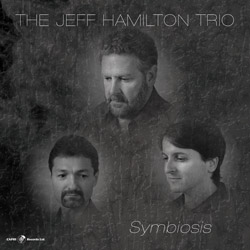
Selected Discography Jeff Hamilton Trio, Symbiosis (Capri Records, 2009) Photo Credits
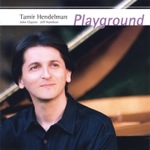
TH: What happened was, I did a duo with [singing bassist] Jay Leonhart in New York, and he had just recorded a CD for this producer from Japan, Ikuyoshi Hirakawa, from Swing Bros. Jay invited him to hear us. When I was in Japan with the big band, Mr. Hirakawa had heard me, and now he asked if I'd like to do a trio CD with John and Jeff. But of course—twist my arm! So I asked John and Jeff, and they said they'd love to.
AAJ: That must have been a little different, being the boss.
TH: One of the reasons I called that CD Playground is that going into the studio was like our playground. We did a couple of rehearsals, not that many. Basically, I invited both of them to the house, we played some arrangements, just to see what each of them had to add to the music, grooves, etc. You couldn't ask for a better trio.
AAJ: What's your dream gig?
TH: I don't think of it like that, as a dream that's out there. I'm already working with some of the best musicians. Anyway, the more you develop as a musician, the more you open yourself up, the more it becomes like a dream.
AAJ: Who are your musical idols?
TH: [Trumpeter] Miles Davis, because he had the sound, carried to all these different styles. [Pianist] Keith Jarrett, for his lyricism and surprise; [pianist] Oscar Peterson, for his groove. And then pianists Chick [Corea], Herbie Hancock, Bill Evans, Gene Harris—it's kind of wide. Ravel.
AAJ: And birdsong, and your daughter's laugh...
TH: Yeah... now we're really getting into it!
AAJ: As far as the eternal question of where jazz is going... I recently met someone who was a childhood friend of [saxophonist] Dexter Gordon. He's one of those guys who thinks that all the best things have already happened, and all the great innovators have already lived. So when you ask him, "Have you heard [pianist/composer] Shelly Berg?" He says "Well, he's not Bud Powell."
For some people, their sense of importance is threatened by something new coming out. After all, they are the keepers of the flame—they heard the greats. I can understand that, but that doesn't help jazz win anyone over, when people insist that the best of it is behind us.
Sure, there was a time when there was nothing, and someone had to invent it, and that makes that person an icon—but that doesn't mean that things aren't going to move from there in new directions. And it's clear you're one of the guys who's going to do just that.
TH: Thanks. I don't think a person has to invent a new language in order to do the next great thing; everyone has their own unique experience to express. Sure, there's a great tradition to work from, but you find your own sound. It's all about sound, not labels. It's what you like, what you hear, what you create with other people, too, since each group has its own sound as well.
AAJ: Meanwhile, aside from all your musical activities, there have been some notable personal milestones in the past year.
TH: It's been kind of a whirlwind. Two big things happened in our personal lives: we moved, we got the first house of our own, and we have a second child, which is beautiful. I never knew how much joy being a father would be, but having two? It's twice as much. It's really something. It kind of makes you look at life differently.
AAJ: How so?
TH: More calmly, which is weird, because you'd think it would make you go, "'Oh my God, now I have two, all those responsibilities." But somehow it makes me feel more calm, because I get so much joy from my children and my wife and my family. It just feeds my soul. And it's an adventure, it makes it more fun. They each have their own personalities: Zoee is rambunctious, and Sophia is like a little Buddha. I have three younger brothers, we just had fun all over the place when we grew up, and they're three of my best friends, you know? So now my children get to have that.
AAJ: Let's talk about your approach to arranging, since that has become such a large part of your reputation.
TH: Some people, when they're arranging for a CD, they say, "OK, give me the chance, and I'll have the arrangements done in a few weeks." But if I can get together with the person and work the arrangements while they're in the room? This always makes me happier, since I can say, "do you think we should go here? Or try that?" Sometimes we do the ending first, and then just try different ways until it clicks.
AAJ: That sounds time-consuming.
TH: Actually, I feed off of their energy, so it makes me write faster. And if I come up with an idea, they get to perform it for me right there and then.
AAJ: So you know exactly what it sounds like.
TH: Yes, and I know if it's going to work. TH: Roberta does a lot of her own arranging. I think I only arranged one or two things for her new CD [So in Love (Groovin' High Records, 2009)]. The fun thing with her was doing a couple of tunes, off the cuff, just me and her: "So in Love" and "Over the Rainbow." That was just joy. Then there's Greta Matassa—she's a really soulful singer from Seattle with a lot of different colors in her voice. Who else... Angela Hagenbach, who did a great album in tribute to Henry Mancini, Michel Legrand, and Johnny Mandel [The Way They Make Me Feel (Resonance Records, 2009]. I arranged and played on about half the tracks there. Now I'm going to do one with violinist Christian Howes. He's doing a blues record, or a record inspired by the blues.
AAJ: You're both arranging and accompanying there?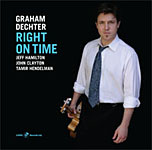 TH: Uh-huh. Then there was the Graham Dechter's CD, Right on Time (Capri Records, 2009). He's a phenomenal musician.
AAJ: Amazing, since he's only 12! Actually, he's 23.
TH: He's mature for his age.
AAJ: Jeff [Hamilton] was saying he's an "old soul."
TH: He is. And he did most of his own arrangements; I think I collaborated on one.
AAJ: You're really getting great buzz on those arrangements of yours. Why is that, do you think? Is it because it's so tailored to the individual?
TH: I also like to find little things about the song that were overlooked, to discover a song anew, to find the genius thing the composer did that made it that great. Delve into that. Get into the feeling of that.
AAJ: Can you think of an example?
TH: "Stardust":"and now the purple dusk of twilight time." It's now, it's coming right at you now, as if you already know everything that happened before. Then it goes into everything that happened in that love affair, and we're back in a garden.
AAJ: With a nightingale, yet.
TH: So, where is this person? In the present, in the past? "As I dream in vain/it always will remain"—it's always there. This makes you maybe reach for different chords, or go for a certain mood or space, finding the one moment that [composer] Hoagy Carmichael wanted to highlight.
And then if I know who's playing, like if John's doing a beautiful arco bass on it, I think, "hey: nightingale, arco, John—let me put this all together and see what comes out." On Angela Hagenbach]'s we were doing a bunch of Michel Legrand songs, and the producer had this idea of giving "I Will Wait for You" a dreamy, French chanson kind of feel. So I went for that, and composed a totally different melody that could be a song by itself. That became the introduction. So it wasn't like, let's do a four-measure introduction; it was, let's create this world, with accordion and clarinet. As long as it has something to do with the song.
AAJ: That reminds me of [saxophonist] Lester Young, who said everyone had to learn the lyrics to the songs that they played.
TH: [pianist] Bill Charlap is amazing that way. When he plays with his trio, you can hear the lyric.
AAJ: Well, Tamir, it seems that your name is all over the place. Of course, one like yours is impossible to forget. But isn't your given name actually John Smith? After all, that's what [singer] Engelbert Humperdinck did to make himself memorable. He was born Arnold Dorsey.
TH: Are you sure you want to put me in the same sentence?
AAJ: I'm sorry, I'll rewind that.
TH: Anyway, I'm just doing what I love. It's really simple. The recent CD with Jeff Hamilton's trio is called Symbiosis (Capri Records, 2009), which is a neat concept: understanding each other, playing as one. It's something that happens over time. We can be playing a song that we've played twenty times before, and somebody can shoot a certain look, and we can know, without saying anything, what to do: that's the magic of music. You can get to that point.
AAJ: And now, on to the [Barbra] Streisand concert at the Vanguard. I assume that came about because of the Diana Krall and Clayton/Hamilton connection?
TH: Jeff and John did a recording with her [Love is the Answer (Columbia, 2009)], and there were several wonderful pianists on it: Bill Charlap, Alan Broadbent, and I play some tracks. There was something in the schedule where someone couldn't be there, and Jeff and John said, why not call Tamir?
So I came in, we were introduced, and Barbra said, hey let's do a tune I've never performed before, but I'd love to record: "Some Other Time." So we did it, and musically we hit it off. Within seconds we were playing it as a quartet, and then I was invited to record a few more songs and, later, to be part of the Vanguard performance. There was also Oprah, and a show in London—not a concert, more of a promotion.
AAJ: What can you tell me about working with such a notorious diva? I can edit out anything objectionable.
TH: No need—I had a great experience. For example, there was a moment when she was listening to this string arrangement, and had the idea of having one verse just for string quartet. And then when the string quartet played that section, they played it soft and gentle. She said, I actually hear it as more intense, so put your whole heart into it, and then, rather than "crescendo-ing" into the last part, taper it down, like it's dying away. Then the orchestra comes back in with a full sound. So they did that, and it was the perfect thing. She's such an intuitive musician. It was really neat seeing her think outside of the box. AAJ: I've heard she doesn't practice
TH: Right. She doesn't have that kind of a background—practicing for hours, music theory and all that—she's very instinctual.
AAJ: So, no head-butting?
TH: Not really. I'm just glad that we made sure there was enough time for me to get together with the band that played at the Vanguard, who are wonderful musicians from New York. We spent 20 minutes to half an hour for each song; we played them through, talked about what kind of flavor we wanted to give it. So by the time Barbra joined us, we didn't really need to talk about the music, since it was already there, and other things needed to be talked about at that point—you know, the lighting, this and that. But the music really flowed. That's the best way I can describe it.
AAJ: Did this gig affect your playing style? I saw some things on YouTube, and you seemed a little more subdued than usual.
TH: That's interesting. Well, the setting of the songs didn't have huge solos. You can see it for yourself when the DVD of the Vanguard gig comes out [on February 2, 2010].
AAJ: The "Deluxe edition" of Love is the Answer is a two-CD set: one is Barbra with the orchestra arranged and conducted by Johnny Mandel, and the other is with quartet. Was the quartet dialed down, and the strings added? Or were there two separate recordings?
TH: The quartet recorded the music knowing there would be strings added later on. So we played sparsely for that reason. And some of the string lines were so beautiful that I wanted to play them basically note for note. I think that's probably what you heard. I don't think of it as being more subdued, or more out—I just listened.
Do you know [pianist] Dave McKay? He's a great accompanist, very attuned. One time I took a lesson from him and he said it's really important to think about the word "responsibility" when you play. And I said, "Responsibility—that sounds so serious—what are you talking about?" And he said, "Response and ability. The ability to respond."
AAJ: Interesting. It's not just a sense of duty.
TH: John talks about it all the time: constantly having your radar out, to all the musicians, the vocalists you might be playing with, and also the drummer, what is he doing? Do I want to answer him; do I want to give him something to respond to? It's such a joy, an incredible experience, to make music with these people.
AAJ: So what's next for you?
TH: I'm looking forward to my next recording on Resonance Records, which will be my first for them as a leader. We're recording in late February 2010, using bassist Marco Panascia and [drummer] Lewis Nash. Resonance has the idea of bringing people together who spark off each other, and take chances.
AAJ: Both Nash and Hamilton are amazing drummers. Asking who's the greatest in the world is ridiculous—it's like asking, what's the prettiest part of nature?
TH: Exactly. It's like, you have your favorite friends: one of them likes to joke all the time, the other one likes to talk about life, and each one brings out a different part of your personality. If you only had one of them as your friend, maybe you wouldn't be complete, you know?
Barbra Streisand, Love is the Answer (Columbia, 2009)
Jackie Ryan, Doozy (Open Arts, 2009)
Graham Dechter, Right on Time (Capri Records, 2009)
Greta Matassa, I Wanna Be Loved (Resonance, 2009)
Angela Hagenbach, The way They Make me Feel (Resonance, 2009)
Tamir Hendelman, Playground (Swing Bros, 2008)
Natalie Cole, Still Unforgettable (WEA, 2008)
Michael Bublé, Call Me Irresponsible (Reprise, 2007)
Jackie Ryan, You and the Night and the Music (Open Art, 2007)
Jeff Hamilton Trio, From Studio 4, Cologne (Azica, 2006)
Diana Krall, From This Moment On (Verve, 2006)
John Pizzarelli, Dear Mr. Sinatra (Telarc, 2006)
Roberta Gambarini, Easy to Love (Now Forward, 2006)
The Clayton-Hamilton Jazz Orchestra, Live at MCG (MCG Jazz, 2005)
Brasil Brazil, Brasil Brazil (Yellow Green, 2000)
Page 1: Eddy Westveer
Page 2: Robert Wade
Page 5: Dr. Judith Schlesinger
Page 3: Art Pazornik
Featured Story: Keep Swinging Blog
< Previous
Quartet Saigon
Next >
Live!
Comments

Tags
Concerts

For the Love of Jazz
 All About Jazz has been a pillar of jazz since 1995, championing it as an art form and, more importantly, supporting the musicians who create it. Our enduring commitment has made "AAJ" one of the most culturally important websites of its kind, read by hundreds of thousands of fans, musicians and industry figures every month.
You Can Help
To expand our coverage even further and develop new means to foster jazz discovery and connectivity we need your help. You can become a sustaining member for a modest $20 and in return, we'll immediately hide those pesky ads plus provide access to future articles for a full year. This winning combination will vastly improve your AAJ experience and allow us to vigorously build on the pioneering work we first started in 1995. So enjoy an ad-free AAJ experience and help us remain a positive beacon for jazz by making a donation today.

Giveaway

Days remaining: 5