Home » Jazz Articles » Interview » Ed Palermo: We're Only In It For The Music
Ed Palermo: We're Only In It For The Music

Yes, it's safe to say that saxophonist, composer and arranger Ed Palermo really, really loves Frank.
 Ed Palermo (center, on alto) with Ed Palermo Big Band
Palermo's love affair with the music of Zappa began in 1969, when as a receptive 14-year-old, he saw Zappa and the Mothers of Invention in concert, an experience which would forever change the way Palermo saw music. Forty years on, the flames of love are undiminished, and Palermo and his wonderfully talented big band have released their third CD of Palermo's adventurous arrangements of Zappa's music, Eddy Loves Frank (Cuneiform, 2009). This latest recording in Palermo's ongoing Zappa project shows Zappa's challenging compositions in a whole new light. At the same time, loudly making the case for Palermo's big band as being one of the very best on the contemporary jazz scene.
Sadly, Eddy's love is unrequited, as Zappa passed away in '93, and never heard Palermo's heartfelt tribute to his vast musical legacy. Listening to Palermo's bold, swinging reinventions of Zappa's music one cannot help but feel that Zappa would have approved mightily.
All About Jazz: Firstly, congratulations on Eddy Loves Frank, I'm sure you must be pretty pleased with the way it turned out.
Ed Palermo: : Yes, it's the best thing I've ever done in my life.
AAJ: Your previous Zappa-inspired CD, Take Your Clothes off When You Dance (Cuneiform, 2006) was most impressive, but I think this latest CD is even stronger.
EP: Thank you so much; I loved that one too, but what I like about Eddy Loves Frank is that I was more creative with the structures of the songs. I decided to take more chances and to get further away from Frank Zappa's versions of them.
AAJ: It must have taken a long time to transcribe these songs in the first place, any of them, but particularly "Echidna's Arf (of You)" and "Night School."
EP: Well, that's an interesting thing. For both of those songs, as far as the transcription goes, I had help. I mention in the liner notes that 99 percent of the music that my band does I did the transcriptions myself, but the "Night School" transcription was done by a friend of mine named Tom Trapp, and "Echidna's Arf..." was transcribed by Robbie Mangano. I took their transcriptions and made my arrangements of them.
After the transcription is done then I have the fun part of making the arrangement out of it. For example, "Don't you ever wash that thing" was not an easy one to transcribe; I would say that it probably took me five hours. Once all the notes are down the way Frank Zappa's band played them, then I think to myself: "Right, what do I want to do with this?" I wanted to use all the parts that Frank wrote but to juggle them around, to make it more interesting for me but mainly so that the hardcore Zappa fans can listen to it and be surprised.
One of my main goals in this whole project is to give a big musical rush to the hardcore Zappa fans, because my philosophy is that whether you ever heard Zappa's music, or liked it or not, I think anyone can get into what I'm doing here but I want to focus on the hardcore Zappa fans. I want the hardcore fans to be really surprised, and there's no way I can surprise them if I structure everything the way Frank does it. But it's much more rewarding for me and the audience, I believe, if they are familiar with the song but they don't know what part's coming next. For example, on "Don't You Ever Wash That Thing," I took Zappa's coda and used it as my intro. Then I did a lot of slicing and dicing, just juggling stuff around because it's very important to me to put the surprise element in this music.
AAJ: You make it sound a lot simpler than it probably was. How much rehearsal time was needed to nail this material before you could record it to your satisfaction?
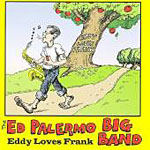 EP: A lot, a lot. It's interesting, because with "Don't You Ever Wash That Thing?" and "Echidna's Arf...," we'd been playing those songs live for about seven or eight years but playing them in a way much closer to the way Zappa recorded them. So by the time it came to record Eddy Loves Frank all the guys knew those parts real well, but I had to confuse matters by writing completely new arrangements. So yeah, we had to rehearse quite a bit for the CD.
When we used to play at The Bottom Line, New York, and we played there from '94 to 2003, we used to rehearse once a week, and each rehearsal was only two hours. Compare that to Zappa's band—he used to rehearse six hours a day, six days a week.
AAJ: That's maybe why so many musicians came and went in his bands.
EP: Exactly, although Frank was able to pay his guys real well and I definitely cannot. The guys in my band are doing this strictly out of love, and the fact that they can play material this difficult and nail it so incredibly well, and make next to nothing, I am forever in their debt.
 AAJ: Your musicians are tremendous, but it must give you a few more grey hairs each time a member leaves as you have to find a suitably skilled replacement and familiarize them with your arrangements.
EP: Well, yes, except it almost never happens. It's been a really long time since I had a musician quit. It would be heartbreaking and very frustrating but for the fact that I live in News York City where there are so many musicians and so many people to replace you. That said, if anyone left this band I would really miss them, because not only are they the best musicians in the world, but we've also become really good friends. Their dedication to me and to this project is something that I'll never be able to repay.
AAJ: On your big band Zappa CDs you personally don't take too many solos; why is that?
EP: When we play live people ask me that all the time, but my answer to that is that the guys in my band play so good, especially my saxophone guys, that I want everyone to hear them. They play rings around me. I would rather hear them than hear myself. When we play live I just shake my head and think, "Holy moly, where did you learn that?" [laughs]
AAJ: Let me take you back a bit and ask you about the first time you saw Zappa and the Mothers; what do you remember about the gig and what effect did it have on you?
EP: It had a huge effect on me, a huge effect. It's like it happened yesterday. I was 14-years-old and I saw him in Philadelphia in February 1969. It was right before Uncle Meat (Bizarre, 1969) came out, and they were touring to promote Cruising with Ruben and the Jets (Verve, 1968). They were doing that sort of material but they were also doing the more avant-garde sort of stuff like "Uncle Meat" and "King Kong." The set I saw was so interesting in the diversity of the music, from doo wop to classical, or whatever "Uncle Meat" is.
I just couldn't believe it. The band was so tight. The horn section was playing these melodies so tight, and man, the band looking so freaky. The whole thing was visually unbelievable. And of course Zappa was the coolest looking guy on the planet, just leading everything, and you couldn't help being mesmerized by him.
Everything about it—the organization, the creativity, the tightness, how he'd put his hand up and—'boom!'—it was a brand new grove. He rehearsed that band like crazy; Zappa made them rehearse on Christmas day, or New Year's Day, it didn't matter to Frank. Half the band didn't read music so they had to learn the music by rote.
This is stuff I've learned reading interviews with Frank and various band members. Bear in mind that I never met Frank; I never played in his band. Some people are under the impression that since I do this music I had some relationship with Frank, which I never did. But I don't want to misrepresent myself, I am strictly a fan. I am a huge Zappa fan.
AAJ: How did your interest in jazz come about?
EP: Well, I went to college from '72 to '76 and completely changed my thing then. Although I was still following Zappa, I had become a hardcore bebop saxophone player. Oddly enough, the major inspiration for me, and I'd been playing saxophone since I was a kid, was Edgar Winter. He was known as this rock 'n' roll guy but very few people realize that he's an amazing jazz composer and a super jazz saxophonist. Winter played a lot like the guys who became my heroes, Cannonball Adderley and Phil Woods.
AAJ: Could you recommend an Edgar Winter CD that people should check out?
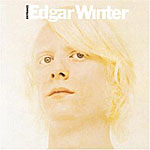 EP: Yes, yes yes! Entrance (Sony, 1970). If you get this album it will freak you out how great it is. It has plenty of rock and blues on it but the jazz stuff and his classical harmonic knowledge is unbelievable. I have to say that my band does that entire album. We've played it live several times. We did it with Will Lee, the bassist from the David Letterman Show; he's an Edgar Winter fanatic too so he was one of the singers we used.
When I transcribed that stuff I learned so much, and that's after years of transcribing Zappa. I mean, Edgar Winter's stuff was so fascinating it was like unearthing treasures. I'm a huge fan of Edgar Winter. I'm dying to have him play with my band some day. We've discussed it but it never looks like it's going to happen.
AAJ: Hey, you never know. What was your first important gig?
EP: Well, after college I moved to New York and started playing with a guy called Tito Puente...
AAJ: A guy called Tito Puente or the Tito Puente?
EP: Right, Tito Puente. Around that time I started making my main artistic expression through writing and composing, though still playing all the while. I put a big band together around '79 doing my original material and various things. When Zappa died in '93, I decided to stop doing my own material for a while and dedicate myself to my hero. He's always been one of my main influences.
AAJ: What prompted you to put together a big band in the first place; it's asking for trouble, isn't it?
 EP: Well, putting together a big band is a lot harder than putting a four- piece band together, that's for sure. It's funny because I wasn't really into arranging when I was at college; I was more into playing the saxophone and writing jazz tunes. Then when I went to New York I went to the Village Vanguard and I saw Woody Shaw. He had a group of four horns and I listened to that and I thought: "Huh, I think I could do that!" I love Woody Shaw.
I should also mention that there's a big band album which to this day is one of my favorite albums, and it's a Charles Tolliver album called Impact (Charly, 1975). I've actually never been a huge fan of big bands, you know I never really dug Buddy Rich or Woody Herman. When it came to jazz I liked the smaller groups, except for when I heard Charles Tolliver. Just don't drive when you're listening to it or you'll end up going at 90 mph. And that, and after seeing Woody Shaw I thought: "Man, that's the kind of thing I want to do." So, I was really inspired by those two things.
Then I just started writing stuff, from scratch. I mean, I was completely untrained as a writer. It was complete trial and error. I would tape every rehearsal and then go home and listen to the cassette, because that's what we had back in the '70s, and I'd get my score paper out and listen and go: "Well, that didn't work," and I'd start erasing and writing new stuff. That band was only a nine-piece band, with five horns.
So I started small. But then a friend of mine who was playing with Buddy Rich said: "Why don't you write some big band stuff, maybe I can get Buddy to buy something. So, I started to write some bigger band stuff, although I never did get a chance to sell it to Buddy Rich. However, as soon as I started writing for big bands I thought: "Man, this is cool! Maybe I can start doing the Charles Tolliver type thing." I then became obsessed with arranging.
AAJ: When did you first record?
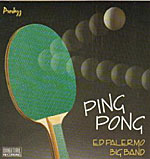
EP: I recorded my first album, Plays the Music of Frank Zappa (Vile Heifer Records) in'82, and now I sell it as Papier Mache, but you can only get it through me. Then in '87 I did another album which is also out of print called Ping Pong, (Pro Arte Records, 1987), named after the Wayne Shorter song. The next time I recorded was my first Zappa album, and that was in '97.
AAJ: What sort of crowds did you play to at the beginning of your big band career?
EP: When I used to play gigs before doing the Zappa material the band would generally outnumber the audience.
AAJ: That must have been pretty discouraging, no?
EP: : Check this out, man: when I was in college in Chicago my brother and I went to a club called The Brown Shoe, and we saw Return to Forever. They had just released Light as a Feather (Polydor, 1972) and at that gig he had Michael Brecker with him and Steve Gadd, and apart from me and my brother there were maybe three other people in the audience. The same thing happened when we went to see Sun Ra; there were just a handful of people and Sun Ra's got this 20-piece band! It was surreal, man.
We had some gigs that we did well at but for the most part it was really an up- hill battle to get the people to come out and hear an unknown big band. Then we started doing Zappa, and keep in mind that Frank had just died; we were playing regularly at a club called The Bitter End, once a month, doing my own material, and drawing very small audiences.
Then one of those months I decided we were going to do a month of Frank Zappa music, though it took me a couple of months to write all the material for one show. Around that time the Internet had just started becoming more used, and word got out via the Internet that there's a big band in New York City doing a night of Frank Zappa music. This is about six months after Frank died, because the concert was June of '94.
So now I go to my monthly gig where I'm used to seeing hardly everybody and the place is swamped! I meet people in the audience who drove down from Montreal, drove up from South Carolina; these people had never heard a note that my band had ever done, but they were so hungry to hear Zappa that they came from all over the place.
 We played our show and the audience reaction is unreal. I'm thinking: "Holy shit! I've really got something here!" But still I guess I'm shortsighted because I thought I'd go back and do my own stuff the next month, figuring I'd just do the Zappa thing as one night. Then my brother told me, "Ed, why don't you call a bigger club in town and tell them what the reaction was, and maybe they'll book you?"
So, I wrote the guy at The Bottom Line a letter and to make a long story short we ended up playing every couple of months for nine years. All the time I was arranging new Zappa material and we'd change the show each time. We were rehearsing once a week and doing the gig about once every six weeks. It was a total labor of love, there was certainly no money in that. I lost money on it. That's pretty much my history up until now.
AAJ: Taking you back a little to Tito Puente, whose band you played in for three years, how did that experience prepare you for leading your own big band?
EP: That's a great question; I figure it had a major influence. One thing, when I started playing with Tito, I hardly heard that music, salsa and mambo and things. I was woefully ignorant of the music. It really took a while to get the groove of it, but they hung in there with me. I kept expecting to be fired at any minute; I was a total gringo.
AAJ: How did you get that gig then in the first place? What sort of audition did you have?
EP: Well, as most of these things happen; at that time that band was only using two saxophone players, alto and tenor, and every now and then for certain gigs they'd hire a baritone player. Then a couple of guys left the band and the guy who played tenor, who I'd met at a jam session, said: "Hey, can you play this Saturday? We've got three gigs. Can you do it?" Now, when I moved to New York I didn't work for a whole year, and I was getting ready to move back to Chicago because I was so disheartened about how bad it was going in New York, so I go to this gig, three gigs in one night with Tito Puente.
On baritone sax that night was Ronnie Cuber, and Ronnie is one of the greatest, if not the greatest baritone players in the world, so it was cool to hang out with him and be part of this scene. It was surreal to me. There are certain elements of that music, like the bass lines which are so bizarre where they lay on the beat. Plus the fact that visually, socially, all the women and all the men in the audience are dressed to the hilt, like they're going to the Queen's Ball.
At that point the guy who I was subbing for decided to quit the band, and they thought I'd done pretty good and so I was with them for three years. Right about that time was when I was really into the Charles Tolliver album, and I'd just seen Woody Shaw, so I'm starting to think: "Boy, I really want to start arranging."
Now, Tito Puente is a great arranger and we would play his arrangements. We were playing seven nights a week and sometimes there were two, three or four jobs in one night, so we were playing constantly. So just by reading the charts I would think: "Oh, so this is how the sax plays against the trumpet." I was learning all this stuff. It was a huge, huge influence on me and a great learning experience.
AAJ: What was Tito Puente like as a leader, as an individual? Was he an easy guy to get on with?
EP: No. He was a musical genius, I mean, he was brilliant but he knew he was a musical genius and he carried it like a badge of honor. If he had something to say to you because you were doing wrong he wouldn't mince his words. He was more than straightforward; he would be borderline mean. He could make you feel like a real berk. You'd try to play it better the next time but I still think it's a bad way to deal with human beings. He liked his control and he liked being in a situation where he could be a bully.
I never became close friends with him but it was a total honor to be playing in his band, because for one thing I didn't deserve it and there were people out there who did. He was one of the most important people in music as far as I'm concerned.
AAJ: Coming back to your relationship with the music of Frank Zappa, do you have a favorite Zappa period?
EP: Well, my favorite Zappa live band was that first band I saw, the '69 band, shortly before he broke the Mothers up. He had Don Preston, Artie Tripp on vibes, he had Ian Underwood, Bunk Gardener, I'm not going to list all the guys but that band blew me away more than any other band.
If I had to say objectively what was the greatest band he ever had, and bear in mind that every band he ever had was nothing short of spectacular, I"d say the band he had in the mid-'70s with Napoleon Murphy Brock, George Duke,Bruce Fowler, Tom Fowler, Jean-Luc Ponty, Ruth Underwood, Chester Thompson and Ralph Humphries; that band, the Zappa/Mothers: Roxy & Elsewhere (DiscReet Records, 1974) was probably his greatest band. Those musicians were ridiculous, and not just technically proficient, for each one of those guys had a personality that they brought into the band that was unreal.
I admired Zappa because he didn't just hire a guys for their technical proficiency, he hired them for what he called "the eyebrows," which was basically their personality.
AAJ: Zappa was a prolific musician; if you had to take just one Zappa album to a desert island which one would it be?
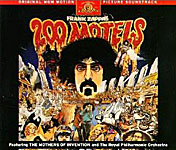 EP: 200 Motels (United Artists, 1971).
AAJ: Why?
EP: Because over the years the orchestral music on that has seeped into my... I'm not even sure how to put it, my psyche, into my heart more than anything. When that album first came out when I was in senior high school I didn't get it, except for the rock tunes. The orchestral music just went over my head. But over the years, especially once I started arranging, and I was also super into classical music like Shostakovich, Prokoviev and Arthur Honegger, influences which I wanted to incorporate into my writing, along with the Charles Tolliver and Woody Shaw influences.
Zappa got me into classical music. Now I find that as I get older and listening to more classical composers that made me more able to understand Zappa's more out there, avant-garde, classical writing. I have to tell you the truth, I never thought about it in those terms until now, so I thank you for that. Aside from 200 Motels, my other desert island Zappa discs would be Burnt Weeny Sandwich (Bizarre, 1970 ) and Lumpy Gravy (Verve, 1968).
AAJ: Have you ever transcribed, or thought about transcribing any of Zappa's guitar solos?
 EP: No, I've never even thought about transcribing a Zappa solo. I've transcribed Zappa licks here and there, I mean, we do "Twenty Small Cigars" from Chunga's Revenge (Bizarre, 1970) and there's a couple of licks that I have the trumpets doing, but as far as full guitar solos? No, that would be really hard. Zappa's picking hand was really fast and he liked to play really crazy couplets and weird rhythms and that might be something that I might not do just 'cause it's too hard. I've never thought about doing that.
AAJ: How big a fan are you of Zappa the guitarist, and do you wish he had played more guitar?
EP: To be perfectly honest, the one thing that separates me from my fellow Zappa fanatics is that I like how Zappa plays guitar but he's not one of my favorite guitarists. When it comes to guitar playing I much prefer Jeff Beck. When it comes to solos I like the guys who play fewer notes and play more memorable melodies, guys like Randy California; do you know him?
AAJ: Spirit.
EP: Spirit, yeah, exactly.
AAJ: Are there any Zappa compositions that you have avoided so far because they are too daunting a proposition to transcribe?
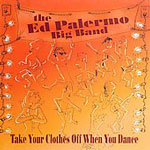
EP: Sure, unquestionably. On Take your clothes off when you dance, we do "Moggio" and there's no way I would have been able to do that if someone hadn't done the transcription for me. I mean, I'm pretty good at this stuff but there are people out there who are better. A guy called Marc Ziegenhagen, an amazing keyboard player, he transcribed "Moggio" from which I made my arrangement. If I thought about it I could come up with some others that I would love to do it but, you know...
AAJ: Life's too short?
EP: Yeah, exactly, life's too short [laughs].
AAJ: You've enjoyed the collaborations of quite a few of Zappa's ex- sidemen; what has been their reaction to your ongoing Zappa project?
EP: Oh, very positive, very positive. Napoleon (Murphy Brock) in particular. He's a big Stan Kenton fan, and the very first time he sang with us he thought that this is what he wanted to do because he grew up with the music of Stan Kenton, though truth be told I'm not at all influenced by Stan Kenton.
AAJ: I don't know anybody who is. What does Napoleon love about Stan Kenton?
EP: I don't really know but with Napoleon I think it's just that he loved the sound of a big band. You know when a singer comes up and he has a big band behind him that's a big rush. It's a really great feeling to have all those horns supporting you.
Ike Willis sang with us on several occasions, Mike Keneally always has a blast singing and playing guitar with us. They have very positive things to say about playing with us.
AAJ: And what about their memories of playing with Zappa?
EP: Believe it or not I don't really talk to them that much about Frank. I do ask them about how he rehearsed a particular song and things like that but I never ask the personal questions about the groupies and stuff like that because I figure there are certain things they might just want to keep quiet. I think that they all love and cherish the time they had with Frank. I think all three of those guys would say it was a completely irreplaceable experience.
AAJ: What about the Zappa estate, the Zappa family; are they pleased about what you're doing or are there any legal complications in presenting Zappa's music live? Are they supportive of you?
EP: Right now there's no problem, but are they supportive of me? No. Gail, Frank's wife, doesn't like anybody like me, and another band called Project/Object, doing this because she thinks we're making money off it and in fact that couldn't be further from the truth. I can speak for all of us when I say that this project is costing us money.
The only person who can make money on this is Dweezil (Zappa) because he's the only guy who has that kind of name recognition and could draw they type of audiences that would garner a profit. I do very well now as far as audiences coming out to hear me but I'm not just doing strictly Zappa now. It's mostly Zappa but I'm also doing jazz versions of my other favorite groups like Procol Harum, Todd Rungdren, and I have a whole project where I do Paul Butterfield's music. It is a mixture of stuff. In the past I have got "cease and desist" letters from the Zappa estate, so to answer your question they are not supportive of it and I seriously doubt they ever will be.
AAJ: Something that I'm curious about is the U.S. Army Blues Band, whom you've conducted doing Zappa's music; the U.S. Army and Frank Zappa seems like an odd combination, no?
EP: There's a story to that. On the first Zappa album I did, Ed Palermo Plays the Music of Frank Zappa my lead trumpeter was a woman called Liesl Whitaker, and let me just say she was probably the greatest trumpet player I ever had in my band; she decided she wanted to have a more stable life and she got this offer to be the lead trumpet player for the Army Jazz Big Band
AAJ: What? You don't have to be in the army to play for the army big band?
EP: No, no, she had to join the army; that was the only down side [laughs].

AAJ: Don't tell me she's playing Zappa in Iraq now!
EP: Right, exactly. At the time she was married and wanted to have a baby, and getting insurance would have been impossible for a New York trumpet player, but the army pays for everything so she joined the army. She was immediately offered musical director status and since she and I have always been very close friends she would periodically call me and say: "Hey, let's do a concert of Zappa stuff."
The Army band are incredible musicians, I mean, they nailed this stuff. Their brass section is unreal.
AAJ: Do you send them your arrangements months beforehand? How does it work?
EP: I send them PDFs, before it was mail copies. Then Liesl will give each one of them their music. They'll practice on their own and then have two or three rehearsals and then I'll go and rehearse with them to get everything all ironed out. That's how we do it.
I've done it that way in Europe too, at the festival in Umea, Sweden, in Finland in Helsinki, and in Norway. That's always a fun thing to do. We played at a yearly Zappa festival in Germany, called Zappenale; I took a small version of the band there, we had like six horns and rhythm section and it was the most amazing concert I think I've ever played. There were two thousand people standing up front and going crazy with the music, but when the music got soft you could hear a pin drop. It was unreal.
I haven't been asked to Europe in a while though. I hope that changes with this new CD, but we'll find out. I haven't gone to England with this music yet and that's something I really want to do; England and Italy.
AAJ: Do you think Zappa would be chuckling to himself to know that the US Army are playing his music. It's kind of ironic, no?
EP: I think about that all the time. Sometimes I wonder what Frank's wife would say; I wonder if she would try to stop a concert like that. Even though I'm a proud liberal we do need our armed services and the people in the armed services do a very important job. I'm not too crazy a lot of the time about what the people in the White House have them do, but I have deep, deep respect for the people in the army.
Liesl actually went to Iraq with several people from the band as a show of support for the troops, because those troops are in a very, very bad way, and now they're coming back with post traumatic stress disorders and stuff like that. I don't feel I have to apologize to anyone for doing this music with the Army band. Would Frank be chuckling? I don't know man [laughs]. Another question people ask me is if Frank would like what we do with this music. I don't know, but I'd like to think he would.
AAJ: I'm sure he'd love it. I feel he'd appreciate the recognition of the seriousness, the complexity of his music, the beauty of his art.
EP: I really thank you for saying that. I'd like to think so too. But I don't lose any sleep over it though.
AAJ: Zappa wanted to be a serious composer but do you think he had a certain degree of insecurity, and that maybe all the zaniness in his music was a kind of mask which he partially hid behind? Do you think maybe he didn't have the full confidence to only do serious composition?
 EP: That's an interesting viewpoint; I've never heard anyone with that particular diagnosis. You may be right but I would say, judging by reading his book and stuff, that more than anything he loved composing and that he would probably have spent most of his time writing and conducting if he had the chance, but usually those projects cost him money, and in his book he says that.
He was totally self-taught, which is amazing considering how well he knew the vocabulary of people like Schoenberg, Webern and Varese. Considering how he was able to orchestrate that stuff ad how to write that amazing music I can see how he wouldn't have any trepidation at all.
However, I can tell you I am basically self taught too, and if I was Zappa and I would go up against people who had gone through conservatories and got PHDs in composition and who have won Pulitzer prizes for composition, if it was me, I would be as nervous as hell. I'd have so little confidence, but I don't think that was Zappa's thing; I believe Zappa had the utmost confidence and rightfully so because his music was amazing.
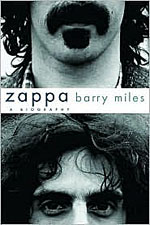
AAJ: Did you read the Barry Miles book on Zappa? [Frank Zappa: The Biography (Atlantic Books, 2005)]
EP: Yes I did. I thought it was fascinating. The only thing he wrote that I totally disagree with was that Zappa wasn't an intellectual. I think Zappa was a highly intellectual guy.
 AAJ: Coming back to Eddy Loves Frank, you have an arrangement of "America the Beautiful" which, once past the vocals, is one of the most beautiful parts of the album. It's the sort of song that Zappa, were he alive today, would parody as a kind of finger in the eye of the American government. Tell us a little about this song.
EP: It's interesting that you bring that up because in his '88 tour, his last tour, he did do "America the Beautiful," and he did it more as a Ray Charles gospel-type thing. The hardcore Zappa fans immediately think that I'm doing Frank's version, which I don't do at all. My version has nothing to do with Zappa at all.
I can tell you where that arrangement came from; I wrote it right after 9/11. The band was playing at The Bottom Line less than a mile from Ground Zero and there were times right after 9/11 when we would do our shows and at the same time there would be people digging up bodies—the police, the fire department and so on. These people were risking their lives and they also made me think of my father who's a WW II hero with a Silver Star. I started thinking about real heroes and how much in awe of all these people I am. That's who I wrote that arrangement for.
That arrangement is totally unlike Zappa because I am totally wearing my heart on my sleeve. Zappa hardly ever did that; Zappa's emotion was a different type of emotion. This is more like what my own original music is like.
Musically speaking I can tell you that I based the chord changes on one of my favorite Crosby, Stills, Nash and Young songs. It's from Déjà vu (Atlantic Records, 1970), and it's the next to last song, a medley of three songs, "Whiskey Boot Hill," "Down, Down, Down" and "Country Girl," and that to me is a desert island song. I just messed around with the chord changes and that's how I came up with the arrangement, and the chords on the organ solo and the guitar solo are totally influenced by that Neil Young song.
< Previous
More Resources for Jazz Musicians
Next >
A Modern Art
Comments

Tags
For the Love of Jazz
 All About Jazz has been a pillar of jazz since 1995, championing it as an art form and, more importantly, supporting the musicians who create it. Our enduring commitment has made "AAJ" one of the most culturally important websites of its kind, read by hundreds of thousands of fans, musicians and industry figures every month.
You Can Help
To expand our coverage even further and develop new means to foster jazz discovery and connectivity we need your help. You can become a sustaining member for a modest $20 and in return, we'll immediately hide those pesky ads plus provide access to future articles for a full year. This winning combination will vastly improve your AAJ experience and allow us to vigorously build on the pioneering work we first started in 1995. So enjoy an ad-free AAJ experience and help us remain a positive beacon for jazz by making a donation today.

Giveaway

Days remaining: 11