Home » Jazz Articles » Interview » 1959: The Year Classic Albums Were Born
1959: The Year Classic Albums Were Born

 When the year 1959 began, there were only 48 states. Alaska and Hawaii would became part of the United States during that annum, the third year of President Dwight D. Eisenhower's second term. It was the year Fidel Castro came to power in Cuba and took a goodwill tour of the U.S., two months after an interview with Edward R. Murrow on CBS television.
Mattel toy company launched the Barbie doll. In professional basketball, the Celtics beat the Lakers for the NBA crown—but it was the Minneapolis Lakers.
Bob Dylan, (then Robert Zimmerman), graduating from Hibbing High School in Minnesota might have gone that year to see the epic motion picture "Ben Hur" or the comedy "Some Like It Hot" that made cross dressing acceptable under certain circumstances—especially if it involved wooing Marilyn Monroe. Or he might have tuned in television shows like "Bonanza" and "The Twilight Zone," both premiering in 1959.
In music, the Grammy Awards were created and debuted. And on the darker side, a chartered plane transporting musicians Buddy Holly, Richie Valens and the J.P. "Big Bopper" Richardson crashed in an Iowa snowstorm, killing them and the pilot, a tragedy later termed "the day the music died" in Don McLean's song, "American Pie." Famed New York disc jockey Allan Freed at WABC Radio refused to sign a statement saying he never accepted payola—payment for getting an artist's records on the air—and was fired.
But in jazz, there was no such bad news (if one discounts the increasing popularity of rock n' roll music that was pushing jazz toward the fringes of popularity). The year 1959, for whatever reason, whatever alignment of the planets or whim of the Fates, was a glorious year.
At Columbia Records, albums were made that year that became some of the most influential music of its time. In fact, any time. Much has been written and said about Miles Davis and Kind of Blue and its great popularity and influence over the years. Two books have been written about that recording alone.
But 1959 was also the year that the first recordings for what was to become Sketches of Spain were done. It became the third major large-group project Miles did with his collaborator and trusted friend Gil Evans. In a totally unrelated way, Miles and that album captured people's fascination and took music out in a different direction. Like Kind of Blue, it attracted listeners who weren't necessarily jazz fans.
Label mate Dave Brubeck was popular among young jazz fans of the day, yet had some skeptics not only in the critical world, but among a segment of jazz musicians. His albums were popular, however. But when he released Time Out in 1959, it became food for thought for both musicians and fans, with its odd time signatures and intriguing sound. Like Miles' seminal album, it, too, was revolutionary for its day. A half-century later, it is still the album for which Brubeck and his renowned quartet are best known.
That magical year 50 years ago also saw the larger-than-life Charles Mingus come out with Mingus Ah Um, which has been hailed as a summation of his great career to that point. Compositions from that Columbia recording are still a staple for jazz groups. Mingus was at a creative peak at the time and the band he assembled to carry out his vision was exceptional.
 Those are colossal recordings in the history of jazz and it's remarkable they were developed around the same time by diverse musical minds. Those minds, however different, also had things in common. Davis, Brubeck and Mingus were—and in Brubeck's case are still—all about music. And they had a penchant for exploring. Those jazz giants were enormously inquisitive about music, and, as such, willing to absorb things they heard, applying them to their art with their own inimitable stamp.
There is no way to explain why things happen as such in 1959. Music lovers certainly appreciate that things came to be. As Gil Evans once said about Miles, "I sure am glad you were born." The same can be said about the birth of these creative albums.
"Looking at it from the perspective of 2009, a major record label (Columbia) was really doing a pretty good job documenting jazz. If not the whole spectrum, at least it wasn't a narrow focus," says Bob Blumenthal, noted jazz critic who has received Grammy Awards for Best Album Notes and the Jazz Journalists Association's Excellence in Newspaper, Magazine, or Online Feature or Review Writing and Lifetime Achievement awards. "They had Duke Ellington at the time. His soundtrack from "Anatomy of a Murder" was also very popular that year. But if you're thinking of the iconic Ellington album on Columbia, it would be Ellington at Newport from 1956. They had Erroll Garner at the time. I'd be willing to bet whatever Errol Garner was putting out in 1959 sold more copies than Miles Davis or Mingus and possibly Brubeck. But, when you think of his iconic Columbia album, it's Concert by the Sea from 1955. It's not as if there weren't other things going on at Columbia."
 Gil Evans and Miles Davis in the studio in 1959
But those four projects became momentous. Sony Music, which owns Columbia, celebrates those four albums by releasing them in their 50th anniversary editions that includes expanded writing, additional music from the bands involved, and, in the cases of Kind of Blue and Time Out, DVDs documenting the making of the music and its impact. Each package is available as part of a Colombia/Legacy series.
The impact of these musicians and their creativity was not lost on the extraordinary musician/educator Gary Burton. "As I was finishing high school and becoming totally devoted to jazz, some of the greatest recordings in jazz history came along at just that moment to show the way: Miles Davis with his sextet and with Gil Evans transcended bebop, Dave Brubeck unlocked the constraints of meter, and Charlie Mingus brought Ellington's legacy into the modern era. It was truly an era of giants."
Saxophonist Gerald Albright notes, "the musical works of Miles Davis, Dave Brubeck, and Charles Mingus are wonderful examples of innovators who literally changed the face of jazz forever. In each piece you can hear the commitment, uniqueness, and the desire to strive for perfection. Each artist has inspired me to be the best that I can be, and to use the best musicians possible to fulfill my visions."
"For years, jazz's archetypal artist have been conditioned to fit the constraints of this industry and starved into acknowledgment of the insincerity that is requisite to their musical survival. Kind Of Blue, Sketches Of Spain, Time Out and Mingus Ah Um all illuminate the type of conviction these artists refined to allow themselves to be vulnerable enough to compel us to listen," says the remarkable young trumpeter Christian Scott aTunde Adjuah. "In my opinion, these albums prove that when an artist allows the music to work as a conduit for sincere expression, the sentiment of the group becomes more apparent and thus more captivating."
Blumenthal notes the development of these albums is somewhat tied to the artists' way of dealing with the relatively new format of the long-playing album format.
"The format of the 12-inch long-playing albums had really only come in about 1955. Some companies, 1956. So the idea that you have 20 minutes on each side. You make an album. You can make the album hang together somehow, differently than if you were just putting out singles or albums where you had a bunch of three-minute recordings. I suspect part of what was going on is people realizing, 'We can do something with this format.' One thing about all these albums is they have an impact as entire albums, even though there are certain tracks that you remember on them. I think that may have something to do with it, above and beyond the quality of musicians who were making recordings at that time."
 Mingus left Atlantic Records in 1959 for the chance to sign with the bigger label, Columbia. It meant a bigger budget project was possible and Mingus surrounded himself with musicians he was comfortable with, including Jimmy Knepper, Booker Ervin, John Handy, Horace Parlan, Shafi Hadi and of course his perfect rhythm mate Dannie Richmond. All were familiar with the mercurial Mingus and his music. They went into the studio in May.
"It was kind of two bands," says Blumenthal. "He was clearly very satisfied that these guys in the band could play his music the way he wanted to hear it. To that extent, it may be his best album in terms of the entire band being on his wavelength."
The result is an album of superior energy and creativity. They brought compositions like "Goodbye Pork Pie Hat," "Better Git It In Your Soul," "Jelly Roll" and "Fables of Faubus" to life in grand style. If it stands as a career summation at that point, it certainly wasn't a stopping point. Mingus was also moving forward.
Says Blumenthal, "You could pick a piece, like 'Better Get It In Your Soul,' and say that's (Mingus') gospel music references from his youth, his experiences in church. He wrote other pieces like that. 'Wednesday Night Prayer Meeting' from around the same time is very close to being the same piece. But maybe this version is a little more succinct, so the impact is a little more. 'Jelly Roll' is very similar to a piece called 'My Jelly Roll Soul.' 'Self Portrait in Three Colors,' I believe, uses two pieces he wrote and recorded under a different name somewhere else. He's really been working on some of this music and improving on it and editing it down and getting a stronger idea of how to make it work than some of the earlier versions.
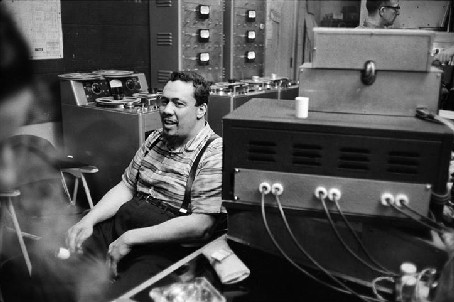 Charles Mingus
"There's some stuff he wrote around this time, as well, like 'Fables of Faubus,' which was very contemporary in terms of commenting on what was going on in the country at the time," he added. It was a protest against Orval E. Faubus, governor of Arkansas, who in 1957 and sent the National Guard to prevent black children from attending high school in Little Rock. The music is delicious, and the words Mingus used to chant during live performances of the piece, openly questioning and criticizing the government, were appropriately biting and chastising.
The Legacy package also includes a second album Mingus made in 1959 with some of the same musicians, but adding others like Teddy Charles, Don Ellis and others. Mingus Dynasty continues to show the composer's brilliance, both in writing and arranging, particularly covering some Ellington material. It was done in November of that year.
On Mingus Dynasty, "There is stuff on there that's much more of him trying to relate to classical music, than on Mingus Ah Um. I think that was part of Mingus' character as well. He was very ambitious. He wanted to write long, extended pieces. I don't think you would necessarily come away from Mingus Ah Um with that feeling. I don't know that (Mingus Ah Um) is a complete portrait of him to that point. I think it's probably the best recording of him executing a lot of the ideas that he was already known for: his blues stuff, his historical reference, his political protest, his very passionate, emotional playing when he writes ballads. There are great examples of all of those sides of him on there," says Blumenthal.
"I think it was a nice idea they added that album ... There are things that sound a little different on there. The band is different. He's using different instruments. He has vibes playing, but it's not like vibes solos, more than the orchestral sound of the thing. He was moving forward. He was going in different directions. Even after he made what many people might consider a perfect album (Mingus Ah Um), he was already looking for other things to do.
To give a picture of his musical personality, you really need Dynasty. 'Far Wells, Mills Valley' is probably the most obvious example, although I think 'Song With Orange' and 'Diane' also have the feeling of Mingus the composer, who is writing all these complex parts. Above and beyond the ability to improvise on the music, the musicians have to interpret it like an orchestra would interpret a symphony. I think that's an important part of the guy. You can hear in the music that he has a lot of diverse and volatile moods to him."
Meanwhile, in the 1950s Brubeck was taking flack from people, even though he was popular, so much so that Time magazine made him their cover story feature in 1954. Some people said what his group—Paul Desmond, Eugene Wright and Joe Morello—were playing was not jazz. It didn't swing, was a complaint. Others didn't like Desmond's sound, which was more out of Johnny Hodges than Charlie Parker. Time Out caused further confusion at first, though "Take Five" skyrocketed as a single, getting radio play, and became jazz's first million-selling single.
Brubeck broke not only time signature rules, doing music in odd meters, but he also approached Columbia with an idea of all-original material. The record label preferred to have something interspersed that listeners could attach themselves to, i.e., interpretations of standards or some popular fare. Thankfully, Goddard Lieberson, president of the label, supported the project.
"Time Out had a huge impact on me," says pianist David Benoit. "My parents played this record in the early '60s, then I learned 'Take Five' in high school and began experimenting with odd time signatures. I loved the mix of sensual odd time grooves mixed with beautiful rich melodies and harmonies. This record was clearly the basis of how I developed my own sound. I later had a the good fortune to become very good friends with Dave Brubeck and performed a series of concerts with him. Time Out remains one of my favorite recordings of all time."
Blumenthal notes that there was also a controversy apart from Brubeck's worthiness at the time, that being does jazz have to be 4/4 time or not. "People had played jazz waltzes, but they were kind of controversial. Benny Carter made a record in 1936 called 'Waltzing the Blues' and a lot of people that were in his band said, 'This is a good record. But it's not a jazz record because it's a waltz. Max Roach made an entire album of waltzes before Time Out came out. It was called Jazz in
Tags
PREVIOUS / NEXT


Become a Sustaining Member

Since 1995, All About Jazz has championed jazz as an art form and supported the musicians who create it. Over three decades, it has grown into one of the world's leading jazz resources, serving hundreds of thousands of readers, musicians, presenters and industry professionals each month.
Help Build the Future of All About Jazz
Your support helps us continue building All About Jazz for the next generation—expanding our editorial coverage, preserving jazz history, developing new community features and creating better ways to discover the music and the people behind it.
Become a sustaining member for as little as $20 per year and you'll immediately enjoy an ad-free experience along with access to subscriber features and future articles for a full year.
Together, we're not simply sustaining All About Jazz—we're building its future. Thank you for being part of the journey.