Home » Jazz Articles » Big Band Caravan » Chuck Owen & the Jazz Surge / Swiss Jazz Orchestra / The...
Chuck Owen & the Jazz Surge / Swiss Jazz Orchestra / The Aggregation

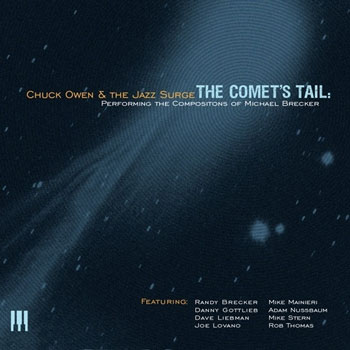 Chuck Owen & the Jazz Surge
The Comet's Tail
MAMA Records
2009
On The Comet's Tail, Chuck Owen's superb Florida-based Jazz Surge performs the compositions—yes, compositions—of the late great tenor saxophonist Michael Brecker. As Owen writes in the liner notes, "[Michael's] blinding brilliance as a performer / improviser...may have inadvertently overshadowed or simply redirected attention away from his output and effectiveness as a composer."
The Surge helps redress that shortcoming via a succession of bracing themes that affirm beyond any doubt that Michael Brecker was an uncommonly gifted writer as well as a remarkably influential player. Owen's forces are buttressed along the way by a number of accomplished guest artists including Michael's brother, the celebrated trumpeter Randy Brecker, saxophonists David Liebman and Joe Lovano, guitarist Mike Stern, violinist Rob Thomas, vibraphonist Mike Mainieri and drummer Adam Nussbaum.
Owen arranged half of the eight selections, with the rest divided equally among Fred Stride ("Peep"), Vince Mendoza ("Slings and Arrows"), Dave Stamps ("Sumo") and Gil Goldstein ("The Mean Time"). Randy Brecker solos smartly (muted) on the sinuous "Peep" and (flugel) on the ballad "How Long 'Til the Sun," Stern on "Peep" and "Mean Time," Liebman on "Sumo" (tenor),) "Mean Time" and "Take a Walk" (soprano), Lovano on "Walk" and "Everything Happens When You're Gone," Thomas on the lively "Itsbynne Reel," "Sun" and "Sumo," Mainieri on the spasmodic "Walk." Nussbaum sits in for drummer Danny Gottlieb on "Mean Time" and Walk."
Jack Wilkins, the Surge's tenor soloist, blows vehemently on "Slings and Arrows," "Reel" and "Mean Time," while guitarist LaRue Nickelson has his say on "Slings" and "Reel," pianist Per Danielsson on "Sun," trombonist Tom Brantley on "Sumo." "Everything Happens," showcasing Lovano's dreamy tenor, is a marvelous way to wrap up the radiant session.
Sound and balance are admirable, the ensemble even more so, the invited guests dazzling. In sum, a superior album by any measure, and an impressive tribute to Michael Brecker's uncommon depth and versatility.
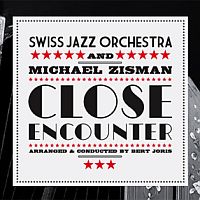 Swiss Jazz Orchestra / Michael Zisman
Close Encounter
Mons
2009
It's not often (make that almost never) that one hears a big-band album whose principal soloist plays the bandoneon, a South American concertina that's a near cousin of the accordion and is most closely associated with the Argentine tango. But such is the case with Close Encounter, an explicitly luminous and charming enterprise by the Swiss Jazz Orchestra that features the virtuosic Michael Zisman on bandoneon.
Besides playing with intensity and panache, Zisman wrote five of the album's eight selections. The others were composed and arranged (as were Zinman's) by music director Bert Joris, a world-class trumpeter who has supervised the jazz ensemble at the Swiss Jazz School (Zinman's alma mater) for two decades. Among the hallmarks of Zinman's solo patterns are his earnest feeling for jazz and staunch propensity to swing, as he does unfailingly on every number. The same is true of the SJO's soloists who complement Zisman on half a dozen tunes. They include trombonist Andreas Tschopp and drummer Tobias Freidli ("Close Encounter"), bassist Lorenz Beveler and flugel Johannes Walter ("Connections"), soprano Adrian Pflugshaupt ("Triple"), Friedli, alto Juerg Bucher and tenor Till Gruenewald ("El Circo"), trombonist Vincent Lachat and flugel Daniel Woodtli ("Agua Tinta") and pianist Philip Henzli ("Sundown").
As for the songs, they are consistently bright and pleasing, from Zinman's opener, the even-tempered "Lauri," through Joris' robust finale, "Sundown." Zinman also wrote "Son Rosas," "Close Encounter," "El Circo" and "Agua Tinta," Joris "Connections" and "Triple" (on which Zinman ends his solo with a quote from Nat Adderley's "Work Song"). While one's thoughts may drift from time to time toward Astor Piazzolla, there are no tangos here, only well-constructed jazz themes.
Coming as it does on the heels of accordionist Richard Galliano's recent tour de force with the Brussels Jazz Orchestra, Close Encounter may signal a seismic shift in the jazz landscape toward a couple of instruments that have been generally looked down on in recent years and seldom heard in a big-band framework whose ascription didn't include the name Lawrence Welk.
 The Aggregation
Groove's Mood
Edjalen Music
2009
The Aggregation, the latest in seemingly endless parade of exemplary New York-based ensembles, is the brainchild of trumpeter Eddie Allen who supervises its impressive debut album, the suitably named Groove's Mood. Besides conducting, Allen wrote three of the studio date's ten numbers (including the evocative suite, "The Black Coming"), arranged all of them and solos on three.
The rhythmic ambience is embedded immediately on Allen's bustling "Groove's Mood" and bouncy "Brasilia" and the bluesy spiritual, "Wade in the Water." Stevie Wonder's "You Are the Sunshine of My Life" introduces vocalist LaTanya Hall who not only subdues that unwieldy lyric but scores again on another of Wonder's hit songs, "My Cherie Amour." "Sunshine" is reprised as an instrumental that closes the session. As for Allen, he solos admirably on the ballad "Tenderly," Freddie Hubbard's buoyant "Sky Dive" and the laid-back "Cherie Amour."
"The Black Coming" is comprised of four movements (Kidnapped / Servitude / Jubilation / Enslaved) that presumably are designed to express in musical terms the black experience in America. The tone poem traverses the gamut of human emotions, enriching spirited solos by pianist Bruce Barth, trombonist Clifton Anderson, alto saxophonist David Glasser and trumpeter Cecil Bridgewater. Completing the program is James Williams' "The Soulful Mr. Timmons," a warm salute to the days when Blue Note Records was riding high and composer / pianist Bobby Timmons was a master of the funk- and blues-based vernacular.
Adams is an accomplished arranger, the ensemble is well-groomed, the soloists engaging and resourceful. Besides those mentioned, they include alto Tia Fuller, tenors Jay Brandford and Patience Higgins, baritone Howard Johnson, trumpeters John Bailey and Guido Gonzales, trombonist Sam Burtis, bassist Dwayne Burno and drummer Carl Allen who anchors the band's grade A rhythm section. Groove's Mood marks a splendid starting point for The Aggregation, which one hopes may continue on its groove-charted course.
 New York Repertory Jazz Orchestra
Le Jazz Hot
Planet Arts
2009
Le Jazz Hot is composer / conductor / trumpeter Bill Warfield's warm-hearted salute to Paris, the soprano saxophone in general and its leading exponent in the 1930s, Sidney Bechet, in particular. Bechet's best-known composition, "Le Petit Fleur," is performed no less than four times in various contexts. Guest soprano David Liebman, a Bechet / John Coltrane disciple, is showcased throughout, and wrote "Pablo's Story," dedicated to the renowned impressionist Pablo Picasso who for many years made his home in Paris. Warfield arranged French composer Darius Milhaud's "Le Creation du Monde" for the New York Jazz Repertory Orchestra and composed "Variations on a Theme by Frank Poulanc" and "Creataloop." Completing the program is Coltrane's easygoing "Blues to Bechet."
Few jazz fans would be likely to list "Le Petite Fleur" as a personal favorite (at least, not the Acker Bilk version of many years ago). The first of these four essays showcases Liebman's unaccompanied soprano sax, and is followed without pause by Tim Sessions' chorale-like arrangement for the ensemble. The third reading, a gentle tango, interlaces Warfield's trumpet, Liebman's soprano and the ensemble, while the fourth, which closes the album, is an even-tempered discourse between Liebman and pianist Tim Harrison. In sum, far more memorable and engaging than Bilk's more syrupy popular rendition.
As for "Le Creation," which features the orchestra's tasteful drummer, Grisha Alexiev, Milhaud arguably never sounded as melodic or accessible as he does here. The same could be said of Poulenc, whose unnamed theme is expertly transcribed by Warfield and the NYJRO and enhanced by Liebman's virile tenor and Sessions' agile trombone. Liebman also plays tenor on the shuffling "Creataloop" (reminiscent of Lee Morgan's "Sidewinder"), on which he shares blowing space with trumpeter Dave Ballou. Bassist Mike Richmond introduces "Blues to Bechet," whose earnest solos are fashioned by Liebman, Alexiev and guitarist Vic Juris who in turn has the first word on "Pablo's Story." Liebman follows on soprano, underscoring his bond to Coltrane.
While Bechet's music—not to mention Poulenc and Milhaud's—may be an acquired taste, there is no doubt that Warfield, Liebman and the Jazz Repertory Orchestra have accomplished what they set out to do. Whether that earns the listener's approval remains to be seen—and heard. Even though skillfully performed, the music swings only randomly, a trait that some may find off-putting. On the other hand, Warfield's approach to atypical compositions by Bechet and the others is admirable and refreshing. What tips the scales in either direction will no doubt be personal preference.
 Ed Palermo Big Band
Eddy Loves Frank
Cuneiform Records
2009
The title of Ed Palermo's latest album is hardly an overstatement; this is the Palermo big band's third anthology of music by the late Frank Zappa, who was best known as a rocker but dabbled in various musical forms from jazz to classical. There is one meaningful departure here: "America the Beautiful," dedicated to the heroes and heroines who stepped forward in the wake of 9/11—and to Palermo's father who earned the Silver Star as a soldier in World War II.
Otherwise, this is pure Zappa (with all arrangements by Palermo). Having heard Palermo's previous salutes to Zappa, the assessment here is that this one is decidedly more congenial and swinging, which may be token either the choice of material or a conscious effort to unscramble Zappa's music. Whatever the impetus, the result is an album that is appreciably more plain-spoken and persuasive than its predecessors.
This is clear from the outset, as Palermo's doughty alto sax darts through a driving arrangement of "Night School." Pianist Bob Quaranta is showcased on the gritty "Dupree's Paradise," Quaranta and tenor Ben Kono on "What's New in Baltimore," organist Ted Kooshian and lead trumpeter Ronnie Buttacavoli on "Let's Move to Cleveland," soprano Phil Chester and trombonist Joe Fiedler on "Egyptian Strut." Alto Cliff Lyons, tenor Bill Straub, trombonist Charles Gordon and trumpeter John Hines are given a chance to stretch on "Echidna's Arf (Of You)," Kono, Palermo, Kooshian, drummer Ray Marchica and guitarist Bruce McDaniel on "Don't You Ever Wash That Thing?" McDaniel is the lead vocalist on "America the Beautiful," with support from Veronica Martell.
Palermo's charts, as noted, are exemplary, and his 17-piece ensemble plays each of them with intelligence and gusto. The third time around, it seems, is a charm for Palermo, Zappa and the band, and Eddy Loves Frank is warmly recommended even to those who've not been seduced by Zappa's music.
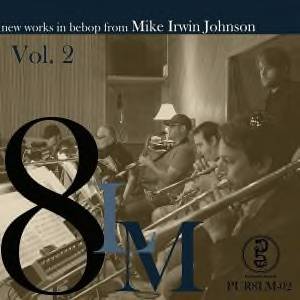 Mike Irwin Johnson
8 Legged Monster, Vol. 2
Pursuance Records
2009
While the liner notes mention Mike Irwin Johnson's affinity for Duke Ellington, his San Francisco-based nonet sounds on 8 Legged Monster, Vol. 2 more like a contemporary renovation of Miles Davis' classic Birth of the Cool sessions than anything else that comes readily to mind. True, there's no French horn or tuba, but Johnson's debonair compositions and arrangements unerringly redeem the spirit of those unforgettably "cool" charts by Gil Evans, Gerry Mulligan, Denzil Best, John Lewis and John Carisi. That's entirely appropriate, as Johnson says it was Davis' album In a Silent Way (Columbia, 1969) that led him away from classical music and awakened his interest in jazz.
The closest Johnson comes to Ellington on this studio date (with invited audience) is the Duke's "Mood Indigo," ably performed by the ensemble (as is everything else) with apposite solos by guitarist Johnson and three of the ensemble's six horns—trumpeter Mike Olmos, clarinetist Rob Barics(who doubles on tenor sax) and trombonist Danny Grewen. Others on the front line are alto Joe Cohen, tenor / elder statesman Noel Jewkes and baritone Fil Lorenz. Bassist Eric Markowitz and drummers Jaz Sawyer or Vince Lateano round out the efficient rhythm section. Karina Denike adds a charming vocal on "Goodbye" (a Johnson original, not the familiar Gordon Jenkins composition).
There are handsome features for Olmos ("Olmos Def") and Barics ("F.U.R.B.," on which he seems to be playing soprano as well as tenor). Markowitz is a standout on "Buttercup," Jewkes ditto on "Jo Co & Co." and "Saturn," the last of which, even though described in the liners as a "startlingly vivid Sun Ra Soundscape," is pretty much straight-ahead and swinging, with buoyant unison passages for the horns and earnest statements from Jewkes, Johnson, Cohen, Olmos and Sawyer.
This is an excellent group led by a talented young arranger whose garden-fresh blueprints deserve to be more widely heard and appreciated.
Tracks and Personnel
The Comet's Tail
Tracks: Peep; Slings and Arrows; Itsbynne Reel; How Long 'Til the Sun; Sumo; The Mean Time; Take a Walk; Everything Happens When You're Gone.
Personnel: Chuck Owen: director, arranger; Chad Shoopman, Mike Iapichino, Jay Coble, Tom Parmenter: trumpet; Tami Danielsson, Valerie Gillespie, Jack Wilkins, Ray Wertz, Matt Vance: reeds; Keith Oshiro, Tom Brantley, Jerald Shynett, Jim Hall: trombone; Lowell Adams (4): cello; Per Danielsson: piano; LaRue Nickelson: guitar; Mark Neuenschwander: bass; Danny Gottlieb (1-5, 8): drums; David Coash (3, 4): percussion. Special guest artists—Randy Brecker (1, 4): trumpet; Dave Liebman (5-7): tenor, soprano sax; Joe Lovano (7, 8): tenor sax; Mike Mainieri (7): vibes; Adam Nussbaum (6, 7): drums; Mike Stern (1, 6): guitar; Rob Thomas (3-5): violin.
Close Encounter
Tracks: Lauri; Si Son Rosas; Close Encounter of the 4th Kind; Connections; Triple; El Circo; Agua Tinta; Sundown.
Personnel: Bert Joris: composer, arranger, music director, conductor; Michael Zisman: bandoneon; Stephen Geiser, Johannes Walter, Daniel Woodtli, Thomas Knuchel: trumpet, flugelhorn; Adrian Pflugshaupt: alto, soprano sax, flute; Juerg Bucher: alto sax, clarinet; Till Gruenewald: tenor sax, clarinet; Klaus Widmer: tenor sax; Marc Schoedler: baritone sax, bass clarinet; Vincent Lachat, Stefan Schlegel, Andreas Tschopp: trombone; Reto Zumstein: bass trombone; Philip Henzi: piano; Lorenz Beyeler: bass; Tobias Friedli: drums.
Groove's Mood
Tracks: Groove's Mood; Brasilia; Wade in the Water; You Are the Sunshine of My Life; Tenderly; The Soulful Mister Timmons; Sky Dive; The Black Coming (Kidnapped / Servitude / Jubilation / Enslaved); My Cherie Amour; You Are the Sunshine of My Life.
Personnel: Eddie Allen: composer, arranger, director, trumpet solos (5, 7, 9); Kevin Bryan, Cecil Bridgewater, Guido Gonzales, John Bailey: trumpet, flugelhorn; David Glasser: alto sax, flute; Tia Fuller: alto, soprano sax, flute; Patience Higgins: tenor sax, flute; Jay Brandford: tenor sax, flute, alto flute; Howard Johnson: baritone sax; Clifton Anderson, Sam Burtis, Isrea Butler: trombone; Jack Jeffers: bass trombone, tuba; Bruce Barth: piano; Dwayne Burno: bass; Carl Allen: drums; LaTanya Hall (4, 9): vocals.
Le Jazz Hot
Tracks: Le Petit Fleur; Le Petit Fleur; Le Creation du Monde; Creataloop; Blues to Bechet; Le Petit Fleur; Variations on a Theme by Frank Poulenc; Pablo's Story; Le Petit Fleur.
Personnel: Bill Warfield: conductor, arranger, trumpet; Bob Millikan, Danny Cahn, Tony Kadleck, Dave Ballou: trumpet; Dave Riekenberg, Bob Hanlon, Joel Frahm, Alex Stewart: reeds; Tim Sessions, Chris Olness: trombone; Tim Harrison: piano; Mike Richmond: bass; Grisha Alexiev: drums. Special guest artists—Dave Liebman: soprano, tenor saxophone; Vic Juris: guitar.
Eddy Loves Frank
Tracks: Night School; Echidna's Arf (Of You); Regyptian Strut; Don't You Ever Wash That Thing?; Dupree's Paradise; What's New in Baltimore; Let's Move to Cleveland; America the Beautiful.
Personnel: Ed Palermo: leader, arranger, alto sax; Ronnie Buttacavoli, John Hines, Steve Jankowski, Steven Jankowski: trumpet; Cliff Lyons: alto sax, clarinet; Phil Chester: alto, soprano sax, flute, piccolo; Bill Straub: tenor sax, clarinet; Ben Kono: tenor sax, flute, oboe; Barbara Cifelli: baritone sax, bass clarinet, E-flat mutant clarinet; Charles Gordon, Joe Fiedler: trombone; Matt Ingman: bass trombone; Bruce McDonald: guitar, vocal (8); Ted Kooshian: Kurzweil organ; Bob Quaranta: piano; Paul Adamy: electric bass, fretless bass (8); Ray Marchica: drums. Special guests—John Palermo (2, 3, 6): mandolin; (8) guitar, mandolin; Rob Paparozzi (7): bass harmonica; Veronica Martell (8): vocal.
8 Legged Monster
Tracks: Or Something; Bait; Goodbye; Saturn; Mood Indigo; Olmos Def; Jo Co & Co. / Sonny's Tune; F.U.R.B.; Buttercup.
Personnel: Mike Irwin Johnson: leader, guitar, arranger; Mike Olmos: trumpet; Danny Grewen: trombone; Joe Cohen: alto sax; Rob Barics: tenor sax, clarinet; Noel Jewkes: tenor sax; Fil Lorenz: baritone sax; Eric Markowitz: bass; Jaz Sawyer (1-4, 8), Vince Lateano (5-7, 9): drums; Karina Denike (3): vocal.
< Previous
Kansas City Outbound
Next >
Saudacoes
Comments
Tags
For the Love of Jazz
 All About Jazz has been a pillar of jazz since 1995, championing it as an art form and, more importantly, supporting the musicians who create it. Our enduring commitment has made "AAJ" one of the most culturally important websites of its kind, read by hundreds of thousands of fans, musicians and industry figures every month.
You Can Help
To expand our coverage even further and develop new means to foster jazz discovery and connectivity we need your help. You can become a sustaining member for a modest $20 and in return, we'll immediately hide those pesky ads plus provide access to future articles for a full year. This winning combination will vastly improve your AAJ experience and allow us to vigorously build on the pioneering work we first started in 1995. So enjoy an ad-free AAJ experience and help us remain a positive beacon for jazz by making a donation today.

Giveaway

Days remaining: 11