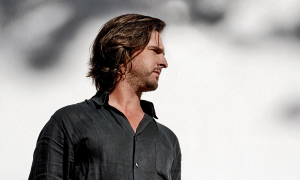
Home » Jazz Articles » Interview » Theo Croker: Ace of Trumps
Theo Croker: Ace of Trumps

It's time for people with integrity to stand up, and time for the bullshitters to sit down.
—Theo Croker

AAJ: Can you pinpoint the moment when that first musical seed was planted?
TC: I don't even know, it's just always been there. When I was a little kid I remember taking three hour baths and beating on the bath tub and shower stall with chopsticks until I was shooed out of the bathroom [chuckles]. I was always making musical sounds. If I saw a movie and liked the soundtrack, I'd be singing the orchestra parts all the way home. My grandfather was a jazz musician so we always had jazz in the house. My mom's of Argentine descent and she loves to tango and all sorts of Latin music, and my dad, he was a cool cat, he liked jazz and R&B. They liked music, not so much popular music, but musical music, so it was always there.
AAJ: How'd you decide on the trumpet?
TC: My grandfather, Doc Cheatham, played the trumpet, and my older brother did, too. I used to sneak into [my older brother's] room when he wasn't home and play his trumpet. My parents said to me, "You don't have to play the trumpet just because they play the trumpet, you can play any instrument you want," but I said, "No, I want to play the trumpet." And that was that. Every other instrument just looked funny to me. Even when I learned other instruments after that, I learned them through the trumpet.
AAJ: What's one track or album that has had a major impact on you as a musician?
TC: There's so much. When I first starting listening to CDs, it was after my grandfather died and Verve Records gave me a box of all the CDs they'd put out that year. I went through that box, I still have all of those albums, and the one that caught me was a compilation on the trumpeter Dizzy Gillespie called Talkin' Verve (Verve, 1997). He was one of the hipsters in jazz who brought it into the bebop and cool era. So as a little kid I was really into that and into the fact that it was heavy swing. It wasn't pop-ish or funk-ish, it was pretty hard-core swing. That set the standard for me for the next five or six years; if it wasn't swing, I wasn't into it. I was thirteen years old and asking "Where's the swing?" [smiles]. It was kind of strange.
AAJ: Other than a trumpeter, you have also led a 17-piece big band and an 80-person young adult choir. What type of stage performance do you enjoy the most?
TC: Oh wow, that was a long time ago, a lot of people don't know about that. I love playing at festivals and outdoor concerts because of the open space. Bars and clubs are cool and very intimate, but it's not always about the music. Outdoor festivals can be like that, too. In a concert hall, you go there to present something to people, with an overall theme, dealing with different emotions and colors. You can really bond with people in that kind of setting. You know that people are there to listen.
AAJ: Other than a jazz composer, you've also scored film, produced hip-hop and composed modern classical music. Do the different genres affect you when you write?
 TC: When I'm composing music, genre isn't important at all, unless I'm being hired to write something specifically. Otherwise, it's all just music. For the contemporary classical pieces, I wrote it for myself, for my own interests, and it was to learn how to compose for an orchestra and compose for strings. It was very out, and a lot of the players who played it didn't like it, but I liked it [grins mischievously]. At the time I'd somehow gotten a position as Artist in Residence at this theater company. I'd composed a 15-part suite and I brought it to the director, this big, two inch thick book of music, and said I'd like to perform it. I think that was pretty impactful, for me to come up to him and say I wrote it, I can rehearse it, I want to do it.
AAJ: How old were you then?
TC: I was, uh, seventeen. [Laughs] Yeah, I was pretty ambitious. They funded it, and we went for two seasons.
AAJ: What about these film scores?
TC: Film scoring is very new for me, and I haven't done anything major. I've done some independent films with people that I've known. The most significant thing for me was a pilot for a documentary on domestic abuse for HBO. It had really powerful images and a really powerful story, and the music was deep and powerful. That was very cool, because the music, tied in with the images, had a really big impact. It meant a lot for me, like I was contributing to society in creating that soundtrack. And the music was... [pauses] felt. I think it's a challenge for me to write a happy song. I don't mean that everything I write is sad, but my music has a darkness to it. It's not giddy or anything like that.
 AAJ: What do you want to reach out to people with in your music?
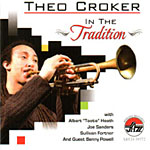
TC: I don't know yet, that's still part of what I'm trying to find out. I think the process for me is a lifelong process. The statements that I do put out are about presenting something you believe in to people, and that goes for all my compositions. For The Fundamentals, I believed in the concepts behind the songs and the musicians also believed in what they were playing, and those beliefs are our fundamentals, our basis. Then after that, my second album, In the Tradition, is about where I come from. Somebody approached me and asked me to play a tribute to my grandfather, and I said, well I'm not him, and I can't be him, but I can play the songs that I remember hearing him play. I chose songs that I liked and played them in a traditional style, but as me, not as him.
AAJ: On that album, you sing as well. Is that something we'll hear more of in the future?
TC: Yeah, that's a very old school way of singing. It was the way my grandfather sang. I was at a festival one day, I think at the Lincoln Center, and one of the producers asked me to sing "I Guess I'll Get The Papers and Go Home," which was one of my grandfather's theme songs [as well as the name of Doc Cheatham's 1996 autobiography, published by Cassell], so I just got up there and sang it like he would sing it. Years later I was in the studio with the same producer and he said, "You're singing. Which of these songs do you know the words to?" I tend not to sing live because it's not really something that I've worked out.
AAJ: And your upcoming album, The Time Is Now, what is that one all about?
TC: The first song is called "Change (Freedom Song)," and it reflects how society is changing, how culture is changing, how America is changing. The Time is Now refers to people suddenly realizing that things aren't what they appear to be, with the financial crisis and companies like Enron. You have to go back to the things that you can hold on to, the meat and potatoes. It's time for people with integrity to stand up, and time for the bull-shitters to sit down. The time is now, if you have integrity, to present it. The time is now, if you are Obama, to lead the free world. That's the underlying context of the album.
The other tune titles reflect that, like "Restless," which is like, I'm tired of sitting here waiting for somebody to make something happen for me, I'm gonna make it happen for myself. "What If" is [about] a question that's always crazy to ask, and the fourth song, "Directions," [is about] moving and where are we going.
AAJ: What's the jazz scene like in Shanghai for musicians?
TC: Well, in other places, you may have a lot of people who know the standard repertoire and the historical progression of jazz, but here, jazz is still new to a lot of people. The preconception of who I am as a jazz musician here is completely different and unique to anywhere else in the world. [Audiences] here are not holding me to any expectations, so that really opens the door, and anytime you open that door, which can mean good and bad things. [Musicians] who are really pushing and have a lot of integrity in their music have a fresh audience to play for without any preconceptions, while [musicians] that are bull-shitting, can bullshit. And there are a lot of bull-shitters out there, because it's easier to bull-shit.
 AAJ: What's different when you play in Shanghai versus New York or other places?
TC: Oh, so many things. New York has harbored jazz musicians for at least a century, so you're playing for a well-informed audience and around well-informed musicians. That's the biggest difference. But when you try to do your own thing, you come off really left-sided. When you do your own thing here, it's not like that. For example when Alec Haavik plays here, [his music] is not considered left- sided, it's just him, just Alec. Society's not trying to dampen what he wants to do. But in New York you can come off the wrong way and people just say, "No, we're not into that, that's not jazz, this and that." Alec's not even calling it jazz, it's just him.
What I don't like about what's going on in America, is that jazz has become this institutionalized, high art form. By doing that, it's secured its existence and its history, but it's turned away young people, turned away entertainment, turned away the industry, and now it's like concert music. Somebody's gotta pay to hear it. You can go to school and get a degree playing jazz, and that's bullshit, even though I have one [chuckles]. I went so that I could hang out with the teachers, who are all musicians, but the degree means nothing to me. I don't even know where it is.
 [Croker's M.I.A. degree is from Oberlin Conservatory in Ohio, U.S.A. Fellow alumni in Shanghai's music scene include trumpeter JQ Whitcomb, alto saxophonist Jonathan Parker, drummer Charles Foldesh, bassist Curtis Ostle, and drummer Alex Ritz.]
Here in Shanghai, jazz is not institutionalized. The way jazz and live music is perceived here is the way it used to be perceived in New York and New Orleans. That's why I come here, that's what I'm attracted to, that rawness of it. Jazz and its improvisational aspect deal with the moment, with right now, which is what makes it so healing. You've had a bad day, you come to see us play, and we're gonna play for you right now. We're gonna give you something to help you deal with what's going on right now. That kind of lively atmosphere is something that I like.
AAJ: It's not like that in New York?
TC: No, maybe in the places that open up at two or three in the morning, but jazz there is pretty much: you go to a place, you pay the cover, you sit down, you listen, and then you leave. What's caught there that's missed here though are all the little nuances. The whole night has a shape, you're taken on a journey. Here, you're listening to song after song. There, you're sitting crunched below the saxophonist, and you're being told a story. You hear every nuance, every detail, every feeling of the story. It's like a bed-time story. That part is something that hasn't been created here yet. But it's coming. If you look at the process of jazz in the States, it didn't start out like that either.
AAJ: What kind of projects are you working on now?
TC: I'm starting to bring different genres into my music that will change the process of how I make music. The project that I am thinking of will have two drummers, very virtuosic drummers, electric and bass guitars using a lot of different effects achieved through pedals, and I'm going to plug my trumpet in as well with a lot of effects. That would be the core of the band. We want to bring in different keyboardists and Chinese vocalists who will write lyrics in Chinese to go with my music. Taking the Chinese language and singer and putting them together with jazz and other styles that are largely American, all in the context of Shanghai, should be very interesting.
AAJ: Sounds like you're pretty excited about this new project.
TC: Yeah, because it's a very modern view of playing music. The people in the band aren't originally from China and we've learned styles and skills from other places that we're going to mix with the music and the culture here. I think [the album] could add to the culture in China and Shanghai, because there's an international music scene happening here. The musicians here, we'd like to push the music to another level. It's a challenge though and hasn't gotten through yet. I'd really like to be part of that process here in Shanghai and contribute to pushing the music to the next level.
AAJ: What about October's JZ Music Festival here in Shanghai? Who are you most looking forward to seeing there?
 TC: Cui Jian, definitely. I like his music, I like him as a person. I first met him at the House of Blues and Jazz and he introduced himself to me as a trumpet player so we started to exchange trumpet things. I didn't know who he was and I just thought he is a cool dude. Then many months later, almost a year later, he was playing in Shanghai and he asked me to come play with him. I got there and there were thousands of screaming people. I was thrown on stage with him and it was one of the few times I've ever been nervous, on stage with a Chinese rock band. That's when I realized the impact he's had on music here. I like musicians who are who they seem to be, and Cui Jian is one of those musicians. Who he is on stage is who he is in person. He was put on the earth to play music and send messages to people and I admire that.
AAJ: Is there one thought or driver that always keeps you motivated as an artist?
TC: I can't not play music. I can't go a day or two without playing my horn. That flight back to the States drives me crazy and all I want to do when I get off the plane is play. I don't know what my drive behind it is, it's just my passion. I can't control it and I can't turn it off, even when I want to. What music has done for me when I listen to it is enough for me to want to present it to others, hoping that it will touch them as well.
AAJ: What's the toughest part about this career you've chosen, or that's chosen you?
TC: Making money is, without a doubt, the hardest part. I could have been an astronaut, worked in finance, even a lawyer [laughs] or anything that requires me hustling. Which is also why I've had any success so far in music, because I will hustle. I'll hustle to get my music in. You've gotta be very persistent and I think you have to prove to the industry that you have integrity. People just don't sign you because they hear one thing and think it's great. You gotta play for years and years and show them that you haven't faltered, haven't changed, and that's how you get it. A lot of hard work and persistence.

AAJ: What is the legacy that you want to leave behind?
TC: Oh man, I'm so far from leaving a legacy [laughs]. I think I'm not even going to go for that one. You can just put, "He doesn't know."
AAJ: If you could go back in time, which musical era would you choose?
TC: Sixties and seventies.
AAJ: Who would you want to play with?
TC: Anybody [chuckles]. Maybe the Grateful Dead. Chick Corea. Someone from the jazz-fusion era, like Miles Davis, or .John Coltrane.
AAJ: What's one thing about you that people may not see at first glance?
TC: I think I've spent the first twenty four years of my life dealing with a lot of hardship, a lot of pain, and a lot of happiness, of course. My upbringing was wonderful, I had wonderful parents who were very supportive and intelligent. But I've learned many life lessons that people usually start learning at my age now. When I finally got out on my own, I'd already experienced a lot and I found it hard to relate to people my own age. But the things I've been through have made me who I am. It even makes me appear arrogant and cocky at times, but it also makes me not care how I appear. And that's really changed how I look at people now. It's forced me to look at people the way I want to be looked at, with a really open gaze. No assumptions.
AAJ: What does the future hold for you?
TC: I think my life is going another way now, and I'm getting to enjoy it, which is nice. I'm getting to travel, getting to live the way I want to live, even though I'm only twenty-four, It's important for me to live and eat and look and feel the way I want to look, feel, live and eat. Where that's going to take me I have no idea, I really don't. The things that come out of my music, out of my horn, are experiences that I've already had. As I get older, that process will just continue. It will never end.
Selected Discography
Theo Croker, In The Tradition (Arbors Records, 2009)
Theo Croker, The Fundamentals (Left Sided Music, 2006)
Photo Credit
Page 1, Rick Purcell
All others, courtesy of Theo Croker
This article was originally published in Urbanatomy Shanghai. Contact the author for more on Shanghai's jazz scene.)
< Previous
On Broadway Vol. 5
Next >
Low Tide Digitals III
Comments

Tags
Concerts
For the Love of Jazz
 All About Jazz has been a pillar of jazz since 1995, championing it as an art form and, more importantly, supporting the musicians who create it. Our enduring commitment has made "AAJ" one of the most culturally important websites of its kind, read by hundreds of thousands of fans, musicians and industry figures every month.
You Can Help
To expand our coverage even further and develop new means to foster jazz discovery and connectivity we need your help. You can become a sustaining member for a modest $20 and in return, we'll immediately hide those pesky ads plus provide access to future articles for a full year. This winning combination will vastly improve your AAJ experience and allow us to vigorously build on the pioneering work we first started in 1995. So enjoy an ad-free AAJ experience and help us remain a positive beacon for jazz by making a donation today.

Giveaway

Days remaining: 4