Home » Jazz Articles » Multiple Reviews » Bobby Hutcherson: Pushing The Vibes Forward
Bobby Hutcherson: Pushing The Vibes Forward
 |  |  |
Grachan Moncur III Evolution Blue Note 1963 | John Coltrane / Archie Shepp New Thing At Newport Impulse 1965 | Bobby Hutcherson Head On Blue Note 1971 |
Bobby Hutcherson is now comfortably ensconced in jazz history as one of the great vibraphonists of the post-Milt Jackson generation. He has amassed a large discography that demonstrates his melodic and compositional skills and flawless technique. It's frequently forgotten that in his early days (roughly from 1963-68) when he was based in New York, he was the preferred vibraphonist for vanguardists like Eric Dolphy, Archie Shepp and Andrew Hill. His innovative approach, with its Coltrane-like improvising lines, percussive thwacks and hovering interludes of stasis, pointed in a new direction for the instrument. But by the end of the decade, Hutcherson's music was changing, taking on the mellower, more melodic character for which he is now known. And while he is still acknowledged as one of the foremost exponents of his instrument, it's those early sessions as a leader and sideman that still excite and amaze.
One of those is Grachan Moncur III's Evolution from 1963. The band is made up of members of Jackie McLean's then sextet, a group that was astounding listeners with the bop stalwart's embrace of the avant-garde. The use of Hutcherson in lieu of a piano works beautifully. He gives the music a broader, more unique textural emphasis in the midrange. Occasionally suspended in near motionlessness, complementing soloists with skittering contrapuntal lines, laying down unique harmonies behind the soloists, Hutcherson is a powerful but subtle force that binds this music. On "Monk In Wonderland," Hutcherson sounds like a playful, avant-garde Bags, taking Monk-ian harmonies one step beyond. The combination of Moncur's original, challenging compositions and excellent soloing by all involved (it's an unexpectedly great session for trumpeter Lee Morgan as well) makes Evolution one of the finest releases by Blue Note during the '60s
By 1965 Hutcherson was rubbing shoulders with firebrand saxophonist Archie Shepp. New Thing at Newport was recorded at the 1965 edition of the festival. This was a split group release, between typically brilliant performances by the John Coltrane quartet and fiery showings from Shepp's quartet. As good as the former set is, in retrospect, it's Shepp's music that resonates further today, if only because this is the only recorded documentation of this group with Barre Phillips (bass) and Joe Chambers (drums). Shepp's playing is ferocious and, once again, Hutcherson provides the backbone of the music: the stunning vamp he plays behind Shepp on "Le Matin Des Noire"; the monotony of drug addiction symbolized by his brittle metronomic accompaniment on "Scag" or the darting, scurrying figures behind Shepp's solo on "Rufus." This session shows what a brilliant accompanist Hutcherson was and what an asset he was to virtually any group at this time.
This reissue is part of a series called "Impulse Originals" which aims to reproduce original vinyl releases. However, in doing so, this release omits the one other track this group performed that day, "Gingerbread, Gingerbread Boy." Considering this was the only other recording this group ever made and was a good performance, omitting it to preserve the original running order, is specious reasoning at best.
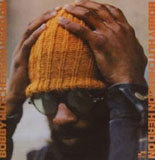
By 1971, Hutcherson was once again based on the West Coast. He'd been co-leading a quintet with saxophonist Harold Land when Head On was recorded. The leader had obviously become enamored of young pianist/composer/arranger Todd Cochran and on the original release three out of the four pieces were his. Various players augment the quintet, sometimes numbering up to 20. Cochran wrote some interesting arrangements that at times reflect a classical background, especially the opening suite "At The Source."
Head On is actually a pretty solid, big band-based session with strong soloing from the principles. Hutcherson plays a lot of marimba in addition to vibes and his approach has changed to a more modal, post-bop style. The earlier rhythmic complexity he was edging toward has been subsumed by more groove-oriented patterns. The original release is augmented by three extra tracks totaling 44 minutes. At 16 minutes, Cochran's "Togo Land" goes on way too long with an endless ostinato pattern. "Jonathan" is an attractive Cochran ballad and Hutcherson's "Hey, Harold" reflects the influence of Bitches Brew. Ultimately Head On was a more than decent recording by Hutcherson but those earlier Blue Notes were far more innovative.
Tracks and Personnel
Evolution
Tracks: Air Raid; Evolution; The Coaster; Monk In Wonderland.
Personnel: Lee Morgan: trumpet; Grachan Moncur III: trombone; Jackie McLean: alto saxophone; Bobby Hutcherson: vibes; Bob Cranshaw: bass; Tony Williams: drums.
New Thing At Newport
Tracks: Introduction by Father Norman O'Connor; One Down, One Up*; Rufus (Swung His Face At Last To The Wind. Then His Neck Snapped); Le Matin Des Noires; Scag; Call Me By My Rightful Name.
Personnel: Archie Shepp: tenor saxophone; Bobby Hutcherson: vibes; Barre Phillips: bass; Joe Chambers: drums; except on * where personnel is John Coltrane: tenor saxophone; McCoy Tyner: piano; Jimmy Garrison: bass; Elvin Jones: drums.
Head On
Tracks: At The Source—Ashes And Rust / Eucalyptus / Obsidian; Many Thousands Gone; Mtume; Clockwork Of The Spirits; Togo Land; Jonathan; Hey Harold.
Personnel: (collective personnel) Oscar Brasheer: trumpet; George Bohannon: trombone; Louis Spears: trombone; Willie Ruff: french horn; Harold Land: tenor saxophone, flute; Fred Jackson: piccolo; Donald Smith: flute; Ernie Watts: reeds; Charles Owens: reeds; Delbert Hill: reeds; Herman Riley: reeds; Bobby Hutcherson: vibes, marimba; Todd Cochran: piano, arranger; William Henderson: electric piano; Reggie Johnson: bass; James Leary III: electric bass; Stix Hooper: drums, percussion; Ndugu Leon Chancler: drums, percussion; Sunship Woody Theus: drums, percussion; Warren Bryant: congas, bongos, percussion; Robert Jenkins: congas.
Comments

Tags
For the Love of Jazz
 All About Jazz has been a pillar of jazz since 1995, championing it as an art form and, more importantly, supporting the musicians who create it. Our enduring commitment has made "AAJ" one of the most culturally important websites of its kind, read by hundreds of thousands of fans, musicians and industry figures every month.
You Can Help
To expand our coverage even further and develop new means to foster jazz discovery and connectivity we need your help. You can become a sustaining member for a modest $20 and in return, we'll immediately hide those pesky ads plus provide access to future articles for a full year. This winning combination will vastly improve your AAJ experience and allow us to vigorously build on the pioneering work we first started in 1995. So enjoy an ad-free AAJ experience and help us remain a positive beacon for jazz by making a donation today.Near


Giveaway

Days remaining: 6



