Home » Jazz Articles » Big Band Caravan » Jack Cortner Big Band / Peter Hand Big Band / Chicago Ja...
Jack Cortner Big Band / Peter Hand Big Band / Chicago Jazz Philharmonic

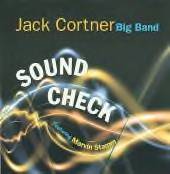 Jack Cortner Big Band
Sound Check
Jazzed Media
2009
For someone who waited so long before taking his first swings as leader of his own big band, Jack Cortner shows again on Sound Check, the band's second impressive recording in as many years, that he's got game. He's also got a bevy of the New York area's leading sidemen to anchor the ensemble, and a superlative featured soloist in longtime friend and colleague Marvin Stamm.
Stamm, whose warm, lyrical trumpet was heard often on the band's earlier CD, Fast Track, solos on every number this time around, a scenario that draws no censure from this quarter. When it comes to fluency and creative power, Stamm never fails to deliver the goods. Nor does Cortner, who arranged every number and wrote two—the blues-centered "Sound Check" and breezy "a la Mode." The Gershwin brothers' "Strike Up the Band" is a powerful curtain-raiser, while Cole Porter's "It's All Right with Me" closes the session on an irrepressibly swinging note.
The band also nails the standards "Speak Low," "Yesterdays" and "You and the Night and the Music," Herbie Hancock's funky "Cantaloupe Island," Juan Tizol's venerable "Caravan," Sergio Mihanovich's "Sometime Ago" and Ennio Morricone's haunting theme from the movie Cinema Paradiso. Although Stamm assumes the lion's share of the blowing space, he is ably reinforced by pianist Bill Mays on five numbers and by trombonist Jim Pugh ("Sometime Ago," "You and the Night"), alto Jon Gordon ("Cantaloupe Island," "a la Mode," "It's All Right with Me") and tenor Dave Tofani ("Yesterdays," "It's All Right with Me"). Mays, bassist Ray Anderson, drummer John Riley and guitarists Jeff Mironov or Jay Berliner comprise an admirable rhythm section.
According to Cortner, he had no plans to record a second album; three cheers for Stamm and other members of the band who persuaded him to change his mind. Based on what Cortner has accomplished on his first two trips to the plate, one can by no means be censured for looking forward eagerly to a third turn at bat.
 Peter Hand Big Band
The Wizard of Jazz
Savant Records
2009
The Wizard of Jazz is the renowned Broadway / Hollywood composer Harold Arlen, and this tasteful tribute by the New York-based Peter Hand Big Band was recorded live in 2005, in honor of the centenary of Arlen's birth. The title, of course, refers to Arlen's score (with lyricist E.Y. Harburg) for the Judy Garland classic from 1939, The Wizard of Oz, as well as to the propensity of jazz musicians to adapt and perform so many of his compositions.
The featured soloist throughout is the acclaimed tenor saxophonist Houston Person, whose candid, bluesy style meshes smoothly with Hand's easygoing charts (splendidly played by the ensemble). Even so, this is an all-star band, and there are admirable statements along the way by guitarist Hand; trumpeters Valery Ponomarev, Jim Rotondi and Cecil Bridgewater; saxophonists Don Braden and Ralph Lalama, pianist Richard Wyands, bassist Harvie S, drummer Steve Johns and all the horns on the buoyant, bop-centered "Blue Jug / Harold's Blues" whose playing time is more than eleven minutes.
The program consists of seven of Arlen's exemplary standards and a Person / Hand original, the aforementioned "Jug / Blues." While every Arlen song on offer may plausibly be considered a masterpiece, the same can be said of a large number of his compositions that didn't make the cut. Arlen also wrote (among others) "Blues in the Night," "Get Happy," "Hooray for Love," "I've Got the World on a String," "My Shining Hour," "It's Only a Paper Moon," "One for My Baby," "That Old Black Magic," "If This Isn't Love" and "When the Sun Comes Out."
Even though the over-all sound is quite good, this does sound at times like the concert it is, with a few soloists slightly off-mic, but never far enough to lessen one's pleasure. Person is always engaging, especially on the tender finale, "Over the Rainbow," which he plays unaccompanied. Harold Arlen would have loved this.
 Chicago Jazz Philharmonic
Collective Creativity
3Sixteen Records
2009
Wildly ambitious. That's one phrase that leaps quickly to mind when searching for means to portray adequately the Chicago Jazz Philharmonic's Collective Creativity. Extremely impressive is another; and one may toss in revolutionary and audacious for good measure. However one defines it, this is music that is seldom heard from a jazz orchestra. But then, there aren't many ensembles that are fifty-four members strong (not counting invited guests). At its heart is the stately nine-part "Collective Creativity Suite," which readily embraces artistic freedom, rhythmic energy and melodic expression. As composer / arranger / conductor / trumpeter Orbert Davis explains: "[The suite] is an amalgamation of twentieth-century classical music and Jazz. Its movements recall the tragedy of human bondage ('Diaspora'); reflect the significance of community and collaboration ('The Creation of Evolution,' Parts 1-3); represent unity and diversity ('1,000 Questions, One Answer'); promote the importance of individuality ('Seraphim') and emphasize legacy ('An Afternoon with Mr. Bowie'—Lester Bowie, of course) and heritage ('Vice Versa')."
If that seems a rather large order, that's probably because it is. The good news is that the CJP not only scores a bull's eye but makes doing so seem rather like a stroll in the park. On board to lend helping hands are vocalist Terisa Griffin (Count Basie / Jimmy Rushing's "Goin' to Chicago") and four distinguished members of Chicago's Association for the Advancement of Creative Musicians (AACM): flautist Nicole Mitchell and saxophonists Ari Brown, Ed Wilkerson and Mwata Bowden. "Chicago" is one of three numbers "outside" the suite; the others are the awesome, Kentonesque "Fanfare for Cloud Gate" (honoring a sculpture by Anish Kapoor) and a medley of King Oliver's "West End Blues" and Louis Armstrong's "Weatherbird," both featuring Davis' soaring trumpet.
One criticism often leveled at such enterprises is that they sacrifice swing on the altar of self-importance. Thankfully, that is not the case here. Davis is first and foremost a jazz musician, and he never loses sight of the music's cardinal rule, that it must swing. And so it does, in spite of the presence of a twenty-five piece string section, which Davis manages expertly while keeping it at arm's length and allowing brass, reeds and rhythm to roar when the occasion demands. Besides Davis, there are admirable solos by all members of the AACM and, from the CJP, trombonist Tracy Kirk ("Weatherbird"), pianist Ryan Cohan ("Seraphim") and clarinetist Dileep Gangoli ("Mr. Bowie," whose two parts are based on the berceuse from Igor Stravinsky's The Firebird).
While this is big-band jazz that doesn't conform easily to any unswerving premise, it can be nonetheless rewarding to those who care to listen closely and appreciate its luminous colors and unpresuming subtleties. As to the phrases that would best describe the CJP's latest endeavor, Collective Creativity sums it up about as well as any.
 Dave Rivello Ensemble
Facing the Mirror
Allora Records
2009
Dave Rivello, who teaches at the Eastman School of Music in Rochester, NY, says he owes a debt to Bob Brookmeyer that is "beyond words." On Facing the Mirror, his debut CD, Rivello begins to repay Brookmeyer's generosity. This is, in other words, Brookmeyer's kind of music—melodic, multi-layered, dynamically persuasive, irrepressibly modern—with the ensemble conspicuously in the foreground, laying down a colorful sonic carpet for the various soloists, much as Brookmeyer has done with any number of big bands. So close are the two men that Brookmeyer, who first employed Rivello in 1996 as a copyist and later instructed him in composing and arranging, has written the liner notes for Facing the Mirror. "Dave came to me with strong harmonic sense," Brookmeyer writes, "a need to pay heed to linear issues and the devotion to stick with it through the ups and downs of this business. [He] is someone I believe belongs in the next generation of large Jazz ensemble composers . . ."
In moving forward, Rivello has taken a cue from several colleagues who helped pave the way, well-known craftsmen such as Bill Holman, Manny Albam, Kenny Wheeler, Bob Belden and Jim McNeely, as well as others he never met but greatly admired—Gil Evans, Igor Stravinsky, Thad Jones, Gyorgy Ligeti. Their influence can be felt here, even as Rivello assimilates their concepts and deftly weaves them into patterns of his own making. Each of the eight selections was written and arranged by Rivello and ably performed by his twelve-piece ensemble, a group comprised of Eastman students and local professionals that has been a working unit for sixteen years.
Even though, as noted, the ensemble is predominant, a number of engaging solos are sprinkled throughout. Trumpeter Mike Kaupa is showcased on "Sometime" and (muted) "(of) Time and Time Past," pianist Red Wierenga on the rhythmic "Dancing in Circles," tenor Jose Encarnacion on the esoteric "Stealing Space." Wierenga and trumpeter Eli Asher share the blowing space on the expansive curtain-raiser, "One by One by One," Wierenga and Encarnacion on the undulating "Path of Innocence," soprano Matt Pivec and drummer Ted Poor on the sinewy "Beyond the Fall." There are no solos on the tasteful finale, simply named "Chorale." As Brookmeyer correctly notes, ..."the perfect way to end this experience."
In sum, Facing the Mirror is an auspicious preface for Rivello, one that explicitly affirms Brookmeyer's faith in him. Fans of more conventional big-band fare should be advised, however, that this is substantially closer in spirit to Brookmeyer, McNeely, Evans and such contemporaries as Maria Schneider than it is to Woody Herman, Count Basie, Stan Kenton or Buddy Rich.
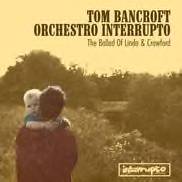 Tom Bancroft Orchestro Interrupto
The Ballad of Linda & Crawford
Interrupto Music
2009
As is true of many contemporary big bands, Scottish drummer Tom Bancroft's Orchestro Interrupto evades customary themes and motifs and focuses instead on music that recounts a more personal narrative, in this case The Ballad of Linda & Crawford. Half of the album's eight selections describe in musical terms the odyssey of Linda, Crawford and their children, Stanley and Marjorie. According to Bancroft, these are people he knows well, albeit by other names. Why he should be writing about them is unclear but presumably cathartic.
Every number save the last—"First Steps Last Steps"—was composed for a tour of the UK with pianist Geri Allen, one of Bancroft's musical heroines. The tour unfolded as planned, but Allen was unable to record with the orchestra—pardon, orchestro—and is replaced by Chick Lyall, who, in Bancroft's opinion, "does a great job" sitting in for her. If that motion needs a second, consider it done. Lyall comps with assurance and brandishes his impressive chops on "Toxic Beaming Happiness," "Ornate Bessie" and "L&C's Theme." The orchestral thread is severed in midstream by a 49-second "Bass Solo," played by the hiply named Mischa Kool.
Besides Lyall, the soloists on "Bessie" (a synthesis of Ornette Coleman and Count Basie) are Bancroft and alto Laura MacDonald, on the spectral "Theme" screaming baritone John Telfer. Tenor Phil Bancroft seizes the moment on the rhythmic "Stanley & Marjorie's Jig" (dedicated to the late Scottish musician / composer Martyn Bennett), trumpeter Colin Steele and trombonist Joost Buis on "The Ballad of L&C," guitarist Kevin Mackenzie on "Beat the Boss Part 1," MacDonald and Buis on "First Steps Last Steps."
Be advised that Bancroft's essays are tone poems, not arranged in a customary big-band framework, and while they do require one's earnest awareness, are never tedious or uninspired. The Orchestro Interrupto is admirable, as are the over-all sound and balance. Recommended to those who prefer their big-band jazz with a splash of profundity.
 Warren Smith Composers Workshop Ensemble
Old News, Borrowed Blues
Engine Records
2009
When a review opens with a comment about sound quality, one can sense immediately that something may be amiss, as indeed it is on Old News, Borrowed Blues by the New York-based Composers Workshop Ensemble. The problem here lies not so much with the music, which is by and large agreeable, but with the acoustics, which are deficient at best. The ensemble passages are especially muddy; one might even say opaque, which is a shame, as leader Warren Smith, who presumably wrote and / or arranged the various selections, has some engaging things to say, and the Workshop boasts a number of first-class sidemen (and one woman, baritone saxophonist Claire Daly).
Soloists aren't named, but that has to be Smith or Lloyd Haber on vibes, probably Cecil Bridgewater on trumpet / flugelhorn, and undoubtedly Craig Rivers on soprano sax, Joe Daley on euphonium, Douglas Yates on alto, Andrew Lamb on tenor (featured on the driving "One More Lick for Harold Vick"). There are two expanded works, the three-part "Rivers State Suite," inspired by a trip to Nigeria in the 1980s, and the four-part "Free Forms," chosen from a set of ten "early experiments in free improvisation." These are perhaps the least successful of the Workshop's endeavors; regrettably, they account for more than one-third of the album's hour-plus running time. The "Rivers Suite" (enhanced by African percussion) and sensuous "Hungarian Gypsy Song," on the other hand, are charming, as is the emphatic opener, in spite of its inauspicious name—"Lock the Toilet Door."
Old News Borrowed Blues comes in a plain brown wrapper, according to which it was recorded and engineered at Ghetto Sound Lab in Brooklyn, NY, which seems somehow appropriate. Not to be too hard on anyone, but the Workshop's best efforts on this session are invariably short-changed by the bargain-basement sound.
Tracks and Personnel
Sound Check
Tracks: Strike Up the Band; Speak Low; Sometime Ago; Cantaloupe Island; Sound Check; Yesterdays; Caravan; Cinema Paradiso Love Theme; a la Mode; You and the Night and the Music; It's All Right with Me.
Personnel: Jack Cortner: leader, arranger; Bob Millikan, Tony Kadleck (2, 5-8, 11), Danny Cahn (2, 5-8, 11), Bud Burridge, Frank Greene (1, 3, 4, 9, 10), Dave Gale (1, 3, 4, 9, 10): trumpet; Lawrence Feldman, Jerry Dodgion, Jon Gordon (4, 9, 11): alto sax; Dave Tofani, Dennis Anderson (2, 5-8, 11), Bob Malach (1, 3, 4, 9, 10): tenor sax; Kenny Berger: baritone sax; Jim Pugh (1-5, 10, 11), Keith O'Quinn (6-8), Tony Studd, Birch Johnson: trombone; Paul Faulise: bass trombone; Jeff Mironov (7, 9-11), Jay Berliner (2, 5, 11): guitar; Bill Mays: piano; Jay Anderson: bass; John Riley: drums. Special guest artist—Marvin Stamm, trumpet, flugelhorn.
The Wizard of Jazz
Tracks: Come Rain or Come Shine; Ill Wind; This Time the Dream's on Me; The Man That Got Away; Let's Fall in Love; Stormy Weather; Blue Jug / Harold's Blues; Over the Rainbow.
Personnel: Peter Hand: leader, arranger, guitar; Cecil Bridgewater, Brian Pareschi, Valery Ponomarev, Jim Rotondi: trumpet, flugelhorn; Houston Person, Kenny Berger, Don Braden, Ralph Lalama, Brad Leali, Mike Migliore: reeds; Sam Burtis, John Mosca, Jim Pugh: trombone; Richard Wyands: piano; Harvie S: bass; Steve Johns: drums.
Collective Creativity
Tracks: Fanfare for Cloud Gate; West End Blues / Weatherbird; Collective Creativity Suite; Diaspora; The Creation of Evolution (Part 1); One Thousand Questions, One Answer; The Creation of Evolution (Part 2); Seraphim; An Afternoon with Mr. Bowie (Part 1); An Afternoon with Mr. Bowie (Part 2); The Creation of Evolution (Part 3); Vice Versa; Goin' to Chicago.
Personnel: Orbert Davis: composer, arranger, conductor, trumpet, piccolo trumpet; Mark Olen, David Spencer, David Young: trumpet, flugelhorn; Tracy Kirk, Henry Salgado: trombone; Arthur Lisner, Robert Lustrea (11): bass trombone; Nicole Mitchell, Stephen Eisen: flute, alto flute; Amy Barwan, Erin Horan: oboe; Peter Brusen: bassoon, contra bassoon; Dileep Gangolli, Jerry Dimuzio: clarinet; Richard Hogarth: bass clarinet; Beth Mazur-Johnson, Alice Render, Michael Buckwalter: French horn; Charlie Schuchat, Dan Anderson (11): tuba; Ryan Cohan: piano; Stewart Miller: bass; Ernie Adams: drums; Sarah Allen: tympani; Ruben Alvarez: congas; Mike Avery, Alejo Poveda, Ernie Adams (11), Suzanne Osman (11): percussion; Sylvia de la Cerna, Bernardo Arias, Elizabeth Brathwaite, Talia Pavia, Carl Johnston, Karen Nelson, Debora Ponko: violin 1; Phyllis Sanders, Carol Kalvonjian, Barbara Farley, Kristine Semanic, Irene Quirmbach, Jennifer Dunn: violin 2; Scott Dowd, Loretta Gillespie, Lynn LaPlante, Karen Dickleman: viola; Ann Hendrickson-Griffin, Ellen Frolichstein, Andrew Snow, Richard Yeo: cello; John Floeter, Kathryn Nettleman, Jacque Harper: string bass; Kara Bershad: harp. Special guest artists—Ari Brown: tenor sax; Ed Wilkerson: tenor sax, clarinet, didgeridoo; Nicole Mitchell: flute, alto flute, bass flute, piccolo; Mwata Bowden: baritone sax, bass clarinet, didgeridoo; Terisa Griffin: vocal (12).
Facing the Mirror
Tracks: One by One by One; (of) Time and Time Past; Stealing Space; Dancing in Circles; Sometime; Beyond the Fall; The Path of Innocence; Chorale.
Personnel: Dave Rivello: composer, arranger, conductor; Brian Shaw: trumpet; Mike Kaupa, Eli Asher: trumpet, flugelhorn; Matt Pivec: soprano sax, flute; Jose Encarnacion: tenor sax, flute, clarinet; Dean Keller: clarinet, bass clarinet; Phil Ostrander, Dan Pierce: trombone; Jeff Meyer: tuba; Red Wierenga: piano; Malcolm Kirby: bass; Ted Poor: drums, percussion.
The Ballad of Linda & Crawford
Tracks: Toxic Beaming Happiness; Ornate Bessie; Linda & Crawford's Theme; Stanley & Marjorie's Jig; Bass Solo; The Ballad of Linda & Crawford; Beat the Boss Part 1; First Steps Last Steps.
Personnel: Tom Bancroft: drums, piano (6), composer, arranger, music director; Colin Steele, Claude Deppa, Eddie Severn: trumpet; Laura MacDonald: alto sax; Phil Bancroft: tenor, soprano sax; John Telfer: baritone sax; Joost Buis; Patrick Charbonnier, Lorna McDonald: trombone; Kevin MacKenzie: guitar; Chick Lyall: piano; Mischa Kool: bass.
Old News, Borrowed Blues
Tracks: Lock the Toilet Door; Rivers State Suite; The Hungarian Gypsy Song; One More Lick for Harold Vick; Free Forms 1-4.
Personnel: Warren Smith: leader, drums, vibraphone, percussion; John Carlton, Cecil Bridgewater: trumpet; Joe Daley: euphonium; Jack Jeffers: bass trombone; Craig Rivers: soprano sax; Douglas Yates: soprano sax; James Stewart: tenor sax; Claire Daly: baritone sax; Andrew Lamb (2): tenor sax soloist; Jeribu Shahid: bass violin; Yoham "Chiqui" Ortiz: guitar; Elusegun Sangofemi, Jose Abreu: African percussion; Lloyd Haber: drums, vibraphone, percussion.
< Previous
Decentred
Next >
Skin and Wire
Comments
Tags
For the Love of Jazz
 All About Jazz has been a pillar of jazz since 1995, championing it as an art form and, more importantly, supporting the musicians who create it. Our enduring commitment has made "AAJ" one of the most culturally important websites of its kind, read by hundreds of thousands of fans, musicians and industry figures every month.
You Can Help
To expand our coverage even further and develop new means to foster jazz discovery and connectivity we need your help. You can become a sustaining member for a modest $20 and in return, we'll immediately hide those pesky ads plus provide access to future articles for a full year. This winning combination will vastly improve your AAJ experience and allow us to vigorously build on the pioneering work we first started in 1995. So enjoy an ad-free AAJ experience and help us remain a positive beacon for jazz by making a donation today.

Giveaway

Days remaining: 11