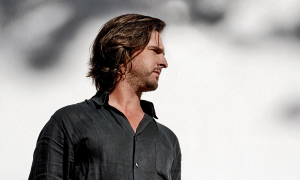
Home » Jazz Articles » Music and the Creative Spirit » George Lewis: A Power Stronger Than Itself
George Lewis: A Power Stronger Than Itself

Lloyd Peterson: Was the AACM established out of a common interest amongst peers or out of a feeling of necessity?

George Lewis: My impression was that it was more a question of necessity—but then, what was the necessity? The people that formed the AACM seemed to be extremely diverse, from Melvin "Li'l" Son Jackson, who made the record Funky Skull, to Betty Dupree, who played with Earth, Wind and Fire, and to the people that we now recognize as being a part of the AACM. At a certain point, the idea was to try and find a way to support the activities of the creative musicians. You can tell that from the purposes [paraphrases from the AACM set of nine purposes]—providing an atmosphere for the creative musicians, making a workshop, forming a place for people to get free musical training, and so on. Those ideas were formed pretty much from the beginning.
As far as I can see, people needed to have venues surrounding their work—whatever their work was. The work was really diverse. Having listened to tapes of the meetings, no one spent any time at all arguing about the stuff people thought they were arguing about. The standard histories of the AACM say that it was designed to promote free jazz. No one ever talked about anything like that.
They seemed to be pretty concerned with whatever their music was, and I really don't think they had a simple definition of what it was. And whatever it was, people felt that they were not in control of the venues and the circumstances surrounding the production of the music, and so that made it difficult to do certain things that you wanted to do. So the necessity really was to assert control.
LP: Was there a mutual search for wisdom and spirituality?
GL: No, I don't think so, because the people were too diverse. Everyone had their own idea of what that meant, so you couldn't really say that. I would imagine that if you spoke to another member —but that was exactly the thing about the AACM. People came together as a collective to support whatever individuals wanted to do. If individuals were concerned with issues of spirituality, then you would support that, but there were people who weren't that concerned with it. Basically, you couldn't say that there was any mutual anything, other than that they should support each other in whatever their explorations happened to be.
LP: So it appears the membership was hugely diverse in many aspects of individuality and creativity.
GL: That's the thing, because individuality usually means competition, cutting each other's throats, or something. But it was mainly a matter of, well, what is it you would like to do, and how can we sustain and support that—even if only morally, by working for your concert, to do what needed to be done to promote your music and to make sure that it gets a hearing, that your work receives a hearing. These were the important things, and there were also certain people who were noted for being more concerned with issues of the spiritual than others. But in terms of an overall, generally agreed upon quest, no.
LP: During the civil rights movement of the 60s,' it has been said that the political powers that be, feared free improvisational music because it elevated the consciousness of the individual. Were you and the other members of the AACM aware of this phenomenon?
GL: So, in order to answer that, I would have to assume that that was a real phenomenon that people believed in? (laughs)
I think that there were people who really believed that powerful social structures were "afraid" of Black music or certain kinds of African American music. But I'm not sure that that's something that I could really sustain. In a certain way, I think there is a kind of flattery associated with that, the idea that someone in Washington, J. Edgar Hoover is quaking in his boots at what you are doing with your saxophone. But at the same time, it was obvious that great pains were taken to infiltrate a lot of these organizations, to try to cause problems for them in various ways— economic censorship of various kinds, political censorship when necessary, or termination with extreme prejudice in some cases. There are always rumors.
 In the end, oppositionality could certainly be inferred from the seeming refusal of many of the artists to embrace whatever the mainstream modes of thought were supposed to be at that time—or not even a refusal of anything, but simply embracing oneself, one's colleagues and community, and to connect one's musical expression with the community in some way. This didn't necessarily mean to find out what the community thinks is interesting and then to produce more of it. Since you come from the community, your work is already rooted. This just showed how diverse and mobile the community of artists could really be. So if there's any fear there, it might be fear of that sense of diversity—that the music could range from Minnie Riperton to the Art Ensemble Of Chicago. Rather than some particular music that everyone's supposed to be afraid of, I think it's the composite nature of creativity that's the scary thing.
LP: Did the music of the AACM reflect the struggle of African or Black Americans during the time of the civil rights movement?
GL: The simple answer is "of course," and the problem with that is that no one ever goes past the simple answer. I suggest that if someone really wants an answer to that question, they watch the DVD of the movie Medium Cool by Haskell Wexler. It was a cinéma vérité documentary about the 1968 Democratic Convention, and the story, which was done with actors, was filmed within and around the intricacies of the event itself. The actors were placed in the middle of these real events as they were unfolding.
The DVD included commentary by Wexler and his associates, and they're talking about a scene in which Studs Terkel had promised them that they would be introduced to Real Black Militants.
So I was wondering who these people would be, and when I got to that part of the movie I found that the "Real Black Militants" turned out to be Muhal Richard Abrams, Jeff Donaldson, one of the founders of the Africobra art movement; John Jackson, who was a trumpeter with the AACM, and several other people who were associated with the more progressive African-American art scenes of the mid-1960's. These scenes were definitely concerned with community uplift, and certainly in the case of Muhal, spiritual uplift as well.
It was interesting to me that Wexler and the others had no idea who these people were, even today. So for them, these were Real Black Militants from the community who had these amazing powers of performance. And the reality was that these were people who had been performing and acting in the visual and performance world longer than the filmmakers themselves.
They were improvising their parts right while the movie was going on. The filmmakers were astonished at their ability to improvise, but that was what they had been doing anyway. That was the nature of their art—involved improvisation and performance. But it also involved a real sense of community rootedness and involvement.
Every music is reflective of the situation that you find yourself in, but the idea that it has to be continually framed as reflective of one thing is the oversimplification that people really don't like. A lot of these musicians were trying to express the diversity of their experiences. And when you see a group as diverse as the AACM, the civil rights movement and its struggles were just one part of a very complex reality. I think that the easy assignment of this music as a kind of simplistic reflection of the tenor of the times that's compatible something you might read in a history book—well, too much has been collapsed onto that sign.
LP: I have also heard AACM members say that they felt there was a relationship with the music and the messages that were being expressed by Black Leaders of that time.
GL: I feel that this was only one of the things that was reflected, and you would have to really talk about the total diversity of the messages. What I don't like is the collapsing onto the same signs, because it gets to be a kind of cliché. It might be comfortable for people who really want to be remembered as having been identified with all that ferment, but in fact there was no monolithic direction to the so-called civil rights movement. There was just a great deal of debate—over dress, culture, political direction, and debates over how expressive culture could be manifested in support of objectives that no one even agreed on. So if the music was reflective of a particular debate and reflective of some monolithic set of black leaders, well, which black leader was it? Was it Whitney Young or was it Stokely Carmichael, Martin Luther King or Ron Karenga? I mean, no single music could be reflective of all those leaders, but it could be reflective of the debate and the ferment of the period.
I thought the music reflected the sense of possibility and the possibility of change. People really felt that social change was around the corner and could be achieved, and I think the music certainly reflected that, along with the audacity and fearlessness of it. It was the willingness to take risks—to take chances. And one of the biggest chances was in making silence in the midst of all that screaming. In a certain sense, it was the ability to create unstable silences and incorporate that into the music. It seemed to be a statement of possibilities. That would be my retrospective take on it.

As a person who came up with the AACM in the early '70s, I saw all of this, and I felt that I was buffeted by all of those winds. You could see the number of ways and different directions that young persons from Chicago could think of themselves as manifesting African-American culture. But African-American culture wasn't the only culture to be manifested. You lived in the world and it was a complex world, and you had to situate yourself in that world. It wasn't just the South Side of Chicago, and whether you wore a dashiki or not. There was a lot going on, and these were cosmopolitan artists in an increasingly globalized and decolonized world. So for me, that was the sense that I drew from that period, thinking retrospectively about how one negotiates the call for identity. In other words, identity seemed to be a major issue that was in question and the push seemed to be whether one would adopt a monolithic identity or an multiply-mediated identity. The AACM seemed to opt for the latter. People were saying that the music reflected the diversity of the Black experience and that experience was potentially infinite. So for the people within the AACM who started the phrase Great Black Music, that slogan seemed to be a statement of the diversity of diaspora, rather than another way to say jazz, as some people have said, a serious misreading.
LP: Did the improvisation of this period provide you with a sense of release, say in a gospel sense?
GL: My first experience with any of that music was on recordings. We were listening to them in high school. I remember being very baffled by Ascension. I just couldn't figure it out. But then a simpler music came my way. That was the second Coltrane Village Vanguard record, which I could understand more easily (laughs). But I don't think even that was able to prepare me for people like Fred Anderson or the Art Ensemble of Chicago. I was a little bit nonplussed. I wasn't quite sure what I should do. Maybe I even fainted, listening to it. So if that could be called a form of release, so be it.
My period of greatest learning about this music was being a participant rather than being a listener first and then thinking, wow, I'd like to do this. Taking part in it helped me to understand it. I still remember the power of it, that energy, kind of hitting me at a certain point. And it may be that the experiences of the people who are listening to it and the people who are doing it are similar, but diverge at certain points.
LP: Did the members of the AACM feel as if their awareness level was unique?
GL: I think that anytime that a group of people comes together around a set of goals that they all share, they develop a group concept of themselves. I think [AACM] people took pains to not separate themselves from the masses, so-called ordinary people. That would have really defeated the purpose, to create a new elite around a group of issues that no one could understand but them. That was more what people heard about bebop—you know, the glasses and the in-group talk. I'm not sure how much of that was reflective of an elite stance, as it's been portrayed.
I think that people were really trying to do a music that reflected their own experience. And in the end, when you look at the audiences that came to this music, they were extremely diverse, so that meant that the interaction between audiences and the musicians also produced more diversity, produced more points of view. So that kind of kept a check on the building of an elite consensus that was disconnected from what was going on outside.
You are also talking about the idea of somehow considering yourself to be a child of destiny, and I think that there was probably a little bit of that. But there really was no real, objective reason for that. It was just what people were encouraged to believe in what they were doing. It was that belief that was the sustaining force, and that's what is meant by creating an atmosphere—an atmosphere in which possibilities could be imagined and beliefs could be sustained and nurtured.
LP: There is an energy and power from the music of the AACM that I believe will keep the music timeless. People just now seem to be becoming more aware of this work. Was the music too far ahead of its time when it was composed or too complex, or is this just the situation with any forward thinking work?
GL: When someone's music, or a variety of approached to music, suddenly touches a number of people, that's the time when it was supposed to do that. In a way, it's its own self-fulfilling prophecy. Particularly in certain corners of the jazz community, people seem terribly exercised about whether they're reaching mass audiences, and I think most of them have no idea how stochastic those processes really are. At a certain point, you start to see that there are two million identical products and one person gets selected. It's been shown to be practically random, so in a sense one can choose on the basis of whether a particular person who becomes famous had a better deodorant than the other person.
So it's better to skip all the talk of timelessness, and then you find yourself asking questions, like, What was the time this music was in? Who was the audience? What was their interest in it? Instead of tying the whole experience and story of the music to some kind of demographic number.
I think there is a stronger message there, and I think the message has to do with the possibilities for mobility and diversity that the music symbolizes. I think people got that from it, and I think there's still a place for that.

The idea that we don't know what it's going to be is critical. If we know what it's going to be, maybe we shouldn't even bother doing it, because in a way, we've already done it. This sense of surprise and portent to the music seemed to be important as an experience, even prior to hearing a note. It's just the expectation level, that now, these people have come here to present us with something that they don't think we've heard before. That's what we're coming to get, to perform this mind melt with this other part of the community which is trying to present us with these ideas that they feel are new.
LP: In our society today, we go to hear music or go to listen to music. But in many African societies, music is a part of everything in everyday life. Is there a chance that at some point over the generations we became a more visual kind of society and placed less significance on various elements of sound?
GL: It's hard to escape that impression. Whether it's called logocentricity, or visual hegemony, or whatever, there is a sense of power of the visual. If you look at new media technologies, the largest impressions are always from the visual technologies, and the sonic technologies seem to be rated second.
Music is a part of everyday life here too. In most places, music is a part of everyday life, so I don't think that separation between traditional societies and so-called advanced societies really works for me. A more salient distinction could be the extent to which music becomes separated from the other senses. In other words, somehow the visual aspect gets separated from the sound, and we're expected to go to concerts but not to intermedia spectacles.
This is where you come across groups like the Art Ensemble of Chicago. Those who only read the press release that said Great Black Music and didn't actually look at the visual iconography of the group didn't get the Asian references, or the Native American references but collapsed it all onto the textually signifier black. So that kind of logocentricity actually gets right into the way in which the music is received. It's a kind of lazy logocentricity on the part of some commentators, and an easy one. If you don't like the idea of Great Black Music—it's overly black nationalist, or racist, or whatever—then it's easy to simply go with the phrase as something that you have problems with.
But when you start looking at the sounds, you start to say, boy, this Great Black Music has to be pretty diverse stuff, whatever it is. You've got people doing Buddhist chants in the middle of it. What does that mean? I guess what it means is the idea of a people who are looking outward, rather than navel-gazing. It's really a globalizing riff.
LP : The creativity of the AACM arrived at a time of the civil rights movement. But we are now at a different type of crossroads, which is more global in nature. Is it possible that a new creativity might come out of the conflict and strife that is happening globally today?
GL: The first thing to consider is that the AACM will be forty years old in 2005. It was conceived in a formal way, it had elections, officers, a governance structure and a business structure. It wasn't just a band. It was a group of people that came together to form an institution, and the institution still exists while going through generations of change.
We have seen waves of creativity from this group of people. And now, there are much younger people than me, like Nicole Mitchell [flute], Savoir Faire [violin], Chad Taylor [drums], Maia Axe [multi-instrumental performer] and if there is really any utility to something like the AACM, it should be able to nurture that kind of creativity. Those people aren't going to sound like the old people; they are going to be different. There'll be a lot of discontinuity. We can't depend on linear progression anymore.
But in the more general sense, if you're talking about the possibility of a new creativity arising, I don't really see any creativity deficit right now. I see lots of interesting things going on. There is plenty to learn from, and if we are lucky, we get to see as much of it as we can before we kick off.
LP: I certainly agree and especially with the world becoming smaller, perhaps we are in the most creative period of our history.
 GL: One hopes so, but globalization brings discontents as well.
Interviewing the AACM musicians who went to Paris, they saw things that they never could have seen in Chicago or New York. They were at a point when the technologies of travel were just becoming powerful enough so that people could assimilate these new experiences which are now taken for granted.
But this is where I begin to depart from the anti-essentialists. I feel that there is an essence of creativity that is a human birthright that doesn't go away, and that we are all basically born with. It's not just the province of a few super-people. I feel that when people are listening to music, they can do it because of the sense of empathy that allows them to respond to the creativity of other people by feeling their own creativity. In other words, those neurons start firing and those experiences, those bodily feelings, start to resonate with the creativity that's coming from outside, because they've got it within them.
The challenge is for more and more people to recognize the importance of that birthright. It's different from saying that everyone is an artist, because there are lots of people who are not artists who are creative, and creativity is not just one tiny thing. But you don't want to commodify it to be the province of an official artist who gets written about in newspapers and all of that. We want to be able to recognize the ubiquity of creativity as a means of recognizing its crucial nature to our experience as human beings on this planet, and maybe on the next planet (laughs).
LP: Does the situation in the world today affect your compositions?
GL: Composing what?
LP: Not so much your teachings but your musical compositions and by the way, many of us wish you would compose more.
GL: Well, I really don't make those distinctions anymore, it's all creativity for me and I don't really care where it comes from (laughs). I don't have any political statements to make, if that's what you mean. The only statement I feel like making, I do it in sound and in what I am trying to do here [Columbia University].
Their history will be totally different, but the idea of the AACM, as a kind of magic, secret, and empowering word that stands for a range of possibilities that gets invoked from using the word, is something that will endure.
To say that one is affected by events in the world is, at this point, kind of a truism, so I really wouldn't want to indulge myself in that. There are certain things that I would like to see happen, but those things may be things that will be bounced off of other horrible things.
If I were to really apply myself seriously to the business of political or economic analysis, I would have to go into it with the same fervor and the same level of integrity and commitment that I now try to apply to musical and historical endeavors. And if I'm not prepared to do that, then it becomes somebody just shooting off his mouth and I already do enough of that (laughs).
I'm trying to avoid the glib statement of universal peace. It's easy to say those things when you are sitting in the belly of the beast, the world's largest, and arguably most rapacious imperialist power, and you have this big job as tenured holder of an endowed chair within that institution. You're differentially enabled and disabled, and you are implicated perhaps in some fairly major crimes, to coincide with some of the successes that you might have personally achieved.
The thing that amazes me is that the people who are given to these glib statements seem to have no idea of the extent of which they are implicated in the very things that they are trying to critique. At a certain point, all you can really say is that you are trying to uphold some values that will be of benefit to people.
I don't want to be the person who makes a litmus test for other people as to how committed they should be to some struggle that I think I'm committed to. In the end, people are going to be situated differently and that means that there is going to be someone who has a more focused notion of what everyone should be doing.
But that was the thing about the AACM, that the people who had focused ideas about what other people should be doing normally left the organization, because no one paid attention to them (laughs). This isn't to say that people couldn't be seduced into unified action, but the idea of a prescriptive reality that everyone was somehow going to be subject to seemed not to work for those people and it doesn't really work for me.
LP: One of the problems with documentation focusing on jazz, (such as Ken Burns's series), is that it spends most of it's time concentrating on what jazz created in the past and little on what the music is creating at the moment. Doesn't this seem shortsighted?
GL: I have to admit that I don't think at all about jazz education, but I will venture this as a start. There is no history of jazz anymore; in fact there's no history of anything else. These linear histories disappeared a long time ago, and it seems to me that if disservices are being done, it's simply in the ideologically driven nature of those holes in the official accounts. The power that those official accounts are trying to grab for themselves becomes very apparent in the end.
But I do not expect Ken Burns to be able to portray an entire history, though I do think that someone from the communities that I hold dear will be able to step forward and do it. I have no doubt of that. And that history may not be the history of jazz. It may be the history of something else.
What ends up really being true is that if those communities do not take it upon themselves to create those histories and nurture them, then there's not much that can be done for them. Far be it from me to sit around critiquing a TV show that I didn't even watch. There were a lot of things that I had to do and I was sort of in the midst of creating my own history.
I thought the parts that I did watch were fascinating, and I think that in the end, the amount of information was the best thing. We don't want to necessarily say, well, this shouldn't have been done, because you get out of it what you need to get out of it. And then the holes that are left indicate places where more work has to be done. And the inability or disinclination of certain people to do that work isn't really my concern. I'm concerned with my own ability to realize those things and I think that's kind of an AACM trait. It's an autodidactic trait, a trait of self-determination and self-help. It's not waiting around for the corporate culture to recognize you.
LP: Are music academic programs moving in the right direction and what would like to see improved?
GL: I don't have any critique of academic music. First of all, it's impossible to critique it because it's too diverse. Academic this, academic that—it's meaningless. Like any kind of broad brush, it's just too thin, with too many holes. Now, that having been said, there are several things to recognize about academia. The first is that academia as a composite institution is extremely well-entrenched and unlikely to go away. What that means is that if you need a lever and a place to stand, academia gives you the place, but you have to bring your own lever, and if you can get your own lever going, then you might be able to produce something.
What I discovered was that people whose books I have been reading for years, and whose ideas I had been studying and assimilating, had no idea at all about the issues that animated the creative communities that I was a part of. But at the same time, the ideas that emerged from those communities seemed perfectly compatible with a lot of the ideas that I had seen and was studying. So it seemed that my role was one of creating and nurturing new kinds of dialogue where I could both learn from and contribute to some of the debates surrounding critical issues affecting the planet. Many of these debates are taking place in the academic domain and those that don't believe that are maybe out of that loop. There are certain things that they are not reading or haven't seen. But if you see it from both sides, you will also see the holes on both sides of academic and non-academic pursuits.
My wish is to foreshorten that distance, so that we don't have the binary any more of you're in or you're out, town and gown, academic and reality, these kinds of things. People who talk about academia as if it's not the real world have no idea how much money passes through academia everyday, and that money is extremely real. They know it when it's time to get a gig but they only see a pittance of that. The fact is that if you just step back and think about any large university system as a multibillion-dollar corporation that has a huge impact on the local, regional, and national economies, you start to get a sense that the lack of reality is on the side of people that claim there's nothing there.
So in the end, as a power center, academia is still extremely important and internationally situated. It's both a barrier to and producer of change, and some of those changes haven't been so pleasant, but some of them have been arguably for the better.
The biggest contribution that I think can be made to the future of musical academia is to multiculturalize and hybridize it and make it more responsive to interdisciplinarity, in the sense of an increased awareness of its own borders and the need to expand those borders or even erase them.
I think it was John Cage who said that performing was one thing, composing is another, and listening is a third—what can they ever have to do with one another? Well, the obvious answer is improvisation, which is about composing, performing, and listening, but that's an answer that he would have been expected to miss. But perhaps the larger issue is that the differences between those things need not be absolute, and in fact, are not absolute at all.
And even if we leave improvisation out of the picture, it seems obvious that we need creative people who embody or nurture all of those activities while looking at historical creative scholarship as being something that can contribute to the state of the art in fruitful ways. So for those performers or composers who are sort of afraid of becoming too involved in academic pursuits, what I find is that it's those perspectives that academia needs the most. The people that are producing sounds are the people who are uniquely equipped to provide those perspectives. Interactivity in general is what produces new perspectives. What produces the boring stuff is hiding out in specialized corners.
LP: In the last few years, we have lost two key contributors from the Art Ensemble and the AACM, Lester Bowie and Malachi Favors. Would you mind talking about what made each of them unique in their own way?

GL: If you look at the Art Ensemble as a collective, it's like the AACM in microcosm. Being a collective, it's harder to understand its importance than if we heroicize a particular individual within the AACM. We say, this person is the smart one, and now this person is so smart that we don't have to really say that they're part of the AACM any more. The Art Ensemble always connected themselves with the AACM. They refused to let themselves be separated from the collective because they were a collective themselves, and all decisions were taken collectively.
I know this because when Lester left the group for a moment to do some other work, they asked me to be a part of it. So I got to see at first hand how the thing was organized, the intense nature of the rehearsals and the work.
If I may be permitted a speculation, Malachi and Lester were two of the major proponents of the idea that the AACM and the Art Ensemble were best thought of being collective. So, at great cost to their own possibilities, perhaps, they held that collective up as being of equal status with any stardom that they might have been able to achieve. They saw larger value systems there that the Art Ensemble could exemplify. That's what I learned from their work. They were incredibly nurturing to young people like me, and very welcoming. You know, I miss these guys. They helped me to find out who I was as a person, and they indulged all of my youthful arrogance. Artists shouldn't expect that; you're being a jerk and they just take it in stride—"Maybe he'll grow out of it."
The Art Ensemble represents five different manifestations of an Afrodiasporic culture. Each one of the people is an individual but somehow they fit into this collective.
< Previous
746
Next >
Fine Objects
Comments

Tags
For the Love of Jazz
 All About Jazz has been a pillar of jazz since 1995, championing it as an art form and, more importantly, supporting the musicians who create it. Our enduring commitment has made "AAJ" one of the most culturally important websites of its kind, read by hundreds of thousands of fans, musicians and industry figures every month.
You Can Help
To expand our coverage even further and develop new means to foster jazz discovery and connectivity we need your help. You can become a sustaining member for a modest $20 and in return, we'll immediately hide those pesky ads plus provide access to future articles for a full year. This winning combination will vastly improve your AAJ experience and allow us to vigorously build on the pioneering work we first started in 1995. So enjoy an ad-free AAJ experience and help us remain a positive beacon for jazz by making a donation today.

Giveaway

Days remaining: 5