Home » Jazz Articles » Take Five With... » Take Five With Domina Catrina
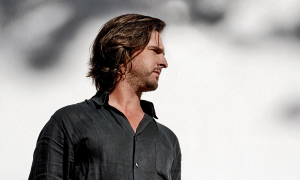
Take Five With Domina Catrina

 Left-handed acoustic guitar, high-strung acoustic guitar, virtual instruments (basses, percussions, ethnic instruments, etc) triggered from M-Audio oxygen-8 keyboard into MacBook using Apple loops (usually modified in some way), Indonesian flute (suling), soprano recorder, alto recorder.
Teachers and/or influences? I spent six or seven months from September '86 studying guitar at the Musicians' Institute. Studied there with various jazz and fusion greats—Joe Diorio, Scott Henderson, Jamie Findlay and Frank Gambale, but humbly do not consider these giants as strong as influences as pianist Keith Jarrett, saxophonist Jan Garbarek, composer/guitarists Pat Metheny, Ralph Towner, John Abercrombie, some Jim Hall and Pat Martino, a touch of Allan Holdsworth, jazz violinist Jean-Luc Ponty, and post-minimalist composer Steve Reich,
I knew I wanted to be a musician when... I first heard cassette recordings of classic rock/progressive rock bands in my pre-teen years. That piqued my interest. Prior to that initial revelation of music as inspiring Kundalini awakenings, and personal inner journeys, the only music I had been exposed to were along the lines of The Sound of Music.
Your sound and approach to music: Conceived and composed on an Apple laptop—my album uses marimba samples and didgeridoo loops—does that make it African/Australian or world music? Or neither.
I modified typical club/DJ loops, morphed them into post-minimalist stabs. How would you categorize that? Then I added Chinese, Indian and Brazilian percussion samples, triggered by my Oxygen-keyboard, and composed virtual double-bass lines under percolating acoustic guitar bebop-ish melodies. The guitar also gets treated with virtual tube amplification-like distortion.
I seek to create according to the impulses calling forth within me. I believe music has to have a shamanic function—both a didactic (in a moral sense of the word) and healing function (emotionally/psychically). It is not sufficient for me to listen to or create music that merely grooves (or rocks, if that floats your boat) or has virtuosic blowing sections. My music is designed for an additional pair of functions—to tell a story of our lives, and to refer back to itself. To realize the second intention, I have also created a recording of purely ambient music that could be used to aid traditional sitting mindfulness practice in the manner of various mystical teachings.
Your teaching approach: I am currently developing a theory I like to think of as the Grand Unified Field of Western Harmony. It explains and elaborates in a very simple and elegant fashion the use of harmony in the West from the time of Bach to the present and encompasses all styles of Western music, from classical to pop to jazz to new age to post-minimalism. Besides this, I would focus on pointed details in simple lesson plans that work with as few objectives per lesson as possible. What is this lesson supposed to accomplish? As a guitarist, if I were to teach a guitar student who came to learn jazz or new music I would be more globally focused—basic repertoire, harmonic theory, reading, time, tone, various approaches to improvisation that I am familiar with. We would also wish to look into strengthening weak areas and seeking the strong areas of playing to maximize the happiness factor, not merely the work factor involved in music-making.
Your dream band:
I would have two ideal collectives in mind. One is centered on more pan-cultural fusion centered on post-'60s jazz. Musicians that exemplify this esthetic include:
Trilok Gurtu: percussion, tabla;
Zakir Hussain: tabla;
Ralph Towner: piano, guitars;
Mark Egan, Steve Swallow or Paul McCandless: reeds.
My second ideal ensemble might be described as more inclined to post-minimalist/new music:
Various member of the Kronos Quartet;
Tracy Scott Silverman: violin;
Steve Bergamo: percussion;
Marilyn Mazur: drums, percussion;
same bassists as above, but including;
Eberhard Weber (the musical possibilities for a multi-bass line up in my ensemble would be creatively mind-boggling);
Keith Jarrett or Lyle Mays: keyboard, piano;
David Torn: guitar, processes, etc.
The first Jazz album I bought was: Chick Corea's Return To Forever, Romantic Warrior (Columbia, 1976).
What do you think is the most important thing you are contributing musically? I am giving to our humanity a vision that you need not be the same as everyone else, you need not be following the herd of robotic social norms as a person or as an artist in order to be heard; to make a difference.
I am giving humanity a vision that you need not be young, or white, or living in the USA, or any other stereotypical reason for any level of success in setting forth a career in the arts. I am resurrecting the forgotten tradition of musician as shaman and visionary.
I am giving a new model for what it means to be a transgendered person living in this global community where transgendered people in the artistic and entertainment fields are still mostly focused on being viewed for their visible beauty alone—models, pop singers, dancers, et al., are doing visible work, but I am doing something totally different. I am being a model of the forgotten transgendered shaman, the two spirit who inhabits both the male and the feminine mysteries. I do the work of the invisible. I speak its voice.
Did you know... I am very possibly the world's first and only male to female transgendered jazz artist. I hope I will not be facing discrimination for this fact.
CDs you are listening to now:
Domina Catrina, The Book Of Worlds;
Pat Metheny Group, American Garage;
Shakti, A Handful Of Beauty;
Steve Tibbetts, Cho;
Steve Reich, Music For 18 Musicians
Desert Island picks:
Oregon, Out Of The Woods;
David Hykes Harmonic Choir, Hearing Solar Winds;
Lou Harrison, La Koro Sutro;
L Subramaniam, En Concert;
Bill Evans, You Must Believe In Spring.
How would you describe the state of jazz today? Mass marketed as an aural accessory to an upwardly mobile urban chic lifestyle for the baby boomers and the metrosexual under 35 crowd, jazz today is exhibiting tell-tale signs of having lost its concentration of prophets, visionaries, shamans. Since the late '90s we are seeing a marked decline in record stores to bring in the lesser known artists, the less Starbucks-approved jazz chanteuses; the slicker and groovably loungey acts dominate a musicscape that's lost its multi-timbral colors in lieu of the mere popularity/fiscal bottom line.
What are some of the essential requirements to keep jazz alive and growing? We need several things to happen to keep jazz vital and meaningful to beings concerned with life. It has always been the individual's concern, and cannot be watered down to be party music only. The collective element need be present, yes, but a collective of intelligent, heartfelt, true, authentic individuals alive and awakened to what life is all about. On the education front, teachers can hopefully stop pushing jazz as a very narrow traditional music style made up of old Broadway and pop tunes from the '40s, and Latin/lounge music.
Cutting the changes and swinging should not be the sole focus of jazz music education, and pedantically demanding every jazz student play that dying repertoire has made jazz a stale, old, repetitive institutional music form for tired businessmen waiting for their clients (or high end prostitutes) in hotel lobby bars.
Can jazz grow? Who has the same vision? Can we move into the forgotten roots of Music Itself to propel jazz forward into a holistic future? Perhaps too few care. The consciousness of the artist must grow first, for it is the artist who decides trends, not managers, not fans, but the artists themselves are in control of the future of the music. People will listen and demand more of what they listen to, only if the artist is bold enough to introduce a new vision of music for them to listen to. The artist is in control.
What is in the near future? I hope to get a good manager who believes in my vision, with integrity, who will ethically market the music in a responsible and effective manner. I hope to get signed to a reputable creative music label, or else find the funds necessary to begin and maintain my own music label. I hope to gig some, but nothing solid is planned yet.
By Day: Freelance Tarot Reader.
If I weren't a jazz musician, I would be a: Shaman.
< Previous
The Paul Dunmall Trio at the Vortex, ...
Next >
One Way/Detour
Comments
Tags
For the Love of Jazz
 All About Jazz has been a pillar of jazz since 1995, championing it as an art form and, more importantly, supporting the musicians who create it. Our enduring commitment has made "AAJ" one of the most culturally important websites of its kind, read by hundreds of thousands of fans, musicians and industry figures every month.
You Can Help
To expand our coverage even further and develop new means to foster jazz discovery and connectivity we need your help. You can become a sustaining member for a modest $20 and in return, we'll immediately hide those pesky ads plus provide access to future articles for a full year. This winning combination will vastly improve your AAJ experience and allow us to vigorously build on the pioneering work we first started in 1995. So enjoy an ad-free AAJ experience and help us remain a positive beacon for jazz by making a donation today.

Giveaway

Days remaining: 4