Home » Jazz Articles » Album Review » J.D. Allen Trio: Shine
J.D. Allen Trio: Shine

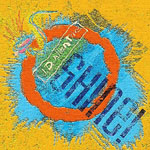
Many "damn yous" are woven into Allen's staccato phrases that run up and down the octaves of the tenor. For instance, there is a wild, almost primeval ring in the romp that profiles "Esre." "Sonhouse" is a masterful minor harmonic sketch in praise of the legendary Son House. Bassist, Gregg August holds sway with exquisite pedal point and some growling ostinato passages and that really heats up the song just prior to the penultimate chorus. Sometimes Allen senses abstractions of Pythagorean proportions. On "Conjuration of Angles," he pokes and prods drummer Rudy Royston, who rolls and rumbles with the changes picking up pace as Allen is joined by August to navigate the rest of the way through the song, before returning to the tantalizing theme.
"Marco Polo," another quick sketch can be menacing at times reflecting the man and his colonial discoveries. But past the opening theme, the music quickly opens up in harmonics and rhythmic intensity much like Trane's "Giant Steps." And then there's the title song, an elementally sad, but beautiful eulogy in praise of the heart of Allen's "blackness." And this is really what sets Allen apart from any tenor man today, including Sonny Rollins. It is never possible to capture an essential characteristic, but if it were, it would be total sincerity—a kind of brutal honesty that is almost too painful to bear; too painful even to hear sometimes.
This is what can sometimes lead to what Don Cherry once called "total communion." This is not to be confused with the musical one, but is actually a state of mind that arises out of music. In all ancient societies this state of being is attained. Among the griots of ancient Morocco, for instance. The Yoruba people have been there too, as the music of Babatunde Olatunji will testify. The Cubans arrive there with their Santeria rituals. And now with J.D. Allen, especially in the ecstatic "Se'lah," a modern psalm of unbridled praise.
In the liner notes to Shine, there is an attempt to define the raison d'être of the record. Worshipful praise of music as a joyous expression of absolute freedom ought to be considered for this Afro-American masterpiece.
Track Listing
Esre!; Sonhouse; Conjuration Of Angels; Marco Polo; Shine!; The Laughing Bell; East Boogie (Kolby's Theme); Ephraim; Angel; Teo (Ted's Theme); Se'Lah; Variation.
Personnel

JD Allen
saxophone, tenorJ.D. Allen: tenor saxophone; Gregg August: bass; Rudy Royston: drums.
Album information
Title: Shine | Year Released: 2009 | Record Label: Sunnyside Records
< Previous
1, 2, 3...
Comments
About JD Allen
Instrument: Saxophone, tenor
Related Articles | Concerts | Albums | Photos | Similar ToTags
J.D. Allen Trio
CD/LP/Track Review
JD Allen
Raul D'Gama Rose
Sunnyside Records
United States
John Coltrane
Pharoah Sanders
archie shepp
Dewey Redman
Son House
Gregg August
Sonny Rollins
Don Cherry
Babatunde Olatunji
Shine
For the Love of Jazz
 All About Jazz has been a pillar of jazz since 1995, championing it as an art form and, more importantly, supporting the musicians who create it. Our enduring commitment has made "AAJ" one of the most culturally important websites of its kind, read by hundreds of thousands of fans, musicians and industry figures every month.
You Can Help
To expand our coverage even further and develop new means to foster jazz discovery and connectivity we need your help. You can become a sustaining member for a modest $20 and in return, we'll immediately hide those pesky ads plus provide access to future articles for a full year. This winning combination will vastly improve your AAJ experience and allow us to vigorously build on the pioneering work we first started in 1995. So enjoy an ad-free AAJ experience and help us remain a positive beacon for jazz by making a donation today.

Giveaway

Eligible winners: 15
Days remaining: 5
Days remaining: 5



