Home » Jazz Articles » Interview » Marian McPartland: Living Through the History
Marian McPartland: Living Through the History

Holding the pose took a minute or two, but getting everybody together took hours.
 Marian McPartland, whose personal artistic history is deeply entwined with that of jazz, continues writing, touring and educating. Following her muse, she has encountered a who's who of jazz while leaving her own indelible mark on the music. Her radio program, Marian McPartland's Piano Jazz, is the longest running show on National Public Radio, and she continues to tape new episodes.
At the age of 91 she's still going strong with Piano Jazz, as well as periodic performances and composing new music, including the ambitious symphonic piece, "A Portrait of Rachel Carson."
Chapter Index
- Discovery
- Vaudeville
- Jimmy McPartland
- Boys' Club
- Recording
- The Sixties
- Piano Jazz
- Still Going Strong
Discovery
All About Jazz: You studied classical music at the Guildhall school of music in London. Was it during this time or earlier that you first encountered jazz?
Marian McPartland: It was much earlier because I started playing the piano at home, when I was about three, and I started to hear jazz on the BBC. Then when I was in my early teens I started to play jazz and I had a boyfriend who brought records over to my house, so I listened to everything—Duke Ellington, Benny Goodman, Fats Waller, everybody. I have been going on ever since.
AAJ: Looking back and listening to any of your early jazz inspirations now, has your opinion of the artists/recordings changed?
MM: No, I don't probably play in the same style as I did then but the artists are just as great. I was lucky to meet Duke Ellington later when I was at the Hickory House. He and I became very good friends, and I was with Benny Goodman for a while. I knew all the people that I listened to as a kid, and then when the war came I went with the USO to France and Belgium. That's where I met my husband, Jimmy. We were married over there and that was my first trip to America, after I had married Jimmy.  AAJ: Regarding jazz versus your classical studies, had you seen it as an "either/or" proposition?
MM: I never had an "either/or" thing. Actually when I went to the Guildhall, I was already playing jazz, sort of for fun, and the thinking at the Guildhall was that I might become a concert pianist. But of course that never happened because I was offered a job playing with a four piano act. It wasn't exactly jazz but it was sort of "Pop jazz." I never really went back to classical music.
AAJ: Like the composer Alexander Scriabin and few others, you are a synesthete (associating different musical keys with colors). Have you always experienced music this way?
MM: A couple of jazz musicians I know have the same thing; Jim Hall was one and he and I used to talk at different times about how we associate certain keys with a certain color. But I never knew that Scriabin did that. I have always had it in my head. I never felt like talking about it for a long time, but it was there.
class="f-right">
Vaudeville
AAJ: You ended up leaving school to tour with Billy Mayerl's Claviers, which was a four piano vaudeville act. What do you remember of your hiring and job description?
MM: I was thrilled. My parents weren't. They were hoping I wouldn't go, but of course I did go. If I hadn't, my life would be very different because I never really went home again. I was always doing something on the road and then the war came. I met Jimmy doing USO camp shows in Belgium and then came to New York after the war ended.
AAJ: You performed as Marian Page?
MM: I started out as Marian Page, which was sort of an alias because my parents weren't too thrilled with me. Then when I got to New York, I found out there was already a Marian Page who played in New York at the Monkey Bar. So I very quickly became Marian McPartland which, as a name, has stood me in good stead ever since.  AAJ: Your parents were not pleased with your choice. Given all that you went on to do, did they ever come around to approving?
MM: Yeah, they did, especially when I would get write-ups and reviews, records, all the good things that would happen to me. They were very pleased about all that.
AAJ: Your father offered you one thousand pounds to stay in school. Was there any temptation? Was there an implicit understanding in the offer that you drop jazz altogether?
MM: Yes he did. He didn't want me to go on that trip with the four pianos. He wanted me to stay at the Guildhall. Of course, I didn't take the money.
class="f-right">
Jimmy McPartland
AAJ: While entertaining troops during World War II you met your soon to be husband, cornetist Jimmy McPartland. He was steeped more in traditional Dixieland jazz and you more progressive. Was there any sort of cross pollination artistically?
MM: Well, I had always been able to play—he hated the word—Dixieland (and I did too). But I could play all those tunes. I listened to a lot of those players of the day. I could play with him and enjoy it very much, but then when bebop came along I could easily switch to that. Still to this day, I love to play with a Dixieland band—not full time, but once in a while it's fun. And of course I enjoyed playing with Jimmy. I guess I am still a middle of the road bebopper. I don't know how to describe myself.
AAJ: Eventually you moved stateside [1946] first to Chicago, then New York (1949). Did either location directly affect your artistic identity?
MM: I think I just got better, being in New York and getting this steady job at the Hickory House, which lasted about ten years. During that time, I think I learned much more about how to play, and I feel I am still learning. I don't think you ever stop learning.  AAJ: Was it at this point you began to record?
MM: We did record in Chicago, but then when we got to New York I was signed to Capitol and made four records with them. Actually, I then later started my own record company, Halcyon. Then I went with Concord; they took all my Halcyon recordings and put them out on Concord.
AAJ: Had you preplanned the size of the ensemble and format you wanted for recording?
MM: Oh, sure. I certainly knew what I was going to do. The first record I made for my own company was a duo with bass and piano. It sounded so good at the time, and still does years later. I went on to record with other people: Dave McKenna, Alec Wilder and many others.
class="f-right">
Boys' Club
AAJ: Your trio had a residency at The Hickory House, which was part of the 52nd Street scene. Was there any preconceived notion of what you could do as a woman—still a relative rarity in jazz—leading a group?
MM: I think all that woman stuff actually went by me because I was married to Jimmy. There was a lot of talk about men not wanting to play with women but I never had that problem. I guess because I was the leader, I could call up any man I wanted and if he didn't want to play with me he didn't have to, but that never happened.
I always had great players, like my really fine trio with Joe Morello and Bill Crow. I recorded for Capitol with them, and later, even though we parted company, just a few years ago for fun we made a record for Concord with that trio. It was really nice to have the group you played with so many years before still get together and play. I think we sounded as good as we ever did.
AAJ: That version of your trio featured Bill Crow and Joe Morello. Joe would go on to be a part of Dave Brubeck's quartet and Bill would be a stalwart for many West Coast tours and albums [Zoot Sims, Gerry Mulligan]. Are there any other former band mates whose names became more recognizable with time?  MM: Not really. I had Ben Tucker on bass, Dave Bailey on drums. I guess they were fairly well known and we recorded for the Time label—two or three records.
AAJ: You were one of three women in the 1958 photograph by Art Kane, A Great Day in Harlem [Mary Lou Williams, Maxine Sullivan]. What do you recall of that day?
MM: I always think about that. That was the greatest photo ever made. It is just as well known and as much desired today, as ever. Jean Bach made a film out of it. I was certainly very proud to be in it. I felt very bad that Jimmy wasn't in it. He was just too lazy to get up. I begged him to get up.
Of course, at the time I didn't realize that it was going to be such an important photograph, or else I think I would have wrestled him to the ground to get him up. Unfortunately, he didn't make it, but then nor did people like Duke [Ellington]. Some of his sidemen did, so obviously he must have been in town, but he didn't show.
There were some people who hadn't seen one another for ages. I hadn't seen Mary Lou that often. I know the whole date was late because [Thelonious] Monk wanted to choose an outfit so that he would look different from everybody else, but he wound up looking just the same as everybody else. He kept trying on different jackets and hats; I forget what he eventually wore.
It was a mixed group. You see some of the people like Pee Wee Russell and I am not sure if Bobby Hackett was there, but then you'd see some of the Ellington gang. Down in the front next to me was Oscar Pettiford; we were very friendly. He used to come to the Hickory House and sit in quite frequently
Holding the pose took a minute or two, but getting everybody together took hours. Art Kane had a terrible job getting everybody to stay still and in their place, not turn their back when talking to somebody else. It was a hard job getting everybody to behave. It was like a party, getting together people who might not have seen each other. They were anxious to talk; they didn't give a damn about the picture. Finally it got down to that—he wound up rolling up a newspaper and using it like a megaphone to tell everybody to keep quiet.
AAJ: Once everyone was assembled, did it dawn on all of you artists that it was an important thing occurring?
MM: No, I don't think it did. It was just as if it was a photograph. We were told, "All right now, they are taking the picture. Keep still. Keep smiling." That was how it got taken in the end.
class="f-right">
Recording
AAJ: After recording for various labels, you started your own, Halycon (1969-1977). What was behind your decision to do this?
MM: The fact that I wasn't with a record company and I couldn't seem to get anybody interested. Rock was beginning to show and be around and I said, "Well, if nobody will hire me then I will start my own damn record company!" That's how it started.
I had a couple of wealthy friends who helped me with shipping and packing—stuff like that. I would say it was a fairly successful enterprise. The records are still out and the name is still known.
AAJ: Did being the label owner bring more freedom?
MM: Oh sure. I could do exactly as I wanted on the record dates. It wasn't a case of "play this tune" or "you can only have ten minutes of different things," which you have when you are recording for somebody. When we were doing our own thing, we could do what we wanted.
I chose to record Dave McKenna because I felt he wasn't really getting to be as well known as he should be, although he did have some records out. The record that he put out on Halcyon turned out very, very well. It's still around.
class="f-right">
The Sixties
AAJ: When rock began supplanting jazz as the music of youth, you briefly worked with Benny Goodman. Was this doubly hard, considering his genre of jazz? It seems there would be an odd juxtaposition between the times and what he was known for. What was your association like?
MM: I thought I was going to play very well for him, but he didn't like my playing. I guess I still had elements of bebop in my playing, and he didn't want that. It was the year that John Kennedy got shot, and that ended the tour. Although I remember that one time I said to Benny, "Benny I know you don't like my playing. Why did you hire me?" He looked at me in sort of astonishment and said, "I'm damned if I know."
class="f-right">
Piano Jazz
AAJ: You are probably best known to the more casual jazz fan for your NPR show Marian McPartland's Piano Jazz. How did this show come about?
MM: Alec Wilder had a show featuring singers like Margaret Whiting, Tony Bennett—people like that. His show lasted about a year and then they were looking for somebody else. Alec actually recommended me, although he always denied that he did.
So we recorded Piano Jazz. We thought we would last a few months. Sure enough, it went on for a couple of years. We got sponsored by Exxon and just kept on going. We had not only piano players, we had singers, all manner of different musicians, and we still do.
We just had a big party at Dizzy's club to celebrate thirty years of Piano Jazz, and we're still going on. We've got two shows next week and two in June. People keep coming along. We keep trying to find young people, and we've succeeded with some of the people like Taylor Eigsti, who was just a kid when he was on Piano Jazz.
AAJ: How did you decide upon the format, and were you given creative carte blanche from the get-go?
MM: We just decided that was the thing to do. If we just had two pianos, with me and one guest, it would work out well. And it did!
The producer and I always talk and decide certain things we will do. Mainly it's me deciding how we'll do it and what guests to get. I'll figure out somebody and call up Shari [Hutchinson]. I'll see if she agrees that we should have that person on.
We just start very informal. We sit down and figure out some tunes. I play and the guest plays; we talk in between. It's very informal.
AAJ: Mary Lou Williams was your first guest, some twenty years after you both appeared in the Great Day in Harlem picture. The list of your guests over the years reads like jazz royalty. Was there ever an artist you wanted on the show but it just did not happen? 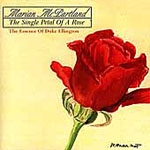 MM: We started out with Mary Lou Williams, Billy Taylor, John Lewis, anybody and everybody that we could get. Keith Jarrett always said, "Oh Marian you must understand, I can't do the show." He said that for years. Finally, I wanted to go to a concert of his at Carnegie Hall, so I called up his manager and asked if he could get me two tickets. That seemed to be the magic time because Keith then said he would do the show. He did it and it was a wonderful show, just a couple of years ago.
I am still trying to get Sonny Rollins, but I don't know if I will ever get him. He has said he'll do the show but he hasn't set a date yet, so we shall see.
AAJ: How far into the show's history did you start to have non-piano playing guests?
MM: Oh, I don't know. We had a producer who was very strict about only liking certain kinds of piano players. I wanted to have Herbie Hancock on and he didn't like that idea. After he died, the new producer Shari Hutchinson took over and she has been doing the show with me ever since.
We got started right away, having people like Dizzy [Gillespie], singers, we had Bela Fleck. We had various other instruments like vibes; we had Lionel Hampton on the show. We've even had people that don't play. We had Nat Hentoff because he was such a good journalist, such a good talker. I did all the playing; he and I talked about different things. It was a very good show even though the guest didn't play.
AAJ: Didn't you once have Studs Terkel on?
MM: Oh sure. As a matter of fact, it is coming up sometime in June; I just read it in the catalog. I used to go and do interviews with Studs every time I was in Chicago. I have several of them that he left for me when he died and now they will be on NPR, which I am so thrilled to see.
AAJ: Do you have a preference in regards to what instrument a guest plays?
MM: It is more about the artist himself. I may like the instrument or I might not like the instrument, but like the guest. I usually like the instrument too; I can't think of anything I really don't like. We wind up liking everything we've done, believe it or not.
AAJ: What was your personal favorite episode?
MM: Probably Bill Evans. I loved that show and I love Bill; he was a great friend.
AAJ: You are still taping twenty six episodes a year. How has the show changed over the years? Has the advent of better studio technology impacted the ease with which a show can be done at all?
MM: First of all by having all these various types of guests, but otherwise it hasn't changed that much. We've changed pianos and we don't have organ anymore. It really basically is the same idea of two people talking and playing. Sometimes what they do is different. You get some fabulous technical player like Denny Zeitlin—my god I was going to faint when I heard him play, he was so terrific. I had to try to keep up with that. There are people that I have to really work to do a good job with them.
AAJ: Although jazz is now somewhat outside the (commercial) popular culture, have trends affected the show at all?
MM: Yeah, we've had people that you wouldn't call jazz: Walter Becker and Donald Fagen. When we had Steely Dan on, people wrote in and said, "Is this jazz?" but it was jazz. They were two guys that really loved jazz. They were so thrilled that I knew Duke Ellington that we spent half the show talking about Duke. I just loved those guys. There are so many newer people that are so very interesting.
class="f-right">
Still Going Strong
AAJ: For your birthday in 2008, you composed a symphonic piece, "A Portrait of Rachel Carson," to mark the centennial of this famed environmentalist. This piece was built out of improvised piano pieces with orchestration help by Alan Broadbent. Had you always the structure of the final version in mind when you initially wrote it? MM: No I didn't at all, but I always liked him and I think he is a wonderful arranger. I couldn't wait when I got it. I had it transcribed—I improvised the piece actually, and had it transcribed by a girl who is fabulous. She transcribed this whole thing. We sent it to Alan Broadbent, who did a wonderful job. I am hoping to have another date in South Carolina.
AAJ: Will there be a definitive recorded version released?
MM: I hope so. Concord is sold, but the thing is it is too short. I think I will probably have to write a second piece to go with it in order to have enough material for a record.
AAJ: Do you have an as yet unrealized dream project?
MM: Well, I would like to keep writing some kind of piece, whether it would be jazz or another thing like the Rachel Carson. I have another piece with no name that I am working on. There is always something that I am thinking of that I have not done yet. But I hope I can get to it soon, because I am 91 now.
Selected Discography
Marian McPartland, Twilight World (Concord, 2007)
Marian McPartland, Yesterdays: First Lady Of Jazz Piano (Savoy Jazz, 2006)
Marian McPartland, Piano Jazz With Steely Dan (Concord, 2005)
Marian McPartland, 85 Candles: Live In New York (Concord, 2005)
Marian McPartland, Windows (Concord, 2004)
Marian McPartland, All My Life (Savoy Jazz, 2003)
Marian McPartland, Contrasts (Jazz Alliance, 2003)
Marian McPartland, Timeless (Savoy Jazz, 2002)
Marian McPartland, Ain't Misbehavin': Live At The Jazz Showcase (Concord, 2001)
Marian McPartland, Single Petal Of A Rose (Concord, 2000)
Marian McPartland, On 52nd Street (Savoy Jazz, 2000)
Marian McPartland, Just Friends (Concord, 1998)
Marian McPartland, Silent Pool (Concord, 1997)
Marian McPartland, Plays The Music of Mary Lou Williams (Concord, 1994)
Marian McPartland, Piano Jazz With Dizzy Gillespie (Concord, 1993)
Marian McPartland, Piano Jazz With Bill Evans (Concord, 1993)
Marian McPartland, In My Life (Concord, 1993)
Marian McPartland, From This Moment On (Concord, 1991)
Marian McPartland, Plays The Benny Carter Songbook (Concord, 1990)
Marian McPartland, Plays The Music of Billy Strayhorn (Concord, 1987)
Marian McPartland, Willow Creek And Other Ballads (Concord, 1985)
Marian McPartland/George Shearing, Alone Together (Concord, 1981)
Marian McPartland, With You In Mind (DRG, 1957)
Photo Credit
Courtesy of Marian McPartland
Comments

Tags
For the Love of Jazz
 All About Jazz has been a pillar of jazz since 1995, championing it as an art form and, more importantly, supporting the musicians who create it. Our enduring commitment has made "AAJ" one of the most culturally important websites of its kind, read by hundreds of thousands of fans, musicians and industry figures every month.
You Can Help
To expand our coverage even further and develop new means to foster jazz discovery and connectivity we need your help. You can become a sustaining member for a modest $20 and in return, we'll immediately hide those pesky ads plus provide access to future articles for a full year. This winning combination will vastly improve your AAJ experience and allow us to vigorously build on the pioneering work we first started in 1995. So enjoy an ad-free AAJ experience and help us remain a positive beacon for jazz by making a donation today.

Giveaway

Days remaining: 4