Home » Jazz Articles » Film Review » Icons Among Us: Jazz in the Present Tense - Episode One:...
Icons Among Us: Jazz in the Present Tense - Episode One: The Quiet Revolution

Icons Among Us: Jazz in the Present Tense
Episode One: The Quiet Revolution
The Documentary Channel
April 20, 2009, 09:00-10:00PM
Paradigm Studio
2009
Many still look back at Ken Burns' Jazz (2001) as the documentary that could have been—or, even more importantly, the documentary that should have been. Its view of jazz as a static musical genre with clear and unmovable boundaries, despite being expertly made, almost entirely ignored the music as it evolved post-1960s. While featuring plenty of terrific footage, it was essentially antithetical to the spirit of the music.
The good news is that directors Michael Rivoira, Lars Larson and Peter J. Vogt, in conjunction with producers John W. Comerford, Theo Ianuly and B Dahlia have created a four-part television series, airing on The Documentary Channel starting weekly on April 20, 2009, that more closely articulates what the spirit of jazz truly is. Icons Among Us explores the many myths and misconceptions of a music that may be a marginalized genre based on CD sales, but is a life's work for a disproportionate number of artists, and draws surprisingly large crowds to what seems like an infinite number of festivals going on around the world, especially during the spring and summer seasons.

Episode One: The Quiet Revolution dispels the belief, held by some, that the lack of massively visible contemporary icons is somehow a reflection on the music and those who make it. The reality is that jazz in the 21st century has never been more alive, more vibrant. That few artists are achieving the legendary status of Miles Davis, Charles Mingus, Thelonious Monk, Duke Ellington or Charlie Parker has nothing to do with being any less innovative; it has more to do with a number of other factors. More music is being released than ever before to compete for the attention of music fans. Released on a seemingly infinite number of independent labels with small budgets, rather than by large labels with the money to promote the music the way it deserves to be, it's not that albums as innovative as Davis' Kind of Blue (Columbia, 1959) aren't being released; it's just that there's so much music out there without extensive publicity that it's almost impossible for any album to rise to the top of the heap and stand out.
Equally, in many cases the music may not be moving forward in great leaps; instead, a multiplicity of artists are pushing the music forward, inch by inch, but the cumulative effect of what these musicians are doing ultimately becomes massive. Few albums or artists today have the ability to influence the music on a grand scale the way Davis, John Coltrane, Monk or Parker did, but together they create new paradigms that are just as significant.
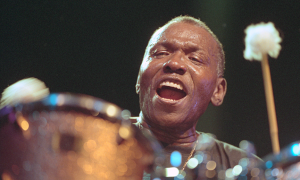
The Quiet Revolution explores, through live footage and interviews from artists ranging from Nicholas Payton and Terence Blanchard to The Bad Plus, Bugge Wesseltoft and Bill Frisell. What comes through in this densely packed but clearly articulated and narratively focused 50-minute program is that jazz has never been a style with defined boundaries; instead, Dave Douglas, who has always been one to avoid categorization, says "I'm very careful not to use the term jazz too loosely, because then you open up the can of worms that is the argument of what jazz is and all of that, and I think that's a great argument to have. But in terms of the global vision of what music is and what's happening in the scene, it ultimately slows down the looking at all the different kinds of music that are proliferating."
Various artists try to tackle the fact that jazz has never had a strict definition, despite all attempts to do just that. Frisell says, "I just don't like it when the name of something has the effect of excluding something. If you say it's one thing then it can't be something else and that doesn't work for me. The words are always smaller than what it is you're trying to describe. And for me jazz is infinite. It's always been about some kind of mystery, part of the nature is that it changes." Avishai Cohen says, "So if it's jazz and it means that this artist and that one is connected to it then I'm honored to be a part of it. But if you wanna call it Johnny I don't mind, too; it doesn't matter, because...the feeling of the music, the magic, exists in a place that's before jazz or the blues, with all respect to the terms."

But in terms of articulating the idea that jazz is inclusive rather than exclusive, and is a living, breathing thing, it's Herbie Hancock who says it most succinctly: "The term jazz, in a sense perhaps, is its own worst enemy, but if we redefine what jazz is in a responsible and powerful way, then it won't be its own worst enemy, because how people will perceive it will change."
The documentary addresses the positive and negative impact of the emergence of the Young Lions of the 1980s, but what is most compelling is its avoidance of racial, age and geographic lines. Black and white doesn't matter, with plenty of time given to Greg Osby, Jason Moran and Russell Gunn, but equally to Aaron Parks, John Medeski and The Bad Plus' Dave King. While the majority of the artists who make up the first episode are American, Norwegian pianist/producer Bugge Wesseltoft also gets plenty of footage. "Every generation has its own pulse," he says, "so you have to create your own pulse. If you try to be in the '60s you can't do it because it was a different time, everything was completely different. If you try to do it, it won't be very important, I'm afraid." Interspersed with his comments is footage of a performance where Wesseltoft seamlessly integrates technology—live sampling, processing, looping—to move solo piano performance into the new millennium.
The message of The Quiet Revolution is that jazz is truly a music without borders—one that should unite, rather than divide—and the battle to define what it is in empirical terms has little value in today's world of extensive cross-pollination. Still, Dave King says, "I think the war is really a critics' war more than it is a musicians' war. I think young musicians today, no matter what they play, I can guarantee you their record collections are probably pretty vast." King's comment, while certainly true with respect to the encyclopedic interests of musicians today, smacks of an unfortunate (and, sadly, sometimes justified) knee-jerk reaction that unfairly dismisses the many of the writers who work hard to advocate this music, including noted critic Paul de Barros, who is also interviewed in the film. The truth is that, more often than not, those who write about the contemporary music that is Icons Among Us' focus possess equally expansive musical tastes, and welcome with open arms and eager anticipation its constant expansion by artists like King and the others who appear or are mentioned in the documentary.

There's no denying that there are those attempting to keep jazz pigeonholed with clearly defined borders, and they may be musicians, critics or fans. But no matter how strongly those purists try to retain a narrow-minded view of what jazz is and should be, there's an irrepressible upsurge of interest in expanding a music that has always been about finding new means of expression and articulation. Icons Among Us: Jazz in the Present Tense - Episode One: The Quiet Revolution makes that abundantly clear in a way that anyone can understand...and, most importantly, see and hear. With a wealth of clear interview and performance footage, based on the strength of Episode One: The Quiet Revolution, the other three parts—to be aired a week apart—can't come soon enough.
Photo Credit
Stills taken from Icons Among Us: Jazz in the Present Tense - Episode One: The Quiet Revolution, courtesy of Paradigm Studio and The Documentary Channel.
Episode One | Episode Two | Episode Three | Episode Four
Tags
PREVIOUS / NEXT

Support All About Jazz
 All About Jazz has been a pillar of jazz since 1995, championing it as an art form and, more importantly, supporting the musicians who make it. Our enduring commitment has made "AAJ" one of the most culturally important websites of its kind, read by hundreds of thousands of fans, musicians and industry figures every month.