Home » Jazz Articles » Interview » Clifton Anderson: Legacy
Clifton Anderson: Legacy

I try to go out and absorb, like a big sponge, as much as I can in every situation that I am in.
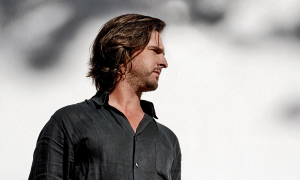
 Clifton Anderson has been on a lifelong journey of artistic evolution. From his start as a child surrounded by a musical family, to formal education mixed with the practical experience of live gigs, Clifton's odyssey is ever-unfolding. Whether playing as a long-standing member of his uncle Sonny Rollins' band, helping to run the Doxy label or leading sessions with his own band, Clifton's life is always happily connected to music.
Chapter Index
- Early Years And Inspirations
- Tennis Versus Jazz
- Formal Education
- First Gigs
- Multi-Genre Touch
- Technology and Bones
- Landmarks
- Writing
- Decade
- Doxy
- Tennis Versus Jazz
All About Jazz: With your father having been a professional church organist, your mother having played piano and soloed in church choirs, a violin-playing uncle and, of course, your famous saxophone-playing uncle Sonny Rollins, it can easily be said that you come from a musical family. Was there an assumption from early on you would take up an instrument, if only for fun?
Clifton Anderson: Yeah, in my family pretty much everybody plays something. As children, we were expected to learn some instrument. Our parents didn't push us in any one direction but, since everybody played something, we were expected to pick up an instrument.
AAJ: You credit the end of The Music Man (1962), where Robert Preston leads a street procession during "Seventy-Six Trombones" for giving you the initial interest in the instrument. What was the next step for you in regards to pursuing this new muse?
CA: There were a lot of different instruments that I had liked, but that was what hooked me on the trombone. After that happened, I told my mother that I wanted to play that instrument and she told Sonny about it. He bought my first trombone for me. So at that point I started taking little lessons and things.
I was so small that I couldn't really hold up the horn. When I got out to the sixth or seventh position, I had to balance the slide on my foot because I was too small to hold up the whole horn and reach all the way out. I had a teacher very early on; I remember him very well. He told my mother that he felt the trombone was the right instrument for me because I could get a really good tone out of the horn at such an early stage. He said that most kids can't get a good sound out of trombone that soon, so the fact that I could do that—he felt the trombone was the instrument for me, and he was right.
AAJ: During these early years, what were you listening to? How did it affect your approach to what you wanted to play?
CA: There was so much music in the house. I heard a lot of organ music since my father was a church organist. I heard a lot of church music and choir music because my mother sang in the choir and my father was also a choir director. I listened to some jazz. There was pop music in the house, and R&B. There was a little bit of pretty much everything. There was no one specific thing that I really keyed on into as a young kid coming up.
 Although the kids in school— everybody was listening to Motown and the earlier pop music that was around at that time. AM radio was a lot more popular back then than it is now, so my parents would have it on sometimes, if my mother was cooking dinner or something. They played a lot of pop music on there—Sly and the Family Stone, Jimi Hendrix, Mamas and Papas- -the Hippie generation kind of stuff.
With church music, we would listen to all the different great organists. My father had a lot of great recordings of organ music. Wherever he would work, whatever church he was affiliated with, we'd go and he would put on the Messiah. We were familiar with the Messiah and the different pieces that would usually come around the holidays. It was quite a diverse mix of material, which was good for my development because I wasn't really stuck in any one place; I could utilize information from everywhere.
class="f-right">
AAJ: In your adolescence, you were actually a good tennis player too, winning some tournaments. You have said that at one point you felt you had to choose between a career in music and sports. What brought things to a head and how did you come by your final decision?
CA: I had the good fortune to be up on Martha's Vineyard; I spent my summers on that island as a young kid. They had a tennis community up there. Tennis was not very popular in urban New York City (where I was living) and it was an expensive sport as well.
I didn't really know anything about tennis until I went to Martha's Vineyard. I would go and sit by the tennis courts and watch these players play, and after a while a couple of them invited me out on the court.
 There was a doctor and his wife took me under their wing; they realized I had an ability to play tennis at a fairly young age (10 or 11 years old). They provided me with some equipment and started teaching me/training me how to play. I got good enough, to the point where I started winning the local tournaments up there. Then they sponsored me to go around and play on some of the junior amateur circuits on the east/northeast. So I played in some of the tournaments, including the Nationals up in Boston one year.
Then I started meeting players from other parts of the country who could play year round and it made me realize that since I couldn't play in New York City year round (it was too expensive for me to able to play indoors at that time), that I couldn't start practicing until early spring and play until mid to late fall. These other kids at the tournaments were able to reach another level. It made me realize that if I was going to do this, I would have to commit—that I would probably have to go away and live out of state. I didn't really want to do that, plus I had started to take music more seriously at about the same time.
As I got into high school, I started meeting a lot of young musicians who were more serious about music; it inspired me to put tennis aside. I kept playing for the high school team but at that point I was more interested in pursuing a music career.
class="f-right">
AAJ: You attended the Fiorello LaGuardia High School of Music and Art (graduated 1974). Had you at this point started to think at all about the possible trajectory of your career? How did your initial studies affect the way you thought about a life in music?
CA: It was a great school. It was my favorite place of all the schools I went to. I came out of a junior high school that was a good school in the Bronx. It had a good reputation but the kids were always fighting. There weren't that many kids who were interested in music, so I didn't have many kids to hang out with. We'd listen to Motown in junior high.
When I got to Music and Art, the first person that I met was a young Tuba player named Carlton Green. The way I met him was, I was walking down the hallway and I heard this tuba playing incredible stuff and I was thinking, "What is that this guy is playing?" So I went to the practice room—they used to have little windows so you could look in and see. His back was to me; I saw him playing his tuba. He was reading this music that looked like flies on paper. I knocked on the door and asked him what he was playing. He said they were violin concertos. I said, "You can play violin concertos on the tuba?" Turns out that this kid was a prodigy and was a soloist at the age of 14 with the New York Philharmonic. He was the best student in the school. We became friends.
From that point on, the school had an amazing brass section. There was a bass trombonist in there by the name of Malleon Walker who went on study at Juilliard and graduated from Curtis Institute. He was known around New York (he is no longer with us) as a premier bass trombonist for European classical music. We had another guy playing French horn whose father was a famous studio French horn artist—he taught his son a lot. One of the trumpet players in our brass section is now the principal for the Minnesota Orchestra; his name is Manny Laureano. So these are the kinds of kids that were in there at the time. I got to hang out with all these kids. Everyone was into playing music and learning and into practicing—trying to be creative and trying to be unique and different. The teachers gave the students all the freedom. They basically told us we didn't have to come to class unless we really wanted to be there.
There were a lot of famous people who were in the school around the time that I was there: the fine jazz drummer Kenny Washington - Vocals; the lady with the hit single "Turn the Beat Around," Vicki Sue Robinson; Steve Jordan, who has recorded on my new record with me and become a big producer; Noel Pointer, who became a well known jazz violinist; Nat Adderley Junior, the musical director for Luther Vandross. A lot of kids with a lot of talent came through that school.
My mother and my uncle, the concert violinist, attended that school. She attended as an art student. It was her experience with the school that made her want both myself and my sister go there. I don't know how they are doing right now, because there have been a lot of budget cuts for schools specializing in arts, but they have an incredible history at that school, turning out many, many great artists.
AAJ: After studying there, you spent one year at The State University of New York at Stony Brook studying under Simon Karasick and Dave Schechter. Were any of your studies by that point focused on jazz specifically?
CA: No. It was very interesting. I had an interest in jazz when I was at Music and Art, and the educator Justin Dicciocio was a young teacher at the school. He was the director of the jazz band at the time. I didn't play in the jazz band but I was with all the musicians there. The jazz band really started forming when I was leaving. Jazz in the schools at that time wasn't a big deal so it wasn't the same kind of situation as it is now. It was something that Justin had just started and put together during my senior year, but I was still interested in the music.

When I went to Stony Brook, I went there to study with Simon Karasick because he had taught at Mannes School of Music and he had a very big reputation for being a great trombone teacher. I decided to not audition or take exams for any other schools. My sister was out at Stony Brook and I thought it would be easier on my parents if I just attended Stony Brook also.
It turned out that he and I didn't get along too well, but it was a good experience because I started playing some music and practicing in the clefs—tenor clef and alto clef—reading music that I hadn't really been that familiar with before. He turned me over to one of his graduate students and that was Dave Schecter. Dave heard me play and suggested that I audition for conservatory instead of staying at Stony Brook. I followed his advice and we put together a program for my audition. We started to look at who was teaching at Juilliard or the Manhattan School of Music, et cetera.
After studying with Simon Karasick, I was very apprehensive about switching. I wasn't too keen about some of the teachers I might find. So I decided to just focus on Manhattan School of music because they had a big band being fronted by Rusty Dietrich. It wasn't like a real part of their curriculum at the time, but Juilliard didn't have one. I also realized that most of the teachers that taught at Manhattan also taught at Juilliard. There was a bass trombone teacher at Manhattan School of Music that did not teach at Juilliard, by the name of John Clark.
People were telling me about John Clark and saying that he was a great teacher, especially if you were interested in sound—which I was; I was very interested in developing my sound. They said that he would be very good to study with. Both of the teachers came highly recommended—the other one was Ed Herman who was the principal for the New York Philharmonic. So I had formal classical training; my training in academia was no jazz. Now the schools have degree programs in jazz, but that wasn't available. Jazz at that time was not looked upon as a viable part of the curriculum, particularly in the conservatories. We relied on getting together in the practice rooms and playing/going out and listening to the music.
Of course, it was a lot more accessible at that time to do it that way. There were a lot more great jazz artists who were still alive from the '60s and the '50s as well. They were real giants of the music. They were all around New York; you just had to go to where they were and you can be around them and listen to them. The club scene was very different; you could walk into any of the clubs, if you were a musician. For instance, The Vanguard—Max Gordon used to have the back door open and all the musicians knew where that entrance was and we would just walk in the back, no matter who was playing or what night it was. Once you came in the back door and came downstairs, you might be standing next to Freddie Hubbard or Jaki Byard—there were so many great musicians who were just hanging out in the scene. You could just sit there with people and mingle, listen to the music and the conversations. It was very different than it is now.
class="f-right">
AAJ: It was during this time, while attending The Manhattan School of Music, that you began gigging out and also freelancing recording dates. What do you remember of your early live gigs?
CA: Yeah, I was trying to learn more about all kinds of music, trying to develop a career and trying earn some kind of living. It was all done by word of mouth. If you knew somebody who knew about a jam session, then somebody may have heard you there and had a record date that needed a trombone player and you'd get the call. There were a lot of jam sessions.
There were a few of us at Manhattan School of Music who were really into jazz even though we weren't playing it in the schools: Kenny Kirkland and Angela Bofield, they were there. So we all looked out for each other and try to get a gig here and there. I got around and started playing with a bunch of different people.
I was out at the Muse. Reggie Workman had an institution out in Brooklyn. He had a Big Band out there and guys would go out there and study, learn about the music. You were able to sit down in reflection with veteran musicians and learn from them.
Slowly, I generated a reputation. There were a lot of bands around at the time, so for an instrument like the trombone you could get into the section. Sam Rivers had a Big Band down on the Lower East Side. Barry Harris had the art center down on 8th Avenue below Penn Station. There were many great musicians would come in and play; in fact, that is how I got to meet Clifford Jordan. Charlie Rouse was down there a lot.
Walter Booker had a place in his apartment called Boogie Woogie Studios, a recording studio; they used to say that Weather Report started there. I remember going there with Thelonious Monk Junior, and Herbie Hancock would be there or Wayne Shorter. All kinds of people would stop through there. Sometimes they'd play, sometimes there'd be a recording session going on. That is where I got most of my jazz education. It wasn't in a school.
 AAJ: Jazz seemed to have always had a great unofficial system of new musicians learning the ropes both live and in the studio via sideman gigs. Your own early experience is very much a journeyman one which follows in this great tradition. Has this way of learning and coming up been replaced with new young players formally studying or leading their own bands from the get-go?
CA: It's not the same and I think you hear the difference in the music. It is not my place to say if it is better or worse, but it is different. If you have to lean one way or the other, I would have to say that it doesn't give you as broad of a spectrum by going to school and learning about jazz in academia, then coming out and just playing. Because you have the basic tools but you don't have...there was a cultural, social aspect of learning about jazz which was really traditional—musicians learning about the music by just hanging out with each other, practicing or being up on the bandstand and playing it. You don't really get that in academia. You learn all your patterns, you learn the transcriptions and theory, you are well rounded in those tools, but there are other things that speak to the nature of the music about really swinging, the rhythm of what you're doing and also the individuality.
One of the things I hear about a lot of musicians who come out of academia is that a lot of them sound very similar, and this is because they are being taught in a cookie-cutter kind of way. It is more recently that this has come about; a lot of musicians who have come out of academia in years gone by are not really subject to that. It is just in more recent times when the real stress on academia has caused this.
That's part of the reason that so many of them sound so similar and have not really created their own identity. Some do have an identity but the emphasis doesn't seem to be on that individuality. When you just came up through the clubs, jam sessions and playing with musicians on the bandstands, it definitely served the musicians much better to try to have a unique or individual voice/style on the instruments.
You also see a lot of musicians now being rewarded for sounding like someone else. Steve Turre and I would, when J.J. Johnson would be at the Blue Note, be in the back of the Blue Note listening for two or three nights and on the third night we both looked at each other and said, "We can't come back here anymore." Or else we were going to go home and just start playing like J.J. Johnson. As much as you admire, respect and love J.J. Johnson, you don't want to, as a jazz musician, play just like him. That's not what the music is really about. It is really about bringing your own thing to it. It is much harder, with the way things are now, to advance the music in a traditional way—the way things were when I was coming up.
AAJ: 1976 was your first recording gig with Carlos Garnett. At this early point in your career, did you find a difference between the reality of a recording date versus the imagined experience of it?
CA: Not at that time. At that time I was just so thrilled to be on a record, especially back then. The LPs were the thing; these were like, for a young musician, the elite musicians of the world. Not everybody could get on or make a record—not the same as it is now. Now anybody can make a record.
Back then, it was only a very elite group of people; they had to be affiliated with a record label, and therefore felt to be the best at what they did in order to record. So the idea that you were making a record for anybody was like a huge thing. So I wasn't paying attention to the nuances of the experience so much. I was just thrilled to be there and just happy to play on the record.
class="f-right">
AAJ: The genres of music which you have performed and recorded run a wide spectrum from jazz to R&B to calypso. Was this an intentional choice on your part or something done for practicality's sake?
CA: I was able to play all these styles because that is was I listened to growing up. My family is from a Caribbean background, so there was calypso also that was playing. So I had an affinity for playing calypso right off the top; I didn't have to really study it or learn the rhythms. So when the opportunities came to make some calypso records with some of the calypsonians who were recording in New York, it was very easy for me to fit in there. They liked the way I was able to relate to their music, so they would call me for all their recordings. I did pretty much all the recordings between 1977 and 1981-82. If you look those calypso recordings up, I am on almost every single one of them.
AAJ: When hired for one of these dates did you need to ever change anything about your way of playing?
CA: I have always had a very clear respect for different idioms of music and trying to bring the real true authentic application of that music to my playing So if I am playing as a principal trombone in an orchestra, because I have a background in studying orchestral music, I know exactly what it is supposed to sound like. I don't too much of that anymore because it has been such a long time that I've been away from it that I know my aesthetic is no longer up on it since it has been so long.
There is a certain way of approaching an R&B situation, especially if you are playing in a section, which is different from calypso music and jazz. They all have to swing because they are all rhythmically based, but it is a different kind of rhythmic application and understanding. It is cultural also. Like if you are doing Klezmer music, you can't bring that same esthetic to Klezmer music—it won't necessarily work. Even though Klezmer is very rhythmic as well, all of these things are just slightly different.
I remember one time where I left a recording date. There were a lot of studio musicians that played on this date—a lot of veteran guys who were a lot older than I was. They had a certain approach to doing what they did on that studio date. Then I went down to play with Barry Harris' Big Band and we had a passage that we were playing. He stopped the band because everybody was playing it too rigid. He wanted it to have a Bebop aesthetic, he wanted his lines to be smoother and more relaxed- sounding.
There are definitely these little nuances, little differences in each application. I just try to learn about what I need to bring to each scenario and be a chameleon. I think the best freelance musicians that are out here are able to do that—they fit into almost any situation and are able to do it authentically.
class="f-right">
Technology and Bones
AAJ: With new technology, there are more ways and styles in which to make a trombone. Have you had the opportunity to experiment with some of new things available? Do you have certain trombones you will play for specific music or dates?
CA: They have been researching this kind of stuff for a while now and they have come up with a lot of different applications for these instruments. The company that made my horn—the guy was affiliated with Edwards once. That's the horn that I am playing now—it is a custom trombone. The company originally was designed to make custom trombones and they did a lot of research with alloys, different combinations of metals, heating and cooling processes, lacquer on the metals (it gives the bells different types of resonances, different types of tones), the combinations of different parts of the horn (some being red brass, some being yellow brass). It is quite a study.
I brush the surface because I want to know what's available. I haven't got into as fine detail as to know what all the differences are. When I go to the factory, I'll ask the techs what they have and what the differences are. I always have to play the horn for myself. The differences that these applications are designed to make don't always work for everybody. Ultimately, all the new advances are very helpful but it gets down to the same old thing: you have to play the instrument, play the mouthpiece—it's helpful in determining what you really need to lean towards.
For instance, if you know that you have a very dark sound, you don't necessarily want to deal with a metal type that is going to give you a darker sound. I used to play a King Trombone, a 4B—a silver sonorous, they used to call it. It was a beautiful horn with a silver bell. When I started playing with the world of trombones, of course J.J. Johnson played a King so everybody was playing Kings. I loved the sound of the horn, but it was a very dark, rich sound. I noticed that when I played with other guys, they would play way up on the horn effortlessly, but I had to struggle with that. I could do it, but it was a lot of work. So I realized that the metal was not the right metal for me to play on, or the combination of the parts in the horn—that wasn't quite right for me. I needed a horn that would be a well-rounded horn that would have a rich enough sound that I could project with.
 AAJ: How important is the actual trombone you are playing to your artistic identity?
CA: I don't believe in that. I don't look for any one instrument. I know the horn makers that are making good horns, so I would go and see a few of them to see what is available. There are some European horn makers that are making great instruments too. I don't rely on any one brand for my artistic statement because I really feel that all comes from the individual.
It's funny, because Steve Turre and I—and I think Robin Eubanks was there too—we went to see J.J. and we were up in his dressing room. We all had our horns with us. I had this horn, Steve had a Yamaha that he was playing and I think Robin did too, or maybe it was a Bach. One of the guys didn't like his horn too much, couldn't get the sound he wants. Anyway, so J.J. wanted to play each one of the horns. He sounded incredible on all of the horns. So Steve and I just looked at each other and said, "Well, forget about that idea—it being the horn!"
The equipment obviously has something to do with it but ultimately your artistic expression is your soul, is your spirit. There is nothing that can equate with one's individuality. This is what music and art are about, is the expression of individuality of the spirit. You can't really be contained by the tools. You want to find a horn that you are comfortable with, that plays easily and well so you can express yourself, but you are the expression.
I like the horn that I am playing on right now. It has a beautiful sound—it is very open, it is very rich. It is the one that, I think, best demonstrates my sound at this time, but I am not bound by it. If I were to lose this horn tomorrow, I would just be on a mission to find another that is going to do the same or better for me
class="f-right">
Landmarks
AAJ: Landmarks (Milestone, 1995), your first date as leader, was recorded about a decade into your current gig. Did you intentionally wait to release your own album?
CA: You asked me earlier about how I felt about recording with Carlos Garnett and I stated how I was just excited to record. But as my career started to develop, and in particular when I first got with Sonny, one of my dreams was: if I could just make one record with Sonny Rollins, then that's it—I've died and gone to heaven. That's what it was like back then.
But when I got with him and we finally started playing together, I asked him if he was going to record and he told me that "I really don't like recording. Recording is a good tool for you to document yourself and of course we have to because it is the business we're in. We have to sell records. We have to bring our art to the world and it is a way to do that. But the recording itself is not where it's at." When he said that to me it almost crushed me because I was so big on recording with him. He said, "The bandstand is where it's at. That's where we make music, not the studio."
When he said that to me it started this process in my mind of thinking about making music and making records. I started seeing artists who would come out with a record every year and as time went by (into the early to mid '90s) there was a lot of material coming out that just wasn't that good, in my opinion. In some cases there were artists making records that didn't sound much different from the last record they had made; there was nothing really different.
I said to myself, "I don't want to make records like that. I want to make records when I feel I have something that I really want to contribute." Al Foster used to push me all the time to do a record. I felt I wasn't ready to do a record. It was a matter of me not feeling comfortable enough with my playing and also what I would have to contribute. At that point, I had a real reverence for jazz music—the art form, the musicians, the trombone players and the history of it.
That reverence kind of prolonged the time until I was ready to do something. I am coming into a form now where so much has been laid down already, great material. I felt that I needed to write something or generate something that was identifiable back to me. I wanted to be able to assert my identity a little bit. So Landmarks was the first attempt at that, and I felt at least comfortable enough to show I had something to say.
AAJ: This album was also produced by you. Did that make the job harder or easier?
CA: It made it easier for me because having done so many studio dates with other artists and being around a lot of producers, I wasn't really that comfortable with having somebody produce me who didn't really know me. I have been in situations with artists where they have been assigned a producer that really was not in concert with them. They did not have the same musical ideas or feelings. Some things were not as important to the producer as they were to the artist. I decided that I did not want to be in a situation where I had someone producing me that didn't understand where I was trying to come from. So in that regard, it was easier. Plus, by the time I did Landmarks, I had some production knowledge and I was seeing that there were producers out here making jazz records, and I thought I knew more about production than a lot of them did.
AAJ: In regards to producing an album, with the advent of all the digital equipment, artists aside, is it the place/studio or the producer and knowledge of the equipment which largely affects an album's sound?
 CA: If you are doing organic acoustic instruments then the aesthetic of the room you are recording in is very important: how the sound bounces of the walls, if there is a lot of wood in there, what the resonance is like. That gives you a feeling. You have to assume that most musicians are sensitive people by nature, so when you walk into a room there are senses that affect you, even on a subconscious level. You have to be aware of them as a producer when you are bringing a project into a space because if you are looking for a certain thing, you want to be sure that there is not something that exists in that room that is going to mess with the ability of the musicians/performers to evoke the desired feeling, to express themselves a certain kind of way.
Some rooms have like the feng shui kind of thing but you can kind of feel it when you walk into a studio room, whether it is a comfortable, relaxed kind of place or if it is stuffy and uptight. Or with the air: if you breathe in, do you feel comfortable breathing? These little things you can sense.
The second thing from a technical standpoint is what are the arrays of microphones and equipment that the studio boasts. Does it have a full range of equipment that is going to be necessary for you to utilize for that particular project? If you are coming in and you have a great pianist, you need a room that has a great piano. You can't put someone like Kenny Barron in playing a Hamlin piano. You need the proper equipment for the people that are working.
For me, I love the studio I did this last record at, Avatar. It is one of my favorite studios in the world, particularly Studio C because the resonance in the room is excellent for me. What I hear back, feel back, the vibrations in the room, are great. A lot of musicians feel that way about that studio. I have done a lot of dates in that same studio with a lot of other people.
AAJ: Also, as the producer on the date, did you find any of the songs changing from how you had initially conceived them?
CA: For Landmarks it was funny, because it started out being like a demo. I was very fortunate because I had Bob Cranshaw kind of mentoring me at the time. At the time, I was on a tight budget and we had two days in the studio so I planned on doing four songs because I wanted it to be a relaxed atmosphere. Bob suggested that I should try and have enough material there- -in case we knocked the stuff out fast, we could do maybe three or four more things. So by the recording date, I had come up with three more songs and added another standard.
AAJ: This album is largely made up of originals. Was that an intentional decision on your part?
CA: Yes, that was part of my purpose as an artist. I am not a cover artist per se. I don't want to build a career by playing other people's material. The whole point of me doing what I do is because I want to be able to bring something of value to the table.
That speaks back to the time when I was coming up. This was one of the important values in a jazz musician: you want to develop your own sound; you want to develop your own commodities so that you can add to this huge reservoir of music/material that your predecessors have left, and try to meet that standard. That's the place that I have always tried to come from.
I wanted to write some material that I felt had my stamp as a writer on it. Even though I am coming out of J.J. Johnson, Slide Hampton was a mentor, Curtis Fuller; I love listening to them all along with many other trombone players. I don't want to sound exactly like any one of them. What I am trying to do is take their standards and mold them into my own thing: the quality of the sound, the articulation and the harmonic concepts. Slide Hampton takes so many guys under his wing that you hear a lot of the guys coming out now— harmonically they play exactly like him. It is a nice thing but it is not a development of an original path.
class="f-right">
< Previous
Northern Star People
Next >
(un)sentimental
Comments

About Clifton Anderson
Instrument: Trombone
Related Articles | Concerts | Albums | Photos | Similar ToTags
For the Love of Jazz
 All About Jazz has been a pillar of jazz since 1995, championing it as an art form and, more importantly, supporting the musicians who create it. Our enduring commitment has made "AAJ" one of the most culturally important websites of its kind, read by hundreds of thousands of fans, musicians and industry figures every month.
You Can Help
To expand our coverage even further and develop new means to foster jazz discovery and connectivity we need your help. You can become a sustaining member for a modest $20 and in return, we'll immediately hide those pesky ads plus provide access to future articles for a full year. This winning combination will vastly improve your AAJ experience and allow us to vigorously build on the pioneering work we first started in 1995. So enjoy an ad-free AAJ experience and help us remain a positive beacon for jazz by making a donation today.

Giveaway

Days remaining: 5