Home » Jazz Articles » Year in Review » Jeff Dayton-Johnson's Best of 2008
Jeff Dayton-Johnson's Best of 2008

I might also have added that jazz, though still ineluctably tied to the United States and its history, has never looked more international. My personal picks for the year feature musicians from Fernández de Kirchner's own country, as well as France, Ireland, Italy, Jamaica, Mali, Norway, Senegal, Scotland and South India. And, for good measure, Memphis, the San Francisco Bay Area and Chicago's South Side.
As always, I cannot claim these are the best records of the year, given the haphazard process by which I hear new releases. I'm not even sure they're the best records I heard this year. But these are nevertheless records I would enthusiastically share with you if you were to drop by my place. In that spirit, then, here are my picks for 2008 (in alphabetical order).
 Arild Andersen
Live at Belleville
ECM Records
The highlight is a forty-minute suite celebrating the centenary of Norway's independence from the yolk of Swedish subjugation—seriously. That the music is so consistently intelligent and passionate is a tribute to all three members of the trio, but particularly saxophonist Tommy Smith.  Anthony Braxton
The Complete Arista Recordings of Anthony Braxton
Mosaic Records
Culled from no fewer than nine LPs recorded in the mid- to late-1970s, including two double albums and one three-record set, most never before available on compact disc—this would be the cornerstone of any other artist's career. For the dizzyingly productive Braxton, even an achievement on this scale is dwarfed but the totality of his oeuvre—so far. Breathtakingly varied, this music is astonishing in the consistently high degree of its imagination and innovation.
 Pierre Briançon
San Quentin Jazz Band
Grasset
For a brief period in the early 1960s, a California prison housed alto saxophonists Art Pepper and Frank Morgan, as well as lesser-known jazz musicians. French journalist Pierre Briançon uses this historical fact as the jumping-off point for an informative rumination on American mid-century jazz, but also race, drugs and drug laws, changing ideas about rehabilitation of criminals (a forward-looking warden promoted concerts, musical composition contests), much of it gleaned from the archives of the prison's remarkable in-house newspaper. Provides another chapter in the history of the jazz musician as the emblematic twentieth-century version of what Rimbaud called the poète maudit.
 Guillaume de Chassy
Faraway So Close
Bee Jazz
This record by the gifted de Chassy, a pianist who might loosely be affiliated with the Paul Bley school of playing, would be included in this list on the merits of its opening track alone: a pathos- laden cover of Pink Floyd's "Wish You Were Here." But there is much more besides.
 Al Green
Lay It Down
Blue Note Records
Long after his 1970s heyday, the greatest soul singer of all time sounds better than ever, accompanied by a crack neo-Memphian band convened by ?uestlove of the Roots. And there are even hints of his eccentricity: "Smokestacks on your love/ Outside my window pane," he sings on one of the cuts. Enough said.
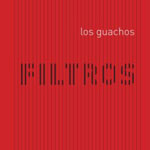 Guillermo Klein y los Guachos
Filtros
Sunnyside Records
Truly marvelous large-ensemble jazz in the vein of Maria Schneider—which is to say, in the vein of Duke Ellington and Gil Evans, thoroughly updated for the new millennium. The Argentine Klein's all-star guachos ("bastards") disprove decisively his president's exclusive association of jazz with the United States, though many of the bastards herein are American. Includes especially fine turns by guitarist Ben Monder and saxophonists Miguel Zenon and Chris Cheek.
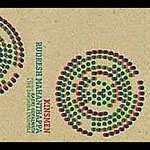 Rudresh Mahanthappa with Kadri Gopalnath
Kinsmen
Pi Recordings
Saxophone wunderkind Mahanthappa guilelessly fuses his intelligent post-bop jazz with the South Indian classical Karnatic tradition, in the person of Gopalnath, the "king of the Indian saxophone." The empathy and sympathy among the players in the Indo-American band ably symbolize the degree of fusion and collaboration: it's jazz, and it's Karnatic, all the time. The solos—from the leaders, but also guitarist Rez Abassi and violinist A. Kanyakumari, are thrilling.
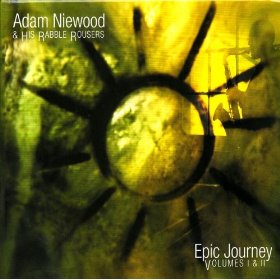
Adam Niewood and His Rabble Rousers
Epic Journey, Volumes I & II
Innova Recordings
A sprawling, ambitious two-hour set, with meticulous arrangements on the first disc and a coherent collective improvisation that lasts almost half an hour—and sustains interest throughout—on the second. Multi-reedsman Niewood's playing is a revelation, as is that of the warped Scriabin-meets-Bud Powell pianist Kristjan Randalu.
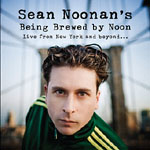 Sean Noonan
Being Brewed By Noon
Innova Recordings
A loose live set of Noonan's Brooklyn-based Afro-Celtic fusion, a big tent that houses singing in Gaelic, Wolof and Bambara, Mat Maneri's free viola, Marc Ribot's riotous electric guitar, and the leader's hyper-kinetic drumming. You might think this music is haphazard, on first hearing; you would be mistaken.
 Augustus Pablo
The Mystic World of Augustus Pablo: The Rockers Story
Shanachie
The music of late reggae producer and performer Pablo defies easy anthologization: Jamaican dub's modus operandi is the remix, the "version," and it's constantly surprising just how many versions exist of many of Pablo's songs. This endless reconfiguration of recordings is elevated in Pablo's case to a sort of philosophical questioning of the very possibility of definitive truth. That, and the ethereal quality of Pablo's melodica playing, make this music both mystical and destabilizing.  Aaron Parks
Invisible Cinema
Blue Note Records
The 25-year-old Parks deserves credit for trying, this late in the game, to rethink the piano trio in a creative but non-revolutionary way. He does so with production values and overdubs that would be at home on big-budget rock albums, electric guitar that might or might not be a solo instrument, and Eric Harland's witty nods to hip hop and rock 'n' roll drumming. It's all anchored by Park's strong, Kenny Barron-inspired playing.
 Todd Sickafoose
Tiny Resistors
Cryptogramophone
Like Parks, though even more successfully, Sickafoose seems to be trying to hew a new path in jazz, but in a sweeter and more populist way than the jazz revolutionaries of the second half of the last century. "'Black and Tan Fantasy' as played by the Beatles," he described his approach in an AAJ interview. Sickafoose's music may be very easy to listen to, but is reassuringly not easy listening.
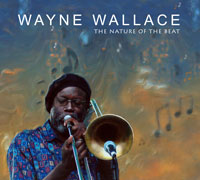 Wayne Wallace
The Nature of the Beat
Patois Records
Sounds like a party, but while it has all the joy of a party performance, party bands rarely play with this much precision and consistency. Wallace plays the trombone the way trumpeter Clifford Brown would have had he chosen the larger instrument, with soulful virtuosity. The set list—excellent Latin Jazz treatments of Earth Wind & Fire, Ray Charles, the Miles Davis Nonet and a couple of originals—is solid gold in this group's hands.
Tags
PREVIOUS / NEXT


Become a Sustaining Member

Since 1995, All About Jazz has championed jazz as an art form and supported the musicians who create it. Over three decades, it has grown into one of the world's leading jazz resources, serving hundreds of thousands of readers, musicians, presenters and industry professionals each month.
Help Build the Future of All About Jazz
Your support helps us continue building All About Jazz for the next generation—expanding our editorial coverage, preserving jazz history, developing new community features and creating better ways to discover the music and the people behind it.
Become a sustaining member for as little as $20 per year and you'll immediately enjoy an ad-free experience along with access to subscriber features and future articles for a full year.
Together, we're not simply sustaining All About Jazz—we're building its future. Thank you for being part of the journey.