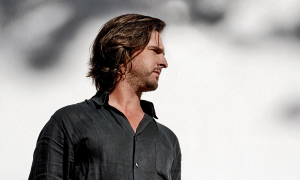
Home » Jazz Articles » Interview » David Weiss: Writin', Arrangin' and Playin'
David Weiss: Writin', Arrangin' and Playin'

You can't get to a higher place than you've been without trying all the time. You can't really change the world if you're happy and content ... You have to go for it.
He also plays the trumpet. Quite well, in fact. Although he's played with the likes of Jaki Byard, Frank Foster, Craig Handy, Christian McBride, Jimmy Heath and a great many others, people may come to know this more via a new group the ever-busy Weiss has put together. For Weiss, its time to play more horn. He's not disregarding other activities, because his name first got around because of his composing and arranging talents. But it's time to play.
One of his main groups, the New Jazz Composers Octet, has two new recordings out in 2008, actually. The Turning Gate (Motema Records) is another outstanding disk by the band of compatriots he put together in 1996. The group was set up to bring fine writing to the fore and it has done so superbly throughout its existence. Along the way, the group occasionally backs trumpet legend Freddie Hubbard, back on the scene after health problems lessened his gargantuan trumpet chops, but not his spirit.
Backing Hubbard, the band recorded On the Real Side (Times Square Records), which was also released this year. It features arrangements by the Octet members of some of Hubbard's best compositions, over which Hubbard plays flugelhorn. The band gets plenty of solo space as well.
Both recordings are produced by Weiss.
And in the hopper, so to speak, is a live recording from a new band assembled by Weiss, called Point of Departure. The group has already recorded music from sets at the New York's Jazz Standard nightclub and will be surfacing at some point. That music is looser, more free, more about taking chances.
The Octet
"The octet has been my flesh and blood for 12 years now," says Weiss. "It always will be important, as long as the guys keep writing and as long as still do some gigs with Freddie Hubbard. It'll still be there... I look at it more as—I'm schizophrenic and I have many personalities I have to keep happy. But a couple years ago, I said enough of this, I need to be a trumpet player. Whatever band-leading skills I have are still in there somewhere. But (the new band) is a lot more about my trumpet playing than anything else I've done."
In addition, recent years have seen him in Charles Tolliver's big band and with a group of strong veteran jazzers called The Cookers, that includes Billy Harper on sax, Eddie Henderson on trumpet, George Cables on piano, Billy Hart on drums and Cecil McBee on bass. So it's a busy time for Weiss.
The Turning Gate is the third album for the Octet, (not counting two discs with Hubbard) which doesn't do a lot of touring. It has done gigs over the years with Hubbard, and has appeared elsewhere on its own when the opportunity arises, but Weiss finds it difficult to book the eight pieces around New York City. That has not tempered his enthusiasm for holding the group together. The band consists of Steve Davis on trombone, Xavier Davis on Piano, Dwayne Burno on bass; E.J. Strickland and Nasheet Waits have played drums; Jimmy Greene, Myron Walden and at times Craig Handy are on alto and tenor sax; Norbert Stachel is on baritone sax and bass clarinet.
"The Octet is a unique thing. It's not something I want to let go," says Weiss.
He feels that writing is what has changed jazz over the years, and he is justly proud of the writing that goes into the New Composers Octet. Even though the paths of jazz history are marked by major soloists like Charlie Parker, John Coltrane and so many other greats, "it's composition that has changed it. It sets up the context for these guys to do whatever they're going to do to change the earth. Charlie Parker changed the planet, but he also wrote all that music that put it in the context of what he needed to do to be that amazing soloist. Ornette (Coleman), the same thing."
The band members write straight though the American jazz tradition and continually come up with fresh, interesting choices that make compelling compositions. Weiss says coming from that vantage point is important. "There's this malaise around the music now and people are looking elsewhere. Everything has to come from Israel or Cuba or Africa or anywhere else. It seems like the press, the powers that be, are looking everywhere else because the model that worked seems to be gone. Or you can't write about it. I don't know. A variety of reasons for where we got to where we are today. But writing is key. Writing is what changes it. As long as these guys feel like writing and the group's developing this thing, I want to keep it going. A: To keep the guys going and keep the group together. And B: Somebody's should be doing this. And that was the idea all along."
As usual, the writing on The Turning Gate is strong throughout. The rhythm section maintains a looseness, but arrangements carries the day. When the players step up to solo, they are fiery when the piece calls for it, or haunting and moody if that's the bent of the composition. It all comes together. Xavier Davis's compositions sparkle on the disk, as he contributes "New," a vehicle for Steve Davis' rich tone on trombone; the swinging "David and Goliath," and the extended "The Faith Suite," made up of four parts.
"Xavier's suite, that was a grant suite from Chamber Music America. That music got him another grant. So he's got another suite of that length that we haven't recorded yet," says Weiss.
"Part of getting a band recorded right is the ninth member, the recording engineer and the recording studio," in the case of the last two CDs it was Systems Two in Brooklyn, engineered by Joe Marciano. "The guy knows what we sound like. He knows what I'm going for. He works with me because I do a lot of the mixing myself. I know what the arrangements sound like and I know how I need to hear the five horns balanced and stuff like that. That part is still a lot of work. It's a lot of mixing work to get it to sound like that. It's not easy with that many horns... with five horns you have to be very precise about the balance of everything. It takes a while if you really care."
With Freddie Hubbard
On the Hubbard disk, Weiss, Burno and Steve Davis did the arrangements of titles familiar to fans like "Up Jumped Spring," and "Gibraltar." Lesser known, but strong tunes, like "Theme for Kareem," "Take It to the Ozone," and "Skydive," show not only the group's fine interplay, but excellent solos. Hubbard, once known for fast and furious trumpet work that has influenced legions of players ever since, no longer plays like he's on top of Mount Olympus. But he picks his spots with the flugelhorn and splashes in melodic runs of style and substance. Craig Handy guests on some cuts and Russell Malone plays a funky guitar line on the title cut.
"Freddie, obviously his chops are down. But he's always been a very melodic player," says Weiss. "It was good to get that group with Freddie because we'd been playing on and off for so long. That record captures the feeling of the group better than the first one (New Colors, Hip Bop, 2001)."
"Freddie's not 30 and can't blow the roof down anymore, but he was a great composer, is a great composer. This band has always been about the presentation—Freddie bringing out this band of young guys playing his great music. Freddie doesn't get that pass, unfortunately. It's kind of a sad thing. He played so well. It makes everybody else realize their own mortality. When Superman can't be Superman anymore. They're human too. Nobody wants to give Freddie a break and let him play enough with this presentation to keep his chops up where he can be consistent. He still plays well, he just doesn't play like that anymore. He doesn't have the energy for it. Nobody would.
"Nobody's played as much as he has on trumpet. Nobody's played that long, that hard, that fast, that high. It's ridiculous what he did. He can't do it anymore. But, fortunately, through our collaboration, he can present a great show. He wrote all this great material that's now flushed out in bigger arrangements. He's got a great band behind it. The bonus is, when he's on a great night he'll shock everybody. When it's not so great a night, he'll still play some nice stuff and he has a great band behind him."
He adds, "He's still legend and he's found a way to get himself out there in a significant way, I think."
Finding an Instrument
A lot of players get their reputations by first playing around the city, maybe getting a gig with an important jazz figure, then waiting for the word to get around. Not so with Weiss, a Queens native. He didn't plan it, but it turned out that writing and arranging is what mostly got his name into the important music circles.
Then again, growing up, Weiss didn't have a clue that he would end up as a musician.
"I grew up in Queens where everybody wore denim jackets or sweatshirts with Kiss and Aerosmith patches on them. I grew up listening to Kiss, Aerosmith, Black Sabbath, Led Zeppelin. I was always passionate about music. It evolved. I got curious myself. The rock stuff begat more progressive rock. Gentle Giant and whatever. European rock bands that had influences beyond rock and roll. King Crimson. I actually went to art school for photography first. The European stuff got more out and out. Then I got into avant-garde jazz. Cecil Taylor got me because he played with so much intensity."
Weiss started playing piano as a youngster, but preferred sports and obeying the parental edict to practice his piano was a chore. He wanted out, and suggested drums. That didn't cut it with the folks. Electric bass was another option. The situation was eventually worked out.
"The problem with the story is, I don't know how trumpet came up. I know it wasn't my idea. So I guess it was them. I think how they sold me on it, was that I was an athlete. Trumpet's a wind instrument and it will help me to run faster. I remember after my first trumpet lesson I ran down the street seeing if it made me run faster," he says, chuckling. "I guess that's how they sold me on it. I don't remember that pivotal moment of how trumpet got into the equation."
Kenny Dorham and Miles Davis were his first influences.
Weiss was taking lessons and playing in school bands, but not hearing jazz. His friends were listening to the electric rock of the day and he bought a synthesizer to play in rock bands in high school. "I'd bring the trumpet with me, just in case. But there was nothing to do with it."
"In my last year of high school, I started hanging out with some guys who actually turned out to be something. Like this guy, Michael Beinhorn, who has played keyboards with Bill Laswell. They were putting a band together and I played with them a little bit before I went to college. I think I played a little trumpet. I would bring it, and if there was something to do, I would play it. Then I went to art school for photography. I finally heard stuff that applied to trumpet and started playing trumpet again.
During his time in art school, he played in free jazz trio. "They had an electronic music studio and I was doing stuff like recording trumpet and making tape loops and experimenting with stuff. Then I came back to New York. I took a summer workshop at the Creative Music Studio. John Zorn was there. Frank Lowe. Leo Smith and George Lewis. All these avant-garde guys were coming through there. It was a lot of fun. Jimmy Guiffre lived up there. He would come by. He said I had some interesting ideas, but it's not a bad idea to listen to more harmony-based stuff too, so you have some more to draw on. He was so nice about it.
"There was a trumpet player there who played like Don Cherry. He really had his shit together. He was an out, experimental guy, but he went to North Texas State first, for a year. He never bothered to tell me there's nobody else like him there. [laughs] So I applied to North Texas State and went down there. It was all about big bands, but by that time, I was like, 'Fuck it. I'm here. It's music. Let me just stay here and make the best of it.'"
Weiss was now listening to a lot of jazz. "That's the jazz that was around. I bought this book "28 Modern Jazz Trumpet Solos" and I bought the records that the solos came from. That's where I heard a lot. A lot of this stuff over the years I did on my own. I didn't have much guidance along the way. The first Freddie Hubbard record I bought, I bought because he was in this "28 Modern Jazz Trumpet Solos" book. I remember putting it on and opening the book to the page, ready to play along with it. [chuckles] I couldn't play a note it was so fast and so intense. So I started working on that stuff.
At North Texas State, where he knew saxophonist Craig Handy, he was in a band learning, transcribing and playing stuff like Art Blakey's Jazz Messengers, Wayne Shorter and Joe Henderson. They gigged at a Fort Worth, Texas, club during the week.
New York City
"Then me and Craig (Handy) got in my 1972 Maverick and drove to New York. I'm from here, so I had a cheap place to live. That part wasn't so frightening for us. My second week, I ran into (trumpeter) Graham Haynes, who I knew a little bit. He set me up with a Jacki Byard big band gig. I got paid $7, or something like that. Then I met a trumpet player who was doing a lot of other gigs, so by my third week I was in a meringue band playing every weekend.
He also formed a band with Handy and assisted the saxophonist with music for the NBC series "The Cosby Mysteries," arranging the main theme for the show. Weiss began getting more calls for his arranging and transcribing skills. His work in that regard has appeared on over 80 CDs including those by Abbey Lincoln, Rodney Kendrick, Alto Legacy with Phil Woods, Vincent Herring, Antonio Hart, and a Rahsaan Roland Kirk tribute CD entitled Haunted Melodies, featuring Joe Lovano, Donald Harrison, James Spaulding and others.
He also began going to jam sessions at the Blue Note in New York, which eventually led him down a different—again, unplanned—path.
"At that point, Philip Harper was doing the Blue Note (jam sessions). Then he got into the Jazz Messengers and Winard Harper started doing it. He would use me for it. Then they put the Harper Brothers band together, so they were gone and I was getting to do the gig myself a lot. Winard needed material for his group. Guys were writing stuff, but there were also tunes they wanted to play.
"They heard I could transcribe. I started transcribing tunes for him and his group. Then they told somebody and they told somebody, and all of a sudden I'm transcribing for everybody. Then the transcribing turned into: 'We have more horns, we have different horns, could you arrange it?' So I started arranging. Then I would have to go to the studio with the material. I got to know my way around a studio. Then it was: 'Can you produce it?'
"Then, when I send the guys at Fresh Sound the first octet CD to see if they would put it out, they were actually very enthusiastic. They wanted to put it out. Three of four conversations later, they noticed I had a lot of great young musicians in the group. They wanted to record them. So I started producing them. Then I started bring them Jeremy Pelt and Robert Glasper and Marcus Strickland and producing their first records for Fresh Sound. All of a sudden I was a producer.
"I had no idea when I got in that '72 Maverick there would be any of that."
So, his contacts came through transcribing and arraigning, more than playing. He says, "I was still playing trumpet and going and sitting in. But I might have been the fifth guy they'd call on trumpet, but the first guy they'd call on all this other shit."
He notes, "At some point, I have to kind of cease and desist and change my perception out here. I really just want to play trumpet. But, on the flip side, I've gotten on some projects and next to some people that I would have never gotten to if it was just trumpet. So maybe some of that's OK. I don't know how it happened. It just happened... But as a producer, I really wanted those guys to get their first records out. So I was glad to be put into a position to be able to do that. Nobody, in the octet got rich, obviously. But because of this other stuff I do, I'm able to get them record dates and get them on stuff, open some doors, or whatever. It had its purposes."
"If you told me the day I moved to New York I was going to be an arranger, producer, transcriber or whatever. Booking your own gigs sometimes. I would have looked at you like you were insane. Things just kind of happened out of necessity. Or the music dictates what needs to happen or where it needs to go. I've never had a plan."
Writing for the Octet
The first time he ever wrote for five horns was the New Composers Octet debut. "I liked it. I remember talking about it with Dwayne (Burno), who had his own group and was trying to do stuff. I think he was the first guy to get signed out of all of us. He was working on his own record. They were all writing and I was talking to them about this expanded thing, saying we should check this out. I was working with Vincent Herring and Carl Allen. They had a production company. I worked for them, doing arranging and transcribing and coordination. Whatever they needed. This was at the height at the Young Lions thing. They were given money to produce a bunch of demos, because they wanted their own young lions. They through that to me and I produced all these demos. I heard great playing, but compositions are what struck me.
"Greg Tardy (an original Octet member) and Xavier Davis both did demos for that and the writing was great. That's when I started having the epiphany of: Let's do this. You guys start writing for it. We got together every week. We started trying out personnel. We settled on trombone pretty quickly. The drummer took about six months of different drummers before we landed on Nasheet. At that point it was more about seeing what the guys could do, waiting for the material and everybody experimenting and getting used to writing for that thing. Because none of them had written for an ensemble that large. They were all writing for their own groups, quartet and quintet.
"They took to it pretty quickly. It was a great time. Every week these guys would come in and we'd play and it was: Wow. At a certain point, I said maybe we should do a gig. I think our first gig was in Small's or something like that."
Weiss is contemplative when he looks his recording output, including that of the Octet. "Each record is different. It's a process when you start recording. You make your first record. It's the culmination of 20-something years of your life, everything you've written, everything you've done since you picked up your instrument. That goes into your first record. Then a year later you've got to make a second one," he says, laughing. "In one way, you kind of lose that fresh-faced exuberance. As that declines a little bit, everything you learned from making the first record—all the experience, all the stuff you learned about what works and what doesn't—goes up. One goes up as the other declines. But you're feeling about every record changes.He realizes listeners cannot be surprised all the time. Not each record can make big waves. But, "Sometimes there's a sense you crossed a big bridge. With the Octet, for me Walking the Line (Fresh Sound, 2002) was that record. That one, to me, was: Whoa! These guys—Damn! It's hard to duplicate that... Most musicians who go through all that, they all have that one record. They've decided, like I did with The Mirror, (Fresh Sound, 2005) I really like this music. I don't know if I'll ever pull this kind of writing off again. Let's make sure this record comes out right.
The Mirror was Weiss' second solo disc. In making sure to get it right, he went over budget. "I went out-of-pocket, made sure we were in a good studio, that we had enough time, and made sure everything was the best it could be. That record was a culmination... Usually we play the music for a couple years before it's recorded. At this point, when everybody is ready and chomping at the bit and you know it's going to be everything it's supposed to be, you want to make sure it's captured that way."
The Turning Gate was actually recorded in 2005. "We've all been joking about that. Frankly, I hadn't listened to it for a year. It was sort of mastered, but I wanted to go back and re-master it. I hadn't listened to it for a year. That's kind of a good thing. Your perception of what's going on in the studio can kind of cloud how the record really is."
The result, he says is strong. It's creative jazz that doesn't pull from World Music or exotic influences.
"I'm not going there. I have no interest. It's all great and it's all wonderful. It's all music. Everything should be judged on its own merits. For whatever reason, this doesn't get that all the time. Which is fine," says Weiss in a light-hearted way. "I tried to explain that to Myron (Walden) one time. 'You're different. You're not going to be recognized in your time. Get used to it.'"
Point of Departure
The Point of Departure group, which hasn't released its music yet, has been playing gigs in New York. On the live disk-to-be is J.D. Allen on sax, Nir Felder on guitar, Matt Clohesy on bass a d Jamire Williams on drums. They cover tunes like "Paraphernalia" from Miles in the Sky (Columbia, 1968) and the feel of the band is definitely different. Weiss' trumpet playing is more featured and he's not confined by a specific arrangement.
"It's absolutely the polar opposite of everything I've done in that way. I don't want to say I had a stick up my ass for 10 years," he says with amusement. "It's just a different conception. This is more about my playing. Some of the band leading things come through. There's a certain tightness to certain things that I can't let by. But I definitely had to let go of a few things during that recording. A lot of the other records were as much about the compositions or arranging as the soloing. The compositions were the emphasis. The soloing was great too, but it was about the writing. I did those records because I wrote stuff. There was a strong conception of what I thought things should be and where they should go. The rhythm section is still really loose."
He also is learning from the outstanding musicians with whom he plays. "Charles Tolliver is as regimented as anybody, but there's still a looseness to it. Certain things he'll never let go by, certain ensemble things or certain drum things. If it's not there, he won't use the take, or he'll think it's terrible. But he'll also do shit on the fly with us. He was always keeping you on your toes. If you screw up there—something out of tune or a note is a little cracked—but you're going for something in that moment, that doesn't matter to him.
"Playing with Billy Harper and those guys, (The Cookers) they are the most serious musicians in the world. I'm not saying they're accepting mistakes, but there are certain things where they feel the vibe is more important. What I'm going for is more important than whether it was perfectly executed or perfectly in tune. I took those kind of lessons to heart with that quintet."
With Point of Departure, "The vibe of this thing is definitely to go for the jugular, all out, all the time. With jazz in general, if you're not going for something all the time, or not afraid to go for something and miss, then you're taking something away from the music. Those guys just go for it."
Taking chances, says Weiss, is a necessary part of the music and its heritage. "You can't get to a higher place than you've been without trying all the time. You can't really change the world if you're happy and content. You have to be pissed off enough to try to do something about it. You have to go for it. If something special is going to happen with the music, you have to try something and you're going to miss (on occasion). Miles did that. He was an amazing trumpet player, but he went for something. He had a band that reacted to him and some nights it was the most special thing you ever heard in your life. But not every night.
"I've been playing with these 1970s guys, Billy Harper and Eddie Henderson and Billy Hart. They're always going for it. Really going for it. Sometimes I walk off that stage—all those guys are about 25 years older than me—and I'm the one that feels old. They're used to playing with that kind of energy and passion always. They never backed off. I talk to Freddie (Hubbard) about this musical life. We talk about the difference between then and now. Harmonic swing-based music. Freddie says, 'We were always trying things. Every time we played a tune, we tried something different.' Even with Art Blakey, which is a pretty regimented thing, they were always experimenting. They never approached something the same way every day or settled fort anything."
Weiss said some players coming out of college learn from records and listen to the greats, and have the technique. But they have to go further. Investigate more. "They hear Freddie Hubbard or John Coltrane play this scale over this chord and they go, 'OK. When you hear this chord, you're supposed to play this scale.' They're creating rules that they're not deviating from... But the next step is, 'OK, I got that. Now how do I fuck with it? How do I make it my own.' I don't know if that's happening as much. But those are the guys I'm looking for" to work with.
The Point of Departure group seems to do that on the bandstand, judging by the as-yet-released recording. And Weiss isn't worrying so much about writing.
"It's all other people's music. We made it our own. But a lot of that material is drawn from this obscure band, Kenny Cox and the Contemporary Jazz Quintet. He did two Blue Note recordings in the late 60s that have finally come out on CD. They were based in Detroit.
"It was very clear that most people in that era listened to the Miles Davis Quintet with Herbie (Hancock), Ron (Carter) and Tony (Williams). When that band was out there, any forward-thinking musician got their cues from that group, or their start from that group, or their approach to music. That group not only changed things for life, but changed things at the moment.
"The two records those guys (Kenny Cox and the Contemporary Jazz Quintet)... they were the first to do what many have done since, including Wynton Marsalis' first band. They heard the flexibility of Herbie, Ron and Tony—all the time changes and tempo changes and key changes and all the stuff, the elastic rhythm section stuff they did—and instead of just playing 'Autumn Leaves' and doing that, ...Those guys said: 'Let me write something that forces the rhythm section to do that.' Kenny Cox and those guys wrote some amazing material—stuff that Herbie, Ron and Tony might do in their sleep at any given moment—they wrote into the form of the tune. It was part of the composition. Time changes and key changes, that kind of stuff. As a result, the material was very opened-ended. It could go anywhere."
With this group and this music, says Weiss, "Anywhere there are cue sections, they go somewhere completely different every night. It's whatever the rhythm section dreams up. They come up with a groove, or they come up with swing. Each player plays a line and the rhythm section reacts. It just goes wherever it goes. If I don't like where it goes, it's another cue and you can get out of it. But basically, it's giving the guys carte blanch. They have to think of things all the time. It's on them. I play cues to go to another section... there are a few they fall back on. I don't say they never do that. But, it's that kind of thing: Play something and we'll all go with you."
Weiss also finds the quintet is easier to get into clubs, and less expensive to tour with.
"Even if the Octet CD sells a million copies, I'm still not touring the world with it. That's not what motivates me. Those are after-the-fact acknowledgments. Whatever I do musically, I do. Then when it's done, I have to look at the world I'm trying to put this into, then I have an epiphany. But it never effects how I approach the music. But it's clear to me now after a number of years that that's not going to be a viable touring thing.
"But the quintet will be. I like to travel. I like to play as much as possible... it's what we do and we're passionate about it. But more so, all we're trying to play more. Where we're trying to get to only happens if we play enough... Whatever light bulb is going to go off, whatever epiphany, or whatever magic is going to happen only happens if you play enough. Whatever we have to do, make sure we do that."
As his playing grows stronger, Weiss wants to keep it that way. So arranger and producer hats may be set aside a bit more often.
"I do like playing trumpet. I do like how strong I've been (playing). I can look in the mirror and say, since I made the decision (to play more), I'm a much better player. I always thought I was OK. Sometimes, it seemed like part time. Trumpet is a very physical thing. I'd do some great gigs and think I'm at the peak of my powers. Everything is working well, and then I'd get an arranging project and not touch the horn for two weeks. ...It's like going to the gym and getting in great shape and then sitting home eating doughnuts for two weeks and not moving off the couch, then get up and expect to do what you did two weeks ago.
"Every time I'd get back up there, I'd say I'm never going to let it happen again. I'm never going to take these writing assignments and let my stuff fall off. Obviously, it's all recoverable, but it still should be this shooting-upward thing. No valley."
The writing and arranging will, of course, go on. But for fans of good trumpet, there appears to be much more coming from this man with the horn.
Selected Discography:
Freddie Hubbard and The New Jazz Composers Octet, On The Real Side (Times Square Records, 2008)
The New Jazz Composers Octet, The Turning Gate, (Motema Records, 2008)
Charles Tolliver Big Band, With Love, (Blue Note Records, 2006)
David Weiss, The Mirror, (Fresh Sound/New Talent, 2004)
David Weiss, Breathing Room, (Fresh Sound/New Talent, 2001)
The New Jazz Composers Octet, Walkin' the Line,(Fresh Sound/New Talent, 2002)
Freddie Hubbard and The New Jazz Composers Octet, New Colors (Hip Bop, 2001)
The New Jazz Composers Octet, First Steps into Reality, (Fresh Sound/New Talent, 1999)
Tom Harrell Big Band, Time's Mirror, (BMG, 1999)
Bop City, Hip Strut, (Hip Bop Records, 1996)
< Previous
55 Years Of Jazz
Next >
Sanrei
Comments

Tags
David Weiss
Interview
R.J. DeLuke
United States
Jaki Byard
Frank Foster
Craig Handy
Christian McBride
Jimmy Heath
Freddie Hubbard
Charles Tolliver
billy harper
Eddie Henderson
George Cables
Billy Hart
cecil mcbee
Steve Davis
Dwayne Burno
Nasheet Waits
Jimmy Greene
Myron Walden
For the Love of Jazz
 All About Jazz has been a pillar of jazz since 1995, championing it as an art form and, more importantly, supporting the musicians who create it. Our enduring commitment has made "AAJ" one of the most culturally important websites of its kind, read by hundreds of thousands of fans, musicians and industry figures every month.
You Can Help
To expand our coverage even further and develop new means to foster jazz discovery and connectivity we need your help. You can become a sustaining member for a modest $20 and in return, we'll immediately hide those pesky ads plus provide access to future articles for a full year. This winning combination will vastly improve your AAJ experience and allow us to vigorously build on the pioneering work we first started in 1995. So enjoy an ad-free AAJ experience and help us remain a positive beacon for jazz by making a donation today.

Giveaway

Eligible winners: 15
Days remaining: 11
Days remaining: 11