Home » Jazz Articles » Interview » A Fireside Chat with Teddy Edwards
A Fireside Chat with Teddy Edwards

The middle Forties was the most creative period in history because everything was at its highest tempo. Everything was moving. The country was moving. People were moving across the country back and forth. Musicians were going from this band to that band. When they would draft guys, they would have to change guys and it was just a fantastic period.
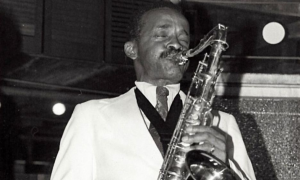
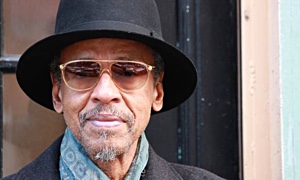
Teddy Edwards should be a legend. But then there would be justice in the world and justice is something beyond comprehension these days. I will allow you to experience Teddy on your own. It is Teddy and the Roadshow, unedited and in his own words.
All About Jazz: Let's start from the beginning.
Teddy Edwards: Well, my father was a musician and my grandfather was one of the early acoustic bass players during that time. Sometimes the band would rehearse at our house and my mother and my grandmother would get my little chair and sit me right next to the saxophones. They would have been very disappointed if I hadn't turned out to be a saxophonist (laughing). Someone that lived at our house played saxophone and his altitude for playing was very low, but he taught me what he knew. He was honest. He said, "I don't know anything else to teach you." I started studying with him when I was eleven years old and at twelve years old, I was playing with one of the local bands at home. I was around music all the time, music in our house in Jackson, Mississippi. That was my home. I went to Detroit in 1940. I stayed there for about four years and I had a death in the family and ventured back down to Jackson and ventured down into Louisiana with a group from home.
The leader was drafted and they made me the leader. I was the youngest one in the group, but I was the one carrying it and attracting the attention. We ventured down into Tampa, Florida. Youngsters used to stand outside just to meet players, Cannonball and Nat Adderley. They (Cannonball and Nat Adderley) were too young to come in the place (laughing). The Ernie Fields' Orchestra was in town to play a dance and they would have a few days and so some of the guys in his orchestra heard me play and they went back and told him about me and he came and asked me if I would join his band. I told him that I was getting ready to go to New York because my father had told me to go to New York. Ernie told me, "We're going to Washington D.C., so you just ought to work your way on up with us and you would have more money when you get to New York." I said, "That makes sense." We got to Pensacola, Florida and the next stop was over in Louisiana and started getting further and further away from New York (laughing).
AAJ: Did you finally make it to the Big Apple?
TE: Oh, not on that trip, Fred (laughing). I made it as far as Wilmington, Delaware. I got that close. We played a theater in Baltimore and we played a dance in Wilmington. By that time, how should I say it, I developed sentimentally toward the guys and I was stuck there for a while. But anyway, we had a gig in Lincoln, Nebraska and the next gig was in Los Angeles at the Club Alabam. That was around late November of '44. That was my introduction to Los Angeles. Incidentally, Fred, I played my big orchestra at the Central Avenue Jazz Festival, just across the street from the Dunbar Hotel, where I stayed the first night I came to Los Angeles. Anyway, that is how I got to Los Angeles.
AAJ: Let's talk about those Central Avenue sounds.
TE: That was the scene in America. Everybody was thinking about 52nd Street, but the Central Avenue was the scene. When I arrived to Los Angeles, we got to LA around three o'clock in the morning and there were people all over the street everywhere. They had after hours clubs going. Everything was happening. Everybody wanted to know. Just like you asked me about Central Avenue, people have been asking me that every since because the newspapers here were not caring about the music because the bebop thing was making a change. 52nd Street was about three blocks. They had music from about 118th Street in Los Angeles, all the way to First Street, with clubs. On one block on Central Avenue, where I first worked at the Alabam, they had the Alabam,
Dynamite Jackson's next, and then the Downbeat on the corner was my favorite jazz club that I ever played in. And across the street was the Last Word. There was music on 56th Street, a lot of music around Vernon and Central. An old movie actor had a place where Art Tatum used to hangout every night. After he would finish his gig, he would go to Lovejoy's and play until daylight. Then there was Jack's Basket Room. That is where the guys really used to get together, Wardell (Gray) and Dexter (Gordon) and Lucky Thompson and Sonny Criss or Hampton Hawes. It was really happening. It held two bandstands. We would jam there after we got off work with our regular gig. That was about two thirty in the morning and it would probably go until six or seven o'clock in the morning. Then across the street, up the street, there was another club that went all night. Across from that was the Lincoln Theatre. But you see, Fred, what happened was the War was in the Pacific during this time. Everything was moving west, except the writers. They stayed in New York. The only one that came out here in early 1946 was Leonard Feather, who finally came out here. We didn't have a jazz magazine here during that time. So they had a couple of newspaper writers that had respect for the music, but they didn't have any support.
Then over on Avalon Boulevard, they had the Casablanca club and Caf' Society and another place down on Jefferson. There were some classic works that played through there. The Casablanca, Frank Morgan, the alto player, his father eventually bought the place and that is where Charlie Parker played his classic solo on "Lover Man" one night, or one morning rather. Then on First Street, there was the Cobra Room, where I worked Roy Milton when I first left the Ernie Fields' Orchestra and came back to California, back in January of '45. Directly from there was the Rendezvous, another after hours club. I used to play with Roy Milton until two o'clock or two thirty and go across the street and work the Rendezvous. Right in the middle of the club was the Finale Club, where Howard McGhee had his band. We had a reed section of Charlie Parker and Sonny Criss were the alto players. Ironically, that building is the only building that is still standing on First Street today. I just showed it to somebody recently when I went down to the City Hall, where they honored some of us. They gave us certificates for our time we've been spending through the years making music in Los Angeles. On First Street and Los Angeles, now that is where Gerald Wilson had his big orchestra upstairs and Eddie Heywood's sextet was downstairs. They had two groups playing there. Then you go to Hollywood, Billy Berg's there on Vine Street, that's where Charlie Parker and Dizzy first played when they came here. Billie Holiday played. He booked all kinds of big named artists there and broadcast every night for thirty minutes every night live from Billy Berg's. Right up the street was the Radio Room.
Then before you get there, there was the Empire Room, a big room. In that same block was the Hangover, a Dixieland place. Music was all over and nobody was recording it. In fact, Fred, the Smithsonian Institute wanted to do a thing about Central Avenue and they could not find one photo of a front of a club. They could not find one photo. If you had a photo, it would have been worth a lot of money. Then on Hollywood Boulevard had the Jade Room and then had the swing club where I had my first gig with Howard McGhee. Howard McGhee came to play at Billy Berg's with Coleman Hawkins and he wanted to stay in California and so he persuaded me to play the tenor because he wanted a tenor instead of an alto. I was playing lead alto when I came here with the Ernie Fields' Orchestra. So that is when I started playing the tenor.
AAJ: Let's touch on your collaborations with Howard McGhee.
TE: We were the first ones playing bebop in California, even before Dizzy and Charlie Parker came. We were the first bebop players in California. I had first met Roy Porter, the drummer, who played "Ornithology" with Charlie Parker. He was the drummer. We had a pianist and a guitar and Howard and I were the frontline. We had another tenor and when he joined the band, it became three horns in the group. It was a really good sextet. Once Charlie Parker finished his engagement at Billy Berg's, he wanted to stay out here for a while and so Howard and I decided to have four saxophones. That is where he made his classic solo on the "Gypsy," during his nervous breakdown, just before he had his nervous breakdown. We were in front of the bandstand at the Finale Club and a couple came over to Howard and asked him if he would play the "Gypsy." So Howard turned around to the band and asked, "Does anybody know the 'Gypsy?'" And Bird said, "Yeah, I know the 'Gypsy,'" and played his classic solo. When they were recording, he was in the middle of his nervous breakdown. I see all the alto players around the world playing the "Gypsy," and I think, "Wow, if they only knew why they are playing the 'Gypsy.'" He introduced it to the jazz world even though he was sick. His nervous breakdown was not a mental thing. It was a case where he was trying to kick his drug habit without any medical attention. He lost control of his nerves, just nervous. It was like his arm might fly out and his head turn around and he might run two steps and walk one. He just had no control. I would ask him, "How do you feel Bird?" And he would say, "I'm OK. I'm OK."
I used to take him down to the theater, to the movies. That was the only way he could rest. The movie soundtrack would let him go to sleep. He managed to go to sleep when the music would turn on. The last night of the Finale Club, we took him to the hotel, which was only a half a block away. We told the manager if he had any problems to call us. About ten o'clock the next morning, he called and said that Charlie Parker was in the lobby nude and to come down there right away. We got up and went straight down there and when we got there, they said that they had taken him to the General Hospital. I know in Ross Russell's book (Bird Lives!), he says that he was the first one to the General Hospital, but that is not right. Howard, he and I were the first ones on the scene in the hospital. They had him strapped down on this couch and he was very clear. He used to call me Teddy Bear. He said, "Teddy Bear, go to the hotel and get my horn and my clothes." Howard went to go with us and that is how clear he (Parker) was in his mind. We had many wonderful, wonderful times. I heard him (Parker) play some of his greatest solos. I was sitting beside him.
When he came to an apex, more of less, before he went down, he played eight bars on this song, "Idaho," and everybody in the place gasped. Most people there didn't even know who he was, but everybody gasped. From there, he went down. Everybody was here. Erroll Garner was here. He was playing at the Suzie Q's, right across from the Swing Club on Hollywood Boulevard. At Billy Berg's, we used to let Frankie Laine play to get rid of him. He had one black suit (laughing). Six months later, he came back a big star after he had that big hit (laughing). So many things were happening, Fred, music, music, music, music. They had everybody. Dexter was here. Wardell was here. It was just music, music, music. There was nothing being written about. People all around the world want to know what was happening on Central Avenue.
AAJ: You recorded The Duel with Dexter Gordon.
TE: Right, that was in 1948. It was after he and Wardell did The Chase! together. Wardell and he did The Chase! first and then Dexter and I did The Duel and on that particular date is where I made my million seller, "Blues in Teddy's Flat." It had the crossover market, the blues and the jazz market. I got forty-one dollars and twenty-five cents.
AAJ: That's it?
TE: That was it. Russell (Ross Russell) from Dial had moved to New York and he wouldn't even answer my letters. I didn't know the record was a big hit until a guy told me that he couldn't even find the record. He was like the cheerleader at the jam sessions and whoever he touted would become the big star of the week. He was one of those guys. He had the front seat at the jam sessions. I made this record by accident, more or less. Dexter and I were supposed to play a ballad each and do The Duel. So we did The Duel and it was Roy Porter on drums, Red Callender on bass, and Jimmy Rowles playing piano. It was Jimmy Rowles' earliest record dates.
He told me that that recording changed his whole life. What happened was that Dexter recorded "Talk of the Town" and in those days, they were going direct to disc. Dexter would get to the last note and it was sounding good to me and he held the last note, held the last note and so we had to go back and do it again. So he took up most of the time and only had five minutes left. The producer, Eddie, told us that we only had five minutes left and said that we didn't have enough time to go through our ballads. So he said that we just play some blues until we give you the signal to turn it off. So I just told the guys that I would make the four bar introduction by myself and then, in the second twelve of the blues, give me some start time and then I doubled up and Jimmy Rowles couldn't find the piano and Red Callender couldn't find the bass (laughing). Jimmy told me, "Man, that changed my whole thing." He didn't know anybody could do that. I was very fast. I was very fast with my fingers. Anyway, this "Blues in Teddy's Flat," I thought Dexter had the contract on it and he thought I had it and neither one of us had the contract on it. It was about three years later that this guy that I was telling you about, he came to me and said that I should be in good shape by now. I said, "What are you talking about?" And he said that "Blues in Teddy's Flat" was in a jukebox and it was a standard order because every time it would run wear out for three years because everybody plays it automatically. He said that he had a list of ten people in his apartment waiting on him to find the record. He said that I should have an apartment building or big car and everything else and a big bank account. I went down to a big music store at the time and sure enough, they told me it sold all day. There were two elderly ladies buying records and they told me to just stand 2here and so when they got ready to check out and then he put the needle down on "Blues in Teddy's Flat," and before it got through the first twelve bars, they said, "We'll take it." They said that it had been going on ever since I made the record. They are still buying it today.
Rhino Records put it out in a package of Central Avenue. It was on four or five different labels that put it out, but I never received anything but that forty-one dollars and twenty-five cents for my million seller. In fact, Fred, that is how Prestige came about. Bob Weinstock and Ira Gitler were working for Ross Russell and my "Blues in Teddy's Flat" was selling more than the entire Dial Records catalog. In fact, Ira Gitler showed me the place on 48th Street and they said, "That is where we sold a million copies of 'Blues in Teddy's Flat.'" In '52, Bob Weinstock wrote me a letter and said that he was starting a label called Prestige and the guys are doing the first record for me free. I just pay for the studio time and then, the next record, you get paid and so he sent me a fifty dollar check to pay for studio time and he said, "I want you to make me 'Blue in Teddy's Flat,' number one, number two, number three, number four, and number five." (Laughing) I sent him his check back. That is how he got into the business. We have had some many wonderful times here. We had some big bands here, Gerald Wilson, Benny Carter. I worked with Benny Carter. They had a lot of bands play the big clubs like the Palladium and all the ballrooms. There would be like Stan Kenton and all the other bands. I started up at the Lighthouse in '49 and the soloists from the big bands would come down and play.
Getting back to Central Avenue. That was the place. Ever since Central Avenue, the jazz scene became diluted and went down and down. The farther west it got, the farther it got away from the point. Central Avenue had the movie stars like Eva Gardner. All kinds of people would be on the Avenue because it was happening. There wasn't anybody getting mugged. It was just everybody having a good time because everybody had money because the War was here. All of the servicemen were in town, getting ready to be shipped out to the Pacific. People had money and everybody was working and families were moving this way to see their brothers and sons off. It was just swingin.' Every night, it was like Marti Gras.
AAJ: What happened?
TE: Well, when the War ended in '46, it shut down. It went down the drain. I was in San Francisco with Howard and when we got back to Los Angeles, the bottom had dropped out that fast. I was there for six weeks. We were in San Francisco for six weeks.
AAJ: A month and a half.
TE: Yeah, and the bottom fell out because the War ended. The bottom fell out. We got back and nobody was working and the clubs were shutting down and there were some rough years, from '47 to '48. Wardell and I, Sonny Criss, we were splitting ten dollar gigs. I would come play on the gig with them or they would play with me. It was just for a little ten dollars. It was album money. The bottom really fell out. And then it picked up a little bit later on, but it never got back to that level. The only way it could be to that level again would be a War and we can't stand a World War III. The country was at its highest tempo during that time. That was the most creative period in music, clothing, dancing, and everything. The middle Forties was the most creative period in history because everything was at its highest tempo. Everything was moving. The country was moving. People were moving across the country back and forth. Musicians were going from this band to that band. When they would draft guys, they would have to change guys and it was just a fantastic period. It can never happen again. It was not written about.
AAJ: When jazz historians refer to West Coast jazz, they are making mention of white musicians like Chet Baker, Russ Freeman, Dave Brubeck, Shelly Manne, Art Pepper, and Gerry Mulligan.
TE: Well, let me explain something to you, Fred, on why that came about. You see, Dick Bork at Pacific Jazz, Wardell Gray and I made his first record for him for free. He brought a trumpet player up to Salinas, California. He was a hippie type guy, who could play little on the trumpet, but somehow, Dick Bork wanted to record him. I did a five saxophone arrangement for one of my songs called, "Before Dawn," that he recorded and that was his first venture into recording. Later on, when he decided to start Pacific Jazz label, I was working at the Lighthouse. I was the star of the Lighthouse. I'm the one that made the Lighthouse big. I worked there from '49, up until '52. He came down and he chose guys out of the group and didn't choose me. I couldn't understand it. I said, "I'm the star down here and he's going to overlook me?" He chose mostly white players. I hate the term, black and white players, but that's reality. He didn't use any black players.
He used Chico Hamilton because Chico Hamilton made the first record with Gerry Mulligan and Chet Baker on speculation. They gave each one of those guys their own record date after that and then they got paid. Then he used Buddy Collette on a couple of things, but other than that, he didn't use any of us and we were over here hitting hard on the Avenue and on the east side and the west side. He didn't want the hard players. He wanted the soft players and I think the reason for that was most of the records coming out of New York were black musicians, the jazz records, except a few like Stan Getz or Zoot Sims, a few exceptions. I think he was trying to use that as an antidote to the way they were doing music back there. I have told people through the years that jazz from the East was heavy and black and out of the West was light and white (laughing). We were here, Fred. We were playing. In fact, I went unrecorded for ten years. Some of my best years, I went unrecorded. I went unrecorded from '48 to '58.
I made only one record in between there and that was with Clifford Brown and Max Roach. I came back here from San Francisco and Max asked me to come and finish the engagement at the California Club and that is where we recorded "Sunset Eyes," my most famous composition. I wrote it in '48. That has been my classic. In fact, I just recorded it again, recently with James Moody and Oscar Brashear and it is coming out in October. He had a great collection of people on this recording, Kenny Burrell, Cedar Walton, Willie Jones, Jr. III. Moody played the hell out of it.
AAJ: What label will that be released on?
TE: Mack Avenue Records, coming out of Seattle. It's Stix Hooper's record label and he has got a song with Shirley Horn, Jon Hendricks, Ernie Andrews. He has got a great compilation of people on this recording. He is very happy about it and should be released some time in October.
About Teddy Edwards

Tags
PREVIOUS / NEXT


Become a Sustaining Member

Since 1995, All About Jazz has championed jazz as an art form and supported the musicians who create it. Over three decades, it has grown into one of the world's leading jazz resources, serving hundreds of thousands of readers, musicians, presenters and industry professionals each month.
Help Build the Future of All About Jazz
Your support helps us continue building All About Jazz for the next generation—expanding our editorial coverage, preserving jazz history, developing new community features and creating better ways to discover the music and the people behind it.
Become a sustaining member for as little as $20 per year and you'll immediately enjoy an ad-free experience along with access to subscriber features and future articles for a full year.
Together, we're not simply sustaining All About Jazz—we're building its future. Thank you for being part of the journey.