Home » Jazz Articles » Interview » Dennis McNally: Cultural Catalyst
Dennis McNally: Cultural Catalyst

Erudite, self-effacing and good-humored, Dennis McNally occupies an unusual and deceptively significant place in contemporary culture.
 Erudite, self-effacing and good-humored, Dennis McNally occupies an unusual and deceptively significant place in contemporary culture. Modest to a fault, he would no doubt deny the description of his role as a catalyst in contexts including The Grateful Dead's business partnership with Rhino Records or the remaining band members' support for Barack Obama's presidential campaign.
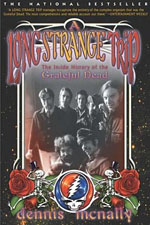
McNally made a proud name for himself by turning his doctoral dissertation at the University of Massachusetts, Amherst into a published biography of Jack Kerouac. The subject and the style of Desolate Angel: Jack Kerouac, the Beat Generation, and America (Random House, 1979) ultimately connected McNally with Jerry Garcia, founding member and titular head of the Dead, who suggested that he write a similar history of that unusual band. McNally accurately captured the life and times of the Grateful Dead in all their kaleidoscopic glory. There is arguably no story of a rock band more full of twists, turns and colorful characters than A Long Strange Trip: An Inside History of The Grateful Dead (Broadway, 2002).
In an irony fitting the idiosyncratic tales of the band, McNally had to place his work on the book on hold when he was tapped—again by Garcia in an offhanded suggestion during a band meeting—to function as the Grateful Dead's publicist. From 1984 through 1995, when Garcia passed away, Dennis McNally was an integral part of a business that refused to act like a business except when it had to.
Nevertheless, the demands of commerce often caught up with the Grateful Dead. They tried to run their own record label in the '70s, then partnered with Rhino Records for a series of archival projects, in the wake of the group's disbandment. During this time, McNally continued to fulfill a vital role, but after the Dead/Rhino collaboration became official in 2006, McNally became truly independent, and claims to have never been busier.
Chapter Index
- Grateful Dead in Egypt 1978
- The Dead Live On
- McNally Solo
- Tribute to Jack Kerouac Live
- Deadheads for Obama
Grateful Dead in Egypt 1978
All About Jazz: The Grateful Dead's recordings from Egypt in 1978 are interesting, to say the least...
Dennis McNally: I would've liked to have been there. Unfortunately, I was not an insider at the time. I found out about the whole Egypt trip by reading about it in the paper in San Francisco.
AAJ: Did you ever get a chance to talk to any of the band members about the experience? It seemed like the band was in the midst of culture shock from the stimulation of the trip, setting up for the shows and playing them.
 DM: They were in the midst of a lot of things. Keep in mind, Donna Jean [Godchaux, Grateful Dead vocalist] and Keith [Godchaux, Grateful Dead keyboardist and husband of Donna Jean] were going to leave the band in four months, so they weren't in the best shape. Billy [Kreutzmann, Grateful Dead drummer] had broken his hand, so he was playing one-handed. The keyboard wasn't tuned. The original plan had been to finance the thing by putting out an album, but that's why they bagged that as a result. That's why Jerry [Garcia, Grateful Dead guitarist/songwriter/vocalist] said, "We can't put that out."
And in general, I think, they only played so-so. Over and above all that, it was almost like being back at the Acid Tests [late 1960s events organized by Ken Kesey's Pranksters, at which the Grateful Dead often played, immortalized in Tom Wolfe's The Electric Kool-Aid Acid Test (Farrar, Straus and Giroux, 1968)]. The setting was vastly more important than doing a show. It was a show, but they were a little distracted.
AAJ: Playing there and the music itself was part of a vast experience.
DM: Right! They'd never been to the ancient world. Not one of them. They'd been to Europe a little, but Europe's Europe. For starters, when you travel to Europe as part of a rock and roll tour, you're inside a bubble and that intrinsically limits it. Besides, although it's wonderful to go to Europe, it's our heritage—it's only one step removed from being in America.
I had the great privilege of going to India—which was my first chance to go outside of the United States/Europe last year—and was able to be in places, standing there looking at things two thousand years old. We don't get that here, much less the five thousand years that the pyramids are.
AAJ: That being said, the music did have that sense of them channeling the whole experience of being in the shadow of the pyramid.
DM: It was an amazing experience, but if you ask Bob Weir [Grateful Dead rhythm guitarist/vocalist/songwriter] about it, the main thing he remembers is the mosquitoes and the bats. The band was getting chewed to pieces by mosquitoes because the Pyramids are down by the Nile River...
AAJ: The only oasis around.
DM: Right, so just when he was about to freak, it got dark enough so that the bats—which come out of caves in the area—came out and started eating all the bugs, and saved them. Egypt was a distinct slice, so the band remembers that.
class="f-right">Return to Index...
The Dead Live On
AAJ: What have you been doing since Grateful Dead business began being operated through Rhino? When that agreement came into play, were there effectively no more Grateful Dead operations?
DM: That's quite correct. They represent Grateful Dead interests and, although there are some really good people there who I like a lot and work well with, they are certainly not interested in keeping me in the loop. I still haven't gotten an Egypt package.
AAJ: Do you have regular interactions with the some of the people at Rhino?
DM: People still relate to me in the role I had for so long, so I refer people to them. And I still work with a lot of Grateful Dead radio shows and, fortunately, the radio guy at Rhino is a big fan and will certainly listen if I make a request. He does his best to accommodate. So I deal with them from time to time but they've got their people that they work with directly—Blair [Jackson] and Gary [Lambert] at the website—but I'm not one of them.
AAJ: When the Rhino agreement was in process, how involved were you?
DM: Not at all. [Laughs.] I never did business negotiations for the Dead; I did other stuff.
AAJ: The band's mindset was, if it's not too simplistic a phrase, "Let somebody else take care of it," but did they have an overriding principle or mission statement that they delivered to Rhino?
 DM: Well, they always retain quality control. And Rhino does not do projects without consulting with the band through their business guy Tim Jorstadt. They did want somebody else to do it. They felt it wasn't making any economic sense to keep the merchandising wing going and the production company [Grateful Dead Productions]. So, yes, they wanted somebody else to do it. But they certainly didn't want to just dump it. Clearly, they have retained an authority.
AAJ: Rhino projects always seem to be put together like the ultimate fan would put them together, if given access to memorabilia and this and that.
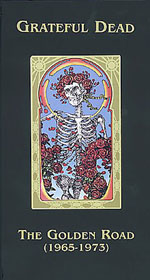
DM: Oh, yeah! In fact, ironically, I started—having no clue, of course—the relationship with Rhino in the early '90s. James Austin, who was one of the real early movers at Rhino, came to me because he was doing a box set on The Beat Generation (Rhino, 1992). I wrote a book about Kerouac and he wanted Jerry to write an introduction to the booklet. And the reason Jerry invited me to be the Dead's biographer was because he liked my Kerouac biography—Kerouac was his childhood hero. So I said, "That makes sense," and I went to Jerry and he says, "Sure, man!" So he did that and it established the relationship. In the early 2000s we did the huge Golden Road (1965-1973) (Rhino, 2001) and various big box sets with Rhino, all of which were quite successful. That led to Rhino, being part of Warner Brothers...
AAJ: Ironically enough!
DM: Ironically enough—Warners is always part of their history—to becoming the licensing acting agent for the Grateful Dead.
AAJ: Was there hot competition for that?
DM: I gather. I would go to the office and people would say, "We got this...we got that..." I wasn't involved, but I would say hot competition.
class="f-right">Return to Index...
McNally Solo
AAJ: Did you take any time off once the Dead operation ceased to be?
DM: I did not. I'm an independent music publicist—too darn busy to work on the book I want to work on. Right now I have seven clients, which frankly is too many. I'm going bananas [Laughs] but that's the way it goes. I've never been busier than I am this fall. I'm working with Bobby, I'm working with Donna Jean, I'm working with Little Feat, I'm working with Michael Falzarano, who used to be in Hot Tuna, I work with Boris [Garcia], I work with The Subdudes. And I'm working on a very special, very interesting project. It's Dead-related in that it's a computer company who bought a software program that was designed by a guy named Tom Paddock, who worked with Jerry as a sound guy. Paddock has created a software program that dramatically improves digitally compressed sound. We all love our iPods—the convenience the portability, et cetera—but no one, or few, would say, "Oh this is as good as CDs," much less as good as analog. And he's done something very special that you'll hear more of in the coming times.
AAJ: Did these clients that you mentioned come to you? Did you solicit them—let's say Little Feat?
DM: Bob Weir's then-management team was Cameron Sears, who was the last manager of The Grateful Dead, and John Scher, who was the tour coordinator for the Grateful Dead on the East Coast from the early '70s on. After Jerry died, John and Bobby talked about and created the first "Further Festival" [1996]. Phil [Lesh, Grateful Dead bassist] said, "Eh, I'm retiring," at that time. (He later changed his mind, obviously. He is free to do that.) Bobby wasn't ready to retire, so he and Mickey [Hart, Grateful Dead percussionist] and John started talking about "What do you want to do?" and they wanted to do a summer tour and that was the Further Festival. John and Cameron managed Bobby for a long time and eventually got involved in Little Feat and I came along as a part of the package.
The Subdudes? I got with them because two years ago they had a CD out called Behind the Levee (Back Porch-EMI, 2006) which got a lot of radio play and was getting a lot of buzz. The promo person at the record company was going, "You know, this absolutely is cost-justified. We need to get some more tour publicity and I don't have time. Who do I get?" And he mentioned this to a friend [Jack Barton], who is now my business partner—a guy at Friday Morning Quarterback, which is a trade paper for radio people, and he said, "Well, it's a comfortable fit—you should get Dennis McNally because he's been doing tour and road publicity for 20 years."
That's actually a funny story because I had never seen The Subdudes and never heard them. And although I knew the name, somehow in my addled brain, it sounded like a punk band to me. So they called me up and said, "Would you consider doing this thing? We'll send you the music." I always want to hear the music, so they sent it. It's hilarious—it takes me three listenings before I am sure about a recording, even with Grateful Dead songs. There have been a couple of notable exceptions—the first time I heard "Scarlet Begonias," (which was live in the spring of 1974 before the album came out) by about the second chorus, I'm going, "This is a masterpiece." But by and large, I'm slow. I put on the Subdudes CD and listened, and literally halfway through the third bar, I'm thinking, "I can work with these guys! Great!"
AAJ: What a great feeling that must have been.
DM: Really! They have such wonderful stuff. So I worked with them for a couple months and they couldn't afford to pay me direct, so they got a new record company and the record company said, "Yeah, we'll do some tour publicity in the fall leading into this CD next spring." So I'm working with them again.
Donna Jean, I actually technically co-manage, which is a joke—my partner does all the numbers and handles the headache stuff and I do publicity like always. Same with Boris—I theoretically co-manage him with Jack, but realistically... And Michael's an old friend. I love Hot Tuna. I met him, then we got Boris or Donna Jean involved with a New Riders [of the Purple Sage, originally a Grateful Dead offshoot] gig and all the musicians really hit it off and then there was a Rex Foundation [charitable organization founded by the Grateful Dead and friends o give grants to worthwhile causes, in memory of the band's soundman/tour manager Rex Jackson, who died in 1976] event in Washington. They became interrelated and Michael saw what Jack and I were doing and eventually, he came to Jack and said, "I'm putting out this solo album which is called We Are All One (Woodstock Records, 2008). Would you guys like to consult and work on it?" And we said, "Sure! We love you!" which we do—Michael is one of the really, really nice, even-keeled musicians on the planet.
class="f-right">Return to Index...
Tribute to Jack Kerouac Live
AAJ: You participated in a Jack Kerouac tribute by Bob Weir's band, RatDog, in Lowell, Massachusetts last August. How did your participation in that show come about? Was that your idea, Bob's, or someone else's altogether?
DM: Actually it was the idea of a guy named John Marciano who is a state park ranger. Downtown Lowell is a national historical site. The industrial revolution began in America in Lowell. It was originally a utopian town—utopian in the sense that it was planned, created from scratch in effect, and it really was built to accommodate the industrial revolution. There was a waterfall there, so they had power to drive the mills.
What happened was Marciano books concerts. They have a small park that's in between this row of preserved mills, and next to it is this building that is part of the park, which was the dormitory for the workers who worked in the mills. It's called Boardinghouse Park. It's a very nice little scene—it's got a very nice built up stage that's got a trolley behind it that was our backdrop. Marciano contacted us about two years before, because Bob's written songs about Neal Cassady. He has a fundamental connection to that whole world and because I'm a Kerouac biographer, there's this double connection.
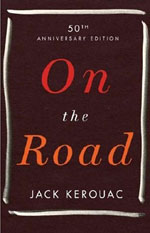
2007 was the 50th anniversary of the publication of On The Road (Viking, 1957). The original manuscript—the scroll of the book—was purchased some years ago by Jim Irsay, who owns one of Jerry's guitars, who also owns the Indianapolis Colts (pro football team). I must say I applaud his stewardship, because for a year-and-a-half to two years, the scroll was on a nationwide tour, as it were, on display. Coincidentally, I was in Florida and it opened in Orlando, where Kerouac had been living at one time, and it spent the summer and fall of '07 in Lowell and December in the New York Public Library. On the Road was published in mid-September of 1957.
So Marciano said, "The scroll's coming; can we book a special show with Bob Weir and RatDog?" And so I went to Bob and said, "Does that appeal to you—doing something that's really oriented towards Kerouac?" and he said, "Yeah, I like that idea." So then I went to the management who works with the bookers, and eventually they come to an agreement on a date that works logistically in the summer of '07 and we could do the gig. And everybody's happy.
Marciano says one of the things he wanted was to play Dead tapes, and I vetoed that because this was not the Dead, this is RatDog—how do you think they'd feel about that? No musician plays himself before he goes on! I said, "What you want to do is play Kerouac. He was a wonderful reader; play tapes of Kerouac." They wound up doing that at intermission. And Marciano wanted to interview Bob on stage before the show, talking about Neal. I said, "Talking about Neal he probably wouldn't mind." And Marciano asked about me participating and I said, "Well, I don't know. I'm willing." So I went to Bob, and he said, "I'm willing to do something different than the average show." I went over this with Bob any number of times and he went, "Absolutely. No problem." [Laughs.]
So we're traveling into New England on day one, the show in Lowell was on day three and day two we're at Gathering of the Vibes [annual music festival begun in 1996 to celebrate the music and audience of the Dead]. So on day one, we land in Newark and we're on a bus on the way up to stay in Connecticut preparatory to the next day. I say to Bob—for perhaps the fifth time—"Now remember, when you write your set list for Lowell, you can't play "The Other One" or "Cassady" at Gathering of the Vibes. And, if you're willing to work it up, it would be cute to throw in "On the Road Again," and he went, "Yeah, we could do that."
The thing about Bob is, it's a matter of focus; you can tell him something five times and if it's not important at that moment, he'll nod, but it's not as if you're getting his full attention. So this Friday night on the bus, he says, "Oh yeah, you're going to read. That's cool, but let's hear what you're reading." So I read and he critiqued it a little bit. I had an idea of doing it at intermission and he went, "If we do it that way, we'll kill the acoustic part [of RatDog's second set]." So he said, "Can you break it up? And I said, "Fine, we read at intermission, just backed by piano."
I had it organized a different way where, one by one, each of the band members would join—which was a little fancy and would've required rehearsal, and there was no time for that. Besides, once he paid attention to it, in typical Bob fashion, he set it up perfectly. You think he's not paying attention, but he really is that good. He said, "You read the first half with Jeff [Chimenti, Ratdog keyboardist] backing, which is great, and then the band comes on and does a couple songs, and then goes into 'The Other One,' and in the middle of 'The Other One,' I'll bring it down." Which left me with, "Oh god, I hope he doesn't forget me." So I read a good part and they go into "The Other One" (and it was great version—they stretched it like crazy) and he drops down quiet so I can read over them, and I read the last three pages of On the Road.
And, if I do say so, I hate listening to my own voice, so it was three months before I listened to the recording from that night. I thought I caught the rhythm pretty well. So On the Road ends: "As I sit on the docks of New York and I look at the sun doing down over New Jersey I think of Neal Cassady, I think of the father that we never found, I think of Neal Cassady."
Everybody's happy and I got a very nice round of applause and I'm walking off the stage and they go back into the second verse, which is "Cowboy Neal at the wheel/On the bus to never-never land." So it was wonderful! It was great being part of the show and, as I said, I got what I angled for, which was not me participating—though that was great fun—I got a RatDog show that was not like any other RatDog show, and it connected with legitimate roots that are very much part of the history of the Grateful Dead.
AAJ: Absolutely. It was a great concept and great execution.
DM: It was amazing, if I may say so, and if I could interject another comment—I'd been in Lowell before the previous fall, but it was a typical gig day. I never left the motel, as I was working my ass off. So this was the first time I'd been in Lowell in thirty-one, thirty two years. The last time I'd been in Lowell was in the summer of'75 or '76—I can't even remember—when I was researching the Kerouac book, and then I left for California. I finished writing the first draft in 1976 and then immediately left for California.
And let me tell you something: in the summer of '76, in the mid '70s, Kerouac was not greatly respected in Lowell. And, in fact, Lowell was economically flat on its back in bad shape. Some of the stuff, like the park downtown, was part of an overall economic resurgence for the city and a resurgence of the attitude about Kerouac because there's a big memorial to him now. It was amazing to come back to Lowell and to see the Kerouac celebration. When I was there in the '70s, every window in those mills was broken. They were hulks, they were abandoned, and Lowell was a grim gritty depressing place, to be honest—pretty tough. It was startling and quite wonderful to see it looking great.
AAJ: In 2006, the local paper in Lowell ran an interview with Louie Perez [drummer/guitarist/songwriter and singer for Los Lobos]. It just so happened it was two weeks in advance of their latest album called The Town and The City (Hollywood, 2006), which is also the title of Kerouac's first novel). Most of the interview he did with the local paper had to do with Jack Kerouac and how his writing influenced Louie as a songwriter.
DM: I had no idea about that. I know Louie because we toured with Lobos and they are great guys; I loved hanging out with Steve Berlin. But there's a conversation I missed.
class="f-right">Return to Index...
Deadheads for Obama
AAJ: Were you involved at all in the arrangements for the concert in support of Barack Obama?
DM: No, because that's a Dead thing and I don't work for The Dead. I was initially involved. To summarize a fantastically hilarious story, though—a long time ago, I got deeply involved with Deadheads who worked in Washington DC. There was what I perceived as a potential crisis, so I decided consciously, as the Dead's publicist, to find ourselves some political allies, and over the course of time we developed some allies, some friends in Washington.

AAJ: Is U.S. Senator Pat Leahey from Vermont one of them? [Laughs.]
DM: Pat is our favorite. Pat is—in addition, to being an extremely well-respected politician and person with whom I agree on most things, but by no means all—he's absolutely one of the more genuine human beings that I know. He's real—really real, which is hard to believe that you could stay that way after twenty years in the Senate.
Anyway, as a result of all those connections, I introduced Bob to Senator Obama's chief of staff this summer, and out of that that evolved Deadheads for Obama. Did you see the listing for the October 13th benefit concert? It's all individual names, because to list it as "The Dead" or "The Allman Brothers," that's a corporate entity and if they work together, that's called bundling and that's illegal. How the Republicans get away with it, I don't know! At any rate, it's tremendously complicated [to arrange such a concert] but I'm very happy and I truly hope we can save our country.
AAJ: It was so gratifying to see how Bob showed up and played with Phil at the Warfield shows this May. I thought that was great because they have had their philosophical differences over the years
DM: You could say that!...
AAJ: But the fact they can still enjoy playing together is a great sign of faith in music.
Selected Bibliography
Dennis McNally, Desolate Angel: Jack Kerouac, the Beat Generation, and America (DaCapo Press, 2003)
Dennis McNally, A Long Strange Trip: The Inside History of the Grateful Dead (Broadway, 2002)
Jack Kerouac, Desolation Angels (Riverhead, 2007)
Jack Kerouac, On the Road: 50th Anniversary Edition (Viking, 2007)
Jack Kerouac, The Town and The City (Harvest 2007)
Jack Kerouac, The Dharma Bums (Penguin Classics Deluxe Edition, 2006)
Selected Discography
Grateful Dead, Road Trips Vol. 1 No. 4 (Grateful Dead/Rhino, 2008)
Grateful Dead, Rocking the Cradle Egypt 1978 (Grateful Dead/Rhino, 2008)
Los Lobos, The Town and the City (Hollywood, 2007)
Grateful Dead, The Complete Fillmore West Recordings 1969 (Grateful Dead/Rhino, 2006)
Grateful Dead, Beyond Description 1973-1989 (Grateful Dead/Rhino, 2004)
Grateful Dead, The Golden Road 1965-1973 (Rhino/Warner Archives, 2001)
Photo Credit
Susana Millman
Tags
PREVIOUS / NEXT

Become a Sustaining Member

Since 1995, All About Jazz has championed jazz as an art form and supported the musicians who create it. Over three decades, it has grown into one of the world's leading jazz resources, serving hundreds of thousands of readers, musicians, presenters and industry professionals each month.
Help Build the Future of All About Jazz
Your support helps us continue building All About Jazz for the next generation—expanding our editorial coverage, preserving jazz history, developing new community features and creating better ways to discover the music and the people behind it.
Become a sustaining member for as little as $20 per year and you'll immediately enjoy an ad-free experience along with access to subscriber features and future articles for a full year.
Together, we're not simply sustaining All About Jazz—we're building its future. Thank you for being part of the journey.