Home » Jazz Articles » Interview » Jack Reilly: Making the Most of the Gift of Life
Jack Reilly: Making the Most of the Gift of Life
The goal is to get beyond, go to something fresh and new. I think you have to walk through the eye of the needle to do that.
 After nearly three-quarters of a century, Jack Reilly's career is hardly in need of queries from one more interviewer—questions about his past associations, his musical history or his previous recordings and accomplishments. These have been fairly well documented. The accomplished and well-traveled pianist/composer, though undeniably obscure to the general public, has made an indelible mark in both the classical and jazz worlds—especially through his ability to marry two seemingly disparate musical styles, classical and jazz, in ways that continually bring out the best of both traditions while creating an exciting new music greater than the sum of the constituent parts.
While the record attests to what the man has achieved as a musician, composer and educator, it gives sparse insight into the human being, and it does little to add to our knowledge of what drives this enigmatic yet extroverted, energetic artist to create and keep on creating. His body of work is a virtual kaleidoscope of musical choreography, moving tonal pictures that dance from one brilliant idea to the next. That his musical reputation remains a surprisingly well kept secret seems more an injustice to the listening public who care about creative music than an insult to the music's maker.
Reilly's musical pedigree boasts an impeccable lineage that includes studying with the iconoclastic Lennie Tristano, as well as studies and a tour with the master of modal music and the Lydian concept, George Russell. Both innovators have obviously left their mark on Reilly, who is quick to credit their influence on his own music as well as the unique vision of each. As a young man growing up in the New York area, he was also strongly influenced through his first-hand observation and close associations with such seminal jazz giants as Bud Powell and Ben Webster.
Like most pianists of the "late" bebop period, his exposure to the work of Bill Evans added another dimension to his playing as well as to his approach to harmony and chord voicings. Reilly recounts with relish his meeting Evans as a fellow serviceman at the military music facilities at Washington, D.C. School of Music. He also reveals that his music is equally the product of his love of classical music of all eras and of his never- ending quest to thoroughly understand the intricacies the musical language of all major idioms. From jazz and classical traditions, Reilly blends two distinct styles into a seamless stream of musical ideas that follow logical and yet delightfully serendipitous, unpredictable paths. His performances offer the listener excitement without pandering, his concerts tending to play more like dance performances than a ponderous concerto or portentous jazz improvisational work.
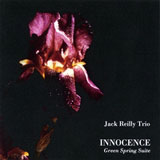
Reilly's recent bout with life-threatening prostate cancer (2002) proved a life and career-defining moment that he used as the source for yet another musical journey. His recent Innocence - Green Spring Suite (Unichrom, 2007) is a series of compositions that Reilly wrote as a tribute and expression of gratitude to the team of medical and spiritual people who helped him through this most difficult time of his life. Despite this singular achievement, Reilly continues to be a man in motion, as though determined to maximize the potential of each of the extra seconds that has been given him. In 2002 he was commissioned by the Keweenaw Symphony Orchestra to write and perform his piece "Orbitals," a concerto for jazz-piano trio and symphony orchestra. He also continues to record in the traditional solo piano, jazz trio and jazz quartet formats—both in the studio and in regular live performances throughout the United States and Europe.
As his role educator, Reilly has created a three-part lesson plan, Species Blue: A Method for Jazz Piano (Unichrom), which by one student's account is like a "musical conservatory education in a book." Additionally, he has gone further than practically any other musician with the music of the last half-century's most influential pianist, methodically analyzing the techniques of Bill Evans in a book titled The Harmony of Bill Evans (Hal Leonard, 1994). Over the years Reilly has taught countless students including contemporary pianists Bill Charlap and Kevin Hays.
Ralph A. Miriello spoke with Reilly at his southern New Jersey home via telephone.
All About Jazz: Well, Jack you have certainly had a long and illustrious career. Were you a child musical prodigy?
Jack Reilly. Prodigy is not the word. I took to music...I did not resist music lessons. My mother was a teacher. She graduated a conservatory of music and was quite accomplished.
AAJ: Did your parents encourage your musical development or was it self motivated?
JR: I had heard jazz early on maybe eight or nine years of age. We always had the radio going, it was an oversize RCA Victor. There was much jazz played on the stations. When we had dinner as a family the music was going and I heard early jazz; I was born in 1932, so the Swing Era was hardly underway then. I heard a lot of Bix Beiderbecke, Louis Armstrong and that kind of settled in my ear. There was one particular [song].... I think it was Beiderbecke, and ran from the dinner table, tripped over a chair, broke my nose and made my way to the piano and was glued to a till the song ended!
 AAJ: You grew up in Staten Island in the shadows of lower Manhattan. Did the proximity to the Mecca of jazz have any early influence on you?
JR: It did in the sense that they had live musicians playing. I heard Art Tatum live, I heard wonderful DJs promoting the music; but the proximity was not as close as we think. I had to take a ferry to get to Manhattan when I was a teenager. That's when I started, at about sixteen, to answer your question about self motivation. The music took precedence over everything else.
AAJ: You have mentioned getting into jazz club galleries as a young man and seeing, up close and personal, the likes of Bud Powell and other legends. At what age did you start taking an interest in these live performances?
JR: Interestingly enough, on Staten Island they had Sunday afternoon sessions at club where you could sit as an underage [patron]...you wouldn't have to worry about being ousted because you weren't drinking. A friend, who lived around the corner from me, Joey Cetani was his name, played all styles that were prevalent at the time. From the early boogie-woogie style, to stride, all the way to the block chord style of [George] Shearing. Joey invited me over to his house to come and play and study, because I was taken with his playing. We both loved [Lennie] Tristano. In fact, Lennie Tristano, was the first major pianist that actually drew me in before [Bud} Powell and [Charlie}Parker, the bebop school, which was going on at the same time. I was fifteen or sixteen at the time.
AAJ : It is well documented that you took lessons with Lennie Tristano. What so intrigued you about what he was doing on the piano initially?
JR: I would have to define his style and that's impossible. It was esoteric, it wasn't the bebop school, it was somewhat more outside of the normal harmonic patterns when he improvised. He had an uncanny sense of rhythm that was different from the bebop players. [With] the quintet, of course, he was surrounded by [saxophonists] Lee Konitz and Warne Marsh, who were influences in my teens.
AAJ: Tristano is often considered to have dissected the music into its most technical aspects and in doing, some say, it lost some of its spontaneity. Yet he is quoted as saying "It would be useless for me to play something I don't feel. I wouldn't be doing anything. If I played something that I'd have to impose on myself, I wouldn't be playing anything good."
As a former student what is your take on this apparent dichotomy of thought about Tristano's approach?
JR: That's a great question, because he used to say to me during lessons, "Don't play it unless you feel it." Feeling is connected to thinking. He was a thinker and to me it didn't come out intellectual or cold as some other listeners would define it. To me it had tremendous feeling and that's what attracted me in the very beginning; the unusual compositions that he wrote over standard songs, most of them, and also the freeform or spontaneous playing that they did as a group.
 AAJ: I was under the impression that even when they did that [freeform] they practiced it precisely?
JR: No, they didn't. I read several books on Tristano, one was a dissertation by Jack McKinney, who was on WBAI [radio] for years and worked for Savoy Records. Jack did his Ph.D. on Lennie, and he was nice enough to lend me a copy of his dissertation, which was about three hundred pages. He said in his book, and he talked to Tristano as well, [that] they would play gigs and do this [freeform improvisation] on the gig, not to work it out but to experiment with it. They would start something and just go from there. I don't know for sure, I never asked Lennie myself, as a freeform player I don't do that and I don't think Lennie would have either.
AAJ: Do you think Lennie Tristano is under-appreciated, and if so why?
JR: I think he is and I think it's partly because his style is esoteric. It's so unlike the music of the time or even of what we like to think of as jazz. It might be too subdued for some ears. To me it's not, it's very exciting. I guess you would say it takes a little willingness to develop a taste for it like good wine. For me I liked it right away.
AAJ: Its interesting that on some levels he is revered as a tremendous innovator and yet on other levels there are those who feel there is no soul to his playing. How do you account for this dichotomy of thought?
JR: I don't understand that at all. He worked out at the piano all kinds of chordal concepts; left-hand, he called them, constructions where the left-hand learned every possible chord in all their positions. [He would work on] inversions; every possible permutation of a chord that goes with jazz. There's nothing new he invented, he just worked out a system or way for him to become very free with that aspect of piano playing. The left-hand. That's also why it was so different from the bebop school.
AAJ: Why do you think he eschewed the rhythm section more than most pianists?
JR: That's a good question. I always wondered that. You mean make them just play time and didn't want to hear the drummer?
AAJ:. He apparently didn't look for them to interact with him. Scott La Faro would probably not be a good match for Lennie.
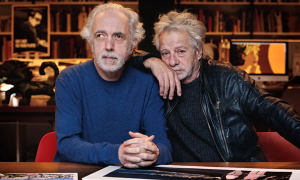
align=center> l:r Jack Reilly, Dave Green, Steven Keough
JR: No. In fact, when Paul Motian played—he played once and Lennie told him to stop all the other stuff and he was quite annoyed and I don't know if he lasted the week or not, it was at the Half Note, and he had come in to sub for somebody. He stayed a few days but I don't know if he was ever invited back to play with Lennie.
To get back to your first question, I think that Lennie had so much going on in his head that anything that was not just strict time would interfere with the way he wanted to express himself at the piano. That's just a wild guess maybe on my part. I understand that as a pianist. Drummers can ruin you as a pianist. It's such a delicate position to have, in a trio especially.
AAJ: You ran into Bill Evans while you were both in the military. How did your exposure to Evans affect you at first?
JR:I heard him practicing at the U.S. Navy school of music where we both were [stationed]. I just heard a joy in his playing and a totally different linear melodic sense. It still was connected to the bebop school, this was 1951, before he even recorded. That caught my ear right away, and as soon as he recorded I bought the record and I wore it out. The Riverside, New Jazz Conceptions (1956). I heard him as a complete musician, one who was technically complete and who had a harmonic sense. Everything he did sounded right to me. I was not intimidated; I wanted to absorb it and so I listened and listened and listened. At one point after the Portrait in Jazz (Riverside, 1959) album, I started to try to play in the spirit of his style.
AAJ: You were obviously smitten by Bill. Your first recording, Blue Sean Green (Unichrom, 1968), clearly has an Evans-like approach to the trio format, and some voicings reminiscent of his work, but it is clearly from your own source. You subsequently did a detailed study of Evans approach in your book The Harmony of Bill Evans. What do you most credit Evans for in your own development?
JR: The inspiration to being a complete musician. I love classical music, so I never stop studying that and I went into [studying] the contemporary schools of classical music. It was his unusual sense of swing and choice of melodic notes. He was an introspective person, but in his playing, to me, he was extroverted. You have to be introspective to get as deep as he did and that's what inspired me about his playing
AAJ: Your musical journey has taken you down many paths. You gigged in the downtown jazz clubs in the fifties and sixties. During this period who was the most exciting artist you played with and what made playing with him or her so exciting?
JR: In the late fifties I played in clubs where I'd have to accompany singers. I was hired for jam sessions on the off nights in different clubs. It happened to be a singer, Sheila Jordan, I started with her in 1959. Sheila was one, we kind of connected right away, she did great tunes and she liked the way I played behind her. I worked with her a long time.
AAJ: Many musicians shy away from studio gigging, claiming it to be a compromise. Others embrace it as just another way to keep playing. What is your take on the studio scene for an accomplished but dedicated musician?
 JR: That's a touchy question. If you continue with studio playing or commercial playing when you're trying to break into your own expressive jazz playing, I think it's a big conflict and I think you're kidding yourself. There's a point when you have to say no. If you have to do it for a living, you do it. I don't know anybody that came out of the studio career and turned to jazz and has made it. There's no chance of developing your jazz artistry or your unique voice as a jazz artist.
AAJ: What did your time with the Radio City pit orchestra or as the musical director for the David Frost show, That Was the Week That Was do for you musically?
JR: Radio City gave me experience reading for one hour these piano parts that have to be played exactly. That was a challenge. After five shows in one day, I was a regular sub but I wasn't the main pianist, so I didn't have to play that all the time, that would have driven me crazy.
[David Frost's show] was a challenge also. I love theater and I love actors who are creative. His troop, most of them were from England, and they [would] come over here and I worked at what is now the Bottom Line, [or what] used to be. I came in to relieve Ray Bryant who was the regular pianist, who just didn't want it. Sheila [Jordan] recommended me to the actors and I came in and it was fine.
AAJ: How did you transition from being a jazz pianist, a studio musician and a teacher to being so prolific as a composer who tackles the challenges of composing for a full orchestra?
JR: Composing sort of filled in when I didn't practice or when I was inspired. I wasn't like, say, Elliott Carter, who gets out every morning and writes for four hours, has lunch and writes another four hours. There are composers like that. The piano was my expressive instrument and I'd compose, maybe like Chopin, through the piano. So I would be practicing, then I would suddenly get an idea and maybe I'd write it out. The larger works started in 1968, when I wrote my Requiem mass. I had Sheila in mind to do certain parts of the mass. I was just drawn to the larger works only because [of] being a classical musician. All those large choral works from Mozart to Verdi; Brahms, especially Brahms, my whole body shakes when I hear a certain part of the Brahms Requiem, so why not a jazz Requiem? The oratorio was a commission by the National Endowment for the Arts and the orchestral and piano concertos were commissions. It's exhilarating.
AAJ: If you could turn back the clock would you have concentrated more on the composition of classically oriented pieces at the expense of the jazz, or are the jazz and improvisational aspects of your work inseparable?
JR: Inseparable; a one word answer. There were incredible periods when I hated jazz, then I went all out the [other] way and I stopped classical music and played the jazz, but I never hated classical music. It's a schizophrenic period that I went through. I actually threw away all my old 78 Dial records of Parker [and others]. I don't know what to call it—a stage of depression? Being an artist in a society that doesn't appreciate it, I don't see that as a limitation anymore.
 AAJ: Your concerto for jazz piano trio and orchestra, as well as the commission to create "Orbitals"—and even the Innocence - Green Spring Suite, that you wrote and performed as a tribute to the people that assisted you through your bout with cancer—all have a decidedly classical flavor to them. They play like a dance to music .Is this forging of styles what you find most intriguing now musically?
JR: I kind of did that from the beginning and I wasn't conscious of it. Everything influenced me, and if the classical is more prevalent or more obvious it's because that's where my heart is. I love the larger forms and in jazz there's no [equivalent] to the piano taking its place in the symphony orchestra, like the piano concerto. In a sense, I tried to—I was inspired to—eventually do something like that, where it was coming from my whole jazz background and my whole classical background to make it work; as they say in Günther Schuller's sense, a Third Stream music. It wasn't conscious; I just wrote the music where I knew how to break out into the musical improvisation, but it grew out of the music as I wrote it. It was not forced at all.
AAJ: As you mentioned, others have tried to create a Third Stream, as Gunther Shuller coined the term. Bird with Strings (Columbia, 1950); Gary McFarland and Steve Kuhn's The October Suite (Impulse!, 1966), done with a string quartet; and recently Bill Mays and Marvin Stamm's Fantasy (Palmetto, 2007), with piano, trumpet and cello. Have you any favorites that you feel do a noteworthy job in this cross genre?
JR: No. Maybe Mingus's "Revelations," from the great Brandeis University concert. The reason I say that is because I don't think anyone you just mentioned is a real composer in the terms of classical sense. I don't think [Duke] Ellington was one, although he had his own way of writing for the big bands. His choral work, I didn't like it at all. I thought it was patchwork. You might say the same thing about some of my choral works.
Schuller is off-the-wall with this. He doesn't have a clue. He's a wonderful, fantastic composer. I didn't think [McFarland's October Suite] was deep enough. I don't think Gary McFarland had enough understanding of classical [music] to make a marriage. Schuller is a fantastic classical composer and conductor and musician of the highest order, if anyone is underrated he is, but to call his opera, "The Visitation, a jazz opera is a joke. The only thing that is related to jazz or that you could hear, because I went to the premier, you heard a bass part that sounded like Ray Brown and that was it. I'm sure it wasn't his idea to call it a jazz opera. It's a very difficult piece to warm up to. In [Bird with Strings], Charlie Parker played great, but the part that was written for the strings was just corn.
AAJ: Are you concerned that by trying to meld the two forms of music into a so-called Third Stream, you may alienate listeners from both camps and wind up with a depleted audience?
JR: I believe you will alienate your listeners if that's what you want to do in a patchwork sense, from classical to jazz, and come up with something. It won't have any depth for me as a listener and you would alienate your audience if that's all you did. It sickens me that now classical pianist are coming in and trying to play jazz, and they're getting notoriety and I know what they sound like before I hear them.
 AAJ: Your music has been characterized as being somewhat cerebral. Would you consider it specialized or elitist or do you see it having mass appeal?
JR: I see it as having mass appeal. It's not cerebral at all other than having to listen and be very aware of what you're doing when you write. First comes the inspiration with me. If it's a large work it's harder, because it's harder to see the end. With a song you have thirty-two bars, forty bars; that's easy. Some of my music is only eleven measures, yet it's complete. It's a challenge to improvise in eleven measures, playing it over and over. "Orbitals," the piano concerto, was the biggest challenge of my life.
AAJ: It has been said that improvisation is the instantaneous art of faithfully translating musical ideas formed in your head to actual sounds played on your instrument. Exceptional improvisation is accomplished by freeing yourself from the confines of your musical history to the extent that you must create—not copy or emulate from what you have heard before. Is this a fair statement?
JR: It's spontaneous certainly because that's what improvisation is defined as, but it's the art of sitting down with your instrument and inventing something for the moment. It's not something that you see ahead. You go with the flow. The idea at the moment. The more you know, the more you're accomplished on your instrument; to me the higher and deeper you can go when you start to improvise. If you want to divide improvisation to modal, tonal and atonal, then you have three different periods of jazz and classical music to draw on. Yes, you kind of draw on the spirit of each era when you improvise. I'm thinking as a pianist. The goal is to get beyond, go to something fresh and new. I think you have to walk through the eye of the needle to do that.
Lennie always said, "Don't worry if you play something that someone already played, that you've heard and it comes out like Parker or it comes out like Earl Hines, don't worry about that. You have to go through that." I just thought of that now; I haven't thought of that for thirty or forty years. That advice stuck with me. Guys would learn stuff and they think they're improvising and they're not. I know some well-known up-and- coming young lions, pianists who don't move me at all but they're fantastic players. None of them did do a freeform thing. They just play the song form.
AAJ: As a teacher, how do you instruct your students how to best accomplish this?
JR: Very slowly. When they approach improvising, whether it's blues form or boogie-woogie up to swing or even Lennie; he played a blues, a Requiem for Charlie Parker ...pretty far out. Whether it's the American popular song or whether is free form... I start with teaching them how to hear a melody and the second note takes you to the melody. If you hit one note there's emptiness; as soon as you hit the next note you have to take it somewhere. That's what you start teaching someone—how to create spontaneously, whether it's on a chord progression or scale or the interval you just played.
align=center> l:r Jack Reilly, Steven Keough, Dave Green
AAJ: If, in fact, real improvisation can only be achieved when the artist frees himself from the collective musical memory of the past, then is freeform jazz the only genre that truly creates with no attachment to what has been played before?
JR: No. I can teach you how to improvise on a song that's very free. Where you are not as locked to the harmonic structure, but you could also absorb the whole—Lester Young or Coltrane or Stan Getz style, and you [would not] imitate it, but play the spirit of that and it can be different, it can be really satisfying to you. The artist always looks to go further. If you can imitate a certain style yet be free within that and not play the same patterns all the time, it doesn't interest me, but people do it.
If you ask me has improvisation slowed down composition, I would say no. Improvisation is what it is and composition is editing. Improvisation has not slowed down composition, and a lot of big names say they're composing. They are not. They're improvising. That may be a semantic closet. Composing is a slow process. It's an ongoing meditation period as the piece evolves and as your vision comes to light on the paper, then it comes to life when it's played. I believe a composition is stillborn until it's played.
AAJ: If music, at its core, is a means of communicating ideas and feelings, then when you perform are you communicating to both your fellow musicians and to the general listening public?
JR: Yes, if you say they're communicating feelings. They're musical ideas. If you tie it to a spiritual or religious idea, or a political idea, then you lower the whole expression, the expressiveness of music. Yes, if you communicate first with the players than it carries to the audience.
AAJ: What are you trying to communicate and is it intentionally multi-layered to address these two different listener expectations?
JR: For the musicians, I don't think it is. For the listener, it is. It's multi-layered for the listener, because if he goes to hear the artist seven nights a week he'll get another message the second night, then the third night. Recordings for the buyer can be the worst experience because you're hearing the same things over and over.
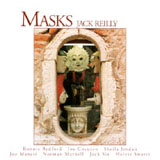
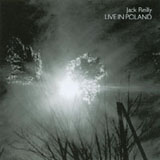
AAJ: If one album sums up the eclectic nature of your musical interests it's Masks (Unichrom, 1998). In this compilation you combine performances from many different venues, taken over a period of several years, and encompassing a musical variety that includes vignettes of stride, bebop, third stream, avant-garde and even church music into this one recording. Who were you trying to reach with this recording?
JR: An agent! I didn't put it together that way. I want to put out a record and I started with the Requiem back in 1969. I always recorded a lot of my concerts some with professional engineers. So yes, it is a picture of me as to where I still am musically all over.
AAJ: I have noticed in your work a tremendous ability to create unpredictable lines from seemingly predictable melodies, while keeping the listener involved and always somehow tying the variations back to the melody. Is this all the result of some formulaic methodology that you employ or is it a spontaneous creation from your mind's eye?
JR: It's the composer in me. It's like looking over the music from above. It's my sense of balance has a composer and my sense of variety never wanting to repeat thinks twice. I heard "Halloween" from the first album [Blue Sean Green] and, in all humility, I am quite amazed at the improvisation section that I breathe in and out. I heard it recently and I said, "Man that's fresh still!"
AAJ: Some artists believe that jazz music has basically run its course; that there is nothing new or innovative since Ornette Coleman and Don Cherry. Some say it is filled with a plethora of retro players, playing the hell out of the music, but with no real innovation. Has jazz as a musical form run out of new and innovative ideas?
 JR: If you define jazz as a small group [format] and that's what we were talking about, then I think in that sense yes. The art of jazz in that sense has run its course. If you are talking about the song form, the American a song, yes. To me, I have composed within that framework, of that structure, thinking a melody that is singable and I've come up with [something]; that's pretty standard. If you're jazz player there is always a challenge to make the improvisation "From This Moment On " or on "My Funny Valentine"; I still play that [song]. I have worked on that for years and I try to break away from the form that [Richard] Rodgers had. I don't destroy what he had; I try to enhance it with a certain progression, so it challenges me too.
When I say there is no composer that has married classical and jazz [that] well, I would like to think I have achieved some [success] with that. Rodgers was a song form composer, so his greatest songs will last. Jazz players who compose something on top of "All the Things You Are" harmonies; to me that is a cop out. Parker did it and Lennie Tristano did it all the time. When you think like the composer and come up with a structure that has an appeal to jazz players, [then] they're challenged by it. "My Funny Valentine," to me I shied away from it for years because of the opening—descending bass lines you can't get away from. "Everything I Love," by Cole Porter, I reworked. If you read the piano chart, it is the simplest thing in the world. When I first approached it I said, "Oh wow." I sat down and tried to re-harmonize it. I did it and put it away for years. I took it out and played it in London for the last couple of years and it is totally different.
AAJ: Who best represents a new direction in the music today to you?
JR: That's hard. I say George Russell right off the top of my head. He has a very special kind of vocabulary; so developed out of his theory, the Lydian Chromatic theory. I studied with George, too. It was about four lessons over two years. Because I had to learn what was in each chapter.
AAJ: Was Russell the one who got Miles Davis to play Kind of Blue (Columbia, 1959)?
JR: No, Bill Evans did. Bill had the whole modal thing down, and Miles knew and Miles learned from him. George's modal thinking is totally different. His thinking, you might say, is diametrically opposed to anything that jazz players have to face. His theory makes it easy to superimpose scales over chords. There's no tonality in George's music. There's no key.
AAJ: Despite your prolific and accomplished career you remain relatively under the radar to the mainstream listener. To what do you attribute this?
JR: As I look back now, it's partly not having the network, [like] where a major label is behind me. I had to do it all myself. It's not that I didn't play in public a lot. Since I've gone out of my way to get my name in the trades it's slowly coming around.
 AAJ: Of all the students that you taught is there anyone that particularly stands out as someone who has found a distinctive voice on the instrument?
JR: Most of my students do find a distinctive voice and don't become as famous as Bill Charlap, but he was a student of mine in his teens. He had already shown a lot of finesse [before coming to me]. He was with me weekly. I don't like to say he has his own voice because of me. The way I teach, as I said before- -very slowly, note-to-note, there's a special path to go through where you develop your own individuality immediately. You're forced to hear your own way. Kevin Hays was with me and he showed great promise.
AAJ: Any contemporary players that you find particularly interesting?
JR: I found Jacki Byard, of course he is not with us now—tragic death— some of his things I liked. Europeans, I like Howard Riley. American, I like a lot of Keith Jarrett's stuff with the Jan Garbarek Group, and also when he was with the Dewey Redman quartet. His classical chops are okay; he has everything, but to act like he did in Umbria [2007 jazz festival], that is just not [right].
AAJ: You're a freeform player What about freeform like Cecil [Taylor]?
JR: I can't warm up to that. I don't get it.
AAJ: What life accomplishment are you most proud of so far?
JR: My writing of "Orbitals" in residency and playing it twice. Happily married to a wonderful person who is also a musician, Carol [is] a wonderful pianist and an incredibly intuitive player. It is not an accomplishment, it just makes life beautiful when you have a partner that understands and shares these things. I don't see it ever falling into a routine.
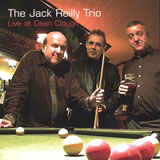
Mostly my musical life, singling out the choral works, my compositions. The more recordings I do. The last two I think are my best recordings, representations of my music, [like] Innocence - Green Spring Suite and the one that is coming out, the live trio concert [from England], The Jack Reilly Trio Live at Dean Clough that has a lot of recent things on it.
AAJ: Is there any artist that you regret not having had the opportunity to play with?
 JR: Not really. I played with Zoot [Sims] one weekend, which was great. I played with Phil [Woods] when he first got on the New York scene for eight weeks on Staten Island. Everyone was talking about him. It was four nights a week and I was in the Manhattan School of Music, and after two weeks I could swing on anything; pick a tune. That is how great that was. He was calling out the chord changes to me. Talk about feeling and projecting emotion. Phil has it. He has it one hundred percent.
AAJ: Any advice for struggling young musicians?
JR: Practice nine hours a day. Work a night gig that is not music so you can continue your studies [during the day]. And it has to be a calling; something that your life will have no meaning if you don't do it.
AAJ: Can a serious musician make a living as a composer and/or a performer?
< Previous
Stories from the Shed
Next >
Cornell 1964
Comments

Tags
For the Love of Jazz
 All About Jazz has been a pillar of jazz since 1995, championing it as an art form and, more importantly, supporting the musicians who create it. Our enduring commitment has made "AAJ" one of the most culturally important websites of its kind, read by hundreds of thousands of fans, musicians and industry figures every month.
You Can Help
To expand our coverage even further and develop new means to foster jazz discovery and connectivity we need your help. You can become a sustaining member for a modest $20 and in return, we'll immediately hide those pesky ads plus provide access to future articles for a full year. This winning combination will vastly improve your AAJ experience and allow us to vigorously build on the pioneering work we first started in 1995. So enjoy an ad-free AAJ experience and help us remain a positive beacon for jazz by making a donation today.

Giveaway

Days remaining: 11