Home » Jazz Articles » Live Review » The Komeda Project at the Cornelia Street Cafe
The Komeda Project at the Cornelia Street Cafe

Cornelia Street Café
New York, New York
November 1, 2007
Jazz, because it is created in the moment by the performers pouring out their souls, has a way of getting inside you. Hearing jazz live, actually being there, intensifies the experience tenfold.
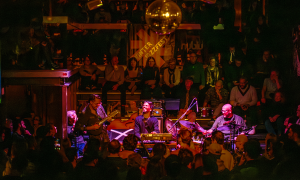
Live jazz at the Cornelia Street Café is particularly rewarding because there is very little physical separation between the musicians and the audience. The Komeda Project at Cornelia Street was electrifying, bringing the music of Krzysztof Komeda vividly to life.
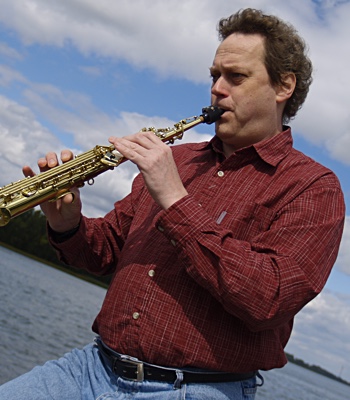
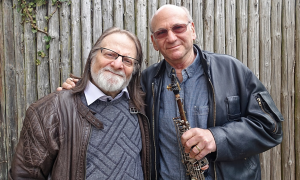
Led by saxophonist Krzysztof Medyna and pianist Andrzej Winnicki, the Komeda Project was created to bring Komeda's music to today's audiences, and they have released Crazy Girl (WM Records, 2007). Perhaps best known for his film scores, particularly Roman Polanski's Rosemary's Baby, it is Komeda's compositions and the groups that played them in the sixties that still have a profound influence throughout the jazz world some forty years later.
Combining the ethos of Poland with a deceptively simple but highly dramatic compositional style, Komeda's music allows much freedom for the players within a structural arc that permits players to create sounds that cut straight to your heart. The melodies, sometimes being just a melodic fragment, are easily remembered, feeling like ur-texts from some forgotten Eden.
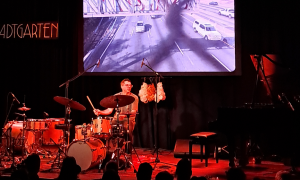
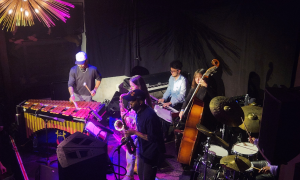
The band, fronted by Medyna playing tenor and soprano saxophones with John Bailey on trumpet and flugelhorn and a rhythm section comprised of Winnicki, bassist Bob Bowen and drummer Dave Anthony, does much more than channel the original group. Though based on the original arrangements (those on paper and transcribed), the music as played by the present group revitalized it: the core, the exciting, the very alive essence of Komeda himself jumped from the stage.
On this night, there were many Polish people in the audience, creating an atmosphere of a homecoming. The effect of the music was startling in its complexity. First, the music is forty years old, and what Medyna and Winnicki are not doing is taking a Komeda melody and creating something new but rather using Komeda's arrangements, in the same manner as Tomasz Stanko on Litania (ECM, 1997). Second, the music, however original, is tied stylistically to the hard-bop of the late fifties/early sixties and sounds it. Third, the players are playing in 2007 and not 1967.
What came out, however, was not a high-quality reproduction of some mystical music from the past, but living, breathing, completely alive music that did not sound dated in the slightest. The reason is that Komeda's compositions are art and, as such, are timeless. While Medyna and Winnicki have an obvious cultural link to Komeda, Bailey played with a verve that captured the music's emotions. Special kudos go to Bowen and Anthony, who gave the music bounce and drive, while always being aware of the tune's structure and the subtle metrical shifts.
The high points of the set were "Kattorna," with its viscerally terrifying theme and dynamic rhythmic drive, and "Svantetic," with its opening theme that sounded like a cry for a lover, the penetrating response using a high repeated note and very cool meter change. Staying into the second set a bit, I was able to hear one of Komeda's most famous tunes, "Astigmatic," which is not on the record, and the thrill of hearing it for the first time on Astigmatic (Power Bros, 1994) came flooding back.
Medyna was on fire, his tenor sound tight with a sharp edge and his curved soprano wailing in front of the pulsating rhythms. Winnicki is a better pianist than Komeda ever was, and he took more solos, all very good, than was the case on the originals. His comping, moreover, was perfect, his voicings and timing lifting the music.
As good as Crazy Girl is, hearing this music live was a fantastic experience, causing me to wonder (with a bit of envy) how the audience felt forty years ago.
Tags

About Komeda Project
Instrument: Band / ensemble / orchestra
PREVIOUS / NEXT


Support All About Jazz
 All About Jazz has been a pillar of jazz since 1995, championing it as an art form and, more importantly, supporting the musicians who make it. Our enduring commitment has made "AAJ" one of the most culturally important websites of its kind, read by hundreds of thousands of fans, musicians and industry figures every month.