Home » Jazz Articles » Album Review » Bennie Maupin: The Jewel in the Lotus
Bennie Maupin: The Jewel in the Lotus

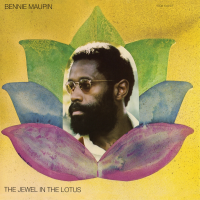
Fellow Headhunter Herbie Hancock—appearing here alongside another Headhunter member, percussionist Bill Summers—was pursuing more groove-centric music on Headhunters (Columbia, 1973) and Thrust (Columbia, 1974). Maupin's debut as a leader is more structurally open—closer in aesthetic to Hancock's Mwandishi group than Headhunters—and, with the exception of occasional electric piano, all-acoustic. It's also an album that ranges from near-pastoral beauty to fiery free play; proof that Maupin, Hancock and Summers' more rhythm-happy Headhunters was a choice, and by no means a definition of their artistic range—although those familiar with Hancock and Maupin will already know that.
With drummers Frederick Waits and Billy Hart—a Mwandishi alumnus—joining Summers, one might expect The Jewel in the Lotus to be both denser and more rhythmically charged. But while there are defined rhythms on tracks like 'Ensenada,' the percussionists are almost on their own as Maupin, Hancock and bassist Buster Williams (another Mwandishi connection) float above them, recalling early Weather Report tone poems like the late Joe Zawinul's 'Orange Lady.' Even when the playing becomes increasingly abstract and abstruse, as it does on 'Mappo' and 'Excursion'—both also featuring guest trumpeter Charles Sullivan—there's an expansive attention to atmosphere that makes even the greatest extreme strangely beautiful.
Maupin is best known for his unmistakable bass clarinet work—especially on albums like Miles Davis' seminal Bitches Brew (Columbia, 1969). Here, while it's heard on the intense 'Excursion' and gorgeous rubato closer " is Past,' featuring some of Hancock's most resplendent playing of the set, it's only part of Maupin's greater array, with 'Ensinada' and, in particular, two multi-layered miniatures—'Past + Present = Future' and 'Winds of Change'—proving him equally compelling on flute.
Maupin's soprano saxophone meshes with Williams' arco bass and Hancock's electric piano on the lengthy intro to the nearly ten minute title track, creating a sound that's other-worldly yet still somehow grounded. As the tune takes on a clearer rhythm—although, with the open-ended playing of Hart, Waits and Summers it's more suggested than direct—Maupin and Hancock take their most delineated solos of a set that's largely defined by empathic ensemble interaction.
Maupin's writing is often marked by richly distinctive lyricism, but it's the ongoing interplay of this sextet/septet that makes the album so remarkable. Like the attention to space paid by the three percussionists, there's a gossamer-like ethereality to these extraordinarily multi-directional conversations, making The Jewel in the Lotus a masterpiece that, at long last, is back in print.
Track Listing
Ensenada; Mappo; Excursion; Past + Present = Future; The Jewel in the Lotus; Winds of Change; Song for Tracie Dixon Summers; Past is Past.
Personnel

Bennie Maupin
woodwinds
Herbie Hancock
piano
Buster Williams
bass, acousticFrederick Waits
drums
Billy Hart
drums
Bill Summers
percussionCharles Sullivan
trumpetBennie Maupin: reeds, voice, glockenspiel; Herbie Hancock: piano, electric piano; Buster Williams: bass; Frederick Waits: drums and marimba (left channel); Billy Hart: drums (right channel); Bill Summers: percussion, water-filled garbage can; Charles Sullivan: trumpet (2, 3).
Album information
Title: The Jewel in the Lotus | Year Released: 1974 | Record Label: ECM Records
About Bennie Maupin
Tags
PREVIOUS / NEXT

Become a Sustaining Member

Since 1995, All About Jazz has championed jazz as an art form and supported the musicians who create it. Over three decades, it has grown into one of the world's leading jazz resources, serving hundreds of thousands of readers, musicians, presenters and industry professionals each month.
Help Build the Future of All About Jazz
Your support helps us continue building All About Jazz for the next generation—expanding our editorial coverage, preserving jazz history, developing new community features and creating better ways to discover the music and the people behind it.
Become a sustaining member for as little as $20 per year and you'll immediately enjoy an ad-free experience along with access to subscriber features and future articles for a full year.
Together, we're not simply sustaining All About Jazz—we're building its future. Thank you for being part of the journey.