AAJ: It's interesting because, as I've gotten more involved with improvised music, whether it be the New Thing, free music, or bebop, I almost am more comfortable—if one is to put labels on Ornette Coleman or his music—that it has more of an allegiance to Charlie Parker or something like that, and the stretch to me now doesn't seem so great as perhaps it would have seemed at the time.
TD: Well, in '59 it was a big stretch [laughs], because you've got to understand that it didn't happen before. There wasn't anything to relate it to—Cecil was out here on the East Coast, but there was not a group like that, that hit that hard. It was something new.
AAJ: So one would assume that Don Cherry was something of a revelation or an influence, too.
TD: No, not at all—he didn't play like Clifford, Lee or Booker. My approach to the horn was not in there, and nor did Miles appeal to me because of their approach.
AAJ: Because Don is a lot more brittle, you might say.
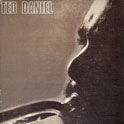
TD: Yes, he is a lot more brittle, and I like Don and I like what he did, but he didn't move me like the other guys did. His freedom did, I liked what he played and understood and appreciated that, but it was the group itself that really moved me. If you notice on my first album, the one I produced [Ted Daniel Sextet (Ujamaa, 1970)], one of the tunes is "O.C." That group was very influenced by Ornette's way of approaching things. I'm not gonna say that I was doing Harmolodics, but as to the spirit of how he moved his music and musicians, I was very influenced by that at the time.
AAJ: If one listens to you on that record, there's not any brittleness to your sound, despite the free-blues approach that's coming out of an early Ornette bag.
TD: My approach is a lot more physical than, say, Don or Miles.
AAJ: You mentioned Bill Dixon as an influence, too. Could you speak more about that or any personal experiences with him?
 TD: I didn't know Bill at the time, but I've met him since then. I actually saw him at the October Revolution [1964] and was impressed then. He played so differently and I was impressed by the boldness of approaching the horn the way he did. That way he played opened up even more areas for me to look at, the subtones and those kinds of things that people don't usually attend to, but he did spend a lot of time with that. So I said okay, there are some areas of the horn that need to be explored also.
AAJ: Right, because if the music is predicated on saxophonists, then the expression of a brass player might need to find a unique area that a saxophone can't get to.
TD: I think Bill did that, but I was also influenced, like everybody else, by Trane and trying to play and putting out a lot of sound on the horn, which you really can't do on the trumpet like you can with the tenor. But that influence was there, and in attempting to do that, I began to develop a style of my own. So Trane was a major influence in regards to the physical approach to the horn. I have a background as an athlete also, so in order to play the trumpet I have to physically be involved to the point where it happens on a more visceral level.
AAJ: It's more of a totality of approach.
TD: Yeah, and Bill's thing was really laid-back and maybe touching sounds but it wasn't as physical, if you will.
AAJ: But there's a weight to it, a heaviness.
TD: Yes, there's a heaviness to it, in the sound, and he just approached it in a different way. In using space, he got that heaviness, if you will.
AAJ: So, as you had returned to New York, a lot of players had left.
TD: Yeah, there was an exodus! [laughs] But really, no trumpet players left New York for any extended periods save maybe Don. And Lester [Bowie] just bypassed New York for France with the Art Ensemble.
AAJ: What made you choose to stay on?
TD: Actually, I went over later in '69, in the fall, and was there for a couple of weeks. I had got work at Newport and in the fall went to Paris, and that was related to the Actuel people. That's when I first saw the Art Ensemble of Chicago in Amougies in the festival that Actuel had put on there. I just didn't want to live in Europe—that wasn't something I wanted to do, and my stuff was here. I came back and Dave was here, other people were here, though many musicians did leave and stayed over there, but I was beginning to work with Andrew Cyrille (I think the first gig I actually hired him!), then Archie would call me, Dewey Redman, so I began to get busy here and didn't need to go to Europe except for tours.
AAJ: How did the band that recorded for Ujamaa come together initially?
TD: Originally I was working and rehearsing with Arthur Jones, the alto player from Cleveland, and we were teaming together. Then he left and didn't come back from Europe. At that time the delegation to New York was from Cleveland—they come in droves. At this point in the late '60s and early '70s, Cleveland was it—you had Arthur Jones, Otis Harris, the Reverend Frank Wright, Bobby Few, so there were quite a few cats who came to New York from there.
AAJ: Probably because of Albert's encouragement.
TD: Yes, because of Albert, so they were here in the late '60s and early '70s. To make a long story short, Otis was around and he was a good player, so we got involved and basically, one of the drummers, Warren Benbow, I had met in the Jazzmobile (he was a teenager at the time) and Hakim Jami I had met through Archie, and Richard Pierce was from my hometown and we'd known one another forever. So I had my double trio; it was just one gig, and it was the nucleus of Pierce and Warren and myself that played together a little bit.
 AAJ: So that wasn't a working band.
TD: It wasn't a working band; parts of it worked a little before and after, but...
AAJ: What happened to Otis Harris? Did he just drop off the scene?
TD: Yeah, he went back to Ohio and went to Cleveland, then he went to California for awhile and came back to Ohio. He passed on a few years ago.
AAJ: I hadn't heard of him before that recording, and definitely felt a strong Arthur Jones/Cleveland vibe from his playing.
So how did you and Dewey hook up?
TD: I'm not sure, actually. I know we played in the same band with Clifford Thornton, for The Gardens of Harlem (a Jazz Composers' Orchestra piece), so we might've exchanged numbers at that gig. There were a lot of rehearsals and so forth; that was in the early '70s, and I think that might've been when I met him and he asked me to join his band.
AAJ: That was a fascinating band, and at that time it seemed like—from the Ujamaa recording onwards—you'd started to employ other brass instruments. How did that interest come along?
TD: The Moroccan bugle (khakhi) was given to me by Dave Burrell; when we were talking earlier about Paris, well, he stayed over and went to Africa with Archie and he got that horn there and gave it to me back in '69. The French hunting horn I bought out in Dayton, Ohio at a pawn shop back when I was working with Brute Force and going to school out there. I've always wanted to add instruments to my presentation, and for quite some time I've been playing those horns.
AAJ: It seems like with reed players, there are quite a few avenues to go down as far as multi- instrumental playing, but with brass players you don't hear that much beyond the flugelhorn or Clifford Thornton's valve trombone. You don't hear a lot about expanding the palette to less common instruments.
TD: I think it's a little more difficult, the trumpet mouthpieces and the embouchure and things like that. It's possible to do, it's just a lot of work and you have to make a lot of adjustments, getting a little rest between horns and stuff.
AAJ: I would think Dewey would've been encouraging, too, as far as exploring different instruments and tonalities.
TD: He played the musette and he wanted something different to go along with that when we'd play that piece. The long horn was something he liked and the Moroccan bugle was something he liked, so I would do that with him. It worked out really well.
AAJ: Could you discuss the recording you did for Sun, Tapestry? From what I understand, it was an electrified ensemble.
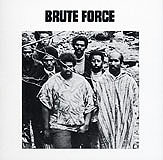
TD: That was done in New York at Ornette Coleman's loft (he had a performance space there) on January 26, 1974. On that recording I play flugelhorn; the other instruments are electric except for [drummer] Jerome Cooper. My brother was the keyboardist on that, and it was an extension of the Brute Force thing, but using my music. I used electric bass, electric vibraphone and a Rhodes with a Leslie speaker.
That was something I was interested in doing, coming from the Brute Force experience and even before then, when I first started with Sonny and my brother Richard, he was playing electric Wurlitzer and Sonny was on electric guitar, and we couldn't hear me because they were electrified. I had to put a pickup on my trumpet way back then! It wasn't something that I was uncomfortable with; I wasn't uncomfortable with electric sounds, you know?
AAJ: I know you were also using that to a degree with Andrew Cyrille, and I had just assumed it was a later development, though that obviously isn't the case.
TD: This was a completely different thing—I used a multi-divider in a duo that came out in the 1970s ["Junction," on Junction (IPS, 1976)] but I've always had an eye on that and wanted to do something with electronics. It was a different voice, another variation of my voice and exploring the possibilities of the sounds. I really enjoyed working with that Conn multi-divider which gave me different octaves that I could play in unison with different octaves and so forth. But you have to keep up with that, and it wasn't a major interest of mine.
AAJ: To continue with Andrew Cyrille, you mentioned using him on an early gig. Could you talk a bit about your relationship with him?
TD: Well, it's pretty much as I said—I had always enjoyed his playing, and if memory serves, I think it was Frank Lowe and I who had him on a gig over in the Village. We just chose him to play the drums; I'm not sure whether it was Richard Pierce or Hakim Jami on bass. That was in the early '70s, and from there Andrew began to call me and I worked with him quite a bit for a long time in Maono. We started off with Hilton Ruiz on piano; Donald Smith was on piano at one time, Jeanne Lee was singing with us, and I think we had one with Haitian drummers (actually, Andrew is of Haitian descent).
Some other musicians that passed through were [saxophonists] David Ware and Joe Rigby, [bassist] Nick De Geronimo, and [pianist] Sonelius Smith, to name a few. I did several albums with him throughout the '70s; we had a long relationship, and I was the constant in that band, now that I think about it.
AAJ: And you guys worked quite a bit, it seems like.
TD: Yeah, we had a lot of gigs both in the States, in New York and down to Philly and then we traveled, went to Europe on three or four tours.
AAJ: You get the idea that that the New Music wasn't really well-accepted, but it seems that with a band like that, in hindsight to me now, it was rather popular. The band with Dewey Redman, too, seems like it had pretty extraordinary visibility, though maybe I'm misinterpreting the facts.
TD: Well, it worked but not enough [laughs]! But yeah, it did work, those bands worked then more than I do now. In the '70s, those were pretty good years for me—I worked a lot more, and things got kind of funny in the '80s. With Dewey and with Andrew, I had gigs down in Washington, in Philly, and here in the City. So you're right, we did work a lot and I was busy. Plus, at that time I was still doing my own thing with trios and so forth.

Also, the guys from Chicago came into the picture in the mid '70s—the Art Ensemble, Henry Threadgill and Air, and the guys from St. Louis in BAG, and in fact, as you can see from some of the players in that Energy band I had, those guys were just coming into town.
AAJ: And you even had Kappo Umezu over from Japan in that band, too.
Was that orchestra, then, inspired by working with Sam Rivers?
TD: Yes, and it was inspired by the fact that I always liked big bands—I remember my father taking me to hear Count Basie play in town, and I was about nine or ten years old. I couldn't understand how those guys could come down in front of the stage and play these long solos, and they don't read any music! I didn't know about improvisation; that was prior to hearing Clifford Brown and all of that, and I was like "wow!" I never forgot how big and grandiose that sound was, so then I heard Trane's Ascension (Impulse!, 1965) years later—this is how a big band could do it, you know? And from all those experiences, and working with Sam, I started writing for big bands, for a rehearsal band—that's what Energy really was.
We had several gigs here in New York, and I got one gig at Cami Hall with a trumpet section of Lester Bowie, Ahmed Abdullah and Olu Dara. Charles Stephens was on trombone, too.
AAJ: So you pretty much got the who's who of who was playing in the '70s in that band.
TD: I had a lot of New Musicians play in Energy in the mid 70's. These cats had just come into town and were trying to work. So then I had to let it go because you can't really work a big band, you know, but in the late '70s I did work at Rashied Ali's place with a big band. But I did record some of it and plan to put some of it out in the future. In the '80s, I formed a smaller version of Energy for a while, which included James Zolller, Michael Marcus, Joe Rigby and others. We often played at a club named after its address, 1st on First, on the Lower East Side.
AAJ: At the time, I guess it would've been finances that precluded the material from being issued. It would've been interesting if the big band had put out a record, how the landscape might've changed as far as the recorded history of the music.
TD: Right, I think about that too. At that time, there might have been only two or three big bands working. I followed Frank Foster's Loud Minority into Ali's Alley in October of '77, and there was the band over at the Vanguard with Mel Lewis and Thad Jones, and maybe one other big band—but it was probably just the two of us [Energy and Thad and Mel band] working every Monday night in New York, and I was not happy that I didn't get any press during those eight months for that because at that time the press was going to the cats who had just come into town. That's just the way it is—you can jump on that, if the new cat's in town from wherever, and they write about them. Anyway, that band was constant and it was good and it didn't get any press. I suspect it had to do with jazz politics, not the music.
AAJ: Right, it wasn't so much the aesthetic of the music because that had already proven itself.
TD: Sure, and that's why people don't know about it—we didn't have the press.
AAJ: I guess Earl Freeman had his band too—the Sound Craft thing, which was pretty wild [Universal Jazz Symphonette, recorded 1975 for Anima Records].
TD: I wasn't aware of that—I met him in Paris.
AAJ: He seems like he popped up everywhere during the '70s.
TD: Yeah, he was a pop-up kind of cat [chuckles].
AAJ: So, could you discuss a bit where things went in the '80s for you?
 TD: Well, I was playing a little bit, not much, and things had changed for me so I had to make some changes around survival and so forth. I had to get into a different kind of work, so I got into social service, working with people and becoming a therapist, a psychotherapist, and that was what I did. In '82 I did a recording and a tour with Andrew called The Navigator (Soul Note), and Henry Threadgill started calling me for work in his big band and sextet. A couple of times he took us to Europe for a week, John Stubblefield and a whole bunch of cats, so I started doing big band stuff with him. Then he called me for his small group with Fred Hopkins, Deidre Murray, Newman Taylor-Baker on drums, Reggie Nicholson, and Bill Lowe on bass trombone. That band was smokin', and we recorded for RCA- Novus an album called Bush, Rag and All, a very good album.
Then I did some different things with him and spent a month in Belgium with him; he was a visiting artist over there (this was in the '90s). In fact, in '94 Henry and I were guest artists in Amsterdam with the October Orchestra, which consisted of famous Dutch, French and Italian composers as well as ourselves. So I did some music performances throughout the 80's and 90's, but mostly I was working at my day job.
AAJ: Were you doing any music therapy, or was it with non-musicians?
TD: I have done some work with adolescents utilizing rap music as a catalyst to stimulate insight into their behavior, stuff like that. I was also training people how to interview, dealing with child welfare issues and that sort of thing. It was a completely different area of my life that was very rewarding, and I was able to transfer my skills back and forth, but I wasn't active musically as much as I would like to have been. I still have a small practice, but I'm now back in music full-time.
AAJ: Could you discuss your recent work? I know you've done some stuff with Billy Bang, for example. What directions has your music been taking of late?
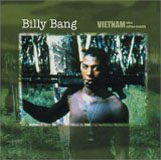
TD: You know about Billy Bang and the two albums I did with him. I need to say a little bit about that; it was very important that I had done the recording of Vietnam: The Aftermath (Justin Time, 2002) as a veteran and wanting to be a part of a musical statement that says something about that experience. That was great for me and still is, as we are still working. I was glad to be a part of that with Billy, and that kind of started me back because I was coming to the end of my day job anyway, so that returned me to the music world, so to speak. It was important on two fronts, by introducing me to some people who probably didn't know me, and helping me get back in.
What am I doing now? I have a band called the International Brass & Membrane Corps, and that is with Newman Taylor-Baker, Charles Burham on violin, Joe Daly on tuba and myself on assorted brass. Of course the name lends itself to the instrumentation—membranes and brass. I started that in '98 with Newman on percussion and Jose Davila on tuba as a trio. At the time we were a part of Henry's band that was working in Belgium. When we got back, I did a few gigs over here and members have changed—I replaced Jose with Joe Daly on tuba and added Charles—and these are people that I've known over the years.
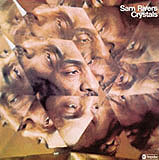
Joe Daly I did Crystals (Impulse!, 1973) with, so we go all the way back, and Newman I first met with Dewey Redman when we were playing Philly back in the '70s. Charles Burham and I go back awhile and we'd been talking about getting together; he worked with Blood Ulmer's band. So that's the group I'm working with and enjoying a lot, and I'm hoping to get some recordings done with it. It's very different than anything else you're hearing right now, because it's melodic and after all is said and done about my freedom and energy playing, at the end of the day it's melodic. That's the basis of what I do.
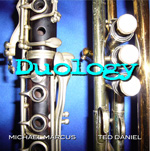
So that band is happening, and I formed a duo with Michael Marcus, who played baritone in the last Energy band in the 80's, and since we've been together for the past three years he's been solely on clarinet. We call the band Duology; we have a release out on Boxholder and have done some gigs in New York. We had very successful concerts recently down in Baltimore and one at the Rubin Museum here in Manhattan. We've done some high school seminars and that's of a piece that's very interesting to me.
Duology revealed to me a lot of musical possibilities with the two horns. It's a very demanding format and it asks a lot of each individual to come up with fresh ideas and approaches to your instrument and to the music. So it's been a challenge and a growth period for me.
AAJ: Especially for clarinet and trumpet; the only analogue I can think of is that John Carter and Bobby Bradford did a duet recording that's really interesting, but it's a very challenging medium to work in.
TD: It is, it is, and I was not aware of the duo when we started—I knew of John Carter and Bobby Bradford but only in group contexts. What happened was that Mike had known of them, but I didn't want to hear any of it until after we recorded. When I listened to it I was floored by what they did— everywhere we've played with the group, people are amazed because they haven't heard anything like it. They think that you need to hear the drum and the bass; you don't, if you're talking about improvisation, and you just put your head in another place and go with that. It's a challenge, but people come away from it- -we've only gotten good reviews from the audience.
AAJ: It's interesting; people often think of the duo format as certainly requiring a drummer or at the very least a chordal instrument. Two front line instruments without a chordal or rhythmic backing (as people understand it) is very, very unique.
TD: What happens is the impetus becomes communication between the two. Then you begin to get a really interesting and powerful statement, when two people are communicating and you can hear the development and movement of that music as they go along. That's intense, and once people key into that— "Oh, they're talking to one another, I see"—they enjoy it. Since the Boxholder recording, we've moved to another level—we bumped it up a notch, but I'm proud of that record and it's a good start.
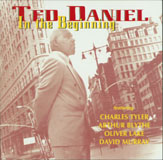
 Trumpeter Ted Daniel was born in Ossining, New York on June 4, 1943. Encouraged early on by his father and brother, Daniel played trumpet from age nine and throughout high school played in bands with his brother and the guitarist Warren "Sonny" Sharrock, a neighborhood pal. Stints at Berklee and SIU provided some context, but the university of the Lower East Side jazz scene provided the most fruit—where he played with Sharrock, Byard Lancaster, Dave Burrell, Archie Shepp and others.
 TD: What happened was that I had decided that that's what I wanted to do—I wanted to play—but I really didn't have the jazz foundation, because in those days you didn't have jazz in the schools like you do now. Anyway, I went to Berklee [College of Music, in Boston] for a semester; Sonny had started there too, and so I went there for a little while and then stayed in Boston for about a year after that. That's really where the education happened [laughs].
 All About Jazz has been a pillar of jazz since 1995, championing it as an art form and, more importantly, supporting the musicians who create it. Our enduring commitment has made "AAJ" one of the most culturally important websites of its kind, read by hundreds of thousands of fans, musicians and industry figures every month.