Home » Jazz Articles » Interview » Meet Sam Newsome
Meet Sam Newsome
Now, I'm looking to bring more people into the band to play the role of a soloist more than accompanist. By me surrounding myself with players who are going to kick me in the ass while I'm playing, it just makes me take it to the next level.
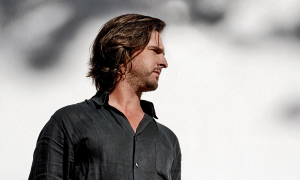
 Courage and vision in the creation of art are rarely rewarded commercially. Sam Newsome proved it does occasionally happen, though the outcome is never certain. After years spent developing a reputation as a first-rate tenor saxophonist alongside Terrance Blanchard, Donald Byrd and Lionel Hampton, Newsome gave up the tenor to concentrate exclusively on the soprano sax. It was a risk, but he developed a musical identity on soprano, and eventually a forward-looking, "cross-cultural jazz" group to present it. His reward came in a deal with Columbia Records. Sam Newsome & Global Unity was released worldwide in 1999 to enthusiastic praise from musicians and admirers. It failed to reach a wider audience, though, and Columbia dropped the group and its leader this year. For some, that might have been the end of the journey, but for Sam Newsome it's proving to be another step forward.
All About Jazz: Why did you switch to soprano?
Sam Newsome: Basically, I wanted to get to something more lyrical, because I felt like when I was playing the tenor I would rely more on things I had worked out while I was practicing. But I felt like when I was playing the soprano I was able to be more in the moment.
Having played the tenor for so long—just the whole process of learning to play, it's like you're coming out of bebop so you have that whole lineage with you every time you play. Sometimes it's kind of hard to shake that and move on to the next level where it's more about just being yourself. So I guess switching to soprano was a way of getting to that.
AAJ: Since you were known as a tenor player, what did making the switch do to your career?
SN: Well, basically I found myself pretty much alone in a lot of ways because all the people who were supporters of my tenor playing—people who would hire me for gigs and that kind of thing—I think a lot of them were kind of angry at me, because on the one hand my soprano playing wasn't as good as the tenor, and also because [as a tenor player] I was a part of what they were doing. It was like they couldn't really see the vision that I had. So basically it left me alone to kind of create my own scene.
AAJ: Is it harder to get work now?
SN: Actually, at the moment in a lot of ways it's increasing my gig potential. I think before, someone just playing soprano was never that much of an option, I think because people just naturally associate jazz saxophone playing with tenor and alto and some baritone. Soprano is thought of as an instrument someone doubles on. So people don't often get to hear the result of someone spending three or four hours a day just playing it for many years—they don't realize the potential of the instrument. So what I found lately is that a lot of people call me just to do what I do. When they hire me they don't hire me as a soprano player—it's like they are just looking for a voice. I think ultimately you want to get to that. Most of the situations I'm in now it's like I do records where people write tunes with me in mind. As I develop more as a player I think people will start to hear it more and I think I probably will get more work as a sideman.
AAJ: Is there a philosophy, artistic or political, behind Global Unity?
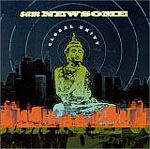 SN: I wasn't thinking along those lines. It started off basically as a jazz trio, so I was writing for the soprano, bass and drums. As it developed I started to add different instruments. I added a percussionist, and this particular guy played the berimbau, djimbe—he played a variety of things—so I got introduced to a lot of sounds. I started writing having these sounds in mind, and the more I got into it I started to hear more textures and I just started bringing in more different instruments. And as it went on I heard different people. And I wasn't necessarily thinking "world" per se, but for whatever reason these particular instruments like the voice and the oud, and different percussion instruments like the dumbek and djimbe, the timbre of the instruments just seemed to blend well with the soprano. I think it just happened to be like "world music"—instruments that are associated with world music.
AAJ: Had you been listening to world music before this?
SN: Not a lot. I had a few records like with African drum groups and different kinds of world beat records where they were kind of doing what I'm doing now—combing different elements. But it wasn't really a conscious thing: "I'm going to play world music and I'm going to have this kind of instrument, that kind of instrument." I just got into hiring different personalities.
AAJ: So, how did you encounter these people?
SN: From having played out around and people having heard the music, they were suggesting, you know, "I heard this guy playing the oud and I think that would definitely sound good with your group." So, it mainly just came from being open. In New York there are so many different scenes, so many different musicians that you can pretty much find anything here, any kind of instrument from any country. It's just a matter of having your eyes and ears open.
AAJ: Did you have to practice particular harmonic and rhythmic ideas to play this music?
SN: Sometimes there are certain scales I may improvise on. There's one certain Turkish scale that I use and there's a Japanese scale I use sometimes and there are certain kinds of Indian scales. But mainly I just try to play the way I normally would play because I think with the music I'm playing now you can't really play jazz licks. You have to approach it like a long-distance runner, in a way. You have to start off with a motif and develop it over a long period of time. It's almost like a lot of folk music where it's very simple and it changes and as you get into it before you know it it's very complex.
AAJ: That must have been a challenge to make the transition from approaching soloing as a jazz musician to having that different vision.
SN: Yeah, it is challenging. I think in a lot of ways it makes playing jazz easier because when you have to create your own path, and then you're given chord changes, you're guided in a lot of ways, so it's a lot easier now. One would think that just playing over one chord or one sound would decrease your ability to play changes, but I think it's actually improved it because it's allowed me to play from a very relaxed space because I don't feel the pressure to make every change. It's like I'm more in the moment. I find that when I'm playing changes now that I'm learning to play colors and textures against the changes and not even think about the changes. It's like you see the overall picture of it. The changes are just changes—you don't really have to play them. It's like you create colors that can go along with the changes as well. It's a like a certain density you can put against them. It's the same concept as superimposing harmonic devices over something, only it's more abstract.
AAJ: What do you see as the connection between the music you play now and the mainstream of jazz? Is there an overlap?
SN: I guess what I do is mainly about melody and rhythm. Playing changes is almost like jumping over hurdles. With my thing it's more like traveling a straight path, but when I play changes it's like it's just a matter of jumping the hurdles as I try to get to where I'm going.
AAJ: Do you use different compositional techniques to write for the group than you would use for an ordinary jazz group?
SN: Not really. I guess the main thing that's different is that I see where the person is and I kind of cater to their strengths. I mean if you have someone playing the oud you can't just put a chord chart in front of them the way you could a guitarist. So I guess what I've learned to able to do is to see where people are at. It's almost like you're a coach in a way, you're just trying to bring [out] the best of what they have to offer. A lot of it has to do with me just getting with them one-on-one and just kind of playing and maybe just playing a vamp or something and just seeing what they come up with naturally, and just taking it from there.
AAJ: I understand you've been writing lyrics for your vocalist to sing.
SN: I was last year. I don't know; I guess I was always fascinated how you can have lyrics to a melody or vice versa and it just seems to come alive in a way that's really hard to get to when you're playing something that's just totally instrumental. It's almost like you can take a picture and when you add the lyrics it becomes 3D.
AAJ: So how did you feel it turned out? I gather you're not doing it as much now.
 SN: No I'm not. The stuff I wrote I felt like was pretty good. But it's weird, I guess at the time I wasn't so much into being just a player. I was more into being a conceptualist or a bandleader. It was almost like I heard the rest of the people in my group almost like an extension of my voice, in a way. I felt like the focus wasn't just on my playing. But the past four or five months it's kind of shifted and it's like I'm back in this space where I really want to play. You know, I'm practicing a lot every day and it's just like I'm really into the sound of the instrument and just playing with people. Now I feel like where I was when I was playing tenor before I stopped. You're just into playing. You're not thinking about other people so much. So that's kind of like where I'm at now.
AAJ: How did you connect with Columbia records?
SN: Well, the group had started to gel and I had all the instruments—it just started to feel really good and I just felt like, "I really need to record this now." It felt like it was at a place where I felt like the three or four years I had been putting into it—I think it had finally gotten to a place where it was time to document it. So I went into the studio and I recorded a CD.
AAJ: You paid for this?
SN: Yeah. So after we recorded the CD, an agent in New York—we have a mutual friend and she had been telling him about the group and telling him she wouldn't be surprised if a major label didn't pick us up soon. I had known him from when I used to play with Terrance Blanchard—and he said, "Yeah, I heard them once. You should tell him to give me a call. I'd love to shop it around for them." So when I got it finished I gave him a copy and he gave me the rap of like he can't promise anything, that a lot of major labels weren't taking chances, that the industry wasn't doing that well, but he would try. But to everyone's surprise, Columbia went for it and bought the master.
AAJ: Were they supportive of the first record in terms of promotion?
SN: They did some stuff. But the thing with the record industry is that it's so complex, it's hard to know exactly what's being done. It's like just seeing an ad in Down Beat or Jazz Times or one of those publications, that's just one side of it, especially with a company like that where when a record comes out you have international distribution. So you have your office in France, your office in London, you have people on the West Coast, Canada—so it's like all of that costs money to put in stores, to put it in listening stations. So, from that perspective some stuff was done. They did help to get us on some festivals. They helped with tour support and that sort of thing. So they were supportive. But with a company like that the drawback is that you never really get the full push unless they start to get some returns immediately or there's like some kind of excitement around the record like when it first comes out. Because if that doesn't happen within the first couple of months it's like they pull back.
AAJ: Is that what happened with you?
SN: Pretty much. In the beginning I was just angry with them because I felt like they just weren't pushing it. But for whatever reason, the public just didn't take to it the way I thought they would. Because, maybe I would have a case that they didn't push it if it were on the top of the radio play chart or if it sold a lot or if it got a bunch of rave reviews. If I had all of that and they didn't support it then you say, "Look, what's going on? We're not getting support." But you know, if the critics aren't behind it and people aren't buying it and they aren't playing it a lot on the radio, I guess from a business perspective they probably think, "Well, what do you want us to do?"
AAJ: What was the critical response? Did you get a lot of reviews?
SN: I didn't get a lot. You know, they thought it was interesting instrumentation. But a lot of times there were references to what Leon Parker had put out maybe six months before. So, I think a little bit of it was like, "Oh yeah, this is like what Leon was doing." So, I felt like they never really gave it up. Like if mine had come out first they would have seen it more as being an original thing. But since it came out after Leon's it was kind of perceived as, "Oh yeah, he's kind of doing that Leon thing."
AAJ: So they didn't really give it a close examination?
SN: I don't think so.
AAJ: Why don't you think the public didn't take to it like you hoped?
SN: Maybe my role on it wasn't—I think maybe because it was so band oriented. Maybe they don't really realize that it was me that made this whole thing happen. You just think of it as a band and I'm playing and everyone else is playing but I'm not really playing that much more spectacularly than everybody else it's just kind of all in the same realm and I just happen to be on the cover. So I think it was a lot of that. I don't think there was a real star on the record.
AAJ: So what happens now? Do you see a future for the group without a major label behind you?
SN: Oh, definitely. I guess the thing that it's actually taught me is that I was maybe putting too much focus on the band and maybe not enough on myself. Because even at the time—I don't know if it was like some psychological thing like maybe you get something like and you think maybe at some level you don't deserve it so you kind of feel like if you bring a whole bunch of people with you. It makes it easier. It's just like, "Oh, it's not just me, it's us." I don't know, maybe it was some of that, but it taught me, you know—I feel like I have to be the focus. It's good because it's made me really focus on my playing more. And it's caused me to grow just as a person. So I feel more confident and strong and I feel like I'm playing a lot better than a year ago and people are calling me more as a sideman. And I'm starting better reviews from stuff I've done as a sideman than probably what I got from my own record, just as far as people talking about my playing. So I think in the long run, by me focusing on my own playing—I don't know—I think it's more of a foundation. I guess you need some kind of main character or star just for people to be able to relate to. There has to be some kind of central focus. I guess I just really wasn't into it.
AAJ: Why do you think that was?
SN: In some ways it was more of a challenge to see all of these other members of your band as just sort of an extension of your voice. I felt like as far as playing is concerned I thought I could just practice and it would come. Maybe my ego got too far out of hand. You know how you can get to where you just feel like you can do anything. I guess I've learned that I can't.
AAJ: If you've shifted your focus toward your own playing, how do you apply that to Global Unity?
SN: By me using other people as an extension of my voice, a lot of times they weren't soloists. I hired people who focused more on creating textures and accompanying than soloing. Now, I'm looking to bring more people into the band to play the role of a soloist more than accompanist. By me surrounding myself with players who are going to kick me in the ass while I'm playing, it just makes me take it to the next level. So I'm going to restructure it so it's more full of soloists. I'm thinking about maybe adding a violinist, and I've started working with the piano some. In some ways I feel like I'm coming full circle.
Selected Discography:
Monk Abstractions (SomeNew Music)
Sam Newsome & Global Unity (Columbia/Sony)
Sam Newsome's Groove Project 24/7 (Satchmo Jazz)
Global Unity (Palmetto)
Sam Newsome & Global Unity (Columbia/Sony)
This Masquerade (Steeplechase)
The Tender Side of Sammy Straighthorn (Steeplechase)
Collective Identity/THE MASS (Palmetto)
Sam I Am (Criss Cross)
< Previous
Take Five With Paul Kendall
Next >
Silence-Light
Comments

About Sam Newsome
Instrument: Saxophone, soprano
Related Articles | Concerts | Albums | Photos | Similar ToTags
Concerts

For the Love of Jazz
 All About Jazz has been a pillar of jazz since 1995, championing it as an art form and, more importantly, supporting the musicians who create it. Our enduring commitment has made "AAJ" one of the most culturally important websites of its kind, read by hundreds of thousands of fans, musicians and industry figures every month.
You Can Help
To expand our coverage even further and develop new means to foster jazz discovery and connectivity we need your help. You can become a sustaining member for a modest $20 and in return, we'll immediately hide those pesky ads plus provide access to future articles for a full year. This winning combination will vastly improve your AAJ experience and allow us to vigorously build on the pioneering work we first started in 1995. So enjoy an ad-free AAJ experience and help us remain a positive beacon for jazz by making a donation today.

Giveaway

Days remaining: 6