Home » Jazz Articles » Extended Analysis » Michael Brecker: Michael Brecker: Pilgrimage
Michael Brecker: Michael Brecker: Pilgrimage
High art in the face of destiny is not always the case, however. June Carter Cash's final Wildwood Flower, while heartfelt, did the singer disfavor because she was obviously ill during the recording. Anita O'Day's final recording, Indestructible, similarly sincere, was recorded much too far past the singer's prime, and the aesthetic value of trumpeter Chet Baker's final recordings remains up for debate. So, what of Michael Brecker's final output?
In 2005, Brecker was diagnosed with myelodysplastic syndrome, a diverse collection of hematologic disease all sharing in common the inappropriate production of blood cells and their propensities for transforming into acute myelogenous leukemia. Unable to find a suitable stem-cell donor, Brecker passed away on Saturday, January 13, 2007. While Brecker did remain active during the period of his illness, appearing on Beatle Jazz's With A Little Help From Our Friends and Leni Stern's Alu Maye (Have You Heard), he had been inactive a year before these recordings.
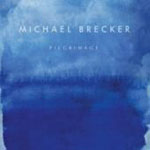
Thus, the artist's largest late effort was reserved for Pilgrimage. He is joined by pianists Herbie Hancock and Brad Mehldau, guitarist Pat Metheny, bassist John Patitucci and drummer Jack DeJohnette, all sacred to Brecker's generation of jazz musicians. The notable absence of Randy Brecker is acknowledged for the life-long collaboration he had with his brother in their various music endeavors (noting that Randy Brecker never appeared on his brother's solo projects). Save that, Brecker chose his group wisely as the results of the recording reveal.
Brecker's tenor tone is strong and muscular. His composing is the best of his career. His melodic head-lines are organic, approximating a flock of small birds flying scattered one second and then in unison the next. Brecker and Metheny share a Bill Evans-Scott LaFaro empathy throughout the recording, both buoyed by the impressionistic piano of Hancock and Mehldau. The heart of the disc exists in its center with the pieces "Tumbleweed and "When Can I Kiss You Again. On the former, Brecker sets up a fast rolling theme and harmonics over which the soloists take quick flight including an aggressively distorted Metheny solo that gives way to one by Brecker. The rhythm section of Patitucci and DeJohnette creates a funky tonk with powerful momentum. No matter what, Brecker is in complete command.
"When Can I Kiss You Again is Brecker's introspective lullaby to his children, whom he could not see while in medical isolation. Again, his superior composing provides a carefully complex melodic introduction with a modal concept over which to solo. Composition and improvisation weave in and out of one another; constructing a silken fabric over which Metheny gives one his most inspired and introverted solos. Hancock provides his trademark abstraction as solo, depicting anxiousness as music. Brecker's solo is middle to low register and impeccably structured (as are all of his solos). The disc's title cut is a moody, Coltrane-esque meditation over electric piano with bass and drums occupying all sonic spaces. The piece grows in density and freedom as an open improvisation develops over the barest harmonic structure. And that was just the extended introduction. Brecker pulls all involved into an extended obbligato that is serpentine and seamless.
How does history view Michael Brecker? Many consider him to be the most important tenor saxophonist since John Coltrane. This is at the expense of Sonny Rollins and Wayne Shorter, though Rollins and Shorter generationally overlap Coltrane. I would come closer to declaring John Coltrane, Sonny Rollins, Wayne Shorter and Michael Brecker the quaternary apex of the tenor saxophone since the previous generation of Lester Young, Coleman Hawkins, Ben Webster, and Wardell Gray. That excludes a lot and that exclusion is necessary. Brecker's importance specifically lies in his universality. When I listen to Oliver Nelson's The Blues And The Abstract Truth (Impulse, 1961), I think of that music as a jazz soundtrack of the 1960s. It had that sound that listeners would immediately identify as jazz: so with Pilgrimage and the opening of the 21st Century. Michael Brecker's final recording is a finely crafted jazz soundtrack for a new millennium, a hyperbright quazar, serving in honor of the late saxophonist and all of jazz.
Tracks: The Mean Time; Five Months From Midnight; Anagram; Tumbleweed; When Can I Kiss You Again?; Cardinal Rule; Half Moon Lane; Loose Threads; Pilgrimage.
Personnel: Michael Brecker: tenor saxophone, EWI; Herbie Hancock: piano (1, 5, 6, 9); Brad Mehldau: piano (2-4, 6, 7); Pat Metheny: guitars; John Patitucci: bass; Jack DeJohnette: drums.
Track Listing
The Mean Time; Five Months from Midnight; Anagram; Tumbleweed; When Can I Kiss You Again?; Cardinal Rule; Half Moon Lane; Loose Threads; Pilgrimage.
Personnel

Michael Brecker
saxophone, tenorMichael Brecker: tenor saxophone, EWI; Pat Metheny: guitars; Herbie Hancock: piano (1, 5, 6, 9); Brad Mehldau: piano (2-4, 6, 7); John Patitucci: bass; Jack DeJohnette: drums.
Album information
Title: Pilgrimage | Year Released: 2007 | Record Label: Heads Up International
About Michael Brecker
Tags
PREVIOUS / NEXT


Become a Sustaining Member

Since 1995, All About Jazz has championed jazz as an art form and supported the musicians who create it. Over three decades, it has grown into one of the world's leading jazz resources, serving hundreds of thousands of readers, musicians, presenters and industry professionals each month.
Help Build the Future of All About Jazz
Your support helps us continue building All About Jazz for the next generation—expanding our editorial coverage, preserving jazz history, developing new community features and creating better ways to discover the music and the people behind it.
Become a sustaining member for as little as $20 per year and you'll immediately enjoy an ad-free experience along with access to subscriber features and future articles for a full year.
Together, we're not simply sustaining All About Jazz—we're building its future. Thank you for being part of the journey.