Home » Jazz Articles » Interview » Gregg Bendian: Inner Flame, Musical Visions
Gregg Bendian: Inner Flame, Musical Visions

I became very passionate about determining my own concept of jazz repertory, extending it into the late '60s and '70s, not stopping with Ellington, and Basie, Armstrong and Bird.
 "Being an American musician means being adventurous. The whole path of American music has been so much about the recognition of stylistic diversity, and the recognition of the importance of music which was from one of the vernacular traditions. You know, music which at one time was considered primitive, uncultured, savage, whatever it may have been...dangerous above all...and recognizing that in this music, lots was being said. Perhaps some of the most important, cutting edge things were being said." (Michael Tilson Thomas, conductor. 2001)
Drummer Gregg Bendian, like maverick conductor Michael Tilson Thomas, knows all about adventurous music making; for over twenty years, this classically trained musician has led a number of stylistically diverse, forward-looking groups, whose leitmotif is controlled improvisation.
And if it is true what they say about the company you keep, then collaborations with saxophonist Ornette Coleman, pianist Cecil Taylor, saxophonist John Zorn, and guitarist Pat Metheny and Derek Bailey speak volumes about Bendian's musical vision. This musical vision has driven Bendian over the last five years to revisit the music of the legendary Mahavishnu Orchestra.
The recent release of Return to the Emerald Beyond (Cuneiform, 2007) is the third outing from Bendian's Mahavishnu Project but, as he explains to All About Jazz, this is much more than a respectful revisiting of guitarist John McLaughlin's ground-breaking '70s band. This is about extending the bounds of jazz-standard repertory and reappraising an important chapter of Twentieth Century music. In searching for the important, cutting edge things being said, Bendian reveals his desire to bring this powerful music to a whole new generation of listeners.
All About Jazz: Was your eclectic taste in music, your musical diversity, there from an early age or is it something which has developed over time?
Gregg Bendian: It was there from the beginning. My parents are big music fans and they had a very diverse record collection, everything from Monk to Miles, to Basie and Ellington; show-tunes, Tchaikovsky, Bach, Beethoven, The Rolling Stones and Beatles. They just loved music, so I grew up hearing everything and liking it.
AAJ: When you were growing up you were listening to all the progressive rock/fusion bands of the day, and studying classical chamber music. At the time, did you see any similarities between the two schools of music?
GB: Of course it was of interest to me that many of the prog-rock guys were referencing classical music, and were in fact classically trained. In particular, keyboardists that were classically trained—guys like Kerry Minnear from Gentle Giant, Keith Emerson, and Dave Stewart from Hatfield and The North. They were bringing a rather sophisticated harmonic and compositional palette to the table and I think hearing that made a very strong connection to classical music, in my brain anyway.
 AAJ: Can you remember when you first heard the Mahavishnu Orchestra?
GB: Yes, I heard the Mahavishnu Orchestra in 1973 at the age of ten. Birds of Fire (Columbia, 1973) had just come out and my uncle was playing it for me. He was kind of like my older brother, and the music just completely blew my mind and excited me very much. It made me very interested in hearing more of the Mahavishnu Orchestra, which I did at the local record shop and I have very vivid memories of hearing Between Nothingness and Eternity (Columbia, 1974) at the shop and asking the guy behind the counter "Is this Mahavishnu? He kind of looked stunned that an 11-year old kid was asking that and he said "Uh, yes!
AAJ: Was recreating the music of the Mahavishnu Orchestra something that you had fantasized about for a long time, or did something spark it off?
GB: I had been doing my own original music for many years, and at the time I started my semi-electric band Interzone, with Nels Cline, the first record was a dedication to Gentle Giant and their compositional processes.
When we got to the second record I had more of a direct linkage to fusion in mind. There were some Return to Forever references there, Weather Report, all different kinds of jazz-rock mixed with different styles of improvisation, and one of the things that ended up on that record was a version of "Sanctuary, which is a beautiful John McLaughlin composition from Birds of Fire.
I think that got the wheels turning because also at that time Nels Cline and I were working on Interstellar Space Revisited(Atavistic, 1999), which is a re-imagining of the Coltrane/Rashid Ali duet. At that point in time and I became very passionate about determining and refining my own concept of jazz repertory, extending it into the late '60s and '70s, not stopping with Ellington and Basie, Armstrong and Bird. You know that it could go on into the electric period of jazz, and that's when the Mahavishnu Project really found its genesis.
AAJ: What was the general reaction of people when you announced your intention to play entire Mahavishnu Orchestra albums in concert?
GB: We've always faced two reactions; one is that true fans of the music are thrilled that someone else is interpreting this stuff and playing it again, and they are happy to hear it live, some for the first time. And then there's always been a dubious attitude from some towards the group. For some reason the Mahavishnu Orchestra is viewed by many people to be merely a rock band because they reached rock band popularity, rock band success, rock band numbers in the business. So, for us to be doing the Mahavishnu Orchestra music we must be a "rock 'n' roll cover band . But that attitude has changed because we've been doing this for five years now and I think people are catching on that we are serious about this being a classic form of music and that we are a group music that is worthy of investigation—plus we are out there doing our own thing with it.
 AAJ:The Mahavishnu Project has had the blessing of John McLaughlin. Did you approach him beforehand, and if so were you nervous at all?
GB: To be honest, we started doing this just out of a love of the music and never had any imaginings that it would grow into a regular, ongoing project. It was just so much fun, so intense and so rewarding musically and artistically that it took on its own energy. The idea was to continue to play music from the first band (Mahavishnu Orchestra '71-73) and to play it as well as we could.
John McLaughlin's wife, Ina contacted me after our Live Bootleg (Aggregate Music, 2002) came out and said, "John has heard about you guys and he's glad that there's a band playing this music. Could you send us a copy of your first CD? I was quite nervous in fact, and waited for his response. Ultimately, I did hear from John and he told me that he was thrilled with what we were doing, and that we should continue doing it and he gave us his blessing.
AAJ: The Mahavishnu Orchestra was in some ways a synthesis of everything McLaughlin did before and has done since; are you as big a fan of the other incarnations of John McLaughlin as you are of the Mahavishnu Orchestra?
GB: John is truly a musical hero of mine. I've followed everything he's done. After the Mahavishnu Orchestra I went on to see him with the One Truth Band and Shakti in my teenage years. I was actually lucky enough to see Shakti's first New York city concert in Central park—that was the summer of '76 at the Schaefer Music Festival.
Then I worked my way back, Extrapolation (Polydor, 1969), Love Devotion Surrender (Columbia, 1973), and his electric Miles work. I've followed everything that he's done with amazement and I've always learned something. Since 1976, I've gone to see him play every time he's in New York, and he remains one of my great inspirations.
AAJ: He's a big hero to many people, and I find it unbelievable that he hasn't received a knighthood from the British government. They give them to Elton John and Mick Jagger, no disrespect to them, but I think McLaughlin should have received some sort of recognition for the body of music he's produced these last forty years.
GB: Well, I agree with you completely, and it only points to the fact that there's a sort of popularity contest involved with that whole knighthood thing.
AAJ: How much of a challenge was it to recreate Visions of the Emerald Beyond (Columbia, 1975) compared to the other Mahavishnu Orchestra albums?
GB: It was a big undertaking, to be sure. I felt that I had to do a lot of pre organizing before we launched it. I had to add another six players to the group, so the group more than doubled in size. I had to find the right players, players that loved the music. In January of 2006 the group changed personnel in terms of the core quintet, so this was only six months later! I had just brought in Glenn Alexander on guitar, Adam Holzman on keyboards and David Johnsen on bass. Rob Thomas has been with me on violin since 2002 and now, for Return to the Emerald Beyond, I was adding strings, horns and voice.
The real challenge was one of reorganizing some of the pieces and deciding the focus each of the pieces would take, but also an overview of the whole piece. I've treated it as a suite, and tried to make a musical connection over the course of the thirteen pieces that are in the Visions of the Emerald Beyond set. Our concept was not to radically overhaul these pieces, not to deconstruct these pieces and then reconstruct. The concept is to play the existing material in our own fashion, and then use the pieces as a platform for improvisation, just like any other form of jazz music.
AAJ: I imagine a lot of rehearsal time was needed before performing this live.
 GB: Yes. We rehearsed and did some concerts, and the recording that was released by Cuneiform is an amalgam of a couple of different performances.
AAJ: Has your own opinion of Mahavishnu Orchestra II ('73-75) changed since doing this album?
GB: Somewhat, yes. As a kid in'74, '75, listening to Apocalypse (Columbia, 1974), and Visions of the Emerald Beyond on eight track tape, they were, to me, as "Mahavishnu-ey as the original. I didn't see them as a lesser Mahavishnu Orchestra then. I just thought it was a slightly different musical direction.
I do now see just how ambitious Mahavishnu Orchestra II truly was for John, and for music in general, perhaps for the audience especially. It was really about reaching for the best aspects of musical fusion, and bringing together the interests of John McLaughlin—from Indian music, classical music, jazz, blues, rock of course, and making for lack of a better word, a fusion of these things, creating something unique and personal, making it his own.
The difficulty of an eleven-piece band on stage, the technical difficulties, and the musical challenge is completely real to me now, playing the stuff. And I can see what a great challenge it was for the original Mahavishnu Orchestra II to pull this off live.
It's very exciting for me because I see, and have seen over the last five years, what a fan favorite Visions of the Emerald Beyond is. Now that we are playing this music live, people are coming from all over to hear us play this because they love this recording and Mahavishnu II played so little of it live back in 1975.
Now that we have revisited this music on our new recording a lot of people are starting to very strongly support it. That's great because I think that for many people the barrier between the original Mahavishnu and the subsequent large band was always something in the mind of the writers, and perhaps not in the minds of the fans.
I feel the fact that it was a new direction for John's Mahavishnu concept was handled poorly by the critics, who I think at the time were looking for more and more commercial, accessible music and just were losing interest in how challenging and diversified truly great musicians could be.
AAJ: Michael Tilson Thomas, who conducted the London Symphony Orchestra on Apocalypse, once said, paraphrasing Aaron Copland, that unlike folk, jazz and blues, which are primarily about one mood, "Classical music shows a transformation of moods, a wide psychological voyage... Based on this definition, would it be stretching the imagination to describe the Mahavishnu Orchestra as modern classical music in your opinion?
GB: No, I don't think it would be stretching it. Both modern classical music and Mahavishnu, for example, incorporate electronics and atonality. I mean, look at "Opus 1, the string quartet at the end of Visions of the Emerald Beyond, and there's John tipping his hat to Anton Webern. You have that, followed by the electronically treated guitar; you also have beautiful, pastoral, tonal movements perhaps reminiscent of Ralph Vaughan Williams or (Benjamin) Britten.
So I think what John was and is doing is just exploring that full range of interests and it may not be necessary to call it a form of classical music; it certainly is a form of creative music and the most creative music, perhaps the most open stylistically.
The thing I find fascinating about Visions of the Emerald Beyond as a whole is that it has this kind of push and pull between various worlds, contrasting worlds, disparate worlds, where you have the electric being followed by the acoustic, you have modal playing being followed by a complex harmonic movement, and you have the simple idea being followed by the complex idea. This, for me, is the heart and soul, the heart-beat of the music from Visions of the Emerald Beyond.
AAJ: In recent times there has been a real flurry of Mahavishnu Orchestra-related activity. Apart from your own Mahavishnu Project which has been going on since 2001, there is the Jeff Richman guitar tribute to the Mahavishnu Orchestra, Visions of an Inner Mounting Apocalypse (Tone Centre, 2005) and Billy Cobham and Colin Towns Big Band tribute to the Mahavishnu Orchestra, Meeting of the Spirit: A Celebration Of the Mahavishnu Orchestra (In + Out Records, 2006). And then there is Walter Kolosky's biography of the band, Power, Passion and Beauty (Abstract Logix Books, 2006). How do you account for this sudden reappraisal of the Mahavishnu Orchestra, and why do you think it has taken a quarter of a century for their rediscovery?

Mahavishnu Project: Holzman, Johnsen, Bendian, Alexander, Thomas
GB: Well, I guess I feel that we led the charge and we were the first people to say: "Hey, let's look at this stuff again. It was great then and its still great thirty years later. Why not give it its due? It does take time sometimes to realize this, and we need a little distance. We need a little bit of historical perspective, and we need to re-evaluate the things that we enjoyed in our youth to see if it stands the test of time. And of course, The Mahavishnu Orchestra's work was great back then and it is great now. It is certainly as fertile and worthy as Ellington or Coltrane for reinterpretation and reinvestigation. So I'm thrilled that our little repertory project got off the ground and generated a bit more interest in Mahavishnu music.
It is possible that at first, people were a little timid about coming out of the closet and saying they loved fusion in general, and Mahavishnu in particular. I admit I was a bit apprehensive at first because some people had definitely reacted negativity to my mention of Gentle Giant on the first Interzone record; "Oh, you know, that stuff was so pompous and overblown, so self-absorbed! I don't know that the Mahavishnu Orchestra had similar epithets thrown at it but I'm pretty sure they did. Hey, I don't believe any of those things and I love this music. It has been a very positive influence in my life and in the life of so many people, not just musicians. So I just think that now is the time.
AAJ: All my Mahavishnu Orchestra stuff is on vinyl and has been in an attic in Ireland for over fifteen years. It's that long since I've listened to the originals, and hearing the Mahavishnu Project bring this stuff back to public light has reminded me, and I'm sure many others, just how powerful and wonderful this music is.
GB: Thank you. I agree, and it's a joy for us to play it.
AAJ: The saxophonist on Mahavishnu Project's Visions is Premik Russell Tubbs, who of course played on the original album Visions of the Emerald Beyond and toured with the Mahavishnu Orchestra II for months. How did his involvement in the Mahavishnu Project come about?
GB: We ran into each other in Woodstock, New York a couple of years ago. Premik was giving a concert of his meditative music. He's still with Sri Chinmoy and the meditation center in New York City. He had heard of what we were doing and I invited him to come sit in with us on some of Birds of Fire shortly after that. At that point I started thinking about what our next project was going to be. I had gotten so many requests for us to play Visions of the Emerald Beyond.

In fact, Phase 2 (Aggregate Music, 2004) had "Lila's Dance on it. So we played "Lila's Dance for a while and we also stared doing "Earth Ship, and Premik sat in with us on that. I had been so active in the classical chamber world for many years and when it came time to flesh out the ensemble for Return to the Emerald Beyond I had access to great string quartet players and singers and I thought, "Who else would I get but Premik Russell Tubbs to play the saxophone and flute with us? He was very happy to jump onboard. He also has so many great Mahavishnu II stories!
AAJ: The Moogfest last year at BB King's Blues Club brought together Keith Emerson, Jan Hammer and the Mahavishnu Project amongst others. What was that like?
GB: Playing with Jan Hammer, being his band for a night was a dream come true. It was incredibly exciting just rehearsing with him. We all had known his songs for many years and we had actually performed them in the Mahavishnu Project before ever meeting him.
He came to hear us at the first VishnuFest in the summer of 2005 and at that point he felt comfortable that if he were to play live again we would be able to come in and play his music. So when he was asked to play and to be honored at Moogfest 2006 he said, "If you get me the Mahavishnu Project to be my backup band, then I'll do it. So as you can imagine, it was an honor to be chosen by him and then to actually spend time working and hanging with him.
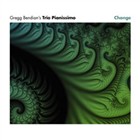
He was also very complimentary of my piano trio disc, Change (Aggregate Music, 2005). I was so honored that he took the time to listen to it. The MoogFest performance was his first in America since 1990, and it was quite exciting to play those pieces from Oh Yeah (Nemperor/Sony, 1976), The First Seven Days (Nemperor/Sony, 1975) and [guitarist Jeff Beck's] )Wired (Epic, 1976) with him.
It was a wonderful evening for Jan and his fans, many of whom, including his children, had never had the chance to see him play live. Jan had a good time and he played so great! The show's been recorded for DVD, so hopefully that will come out some time this year.
AAJ: Do you have any ambitions to record Apocalypse, or perhaps conduct an orchestral recital of that work?
GB: Of course, yes. It would be a huge undertaking. Return To The Emerald Beyond includes my string quartet arrangement of another Mahavishnu gem, "Smile of the Beyond, from Apocalypse. In a way, working from Visions of the Emerald Beyond—and going back to Apocalypse—gives me quite a clear picture of what would be involved. It would be a matter of finding the right orchestra, finding the right conductor, among other things.
I would love to do this for Sony Classical. I've done some Mahavishnu archival work for Sony Legacy and of course it's a matter of budget and interest higher up. I don't know that there is a lot of interest in a company like Sony. So, it's in mind, It's just a matter of whether it happens in the next two years, five years, or ten years. But it is something that I've discussed with John and he said: "If anybody can do it, you guys are the ones.
AAJ: Do you think the Mahavishnu Project will end once you've recorded all the Mahavishnu Orchestra material or can you see it continuing in one form or another?
GB: I would hope it can continue. There are a lot of places around the world where we haven't played this music. There are places the Mahavishnu Orchestra didn't perform that would want to hear this music performed live. So we have a bit of a job to do in terms of continuing to spread the word.
I also think there are additional musical possibilities for the band. I'm more and more interested in playing with other musicians and having more and more collaboration going on in the music, and more and more abstraction. At the moment it's difficult for me to see an end point. It's a thing that keeps feeding itself—just like any other form of great music.
AAJ: You studied classical percussion under Gary van Dyke of the New Jersey Percussion Ensemble; do you get much opportunity to perform in a more classical context these days?
GB: I also work in contemporary classical composition and right now I'm working on a CD of my music for strings and a CD of my solo percussion works.
 AAJ: What other projects do you currently have in the pipeline?
GB: Now I'm working on a duo record with guitarist Richard Leo Johnson for Cuneiform, and I'm hoping to do another Mahavishnu Project recording, which I think will be all original compositions. Then there's also a trio I've been doing with Glenn and Adam which is looking at the Tony Williams Lifetime material, Miles Davis material, as well as Mahavishnu material. I'm also producing live recordings from The Bottom Line archive which will be part of a Koch box-set featuring great jazz artists like The Brecker Brothers, Tony Williams Lifetime [with Allan Holdsworth], John McLaughlin Trio, and the Cobham-Duke Band.
AAJ: Obviously Billy Cobham and Tony Williams are big influences; what other drummers particularly inspire you?
GB: My big hero is Jack DeJohnette. Just in terms of his pure musicality, his range of endeavor, the sound he gets from the drums. He's just the consummate drummer and musician. And of course, before him, Roy Haynes and Max Roach. Max Roach has been a tremendous influence on me as well. I had the great honor of spending a couple of weeks with him on the road back in '89. I was on tour with Cecil Taylor's group and at that time Max was on tour with his quartet. Max took me under his wing, and took a liking to me and was very supportive of my playing with Cecil's band. He told me a lot of stories and I was able to ask him a lot of questions. I was twenty-five at the time. That was a huge inspiration. Life-changing.
AAJ: And of course, Roy Haynes at eighty-one years of age is going great guns, playing fantastically well and leading a great group.
GB: He really is. He is fantastic. In fact, on my recent CD called Change, which is just piano, bass and drums; I feel there is a lot of Roy in there.
AAJ: Can you expand a little on that last comment?
GB: Well, it's Roy, Tony and Jack really. I use the drums as the catalyst for many of the compositions, and the drums are the catalyst for the improvisation and interaction. And my approach to the kit couldn't help but be influenced by theirs, particularly with Roy. You know, the idea of orchestrating and isolating elements on the kit. And combinations of drums and cymbals that move the music forward and color the music, propel the music.
AAJ: Your current band is impressive. Would you care to comment on the players?
GB: Glenn Alexander is the clear favorite of all the guitar players I've had in the band. He's a supremely musical, melodic soloist and never needlessly flashy. He has a vast knowledge of jazz and rock music. I love the fact that he has that beautiful rock tone while playing from a jazz-rock vocabulary. I haven't had that in the band before. And I also haven't had a guitarist who played so absolutely within the rhythmic cycle of the Mahavishnu Orchestra's music. I think that is the greatest challenge of Mahavishnu music, to be comfortable with 19/8, and 7/8 and 9/8—these complex rhythmic situations. And Glenn just has that natural rhythmic ear. So that's been a pleasure.

As is working with Adam Holzman who, having played with Miles Davis, brings the Miles knowledge and I have always had this interest in McLaughlin coming to the Mahavishnu Orchestra through Miles and wanting to have that element in our interpretation of the Mahavishnu Orchestra. And he has the vintage keyboard sound which I'm interested in, and he's another incredible soloist, very melodic, very nuanced.
Rob Thomas continues to amaze me on the violin. He's easily one of a handful of electric violinists that are moving the instrument forward as a jazz instrument; Rob, Didier Lockwood, Jean-Luc Ponty, Jerry Goodman—there aren't that many. Rob's linear approach is so sophisticated that in many ways it really is more influenced by Allan Holdsworth than it is by anyone else. It's something that hadn't really happened on the electric violin before Rob started bringing this in. So, it's a great pleasure to be working with him.
Our new, young bassist, David Johnsen is great because he's a kind of hybrid between the Rick Laird and Ralph Armstrong approaches. He's very solid, he lays it down, and he is also very astute rhythmically and quite a funky player. And if you want to get into some noise and sound exploration with him, he has the Moog pedals, so watch out!
It's a very creative and very happy new Mahavishnu group. We enjoy playing together and enjoy each other's company off the stage as well. I'm very proud of what these guys are doing with this wonderfully challenging music. It just gets better and better.
Visit Gregg Bendian and Mahavishnu Project on the web.
Selected Discography:
The Mahavishnu Project, Return to the Emerald Beyond (Cuneiform, 2007)
Gregg Bendian's Trio Pianissimo, Change (Aggregate Music, 2005)
The Mahavishnu Project, Phase 2 (Aggregate Music, 2004)
The Mahavishnu Project, Live Bootleg (Aggregate Music, 2002)
Gregg Bendian's Interzone, Requiem for Jack Kirby (Atavistic, 2001)
Gregg Bendian's Interzone, Myriad (Atavistic, 2000)
Gregg Bendian/Nels Cline, Interstellar Space Revisited (Atavistic, 1999)
Gregg Bendian's Trio Pianissimo, Balance (Aggregate Music, 1999)
Gregg Bendian/Alex Cline, Espiritu (Truemedia Jazzworks, 1998)
Derek Bailey/Pat Metheny/Gregg Bendian/Paul Wertico, The Sign of 4 (Knitting Factory Works, 1997)
Gregg Bendian's Interzone, Gregg Bendian's Interzone (Atavistic, 1996)
Paul Wertico/Gregg Bendian, Bang! (Truemedia Jazzworks, 1996)
Derek Bailey/Gregg Bendian, Banter (00 Discs, 1995)
Gregg Bendian, Definite Pitch (Aggregate Music, 1994)
Cecil Taylor, In Florescence (A&M Records, 1990)
Gregg Bendian, Gregg Bendian Project (Aggregate Music, 1988)
Photo Credit
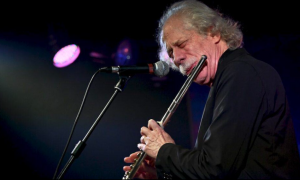
Top Photo: Peter Gravina, courtesy of Gregg Bendian
Bottom Photo: Monica Bass
Mahavishnu Project Photo: Robert Mode, courtesy of Mahavishnu Project
About Gregg Bendian

Tags
PREVIOUS / NEXT

Become a Sustaining Member

Since 1995, All About Jazz has championed jazz as an art form and supported the musicians who create it. Over three decades, it has grown into one of the world's leading jazz resources, serving hundreds of thousands of readers, musicians, presenters and industry professionals each month.
Help Build the Future of All About Jazz
Your support helps us continue building All About Jazz for the next generation—expanding our editorial coverage, preserving jazz history, developing new community features and creating better ways to discover the music and the people behind it.
Become a sustaining member for as little as $20 per year and you'll immediately enjoy an ad-free experience along with access to subscriber features and future articles for a full year.
Together, we're not simply sustaining All About Jazz—we're building its future. Thank you for being part of the journey.