Home » Jazz Articles » Profile » Paul Dunmall
Paul Dunmall

In free improvisation there
 "I think what's actually happened in free improvisation...there's nothing that's barred. We want to use it all. We want everything. We want melody, we want time, we want abstraction, we want no time, we want the whole package so that you are truly free to play what you want.
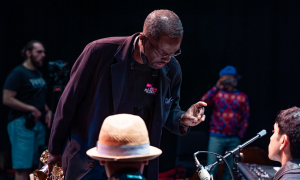
 Musicians do not usually tend to have mottos or slogans but the above statement just about encapsulates the career of saxophonist Paul Dunmall. One of the second generation, using the term loosely, of British free improvisers, Dunmall is a champion of the form as it enters its amazing sixth decade.
Dunmall, born in 1953 in Welling, Kent, spent his formative years, after having turned professional at age seventeen, playing jazz but also the progressive rock popular at the time with a band called Marsupilami. He moved to America in 1973 and spent three years at the Divine Light Mission Ashram through which he played with Alice Coltrane.
When he returned to London in 1976, he began to meet the earlier generation of British improvisers and learn, really for the first time, of his musical heritage, initially from hearing drummer Louis Moholo's album Spirits Rejoice (Ogun, 1978) with Evan Parker, Keith Tippett, Kenny Wheeler, Harry Miller, Johnny Dyani and Nick Evans. "I felt great because I had done the hard slog by learning my craft in all sorts of bands, Dunmall recalls. "Learning how to play the saxophone properly, playing in horn sections, learning how to play like that, studying the American side of jazz and then getting drawn into the free improvising—I didn't belong to any camp. I was my own man sort of thing and I could play with all these different sorts of people.
It has been stated by others that free jazz is very much about community and Dunmall seems to agree: "I found they [older British jazz players] felt, well there's not that many of us around, here's someone else who's a really good player who's helping us. They could hear that I was from the American tradition but they could hear also that I was doing my own thing.
Dunmall, had started down the path to free improvisation years before, though he might not have known it. "I've done it from day one honestly, he says. "It just seemed natural to me that you play what you want. Playing what he wants or as he puts it, "see what happens, has led to some very fruitful relationships with a host of other like-minded players, perhaps most notably with drummer Tony Levin, bassist Paul Rogers and pianist Keith Tippett, both independently and as the collective group Mujician.
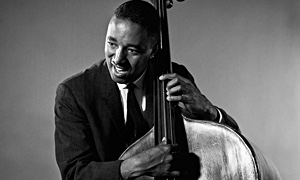
 Dunmall met Levin after the drummer had heard the saxophonist play at a festival. Rogers and Dunmall met when they were on the same gig in the early '80s. Tippett and Dunmall taught at the same summer music camp. Chance encounters that have led to over 25 years of making music together, making but never discussing. "Since day one we said let's never talk about what we're going to do, Dunmall states. "So we never discuss the music, never have. And sometimes we haven't worked for long periods, three months, six months, we haven't done a gig and what's happened, we've walked on and it's just been as though we were together yesterday.
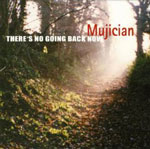
Mujician came together in 1989 after Paul Rogers' return from a stay in America. Dunmall got a gig, for what at that point was called the Paul Dunmall/Keith Tippett Quartet. All four participants were enthusiastic about the results and started thinking about names. Tippett had used the name Mujician on a trio of solo piano releases for FMP, the moniker coming from an auspicious mispronunciation of her father's profession by Tippett's daughter. The group made The Journey, their first recording for Cuneiform, in 1990 and seven more have followed, including this year's There's No Going Back Now.
Speaking about the band's development, Dunmall observes, "The latest stuff we've been doing amazes me how it turns on a sixpence. The music's going on one direction and it shoots off at a right angle in a split second. I don't know how that's possible but it does it. It seems to be happening a lot. All of a sudden, it is absolutely full on roaring and it stops and a pin drops.
Though Dunmall has had international exposure through Mujician and the Cuneiform albums, as a bandleader on SLAM Productions, playing solo on several FMR discs or as part of the ensembles of Barry Guy or the late Elton Dean, Dunmall feels very strongly about being in control of his own music. To that end, in 1999, Dunmall founded DUNS Limited Editions. The first release was a solo bagpipes album. Dunmall recalls he "sent it to a couple of record labels and I almost burst out laughing, thought I must be joking and I thought I'm not joking, this is something I really want to do. Maybe many people aren't interested in improvised bagpipes but on the other hand I want it documented and I want it released. I don't care if nobody buys it. I'm going to release it.
The initial run was less than 100 copies and sold well enough to allow Dunmall to "put out whatever I like without asking anybody's permission or whether they like it or not and not only that, because I only make small amounts, I can put one out every month, every six weeks which is really I wanted to do, rather than putting an album out with a big label, my one album every two years or once a year that I'm precious about and in the end I don't like it. 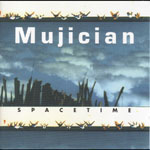 DUNS Limited Editions, as stated in the liner notes of one of the discs, functions very much as a newsletter, allowing interested listeners immediate access to what Dunmall and a small group of musicians are doing at a particular point in time. What it is not is a label modeled after famous European musician-run imprints like FMP or Ogun or Incus. "I've said to all my friends, just so they so understood, I'd love to put all your guys' music out but unless I'm on it, I can't, Dunmall bemoans. "I am always saying to the guys, it's easy, do it yourself. It's one of the best things I've ever done. People complain that it swamps the market with stuff but I disagree. I think it's taking the power away from all these big record labels that used to tell you whether you were any good or not. Everybody now has a chance to present their music. It's up to the public. They buy it or not, that's their decision.
Dunmall has now played professionally for over 35 years, a period still only slightly half of the lifespan of free improvisation. And much like that genre still struggles for recognition, Dunmall is too often not afforded his own identity and the respect that comes with it. "One thing that always got to me, he says, "was I was always sounding like every saxophonist you've ever heard. And I don't know whether that's a compliment or not. I can't figure out whether I'm doing something wrong or I'm doing something right. I know I've made it when people start saying that they sound like me.
Selected Discography
Mujician, There's No Going Back Now (Cuneiform, 2005) Paul Dunmall, Solo Soprano Saxophone (FMR, 2005)
Alex von Schlippenbach/Paul Dunmall/Paul Rogers/Tony Bianco, Vesuvius (SLAM, 2004)
Paul Dunmall/Paul Rogers, Awareness Response (Emanem, 2003)
Paul Dunmall/Paul Rogers/Kevin Norton, Rylickolum: For Your Pleasure (CIMP, 2003)
Mujician, Spacetime (Cuneiform, 2001)
Photo Credit:
Frank Rubolino
About Paul Dunmall

Tags
PREVIOUS / NEXT


Become a Sustaining Member

Since 1995, All About Jazz has championed jazz as an art form and supported the musicians who create it. Over three decades, it has grown into one of the world's leading jazz resources, serving hundreds of thousands of readers, musicians, presenters and industry professionals each month.
Help Build the Future of All About Jazz
Your support helps us continue building All About Jazz for the next generation—expanding our editorial coverage, preserving jazz history, developing new community features and creating better ways to discover the music and the people behind it.
Become a sustaining member for as little as $20 per year and you'll immediately enjoy an ad-free experience along with access to subscriber features and future articles for a full year.
Together, we're not simply sustaining All About Jazz—we're building its future. Thank you for being part of the journey.