Home » Jazz Articles » Profile » Ira Sullivan
Ira Sullivan

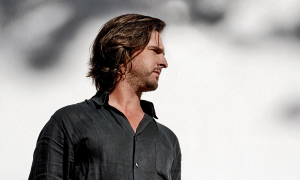
In Florida, away from the reputation as a solid bebopper that he had earned in Chicago, Sullivan was free to express his own developing musical personality as a leader.
 When Ira Sullivan makes his eagerly anticipated appearance as a featured soloist with Eric Alexander's quintet at Dizzy's Club Coca-Cola this month, it will be the first time the amazing multi-instrumentalist will be playing a weeklong engagement in New York in twenty years. Sullivan was a regular visitor to the city from 1980 to 1986, when the hard bopping band he fronted with trumpeter Red Rodney would come into the Village Vanguard annually to kick off their yearly world tours, but since then he has been seen and heard here rarely—most recently at last year's star studded Jaco Pastorious tribute at the Beacon Theatre. Sullivan, who was a mentor of sorts to Pastorious when the bassist was growing up in Florida, remembers, "There were 15 great fender bass players there—Gil Goldstein had written (arrangements on) a couple of Jaco tunes. I had a four piece string section plus me playing soprano and then Randy Brecker also was with me." A few years earlier Sullivan appeared on a JVC tribute to Johnny Smith. "I was the only horn player," he says, "there with 22 of the world's best guitar players."
 One of the music's most enigmatic figures, the seventy-five year old Sullivan is one of the very few musicians of his era to make a world class name for himself while rarely appearing in the jazz capitol of the world. He first came to New York from his native Chicago under the most auspicious of circumstances in 1956—to join Art Blakey's Jazz Messengers—and astounded musicians and critics alike with his uncanny facility on both saxophone and trumpet. He recorded with Blakey for Columbia, on Blue Note with J. R. Montrose (a date featuring the stellar rhythm section of Horace Silver, Wilbur Ware and Philly Joe Jones) and as a leader under the auspices of pianist Billy Taylor. Following this propitious introduction to the national jazz scene he returned home and was seldomly seen here for the next 25 years. "I left home when my first child was four months old and I didn't get back until she was ten months" he explains. "I said I'll never do that again."
Sullivan's years in Chicago were far from uneventful. His prodigious abilities as a brass and reed man made him a first call sideman—he played trumpet with Charlie Parker and tenor with Roy Eldridge—as well as an important leader on the windy city's lively jazz scene. Sullivan's love for his hometown is obvious. "In Chicago I grew up with all the great tenor players growing up," he fondly remembers. "Gene Ammons, Johnny Griffin, Dexter Gordon, Sonny Rollins, Lee Konitz, Sonny Stitt, you know, whatever name you want to cover." Tenor players weren't the only musicians Sullivan encountered at home. "They all came through Chicago," he says with palpable pride. "Herbie Hancock was eighteen when he was going to the University of Chicago and handed me a card that I showed to him backstage when he was forty-five; he almost fell on the floor—Back then we were all wearing Ivy League suits. He said, 'Mr. Sullivan, if you ever need me here's my card.' He was studying physics at the University of Chicago. So that's what I mean. And Chick Corea. They were all young guys."
During the decade following his return to Chicago from New York, Sullivan achieved a somewhat legendary status as one of the city's favorite sons. He recorded a pair of records as a leader, Nicky's Tune and Blue Stroll, for the locally based Delmark label, playing an impressive battery of instruments, while sharing the front line with fellow Chicago saxophonists Nicky Hill and Johnny Griffin. A couple of other distinctive dates as a sideman featured him in tandem with two more multi-instrumentalist iconoclasts—Rahsaan Roland Kirk and Eddie Harris. Well on his way to becoming one of the most celebrated jazz musicians living away from the country's coastal media centers, Sullivan made a move even more arcane and audacious than his earlier withdrawal from the spotlight of New York, when he migrated to Miami in the sixties.
"The first thing I knew about Florida was from Popular Mechanics when I was a kid, right up until my twenties and thirties, until I came here," Sullivan says from his home in the sunshine state. "I'd pick up Popular Mechanics and there'd be an ad and there'd be gray headed couple sitting in a canoe and he's rowing and she's sitting there, maybe sewing or something, on a nice sunny day and it says 'Retire in Florida on fifteen dollars a month.' Now at no stretch of the imagination did I think that Florida was a place to play jazz, so when I came here, I didn't even bring a horn with me—I came here for two weeks to visit my parents and now after forty years of culture shock I'm still here." He continues cryptically, "It's too involved a story, but I found myself staying—I had sort of already established a career my first year here, playing in places."
Sullivan played in a surprising variety of venues—some more unlikely than others—including of all places Disneyland. "They had a wonderful jazz room at Lake Buena Vista in Disneyland when it started, for about six or seven years and I'd play there," he recalls. His memories of club includes reunions with trumpeter Idrees Sulieman, with whom he played with in the Messengers. "Idrees would come in and sit in because he always came to visit his family over from Denmark and stay a couple of months—he also played alto sax by the way. A lot cats didn't know that—So he came in and sat in on his alto and he said, 'Man, I never get to play alto.' And he played as many choruses as Trane would do on a tune, only this was in the Disney World jazz lounge—but I just let him play because I know he loved it."
In Florida, away from the reputation as a solid bebopper that he had earned in Chicago, Sullivan was free to express his own developing musical personality as a leader. His forward looking Horizons album, recorded for Atlantic in 1967, proved him to be one of the most eclectic players to ever develop out of the mainstream. Eight years later he solidified his reputation as a truly unique creative musician with an eponymous date for A&M Horizon that introduced the then unknown Jaco Pastorious. While teaching at the University of Miami he mentored a young Pat Metheny, which would, along with his association with Pastorious, later lead to his revered status among the younger fusion generation. Meanwhile he maintained his reputation as a straight ahead master with recordings as a sideman with Philly Joe Jones, Red Garland, Hank Jones and Louie Bellson, as well as with the group he co-led with Red Rodney.
Sullivan is emphatic in saying that the only way he's managed to remain in Florida all these years is his ability to leave and play elsewhere, most notably in his beloved hometown of Chicago, where he remains an annual fixture. "I host at the Jazz Showcase," he says. "I finish up Charlie Parker month and then we go right into the week of the Labor Day Festival, which is on the lakefront. And so I'm usually the host at the club and all the headliners come over and play with us." He believes that one of the room's jam sessions is where he first met an eighteen year old Eric Alexander. This year's trip had an even more rejuvenating effect on Sullivan than usual. An old trumpeter friend there, Dr. Martin Marshack, had become a prostodontist and in a revolutionary new procedure restored Sullivan's aging teeth, which had suffered from years of punishing multiple embouchures. "He rebuilt my tooth structure, took it back to where it was when I was nineteen," he says.
Sullivan will be playing soprano saxophone, trumpet and flute when he joins Alexander at Dizzy's with a group that will also include Harold Mabern at the piano, John Weber on bass and Joe Farnsworth on drums. "Eric is covering the tenor," he says, "so we'll have a lot of variety. A lot of different sounds can be made with that kind of quintet." He rejects the concept of a battle of the saxophones. "Battle," he says, "we've got enough war in the world. Music is harmony, melody and rhythm."
Recommended Listening:
· J.R. Monterose—J.R. Monterose (Blue Note, 1956)
· Ira Sullivan—Blue Stroll (with Johnny Griffin) (Delmark, 1959)
· Rahsaan Roland Kirk—Introducing Roland Kirk (Chess-GRP, 1960)
· Ira Sullivan/Chicago Jazz Quintet—Bird Lives! (Vee-Jay—Koch, 1962)
· Ira Sullivan—Peace (Galaxy-Fantasy, 1978)
· Red Rodney/Ira Sullivan—Sprint (Elektra, 1982)
< Previous
3D Family
Next >
Wild Orchids
Comments

About Ira Sullivan
Instrument: Multi-instrumentalist
Related Articles | Albums | Photos | Similar ToTags
For the Love of Jazz
 All About Jazz has been a pillar of jazz since 1995, championing it as an art form and, more importantly, supporting the musicians who create it. Our enduring commitment has made "AAJ" one of the most culturally important websites of its kind, read by hundreds of thousands of fans, musicians and industry figures every month.
You Can Help
To expand our coverage even further and develop new means to foster jazz discovery and connectivity we need your help. You can become a sustaining member for a modest $20 and in return, we'll immediately hide those pesky ads plus provide access to future articles for a full year. This winning combination will vastly improve your AAJ experience and allow us to vigorously build on the pioneering work we first started in 1995. So enjoy an ad-free AAJ experience and help us remain a positive beacon for jazz by making a donation today.Near


Giveaway

Eligible winners: 15
Days remaining: 5
Days remaining: 5