Home » Jazz Articles » Interview » Steven Bernstein: Proud Member of the Pre-Computer Absor...
Steven Bernstein: Proud Member of the Pre-Computer Absorption Generation

People ask, 'how do you write all this different music? You do so many different things.' But my philosophy is that I absorb it and I just put it out. I
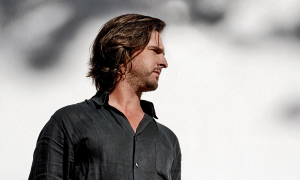
 Trumpeter/composer/arranger Steven Bernstein may be the ultimate Downtown jazz personality. Certainly, he's one of the most ubiquitous and hard-working since he began playing in New York in the 1980s after relocating from California. In addition to playing with, well, everyone, he was a member of the 1990s edition of John Lurie's Lounge Lizards and a co-leader of the 1990s trio Spanish Fly. Meeting producer/impresario Hal Willner (who produced the first Spanish Fly album) led to a long association that's continued to this day—Bernstein having become Willner's indispensable bandleader/arranger for many of his multiartist events, including tributes to artists like Doc Pomus, Harold Arlen and Leonard Cohen. Bernstein's scored films and television shows, done commercial jingles, worked with pop players such as Lou Reed, Marianne Faithfull and Sting—you've probably heard his playing even if you've never listened to a single jazz recording, and his reliability in all these musical situations has put him in the enviable position of being able to do what he wants.
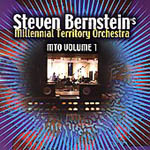
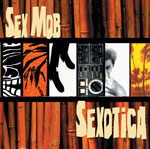
In 1995, he formed the quartet Sex Mob, perhaps the archetypal hipster Downtown band, and the first Bernstein group to feature its leader on slide trumpet, a long-disdained instrument that resembles (and is played like) a small trombone. Sex Mob recently released its fifth CD, Sexotica, on the Thirsty Ear label. Bernstein formed his other current band, the nine-piece Millenial Territory Orchestra, in 1999. While this group was formed to pursue Bernstein's fascination with the territory jazz groups of the 1920s and 1930s, its repertoire covers a vast range and includes contemporary tunes like Prince's "Darling Nikki ; MTO's version of this song on the recently-released Sunnyside record MTO Volume 1 has gotten Bernstein attention in media circles not previously interested in the Downtown jazz scene.
Bernstein's easy to interview. He's a natural raconteur and as big a fan of music as he is a player. I spoke with him about Sex Mob, the MTO, his Baby Loves Jazz project, his role in the Levon Helm Band, and much more.
All About Jazz: Are you ready to be interviewed?
Steven Bernstein: Hold on, I'm going to go in the back yard. Let me put a little music on the record player. I still can't stop buying records. I keep saying I'm going to stop. But I went to this street fair and got this Duane Allman: An Anthology (Polydor, 1972). It's actually good, man. It starts with all his sideman stuff. He made a lot of records as a sideman. Hmm, how about this old George Duke album. I have so many records; I'm a little obsessive.
AAJ: Do you just buy used vinyl?
SB: Yeah. Well, I buy CDs. I keep saying I'm not going to buy any more CDs either, but then I'll find some great store when I'm on the road. I was just in Chicago for a day, and we had three hours between shows and I was back at the hotel. I said, "Hey, I think I'm right around the corner from Jazz Record Mart, and sure enough, I was. I had 45 minutes at Jazz Record Mart.
AAJ: Well, I live in Chicago, so I know firsthand that 45 minutes can be $450 spent if you're not careful.
SB: I know. But I walked out with a huge pile. Just getting one from each subject is a huge pile.
AAJ: I'm just glad to talk to a musician who still buys music. A lot of people I interview don't buy records anymore.
SB: Well, that's why I'm kind of a unique musician. People ask, "How do you write all this different music? You do so many different things. But my philosophy is that I absorb it and I just put it out. I'm always getting ideas because I'm always listening to music, constantly buying new CDs. Everything has some idea in it—"Oh, I never heard that before. I write so many arrangements, so I'll think, "Oh, I've got to write an arrangement of this song. Or "I've got to take this lick and throw it into the next thing I write.
AAJ: That's a very good thing to do.
SB: Of course, man! That's how you create a vocabulary. You absorb things. You hear something and use it, but when you retranslate it, it comes out different. It's like with Sex Mob—we'd play a song and people wouldn't even recognize it. And we'd have played it exactly like it was on the record. Literally—as far as the notes. The intention may have been very different, but harmonically, we'd have taken the exact same notes. But people don't recognize it because they're used to hearing the record, and I'm just taking the notes of the record.
 AAJ: Context and tone are huge to people. But there's also the fact that some rock people only hear rock. Some jazz people only hear jazz. So if you play something from an area they've never heard, and it's out of the blue for them.
SB: Well, I'll tell you something interesting. The Millennial Territory Orchestra's been such a New York phenomenon—I mean, in the sense that a lot of people know us in this tiny community of people. In this tiny world we're talking about, people know what I do. But now that it's gotten out into other worlds, people have started—as they tend to do—to identify things and categorize them. And I think people have begun to hear what not just me, but a lot of people in New York have been doing. I think with this MTO record, I'm kind of putting out to the world this real combination of everything. We've absorbed everything. That's how we grew up. We're the pre-computer absorption generation.
AAJ: Right—the music has gone straight up to the original hard drive between your ears.
SB: Exactly. On the other hand, there's so much to absorb, and so much to learn, that I'm always getting embarrassed. I had some time off yesterday in the city, so I went to this one store—the only clothing store I like in New York City. They get these really cool clothes from England that nobody else gets. Anyway, they're playing this one song and I recognized it. I knew it was a really famous song. And I can't hear lyrics, so I can't ever tell what a song is by its words. It just sounds like the teacher in "Peanuts. I just hear the drum part, the bass part; I'm seeing the score in my head as I hear it. I looked at the people at the store, this really nice couple, and said, "This is a really famous song, right? What is it? They said, "'Whole Lotta Love' I said, "By The Who? They just gave me a look and said, totally flat, "No, Led Zeppelin. There are some things that everyone in the world knows that I just don't know. I never listened to Led Zeppelin or The Who, so when I hear that stuff, I know it's that kind of music, but I'm not quite sure which one it is.
AAJ: Well, you were in the right zone.
SB: Yeah, I knew it was that. We've been doing "I Can See For Miles for about three years now in Sex Mob. Originally, my wife was with me in the car—she likes to listen to classic rock—and the song came on, and I was like, "Wow, this is cool. What is it? She just looked at me and said, "The Who, 'I Can See For Miles.' It was like asking somebody what that red sign is that says S-T-O-P. But I actually had the song on a record, because I'll just buy a box of rock records for five dollars so I can have them. So I had this Who collection. So I found the song and wrote it out that night. That's a good tune, man.
AAJ: That's one of their best. I love the one-note guitar solo.
SB: Yeah. Anyway, we haven't even started the interview yet.
AAJ: This is the interview. But I guess I will get a little more formal. Let's start by talking about your longstanding nine-piece Millennial Territory Orchestra, which, after a couple of extended residencies at Tonic and the Jazz Standard, finally released its first record on Sunnyside, MTO Volume 1. This group, to some extent, is reflecting your interest in late 1920s-early 1930s jazz bands—the so-called territory bands from the Midwest.
SB:Yeah, and listen—I just got a new collection from Chicago. The first three songs that I transcribed for the band were all from Chicago. I don't think any of them ended up on the first record. Two Tiny Parnhams and one from a guy named Preston Jackson, who was a Chicago trombone player who played with Louis Armstrong. Even though it's not considered a "territory of the territory bands, Chicago had a lot of bands with violin in them. Violin, for whatever reason, was really big in Chicago bands in the twenties. And I really wanted to check out bands that had violin.
AAJ: Well, of course. You have a violin in the group.
SB: So I just listened to one of the records I got at the Jazz Record Mart in Chicago, called something like Black Chicago Bands of the Twenties. [Actually, Hot Stuff: Black Chicago Bands 1922-29, Frog Records], and there's a band called Fess Williams and his Joy Boys, that had three violins! Two trumpets, trombone, three saxophones, three violins, tuba, banjo, piano, drums. And it's unbelievable.
 AAJ: Well, if you have three violins, what are they doing? Are they keeping time?
SB: No, sometimes they're playing unison melodies, sometimes they're playing little sax-like soli in harmony. It's an incredible sound. I think there were all these mob clubs with people dancing, and they wanted to dance to sweet tunes, too. So they had violin in the band. I'm pretty sure that's why they all had violins. So yeah, anyway—MTO started off with this twenties thing. I had this interest in the sound. I knew the stuff existed, because I'd seen about a million pictures in all these jazz history books I'd read; there were always these guys in the tuxedos, and they've got the violins, saxophones, clarinets. So I thought, "Let's just bring the sound back and see what happens. We'd take the sound, but not like in some recreation—not making some sort of examples for school programs.
AAJ: Well, MTO doesn't seem like any sort of tribute band that just recreates a style.
SB: No. It's a real band of friends and improvisers.
AAJ: Tell me how this group started out and how it works as a continuous entity.
SB: It started because I had been doing Friday nights at midnight with Sex Mob at Tonic since it opened. And it got really huge. It got to the point that our crowd starting going down, because the crowds were so big at one point that there would be a line of people waiting to get in—you couldn't move. It was that little moment where it was one of those things to do in the summer: go see Sex Mob at midnight. It was before no-smoking; Giuliani hadn't totally clamped down on New York yet. It was the end of having some sense of, "You're in New York. You can do whatever the hell you want. It's one o'clock in the morning in the Lower East Side. This is our zone. Actors, models, that whole thing. People who just wanted to be free to do whatever would come and hang. But then [bassist] Tony [Scherr] and [drummer] Ken [Wollesen] started working with [guitarist] Bill Frisell. Bill hired both of them as his trio; he basically hired my rhythm section.
AAJ: You were screwed.
SB: [Laughing] I kind of felt like that at the time. I've since come to appreciate the fact, but at the time I was like, "Fuck. And I wanted to keep playing. Meanwhile, I'd had this gnawing thing at the back of my head, thinking about this music. I'd been buying a lot of it, and it was like being sucked down this hole—I kept going out and getting these records, finding these collections of twenties and thirties music, and spending all my time listening to it. So I thought, "Fuck it, man, I'm just going to put together a band with this instrumentation. I'll keep the night, and start a new band. I had no idea what kind of musicians I was going to get. Literally until the night before, I probably didn't have a band. Or music—I didn't even know what music I was going to do. I just wanted to get this instrumentation. I wanted clarinet, tenor, a guy who played baritone and soprano—him, I knew.
One thing that really inspired me was the idea of the saxophones switching instruments. Mingus had done that on The Black Saint and the Sinner Lady (Impulse!, 1963), a record that I'd been listening to a lot at that time. And that record's got almost the same instrumentation, but it has a guitar in it. Jerome Richardson plays baritone and soprano there, so sometimes you have him playing the bottom reed and sometimes you have him playing the top reed, and that can really change how everything sounds. So you can change everything by pivoting one person. Originally, I was going to get really super-Downtown-ey rhythm guys and then straighter horn guys. But because you never know who's available, I ended up with this band with more of a groove type of drummer—it just ended up with this sound. And that's how it started. I had maybe two arrangements and we improvised the rest of the show. We just kind of went for it. And no real rehearsal. I think we just rehearsed downstairs right before the gig.
For the second show, we did the same thing. We met downstairs. And there were already two musicians that couldn't make it—you know, people are always subbing out in New York, because somebody's always on the road. And that was the night of [trumpeter] Lester Bowie's funeral in New York. And man, a bunch of us had been to the funeral and I was really emotional—and probably a little ripped too, in honor of Lester. I had a cigar and cognac and other things. It was a really emotional funeral. Some of the most stoic people I knew were breaking down in tears. People just couldn't talk; they were devastated. And so then we played this show. I started with "St. Louis Blues, and the show was incredible. After the show, this guy comes up to me—and remember, this was our second gig, we don't really have a personnel, we have like three or four songs, we've never had a real rehearsal—and says, "I run a festival in Norway, and I have to have you this summer; I'm going to get you a summer tour. So [laughing] I said, "Okay. So from that second gig, we got a little mini-European tour. We did three huge festivals in Europe that summer.
So after two gigs, this band already had this little thing happening. And it just kept going. The only two personnel changes, really, were when people went on the road for extended periods of time and someone else came in and the music just changed around the new person. I never really fired the other person, but when they came back, it was like, "Miss a beat, lose your seat. The music had just changed, and you can't really go back once the music evolves. It may seem kind of mean, but it's just the way it was. A new person came in and kind of rewrote the part. Chris Speed had originally played clarinet, and he had gone to Italy for three or four months. So Doug [Wieselman] came in, and that was it, man. I couldn't really go back. The music had changed. And it was the same thing with Roberto Rodriguez, the original drummer. He went on the road with Joe Jackson, and Ben Perowsky came in.
 Originally, it was all twenties music—twenties and early thirties. But then, really early on, I'd done a "reefer song concert—where I made a whole concert of doing all reefer songs with guest vocalists. And afterwards [singer/guitarist] Doug Wamble said, "Oh, I can sing that song —[Fats Waller's] "The Reefer Song. So we started doing that, and people were loving Doug's voice. Doug's a young kid from Memphis, and he's never been part of the Downtown scene, and he's just flowering. He'd been in Chicago, actually, before, and then he came to New York to be with Wynton [Marsalis]. And so that's kind of what he knew about music. So now suddenly he's around all these people who are like, "Hey man, here you are, play—do whatever you want. Whatever you feel like playing, just play it. Have a good time. No judgment. And he's just exploding, man. This young kid. He's really amazing to watch, because he's from another generation—the post-Wynton generation.
 I'm from the psychedelic generation, the Art Ensemble generation. The Rahsaan Roland Kirk generation. And I'm walking in the mall—there's this fucked-up mall where I live and sometimes you have to go there to get stuff. So when I'm at the mall, I suddenly hear this arrangement of [Stevie Wonder's] "Signed, Sealed, Delivered in my head; I hear the whole thing. So later I said to Doug, "Hey, can you sing this song? He said yeah, so I wrote this arrangement. And once I wrote that, I suddenly knew: "Oh, I can do any kind of music now.
AAJ: And there's no turning back after that.
SB: Yeah. Because I suddenly realized that it doesn't really matter. Any song I like, I can write for this band and it's going to sound like this band. It's going to sound like this new kind of music that is this old kind of music being interpreted by this group of people.
So when I'd bring in a tune, one time I'd bring in a twenties tune, and one time I'd bring in a modern tune. I try to keep mixing it up. If I'd bring in a couple modern ones in a row, I'd think, "Okay, I have to go back to the twenties stuff and pull out something new from there. I'm going do this Harry James from 1938 or '39, and it's kind of amazing—even though it's a little later, it references all that old riff stuff. I may even have to hit this 1928 Chicago one called "Nightmare [by Elgar's Creole Orchestra], which is really incredible. AAJ: No one's going to know that song but you.
SB: No [laughing]. Exactly. But I'm actually surprised at how many people do know. Well, there aren't many, but there are these jazz historian guys like Will Friedwald, who know all this stuff. It's amazing.
AAJ: I think it's perfect to do any song you want. But as the group has gotten noticed outside of the Downtown thing, it seems that a lot of people have jumped on the contemporary tunes.
SB: Of course! Because those are the ones that they recognize.
AAJ: That's the hook for them.
SB: That's the hook. [Prince's] "Darling Nikki is the one. "Darling Nikki is the hit, and now I pretty much have to do it every week because people really want to hear it. It's also a very cathartic arrangement that people kind of love; it's a real voyage.
AAJ: It's a very, very good arrangement. It really uses a lot of different colors and voices really successfully, and it's true to the original song and original at the same time. Hey, I hear two guitars at the beginning of that one.
SB: No, it's violin. Charlie Burnham.
AAJ: Oh, of course. So all this stuff was pretty much recorded live.
SB: Everything was recorded live. There are no overdubs anywhere on the record.
AAJ: And the arrangements are all yours.
SB: Well, some of them are transcriptions, but I don't do exact transcriptions. There are people, like Don Byron or Dave Berger, where that's really part of their art. They make exact transcriptions. What I do is usually take the top melody and the bottom melody—and after that, I'm like, "Okay, what do I feel is going to work in my context with this?
So the "Pennies From Heaven arrangement is pretty damn close to the Don Redman arrangement. It's not an exact transcription, but if you listened to it, you'd totally recognize that it's that Don Redman arrangement.
AAJ: That's a reasonable way to work. It's just not slavishly literal.
SB: Well, it's just the way I like to do things. Like I was saying to someone: every musician's duty is to remake the music in their own image. And you also have to remake the process in your own image. So that's not part of my process; I don't feel the need to make exact transcriptions. That's not who I am. There are some people who are very exacting, and they live their lives that way. I'm just not that way [laughing].
AAJ: Well, everyone should just do what they want, work the way they want. You've said the group sound has changed over the years, and I understand that a lot of that is the result of the couple of new players that have come in. But do you think it has changed in any other ways?
SB: One of things I have to say that I think is really amazing about this record is that it's the first record I've ever made where people had been playing the music for a long time. And the parts have all evolved because the more people play the music; the more they personalize it and take it away from what's actually on the paper. So it's always evolving as these parts become more part of personnel expression and less part of something on a piece of paper. The more people play this music, the more it gets away from what I originally intended and the more it becomes what these guys are going to make it. Which is a great thing. I mean, there are some people who don't like that. There are people who like it to stay the way they intended it. But my thing is that I've got all these great musicians—so let them make this music more.
I used to say I had this theory called "superharmony. So there are lots of thirds, lots of things that are really bright, and then just let the people keep going, man, beyond harmony. Because it's not so much about conventional harmony. Not if you've not a guy like Peter [Apfelbaum]; he's a tenor player. It's interesting, because the reviews never mention him. I realized he doesn't have a lot of features—but on every song, he takes the lead.
AAJ: I actually think the reviews don't mention individual players on the record because the liner notes don't say who plays what on what song—so writers are afraid to say "great lead from Apfelbaum because, well, what if it was Doug Wieselman?
SB: Right. Interesting. But you know, Peter is almost like the secret weapon. I've known Peter since I was in the fifth grade. So I know these things that he's going to do that only he can do. So it's interesting, because when anybody else plays the book, there's no way that stuff's going to happen—because it's stuff that only he does. And he can't write it—but if I write something like it, he knows what to do [laughing]. So he gets this thing on the out chorus of "Soul Serenade, right at the end, and Peter's playing really sharp, really so on top of the pitch—something that no normal person who doesn't think like Peter would do, because it's so wrong. But it's also so right.
You know how you listen to The Band, and Richard Manuel's singing really sharp up there, or Rick Danko—how they would sing falsetto? Or even how the guys in the Beatles would sing falsetto. It's not in tune; John Lennon was always really sharp. Burning Spear is always really sharp. It's like this human way of playing an instrument. One of the things about this band is that everyone plays in a really human style of playing an instrument. Most of this generation of players have really developed this more literal, mechanical way of playing music, so they don't throw a lot of expression into each note. They focus more on long, more complex lines. AAJ: They're a little Berklee-ified.
SB: Well, I don't know. It's not just Berklee, and it's not negative. It's an observation. Steve Coleman, John Coltrane, Woody Shaw. Woody Shaw's my favorite musician in the world, but he always had a lot of expression in his playing. But it was very pattern-based, and people would follow that pattern-based way of playing, but maybe not throw in as much uniqueness as Woody would. And then Steve Coleman's whole thing is very pattern-oriented, and so he has all his disciples. So there's all these people. Michael Brecker has all these disciples. Of course, you're talking about people like Michael Brecker and Steve Coleman, who have very unique sounds. But there are people who aren't that interested in that part and they just focus on these patterns. Which is fine; that's another way to play music. But the guys in my band really focus on each note. So one note comes out, and that's what it's all about.
AAJ: Well, that really makes for a band. When people do that, you have a really band-y band. Those are the special bands, and that's the way that some rock groups beat some jazz groups. They're sort of stuck with each other.
SB: I'm totally with you on that. They're bands. And again, that brings me back to Sex Mob. It's a band. It's like a rock band because of the way we relate to each other. And the thing about MTO—because of the reality of having nine people, I haven't played with the original nine since I don't even know when. There's always a sub. It always changes, man. But with Sex Mob, we really don't do with subs.
AAJ: Well, it's almost time to talk about Sex Mob. But about the MTO record: I take it that the nine songs on the MTO Volume 1 CD are just a few from a much larger book?
SB: Right. I have about fifty arrangements. AAJ: And there was more stuff recorded that didn't make it onto this one?
SB: Yeah. We recorded two albums worth of music. We went in and just recorded for two days. So there already is another record of music ready. But I've done so many arrangements since then—since more than a year ago, when we made the record—that I kind of want to go back in the studio. I don't even need to get that many songs. There are a few new songs that I'd like to get to sort of round it out. I think you shouldn't make records any less great than you can as far as sequencing, and making it really well-rounded. So yes, I do have a whole record's worth of stuff.
AAJ: So there will be a Volume 2, but you're not worried about when.
SB: No, I never do. I've always done everything myself. No one's ever paid me to make a record, so when I have time, I just go on to the next project.
AAJ: This record can just work for you for now.
SB: I think so, man. I'll let it simmer there for a while. Maybe someone will even offer me some money to help me out. I had to pay for this first record. And it's funny—I thought this band would really get signed by a label. To me, it's pretty inside, you know? There's no noisy stuff at all, and that actually bummed out some people. "Oh man, I kind of wish you'd done more of that stuff you do live. But that doesn't always translate to CD.
AAJ: There is that tiny little section in the middle of "Happy Hour Blues.
SB: Right. There is. There's that one tiny section where it gets a little skwonkly. So anyway, I did that whole record myself. And [laughing] I wouldn't mind a little help!
AAJ: Just to cover the cost of tape, say.
SB: Well, we don't use tape anymore. We all just record onto hard drive. I mean, there was no tape for a few months—it was all gone. But they have started making it again. But tape is like $180 for 20 minutes, and a hard drive is $200 for two CDs. So everyone just buys the hard drive.
AAJ: Time to talk about Sex Mob. This is your longstanding quartet of you, saxophonist Briggan Krauss, bassist Tony Scherr and drummer Kenny Wollesen. This is a pretty popular band. If Sex Mob is a party band, it's the smartest party band of all time. The group's new CD is Sexotica, which came out on Thirsty Ear the same day as the MTO CD, right?
SB: Same day, yeah.
AAJ: Before we talk about this new one, just tell me about Sex Mob—what you like about playing with these three guys in this band.
SB: We really create a language that is so personal. It's kind of like all four of us feel that the way we play in this band is the way that we really play, and you have to change a little to play with anybody else. So everyone gets to do this really natural thing that they do. So it's incredible; me and Briggan have developed this total language together. Now when he plays the saxophone, he can sound like a slide trumpet—he can move between notes in this really ridiculous way. He's always had his own language, which I immediately heard and incorporated into the sound of the band. Then there's Tony, who's kind of this über-bassist. He can just do whatever he wants on his bass: he can be the guitarist, the pianist, the drummer, the horn player—and keep pounding away on the bass. Kenny knows all these different rhythms. So we play everything. We play some straight-ahead stuff, we play rock. It's funny, I talked with someone, and he said Sex Mob was my "funk band. I don't have a funk band! I don't have any band that's a style. I just have bands.
AAJ: You have a Sex-Mob-style band.
SB: Yeah! It's Sex-Mob-style band. It's just a band that's these guys. We have hundreds and hundreds of tunes. It's interesting—we hadn't seen each other for two months, and we played in Europe at this really cool little festival where you play in these old barns outside of this small town and people bike from place to place. It was nice, because when you play a big concert or festival, you kind of have to go for your hits, because you're playing for a couple thousand people and you have to make those grand gestures to make it work. But we were playing in a small environment for a couple hundred people in an enclosed space, and man, we did four sets and we never repeated a song. And we hadn't seen each other for two months. But before we played, I was just saying, "Hey, remember this one? "Oh, yeah. You remember that part of it? "Yeah, right, that part—I forgot about that.
We just have so many songs. There's such a huge library of stuff in that band after eleven years. I've written so many charts, and these guys all have incredible memories. They remember everything. Briggan's the only one who carries charts with him, and sometimes I'll carry some of the newer songs. Tony and Kenny don't carry anything; it's all in their heads. So it's amazing. We've had one rehearsal in eleven years, one actual rehearsal where we called a rehearsal at an actual rehearsal studio. Before we did Sex Mob Does Bond, we got together at the club that afternoon and ran some charts. But we did a concert of waltz music once, and I had these twelve-page charts, and they were exact transcriptions of Strauss waltzes. It was really complex—you had to go from this section to this section to this section. So I said, "You know, we're actually going to have to have a rehearsal. But in eleven years, that was our one rehearsal.
AAJ: That one seems kind of called-for.
SB: Yeah. But it's a pretty unique way of creating a band—it's being created onstage. With both bands, actually, but even more for Sex Mob, because we've been doing it onstage for eleven years.
AAJ: Sounds like some fortunate relationships to have.
SB: Yeah. Unfortunately, because everyone's so busy, we don't really play that much, but luckily now, whenever we play, we're either playing at Tonic for our friends or playing in Europe for a lot of money. We barely play the States; I've kind of given up on that. I don't really give a shit at this point. I'm not going to kill myself. I'm 44 years old; I make a really good living as a musician. If people don't want to pay me, I'm not going to go! I'm not going to bang my head against a wall. I can play with Lou Reed, and Levon Helm, and Rufus Wainwright, and write music for TV jingles, and make money doing that. I did it, I went on the road—Sex Mob paid serious dues on the road, man. We went out there. We've never had a tour manager; I drive the van and I check the guys into the hotel. It's all self-propelled. The guys just believe in me. "You lead, we'll be there, man. At this point, I feel like everyone knows at this point that we're one of the really cool, unique bands in the world. We just do what we do, and I don't have anything to prove.
There are people who really like this music all over the world, and I know that. When we play a festival in Europe, and it's like, World Saxophone Quartet one night, and us the next night, and Mingus Dynasty the next night—that's all you've got to say. And we're all part of the same community; when we're backstage, they all know Sex Mob. So I feel if the U.S. promoters can't figure it out, well then, forget it. Like I said, I'm not going to bang my head against a wall. AAJ: It's tough touring in a van. And it's always harder for bands that play instrumental music.
SB: Yeah. There are very few people who get those art center gigs. And having a name like "Sex Mob —well, my wife always says, "You did it. It's your fault. The great thing is that everyone knows the name. No one's going to forget the name "Sex Mob. But on the other hand, the art centers are just a little afraid of a band called Sex Mob. And people have told me that, because I've said so many political things onstage, they're a little afraid of that too. But I just do what I do, and I think it's paid off for me, so you have to take the good with the bad.
< Previous
So There
Next >
When We Were There
Comments

About Steven Bernstein
Instrument: Trumpet
Related Articles | Concerts | Albums | Photos | Similar ToTags
For the Love of Jazz
 All About Jazz has been a pillar of jazz since 1995, championing it as an art form and, more importantly, supporting the musicians who create it. Our enduring commitment has made "AAJ" one of the most culturally important websites of its kind, read by hundreds of thousands of fans, musicians and industry figures every month.
You Can Help
To expand our coverage even further and develop new means to foster jazz discovery and connectivity we need your help. You can become a sustaining member for a modest $20 and in return, we'll immediately hide those pesky ads plus provide access to future articles for a full year. This winning combination will vastly improve your AAJ experience and allow us to vigorously build on the pioneering work we first started in 1995. So enjoy an ad-free AAJ experience and help us remain a positive beacon for jazz by making a donation today.

Giveaway

Days remaining: 5