Home » Jazz Articles » Megaphone » The Cape Town Jazz Scene
The Cape Town Jazz Scene

[Hugh Masekela and Miriam Makeba's] influences were quite different, whereas we in Cape Town, it
Its jazz is both similar and different from American jazz. First of all, at the time—the late '40s-50s—we wouldn't even call it jazz if we didn't identify so completely with Black Americans, both in social and political ways. In South Africa and Cape Town especially, you've got the White people and African people and their tribes, but the Coloreds were like a buffer zone—we were never made to feel a sense of pride in our heritage. So I remember when I first heard that "colored folks lived in America—it made me feel good to know that somewhere else in the world there were people of mixed race called "colored .
Later, when we started going to movies and heard the music from musicals such as Cabin in the Sky and saw Lena Horne, Cab Calloway and Duke Ellington, that was thrilling as well, seeing the similarities on so many levels, not the differences.
Initially, the jazz musicians all started out emulating the musicians from the United States. For me it was Doris Day, when I was singing popular songs at the Bioscope movie theater during intermission. Most of the time, people would throw things at you if you didn't sing something like "Somewhere Over the Rainbow and things they had heard from the movies. The people would dictate to you - we didn't have any critics in our community. That came later, when we got our own newspapers. The audience, they were your critics and they could make you or break you - they could physically come onto the stage and grab you and put someone else who was good enough. And they'd yell at you what to sing.
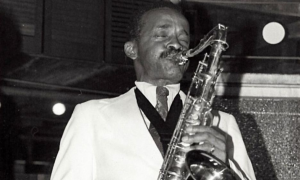
All the musicians could emulate great American jazz musicians. For example, there was Kippie Moeketsi, who could play Charlie Parker riffs—if you closed your eyes, you'd think it was Parker playing.
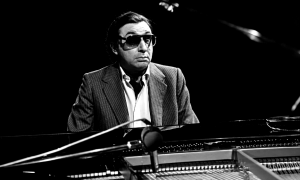
Slowly we moved on to discover "the gold within ourselves —our own very rich mix of musicians and musics, like the goema rhythm, absorbed from different cultures that passed our way. Cape Town is singer country, guitar country and piano country. There are so many musicians—then and now, it's a place with a lot of musical talent. Musicians like Henry February, who was a marvelous pianist. He was also a great teacher and enthusiast of the artform and there are many whom he took under his wing, including myself. There was also the Schilder family—Richard, Chris, Anthony—all fantastic musicians, the pianist Vincent Colby, guitarist Harold Jefta and others, all playing in white nightclubs.
I first started singing jazz in the white nightclubs when a musician named Bernie Smith heard me and said, "we're having our first jazz concert in the town hall and you should come around. Colored musicians were allowed to play in the nightclubs. Basically the white folks dined and danced while we provided the music—during intermission we'd go into the kitchen to get food. After the nightclubs, we would head back to one of the guys' houses and listen to Charlie Parker, all the Black Americans. I loved it all so very much and I refer to this period as my "night school .
Johannesburg, where musicians like Hugh Masekela and Miriam Makeba come from, had it different—it's inland. Their influences were quite different, whereas we in Cape Town, it's a lot more like New Orleans. I can only talk from my own experience, but I think the musicians in Johannesburg latched onto Miles, Woody Herman, maybe Duke Ellington—they had another approach to the music and still do.
My husband, Abdullah Ibrahim, wrote a piece called "From Cape Town to Congo Square that emphasizes or brings to light the similarity of the musics from these two places. Each year, we still celebrate the "Minstrels from America who visited South Africa in the 19th Century with blackface parades. I believe this relates back to when American ships, going to the Far East, dropped off in Cape Town. Minstrels from onboard came and enjoyed Cape Town hospitality. In turn, Cape Town heard their music originally from New Orleans and the connection was made.
To me, Cape Town jazz means musicians like Abdullah Ibrahim, who taught us all to look within and find your very own original contribution to this music. He helped me much to realize my own originality and to be unafraid to express it and "throw all caution to the wind , as they say. The same is true of all the other Cape Town musicians I worked with—Jimmy Adams, the Schilders or Bernie Smith—who all helped find an original voice for Cape Town's jazz. Maybe the music's in the air in Cape Town. It's really a magical, beautiful, mystical place.
About Sathima Bea Benjamin

Tags
PREVIOUS / NEXT
Become a Sustaining Member

Since 1995, All About Jazz has championed jazz as an art form and supported the musicians who create it. Over three decades, it has grown into one of the world's leading jazz resources, serving hundreds of thousands of readers, musicians, presenters and industry professionals each month.
Help Build the Future of All About Jazz
Your support helps us continue building All About Jazz for the next generation—expanding our editorial coverage, preserving jazz history, developing new community features and creating better ways to discover the music and the people behind it.
Become a sustaining member for as little as $20 per year and you'll immediately enjoy an ad-free experience along with access to subscriber features and future articles for a full year.
Together, we're not simply sustaining All About Jazz—we're building its future. Thank you for being part of the journey.