Home » Jazz Articles » Profile » Buck Hill
Buck Hill

I used to have a lot of battles with Sonny Stitt and he was hard to play with. He would make it hard for you, you know, with up tempos.
—Buck Hill
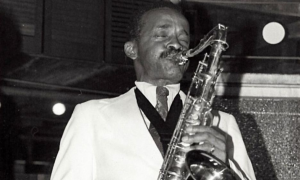
 Our nation's capitol once had a vibrant and creative jazz scene centered on and around U Street. Home to the fabled Howard Theatre, one of the first African-American venues to feature major jazz talent, the U Street area boasted many clubs and an innovative landscape that rivaled any city in the country. The place during the '30s and through the '50s in which Duke Ellington and Ella Fitzgerald honed their crafts, the Howard and its environs were a national jazz epicenter. A wonderful living link to that time and possessor of one of the finest tenor tones ever is "The Wailin' Mailman , saxophonist Buck Hill.
 After a 15-year hiatus from session leadership, Hill has returned to the studio to release Relax, a recording that showcases both his versatility and trademark round sound in the context of a guitar/organ/drums trio. Born in 1927 and growing up in Washington DC, Hill remembers that it was his brother that introduced him to the sax. "My oldest brother bought that horn for me, a soprano saxophone. He played piano and he wanted me to play. He had a saxophonist that played with him and that is who taught me. He was really the only teacher I ever had. Somewhere along the line, Hill developed a beautiful tone that reaches back to the masters and that he maintains is, "...just a natural thing. I listened to Ben Webster and Coleman Hawkins but Lester Young was my favorite. I listened to all of them and I will tell you I used to have a lot of battles with Sonny Stitt and he was hard to play with. He would make it hard for you, you know, with uptempos.
Hill quickly became a mainstay on U Street and for a time was a player in the Howard Theatre house band. His first recording was with a somewhat surprising leader: "The first recording I did was with [guitarist] Charlie Byrd (Byrd's Word, Riverside). That was way back in '58 ...Keter Betts he played bass with Ella Fitzgerald for years...Keter was working with him and he got me some gigs with Charlie because things were slow...as they usually were...so he hooked me up with Charlie and that's how that record came about. The '50s saw Hill balancing a career as a top sideman and leader while working for over 30 years for the post office and maintaining his family responsibilities. Now nearing 80 years of age, Hill recalls that time as "...thinking about music and carrying mailbags.
Hill disdained the road to remain in DC and significant sessions as a leader had to wait until the late '70s when drummer Billy Hart coordinated a series of releases for Steeplechase that included pianist Kenny Barron and bassist Buster Williams. Hill remembers Hart as a young musician in DC: "His grandmother used to live in my building. He used to come over there and I took him out one time. I took him out to a place up on 9th Street and let him play... He was friends with Nils Winther, from Steeplechase and he got me a date. A second sequence of recordings, this time produced by another great tenorist, Houston Person, are also gems of this genre. As Hill remembers, "Houston Person was the producer and he put that all together. Kenny Washington [drums] and Ray Drummond [bass], he picked them. Playing with those guys was great. Particularly compelling is Impulse (Muse, 1992) that highlights Hill's creativity as he doubles on clarinet and delivers striking versions of Duke Ellington and McCoy Tyner tunes as well as his own compositions.
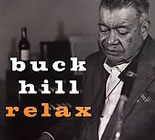 Amazingly, the newly-released Relax (Severn Records) shows the tenorist's sound to have an even deeper and more lovely patina than previously. A quartet that also includes long time Hill pianist John Ozment on Hammond A100 organ, Jerry Jones on drums and guitarist Paul Pieper, delights with three Miles Davis tunes, complete reworkings of earlier recorded Hill originals and new material. "The studio that we made them at...they didn't have a decent piano so we made them on organ (laughs). That was John's idea. Jerry got them all together. Jerry wanted to do it. You know he is an eager beaver so we went and did it... He wants to do another record and I want to do some on the soprano sax. That will be with the organ too because the organ seems to draw the people in. Hill and Pieper, meeting for the first time on this recording, connect incredibly well and their interplay throughout is engaging and soulful. This is especially evident on the Davis tunes "Flamenco Sketches and "Prancing . Hill credits Jones with the inclusion of these rarely interpreted compositions. "Jerry wanted to do the Miles' tunes... He had the records... You don't hear them done much and I can't think of anyone else who has done them.
"RH Blues is an opener that can be best described as mellow bop played the way it should be and the title cut is an enchanting piece that, as soon as Hill opens up on tenor, makes you as comfortable as your favorite pair of slippers. The chestnut "Old Folks is presented as a leisurely portrait of senior citizenry and as Hill recalls, "Everybody does it and I do it on jobs...Don Byas did it...I remember him well...I never saw him in person but I heard him a lot. The Latin breeze of "Little Bossa , first heard on Hill's Scope (Steeplechase, 1979), is here recast and gorgeously recolored by Ozment's organ. CD closer "Sad Ones , reprised from that same release, is ample proof that the "t in Hill's tenor stands for tenderness. Hill, however, perhaps sums his sound up best when he says "That's the way I play. I am not always satisfied with it but that's me...and I have been playing professionally about 60 years.
Recommended Listening:
· Buck Hill - This Is Buck Hill (Steeplechase, 1978)
· Shirley Horn - Close Enough For Love (Verve, 1988)
· Buck Hill - Capital Hill (Muse, 1989)
· Buck Hill - Impulse (Muse, 1992)
· Buck Hill - Uh-huh! Live at Montpelier (Jazzmont, 2000)
· Buck Hill - Relax (Severn, 2005)
About Buck Hill

Tags
PREVIOUS / NEXT


Become a Sustaining Member

Since 1995, All About Jazz has championed jazz as an art form and supported the musicians who create it. Over three decades, it has grown into one of the world's leading jazz resources, serving hundreds of thousands of readers, musicians, presenters and industry professionals each month.
Help Build the Future of All About Jazz
Your support helps us continue building All About Jazz for the next generation—expanding our editorial coverage, preserving jazz history, developing new community features and creating better ways to discover the music and the people behind it.
Become a sustaining member for as little as $20 per year and you'll immediately enjoy an ad-free experience along with access to subscriber features and future articles for a full year.
Together, we're not simply sustaining All About Jazz—we're building its future. Thank you for being part of the journey.