Home » Jazz Articles » Interview » David Binney: Airplanes, Cities, Moods and Vibes
David Binney: Airplanes, Cities, Moods and Vibes

Anything that really makes an impact on the world, it seems to me, involves strong melody. It doesn't matter what kind of music. Melody is the supreme thing to me.
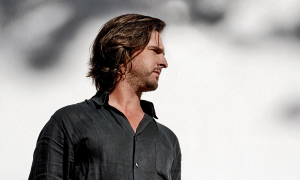
 New York altoist David Binney is a tremendous improviser, a prolific composer, a tireless bandleader and a reliable sideman. Although he was born in Florida and grew up in Southern California, he's been a gigging New York musician since he was 19 years old. He used the proceeds of a 1989 NEA grant to record his first CD, Point Game. Since its release on the Owl label, he's co-founded two groups, Lost Tribe and Lan Xang, played countless sessions and gigs as a sideman, and recorded a long string of recordings under his own name. While the personnel on Binney's records are often drawn from a core who's-who group of New York City pros such as bassist Scott Colley, saxophonists Chris Potter and Donny McCaslin, keyboardist Craig Taborn and drummer Brian Blade, the records themselves span a wide range of lineups and approaches, from the large-ensemble heft of the 2002 ACT CD Balance to last year's Criss Cross small-group blowing session, Bastion of Sanity. It's striking just how consistently good these records are, both in terms of performance and composition.
 Binney's a great, productive composer. At the same time, he can free-improvise with the best of them, and his improvisations tend to benefit from the same formalism and flow that imbues his written pieces. And, of course, from the same love of melody; even on his most bracing of performances, there's a sense of tunefulness and song that seems to owe as much to, say, Paul McCartney as to Thelonious Monk. I won't claim Binney's the greatest living New York jazz composer or soloist, although he is as good at either as anyone around today. I will unhesitatingly, however, call him jazz's greatest contemporary melodist.
Binney's been recording a good deal lately. When I called him to discuss his splendid new album Out of Airplanes, a recording on his own Mythology Records, he was happy to. But he was also eager to talk about his new new record, Cities and Desire, a set on the Criss Cross label due out September 19th. Not to mention his newest new record, which should be out on Criss Cross in January. Despite a schedule active enough to produce this kind of output, and a very late night out on the town with Wilco guitarist Nels Cline, Binney found time to speak with me when I rudely woke him up in his Québec City hotel room.
All About Jazz: You've got a new CD out, Out of Airplanes, on your own Mythology Records. Or I think the actual CD is out now, but for the first month or two, the album was available only as a download from your website—an approach which you obviously must have thought about. What encouraged you to release the music first in this online format?
David Binney: Well, the CD is at the factory right now, but by the time this interview is out, the actual CD will be available. I wanted to do the download thing because I find myself just buying downloads. I don't really buy CDs anymore, unless there's something I can't find as a download. For me, logistically, it's a lot easier as well to sell the download. It's cheaper for me to sell and taking the CDs on the road was always a huge, huge hassle—whether it was getting them across the border or just the weight of them. This way it's much easier. So there are those personal reasons.
 But there's also the fact that that's what it's all going to anyway. CDs are dying! I was just talking to the jazz buyer at the downtown Tower Records in New York, and I said, "I'll have the actual physical CD in about a month, so I'll bring it by. He said, "Well, okay, if we're here. They've been trying to sell us. We're just dying—every store. It's going to go under soon. So I think all these stores are going under, and I think the reason is that people just don't get their music that way anymore for the most part. So I just wanted to sell this record that way first, as a download, and get people used to switching over, because it's really the way it's going to be done anyway. And the way I'd rather have it be done, personally. And some people say, "Oh, the sound quality's not as good, but to be honest with you, I don't really notice that much difference in sound quality. Maybe a slight difference, but it's not enough to matter—I'm just interested in the music. If there's any sound difference, it doesn't bother me.
AAJ: Like a lot of people, I've made the adjustment.
DB: Yeah. So for all of those reasons, I wanted to encourage it and to also get people focused on going to my site and downloading some of the live gigs—if they go to buy a record, they also see that there are live gigs there. I'm just trying to start this commerce at my site. It's another way for me to make money.
AAJ: I don't think you've ever made the same record twice, and Out of Airplanes is another "something new from you. It's a quintet set for the most part; the band consists of you, drummer Kenny Wollesen, keyboardist Craig Taborn, bassist Eivind Opsvik and guitarist Bill Frisell. Adam Rogers adds guitar to a couple numbers as well. It's also a definite studio creation, especially in its after-the-performance editing. This is music that goes into some strange and beautiful terrain—and the more I hear it, the more it sounds like a very reasonable extension of work you've done before. One thing I hear in some of the pieces is an exploration of static structures, with the tension coming from what elements in a piece are completely locked and what elements have some freedom. In any case, this ain't a blowing session. Any overview before we discuss things specifically as to what you wanted to create when you started this project?
DB: I think at one point I had sort of envisioned this group of people together and was hearing what that could sound like. And we did a gig—without Bill—at Zebulon in Brooklyn, and it went really well. I actually used a lot of computer stuff there myself, which I didn't do on the record. Then we went to Seattle and got Bill involved, rehearsed, and it was great. But I had this idea of combining a lot of composition with completely free playing. Which is pretty much what the record is. Then I thought we'd do a lot of free playing and maybe I would go in and cut it up—do different things after the fact, as you said. Which we ended up doing somewhat, but not as much as I originally envisioned. It's actually a lot more just live playing than was originally planned. I was going to loop things, and I had ideas of adding some rap stuff, trying to contact a couple guys that I like and see if I could get that element in there—do you know Prefuse 73 at all?
AAJ: Yeah, that Atlanta guy. Scott Herren.
DB: Exactly. He's great. The amount of rap that he mixes into his projects is really cool. It's often about a third of the CD. So I was thinking along those lines and about some other different things. But it turned out to be what it was; I realized that when we just played, and then played the written stuff I had brought in, it was really great. I really loved what happened. It didn't need to be manipulated or worked on as much as I thought for me to really love the record. So that's what happened. But I really just kind of heard the sound with the musicians first—which is usually the case for every album. I try to envision that, and write for that. That's the overview.
AAJ: Let's talk about the musicians. They're a mixture of people we've heard on your records and those we haven't. Eivind Opsvik plays both electric and acoustic bass on these songs. Beyond his actual playing, he co-produced the record with you, wrote the amazingly great song "Jan Mayen, and did a whole lot of the editing of these pieces—half the tunes are so-called Opsvik edits, which really gives him a lot of responsibility for the finished product here.
 DB: Well, the thing about Eivind was that before this project, I didn't actually know him that well. We had played a little bit together, and I liked the way he played. I liked his whole vibe. And I liked his own records—Taborn had also played on those records, so I knew them a little bit. So I knew that he would be the right guy to get involved, and to be involved where he did more than just play on it. And he was really into it. So I had him bring in some music, and we ended up doing one of his tunes—and the demo for that tune that he gave me, "Jan Mayen, is completely different. It's just tenor, trumpet, bass and drums. But for some reason, I heard how that could sound in this group, and I really loved the way that song came out.
And then he has editing capability—and sensibility—that I wanted on the record. It would be much harder for me to do, because I don't have quite that sensibility. He's from Norway, and there's a little of the Scandinavian vibe to it, if there is such a thing. I think you know what I'm talking about. So I thought I'd like to get that in there, and so I just let him go on some of the stuff, and he came up with some really beautiful things. So I just gave him co-production credit, because he worked so hard on it. It was great working with him. We got to know each other a lot better and now we work together a lot more often. He's also a great bassist. We just played trio with [drummer] Tom Rainey a couple weeks ago, and he just played electric. He's a great acoustic player, but it was fantastic. He's just a great all-around musician and conceptualizer.
AAJ: Kenny Wollesen and Craig Taborn have appeared on your records before. Craig's pretty much sticking to piano here—there's a bit of organ and some synth, but none of his Fender Rhodes, and his piano ostinati are really important to the pieces. Kenny is, like Eivind, mostly concise, controlled, and as he always is, pretty perfect. Tell me why you chose them for this record.
DB: Well, Craig is in my quartet. We play every two weeks in New York, and have toured so much in the last couple of years. He's just one of my favorite musicians on the planet. He's a genius! If you check out any of that live stuff on my site, the way he plays live, especially, is just incredible. So I try to involve him in most of the projects that I do at this point, because he's also so versatile. On the road, he just plays acoustic piano in my band. That's all that he does. And at the 55 Bar, he just plays Rhodes, because that's what they have—and he's amazing at that. And then he's amazing with the computer and all that stuff, so I wanted him to get him to do that a little bit more on this record. We've also done concerts where he did mostly all computer stuff. So he's just really versatile. And he knows more music than anyone I've ever met. Dan Weiss comes close, but as far as what he listens to and amount of stuff that you can mention that Craig knows—it's unbelievable, and it doesn't matter what kind of music it is. I love that.
And Kenny is just a great drummer, obviously, and one of my best friends. We live about 50 feet from each other in the same building, and we've been friends for years. It's kind of amazing, as good friends as we are, that I haven't used him more in the past, but I've always wanted to. So I really thought of doing a project with Kenny, especially with Bill there, because he plays with Bill all the time. Kenny and I had this band, Lan Xang, together with [bassist] Scott Colley.
AAJ: Right, and Donny McCaslin.
DB: Yeah. That band is actually starting back up again—not that we ever considered it to be over, but we're going to be playing a gig at the Stone in New York. We've played a lot together over the years. I was in the Wollesons, Kenny's band—it's now disbanded, but it was a great, funky band. We've just played endless amounts of gigs together. So I wanted him involved with this.
AAJ: Then there's Frisell. I don't think he's ever been on one of your records, and there's no way he's not going to be a big part of a group's sound. I think you've always worked well with guitarists on your records, Adam Rogers in particular. Why'd you get him on board?
DB: Well, Bill is Bill Frisell. He's always been one of my favorite musicians to listen to, and I have so many of his records, and I've always dreamt of doing something with him. And when I put this thing together, I heard his sound in it, and at that point I knew Bill, at least a little, from running into him on the road, seeing him in New York, hanging out a bit. So I just asked him if he'd be interested, and he was. He didn't know Taborn or Eivind or know of them, really—no, wait, actually he had heard Junk Magic (Thirsty Ear, 2004), Taborn's record. Somebody had played it for him on the road, and he loved it; at the time he heard it, he didn't know who Taborn was. So when I mentioned everybody who was involved and what the idea was, he was into it.
We were going to do it in New York, but he's traveling so much, and then his favorite guitar engineer is in Seattle, so we just decided to go to Seattle and do it and then relax there, and have a different experience. Which was great for me, because all my records before that have been done at Systems Two in Brooklyn—which is a great studio, but it was nice to do it outside New York with a different engineer.
But Bill—he's just Bill Frisell. What he did on the record is just amazing, and that stuff is all live except for maybe a couple things he overdubbed. But I would normally associate the amount of sounds that he gets within one song with somebody overdubbing and changing the sound. He just does it by standing there and playing through the song, and his knowledge of how to do that and where he places things is really sort of amazing. He's a great musician, and I was very happy that he did it, and very happy with the way it came out.
AAJ: I think one person that's significant on this record is tenor player Chris Potter, only because he's not on it, and the two of you have done a lot of collaborating on your records. Here you're the only horn, which means you've had to double things yourself when you have those kind of doubled horn parts in your songs that he's done with you, or fill that musical space with other instruments. Any reason you're the only sax here?
 DB: Not really. With a lot of my projects, I heard that tenor/alto thing. I heard it for years, starting with Donny and, on my recent records, with Mark Turner and Chris in between. And Chris probably in the future too. But I certainly don't hear every project like that. It just so happened that I heard that sound on the projects I was doing. But even on that record Balance, I'm really the only horn—there's a couple Donny is on. Chris was actually supposed to be on that record, but he had to go out on the road with Dave Holland or somebody and I couldn't reschedule it.
But I like doing records on my own. The last one, Bastion of Sanity (Criss Cross, 2005), had Chris on it, and the new one coming out on Criss Cross in September has Mark Turner; he's on about half of it. Maybe more than half. But I'll probably do more single-horn stuff in the future, just because I think it's something I'm hearing a little more than before. I like melodies orchestrated, and I always have when I hear that on records. Even on some of my records like South (ACT, 2001) or Welcome to Life (Mythology Records, 2004), even the countermelodies and guitar things are sort of doubled, and I like that kind of orchestration. Also, Chris Potter is Chris Potter, and he's one of my best friends and he's a great musician. That's number one. But the sound of that is something that I'm very attracted to. So I love having Chris on things. But for this record, I wasn't hearing it; I wanted Bill. If there's any doubling, I wanted to feature that guitar sound.
AAJ: Let's talk about some of the individual pieces on the record. "Contributors seems built out of stacked, static parts—there's a looping, accumulating quality to it as your sax melody repeats with that descending guitar counterpoint and Craig's piano alongside. It's a very Binney-ish melody, and pretty beautiful, but at the same time sort of stalled—like we're sitting in a gorgeous spot in a boat that's becalmed in the middle of a lake. Frisell eventually breaks free and solos over the rest of you, or at least decorates what the rest of you are doing. Any insights into this one?
DB: Well, it is sort of in a style that I've written in before. Sometimes I write these things that are basically vamps that I build on. It is a certain kind of thing that I do that, as you say, kind of builds upon itself. And I've always liked that sort of thing, and basically, it was just something that I came up with. I think when those things happen you just take them to where they go. I just don't have any preconceptions when I'm writing them; I just start to write, and a lot of times I'll write something and realize, well, that's it. The basic thing—this is it, whether it's a four-bar pattern or whatever it is. Then I just hear things building. And that's basically what that tune is. It's a groove and a piano rhythm and all of that. Then I just let Bill go crazy at the end.
It's fairly simple, and it's something that I brought it that, when we played it, I thought, "Well, this could be cool, but I'm not sure about it. Then everybody else in the band was really into it, so they sort of talked me into keeping that piece. Originally, I was thinking, "Yeah, it works good, but I don't know if I'm going to put it on the record. This was before we recorded it, when we were rehearsing it. And everybody was saying, "No, you should definitely do that one; it's really great. So that's how we ended up recording it and putting it on. I'm actually glad, because they were right. I really like that thing now. But in a way, it's almost like an interlude to me, some sort of—like you said, it's like a moment. It's not supposed to be anything more than a mood and a vibe.
AAJ: Well, it's an album. This CD, like any, is composed of moments and moods, and one of the qualities of this album is that it is very much the whole of the individual parts. Maybe even more than your average record.
DB: Well, I hope that's the case, because that's the reason that I don't sell the downloads like iTunes would. I don't sell song downloads, because I make albums, and I think I always will. Unless I do a pop record or something—then maybe I would do some kind of tune download thing. But I definitely hear things as one large piece, and that's the way I try to put together all my records. Actually, the one that's coming out in September is the most like that, even though it's a complete blowing record. But we recorded it all in one shot—we didn't take breaks in between the tunes, we just played. There are interludes, and they're what we played in the studio.
 And it really sounds like a complete thing to me in that way, and I'm really into that now. When we play live, we've been playing that new record—the one that's out in September—just as we did on the record. The tune order, who plays in between each tune, everything. So that's our live performance now, and I really like that, instead of changing the set list around all the time. You can really get into a bigger picture. I've also been studying Indian music lately and, if you listen to a raga, that's what it is. You start here and 30 minutes or whatever later, you end there. And that's what it is. I really like applying that kind of sensibility, even to songs. So that's what I've been doing lately, and I think it started with this record, with Out of Airplanes. The next one is even more like that.
AAJ: "Jan Mayen is Eivind's tune. It's got a fantastic, icy beauty and is, to me, a really important one on the record. It's got a lovely theme melody that resolves heartbreakingly, but the textures around the melodic materials seems just as important here: Bill's chiming, brittle guitar parts, for example. What I like best is how a two-way Bill/Craig dialogue turns into a three-way dialogue as you join in, and then that turns into your solo—although those two are still in there, commenting.
DB: I think that was one where we just played. One of the reasons I may not remember certain details of this record is that I had a 103 fever, and was literally hallucinating because I was so sick. It's really weird, because I never get sick—and the two days we were in the studio, I was completely gone. And I've been on other records where that has happened to me. I was on a Medeski Martin & Wood record years ago where, again, I was feverish and hallucinating in the studio, and they were trying to get me to play much more on the record than I ever did. Because I couldn't [laughing]. But musically, I feel fine with what I did on this record. But I was definitely sick, so a lot of it is a blur as to what happened when we were in the studio.
But I remember, on that one, just directing where we would start soloing and where I would come in, basically, and then just letting it happen. After the fact, we had overdub things to orchestrate—the guitar and the synths. Actually, I did some of the synth overdubs. I don't list that on the record, but I did a couple of them, just the simple melody doubling things. And it's really just what we did live, with some orchestration after the fact. That's all it is. But I love the way that tune came out, and I really love that tune, and the way Bill plays on it—at the start of it, he's got that classic Bill Frisell clean sound, and by the end he's completely distorted, all in one take. But that cut is one of my favorite things on the record.
AAJ: I love that moment on the song where your solo snaps back into the theme. That's really effective, and it's something I hear a lot in your music. I mean, everybody solos and then goes back into the theme, but there is something about the way you construct your solos that makes the moment the theme is restated really thrilling and dramatic. Is this characteristic something you're aware of?
DB: Yeah, I think I'm aware of it—only in the sense that after years of writing and playing, I realize that when it happens, like you, it really affects me. When we play live, I see how it affects audiences. I think it's something that's been done in pop music a lot, probably more than in jazz—and since I listen to everything, I think that's probably where that influence comes from. As you can probably tell from listening to my records, melody is the most important thing to me. And I think it comes, first, from growing up with pop music, and just loving the great songs. And then later in life, getting involved in classical music, and realizing that a lot of that music is also really based on hooks.
AAJ: That's actually very true.
 DB: It really is. People don't think of that way sometimes, but it is. Anything that really makes an impact on the world, it seems to me, involves strong melody. It doesn't matter what kind of music. If you listen to free jazz that's important in some way, or really has had an effect—when you think about what the difference is between people who are just there improvising and making noise and something that had some sort of a melodic theme, it always seems that the stuff with the melodic theme stands out. Even with improvising; it makes the improvising greater to me, somehow. This could be a personal taste, but I find that that's a constant in the things that I listen to.
 Melody is the supreme thing to me. So I just try to come back to that in some way, even when I improvise; it goes beyond composition. When we're improvising, a lot of times I will get on something very repetitive and keep that going, and then other people will join on. Or maybe somebody else is playing something repetitive—Craig is really great at that—and then I'll join in. And for the listener, it becomes a hook. We might be freaking out for ten minutes, but in the middle of that, you can bring the listener into something they can really grab on to and feel differently about. And maybe it helps explain what we were doing before or after. There's something about that I love. Even within completely free playing, I try to bring that element into my own playing. It's important.
AAJ: Well, in terms of audiences responding to that sort of thing—you're not going to find a more aware, responsive audience than the regulars at 55 Bar. Especially since I see that sort of response not happening at so many other places.
DB: Yeah [laughing], I know. That's a great place to play. We played there the other night, and it was all these young kids. Actually, Monica Frisell, Bill's daughter, was there. She's 21 or so, and she lives in New York now. All of her friends were there. It was just packed with all of these kids who were completely quiet when we were playing really softly. And the minute we got loud, or freaked out somehow, they just got so excited. It was like a rock concert. And I love that; we feed off that. It's a great audience there, and that gig is so important for me for development of all of my music. And a lot of it is because of the audience.
AAJ: You talked about free improvisation, and the title track, "Out of Airplanes, starts with ascending piano before your harmonized altos state the theme. But there's a big free section in this where everyone is just playing what they want. Then that resolves into that anthemic melody that repeats for a long time. It's all pretty wonderful, and I like the combination of freedom and structure. I don't know if you remember doing it...
DB: No, I do. It's true, I was out of it, but when I was there, I was completely focused. I let myself go afterwards—I let myself get completely sick. But I remember. It's the kind of tune, again, that I've written before, maybe starting with a record I did called Free to Dream (Mythology Records, 1998). That's sort of an important record in my catalog, and that's my biggest ensemble—twelve people. There's a song on there that's probably eleven minutes long, and it's the same thing where we play a written thing and then we play completely free, and end up with a sort of repeating, slow melody. I've always liked that, and I've written a lot of things in that vein—a lot of them I haven't recorded. But for this one, I had this idea it would work, and work with Bill. So I decided to do it. It has a completely composed beginning, a completely free middle, and then sort of that anthemic end, which I think of as sort of a pop thing.
AAJ: Yeah, very "na na na na Hey Jude.
 DB: Exactly! It's really like a Beatles thing in a way. That's exactly what it is. I wasn't thinking about that when I wrote it, but when I listened to that stuff, I realized that that's what it is. That's why I referenced some of the pop music in this interview—because I realize that that has a strong influence in my compositional thing. I grew up listening to that music, and it's in there. It always will be, I think. Yeah, that's what happened on that tune, and the interesting thing that you said is about the doubled altos. I'm trying to remember the doubled altos—that's something I rarely do, and I don't remember doing it on this record.
AAJ: Well, you should know better than I. I probably heard it wrong.
DB: I'm wondering if it's not doubled with something else. I'll have to listen to that again. I have a feeling that it's a combination of Bill and also Minimoog, which, mixed the right way, could be mistaken for another saxophone, because it's a round, pure sound. I think that might be what it is. I'm usually not a big fan of doubling myself with myself. With anything else, it's fine. But I don't hear that orchestration thing very often. I don't really like it very much when I hear it on other records—when somebody overdubs himself. I might do it if I played a tenor or a soprano, but I usually try to stay away from that. I would rather have it doubled—and doubled live—with another instrument. I might have done it on this song. I don't remember.
AAJ: I think you're just being diplomatic.
DB: No, it's possible that I did, because I didn't want any restraints on what I would do on this record. I'm not a huge purist where it just can't happen. But it is a sound that I am not fond of.
AAJ: That song ends with this harp-like instrument—sort of a metallic wind chime sound, but I can't place that instrument that plays in the final seconds of the song.
DB: That's just a little glockenspiel that Eivind played. It's also in the written part, the second time through, just before the free improvisation. It comes through in the orchestration. He plays all of those parts. All of the parts that I wrote, he plays on the glockenspiel, so it's a combination of the guitar part, the bass part, the saxophone part. He doubles it at the start of the song, and at the end we brought it back—and those are all the parts you heard at the start of the song just played on glockenspiel. Then it fades out. So that's what that is. Actually, I had an idea of doubling it with some sort of instrument, and I don't remember directing Eivind to use glockenspiel. I think that might have been his idea when he did the edit in the middle, because we actually improvised longer than that. But I really liked it.
AAJ: The two "Brainstorms are separated and edited sections of a group improvisation, I believe. A lot of the second "Brainstorms actually feels like an actual loop that's repeating, although I think it goes into real time at the end. Did this material come out of a much longer improvisation?
DB: Yeah, we did a couple of things that were really long improvisations. The whole point was to use material from it to make compositions later, after the fact. Like I said, that was the original idea for the record—to do a lot of free improvisations and put it together later. So we had a lot of improvisation to take things from, and those were things that were taken from parts of it. And within those, there are loops, and loops that come out of each other—all kinds of things like that. But basically, it's just culled from a larger improvisation and put together. Certain things are live and I think some of the melodies were doubled. I think there are bits in there that we doubled. But a lot was done live and just put together, and Eivind did that. He really put those together in a really cool way. They're just supposed to be short vibes, which is the way they appear to me, and I really like them.
AAJ: I think "Bring Your Dream is an improv as well, and they definitely are materials that build the album as a whole.
DB: Yeah, exactly, and that's the point. If I just had the more composed tunes, it wouldn't be as strong a record. These things really complete the more compositional things. I like bringing that element into it. There is one, and I can't remember the name of it, because we just had working titles for everything and the official titles are still new to me. But there's one near the end that's more of a ballad.
AAJ: "Instant Distance?
 DB: Yeah, that could be it. The basic part of that is a clavinet part, a written part that I had on another tune. So it's this written part that Eivind lowered about an octave and, I think, retuned also, and used that as a base for that piece. Which I like, because even if you don't notice it, it has a thematic kind of link with earlier material—because it is earlier material. And it may be subconscious for most people, because they're not going to recognize it, but it's there. It's the same melody. I've done that on a couple of records. On South, I think, there's some sort of sample of some earlier tune, very lightly used behind some free improvisation. But it's something that I like to do—to bring back the material in a way that's unrecognizable, but maybe recognizable subconsciously.
AAJ: That's an interesting thing to do. That's sort of what Frank Zappa called "conceptual continuity.
DB: Yeah, exactly. That's what it is.
< Previous
Hillbilly Jazz: From the Blue Ridge t...
Next >
Big Night Out
Comments

About David Binney
Instrument: Saxophone, alto
Related Articles | Concerts | Albums | Photos | Similar ToTags
For the Love of Jazz
 All About Jazz has been a pillar of jazz since 1995, championing it as an art form and, more importantly, supporting the musicians who create it. Our enduring commitment has made "AAJ" one of the most culturally important websites of its kind, read by hundreds of thousands of fans, musicians and industry figures every month.
You Can Help
To expand our coverage even further and develop new means to foster jazz discovery and connectivity we need your help. You can become a sustaining member for a modest $20 and in return, we'll immediately hide those pesky ads plus provide access to future articles for a full year. This winning combination will vastly improve your AAJ experience and allow us to vigorously build on the pioneering work we first started in 1995. So enjoy an ad-free AAJ experience and help us remain a positive beacon for jazz by making a donation today.

Giveaway

Eligible winners: 15
Days remaining: 4
Days remaining: 4