Home » Jazz Articles » Album Review » Our Theory: Our Theory
Our Theory: Our Theory

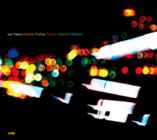
The theory of Miles upon which Messrs. Ersahin and Truffaz (the French guy) draw has three tenets. The first is that the overall sonic Gestalt is more important than the performance per se. Thus, over time, Miles became ever more indifferent to whether the aural texture was the ex ante work of the arranger (Gil Evans), the ex post work of the engineer (Teo Macero), or both (Marcus Miller). Ersahin, Truffaz and company jammed for two days, but in accordance with Tenet Number 1, Ersahin and guitarist Madsen fiddled with the tapes for two years. (In fact, the record doesn't sound as belabored as that might imply: I'm not sure what they did for those two years, but I suspect these boys have a problem with deadlines.)
Miles' second tenet is an insistence on fusing styles, and in this regard, the Our Theory boys have added a new style to the mix: electronica. Post-performance sound collage is ideally suited to such a melange. In some sense, the two-day jazz session becomes a sound sample to be endlessly reconfigured and recombined with synthesized beats and sounds. On "Nu, the fast, furious and somewhat formless funk beats are there in earnest, but other tracks highlight the tension between these musical approaches. On "Shades of You, for example, the sax and trumpet impose a nakedly human, organic contrast to the surging synthesized sounds.
(Bear with me: Marx himself had eleven theses on Feuerbach, and I'm only enumerating three for Miles.) Miles' Tenet Number 3 attempts to distort instrumental sounds to the extent of obscuring who is playing what. (For other recent developments in this area, see the debut by Electropolis.) Here this is evident in what appears to be a tenor sax solo on "Our Theory (whatever it is, it sounds good). This part of the theory, like the point about sound collage, has the effect of downplaying the importance of individual virtuosity, a feature shared with a lot of electronica. Despite this, Our Theory in fact devotes consiberable space ("Blow Up, "Midsummer Sun ) to jazz soloing (oh benighted notion!), and Truffaz in particular pays close attention to his interventions.
Musical fusion is hard work; the parts don't always fit together. Althusser would later recant a lot of his philosophies. On balance, however, I would not encourage this collective to do the same.
Track Listing
Our Theory; Midsummer Sun; Let Me See You Tonight; Yeah, That's Right; My Sugar; Radio; Shades Of You; Nu; Blow Up; Our Song.
Personnel
Erik Truffaz: trumpet; Ilhan Ersahin: saxophone and samples; Thor Madsen: guitar, keyboards, programming; Matt Penman: bass; Jachen Rueckert: drums.
Album information
Title: Our Theory | Year Released: 2006 | Record Label: Nublu
About Our Theory
Tags
PREVIOUS / NEXT


Become a Sustaining Member

Since 1995, All About Jazz has championed jazz as an art form and supported the musicians who create it. Over three decades, it has grown into one of the world's leading jazz resources, serving hundreds of thousands of readers, musicians, presenters and industry professionals each month.
Help Build the Future of All About Jazz
Your support helps us continue building All About Jazz for the next generation—expanding our editorial coverage, preserving jazz history, developing new community features and creating better ways to discover the music and the people behind it.
Become a sustaining member for as little as $20 per year and you'll immediately enjoy an ad-free experience along with access to subscriber features and future articles for a full year.
Together, we're not simply sustaining All About Jazz—we're building its future. Thank you for being part of the journey.