Home » Jazz Articles » Interview » Steve Williams: Explaining A Drummer's Role
Steve Williams: Explaining A Drummer's Role

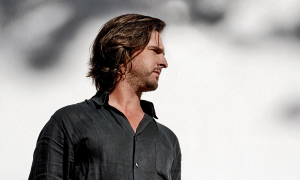
 A career sideman to Washington's own, the legendary singer-pianist Shirley Horn, fellow DC- native drummer Steve Williams has been around the proverbial jazz block and is here to tell you a bit about his ride.
 Williams has a jovial air that shows he's unmistakably joyous about living life. But there are issues that come to light in this interview, revealing what irks him. For instance - the typecasting and discrimination against drummers by fans, other musicians and the press, and the harsh realities of the record business.
He also reminisces on a bygone era in New York when so many of jazz's elder statesmen were visible on the streets, in the lunch line, and sitting in at the clubs. He recounts countless clubs, joints, and watering holes throughout the Gotham city that have been relegated to historic relics, only to be remembered by the musicians and fans that frequented them.
All About Jazz: You're not originally from Washington D.C., where were you born?
Steve Williams: I was born in Rochester, New York.
AAJ: And how did you make your way to DC?
SW: My father took a job in the Government Printing Office in 1959. We moved to Southeast Washington, I was about two years old.
AAJ: So pretty much you did all your growing up in DC?
SW: Right, I consider myself a Washingtonian.
AAJ: When did you first pick up a pair of drum sticks?
SW: Probably when I was about 8 or 9 years old. I played at my 6th grade graduation. We played Louie, Louie for about a half an hour.
AAJ: That's one of those tunes you can do that on.
SW: Especially when that's the only song the guitarist knows! ( laughter ).
AAJ: Where did you go to high school?
SW: I went to Calvin Coolidge High School for two years and was getting into a lot of trouble. At that point, my parents suggested for me to find an interest. And already music was my interest. I had a band in high school with guys I went to school with. After our first class we would go right back to my house and jam all day long. So my mother looked at Interlochen, the academy for the arts.
AAJ: In Michigan?
SW: Yeah. So I ended up going there my last year of high school...actually my last year and a half of high school. And I graduated there. I was a minor in [classical] percussion. I had to take another - I took metalsmithing actually.
AAJ: Really?
SW: Yeah, because I didn't know how to read music at the time so I couldn't be a music major.
AAJ: After Interlochen...did you go to college there too?
SW: No. I went to the University of Miami but in between, I took a year off. I came back to Washington. I worked at the American Café making sandwiches.
AAJ: Were you gigging at night?
SW: Nope. Not at all. I was not even sure music was gonna be my career. I wanted it to be, but man I came outta high school and I realized there was more to music than I thought. And before the year was up, I realized that I had to go to college for something. And since I went to high school for music, I might as well go to college for it too. So I applied all over. Peabody - rejected. Hartt - rejected. University of Miami - accepted !. So I went where I was accepted. And I was a music education major and a percussion minor.
AAJ: This was legit percussion?
SW: Oh yes!.
AAJ: Even back then, that had to be like the mid 70s...was this around the time when jazz education was becoming "legitimate"?
SW: They had just installed what they called a studio music in jazz degree. And you could study from two guys that would teach you how to play the drum set and others that would teach you how to play vibraphone and the rest. But what happened was my legit percussion teacher, Mr. Wickstrom, suggested to me that I finish studying some legitimate percussion - tympani, snare drum, and take some jazz courses as well.
AAJ: So you spent four years in Miami?
SW: No I spent three years in Miami. My second year I was working' six nights a week with Carmen Lundy.
AAJ: Wow.
SW: And getting up at 8 o'clock in the morning for my English class. I realized that I didn't need to be in college anymore. Bobby Watson, as a senior, was teaching the second jazz band.
AAJ: So was Carmen the first vocalist you backed?
SW: She was the first real quality musician , vocalist, singer, pianist. She was an opera student at Miami. She was incredible then and she's incredible now.
AAJ: How long was it between then and your joining Shirley Horn?
SW: Well, I moved...the reason why I was only three years in Miami was because all the musicians that were teaching me and the ones that were my peers, were moving to New York. Curtis Lundy moved to New York. Bobby Watson moved to New York, Carmen moved. So I did what they did. I moved to New York. I didn't know what I was doing at the time. Except I knew that I was getting bored at college. I mean, I learned a lot...really I did.
At the time, New York was a Mecca for jazz. Man, I'm gonna tell you...it was incredible how many musicians - who we all looked up to as heroes - you could see daily and nightly just doing their thing.
AAJ: What year was this?
SW: Well, after leaving college, I gigged for a year in Miami, then a year in Washington, and then moved to New York in about 1983 - I think. I stayed there for about five, six years.
AAJ: When you were in New York, what were some of your preferred hangouts?
SW: The Star Café. There used to be a place called Studio We down on Livingston in the Lower East Side. There was Ali's Alley, a club owned by Rashied Ali. There was Green Street, which was a club where a lot of great singers would play. There was the Tin Palace, which was...I mean, on any given night you would see people like Philly Joe Jones, Milt Jackson, Art Blakey hangin' out, at the bar, downstairs in the basement sittin' in or something like that. I mean, like we're sitting here right now, I remember going to Katz Deli, an incredible deli down on uh...
AAJ: Houston Street.
SW: Yeah. So I was standing' in line, and the guy in front of me eating a hot dog was Philly Joe. New York was like that when I lived there. You saw the guys that you admired. You the guys whose records you had. At the Bottom Line I remember seeing Art Blakey and the Jazz Messengers with Betty Carter and I got backstage because when I first moved to New York, I lived with Jim Green, Art Blakey's road manager. I used to carry Art Blakey's cymbals. I could barely lift 'em. So I got to meet all these incredible guys. I remember one night, Betty Carter was there and Jack DeJohnette just showed up and sat in with Betty Carter. Who's sittin in with a singer. I mean, that's unheard of. And Jack DeJohnette took a bass drum solo. I mean, you just don't see that kind of stuff anywhere these days.
AAJ: And all this is happening in the 80s, when I thought jazz was really suffering compared to now.
SW: Lemme tell you something man. It's not as vibrant now for sure. And even though I don't live there, when I go a few times a year to play with Shirley or to see family or whatever, just the fact that four or five of the clubs that used to be there are gone, has just...annihilated the scene. I mean there's no Bradley's. Bradley's was a piano bar. It was a solo piano bar at first where you'd see people like John Hicks, Kenny Barron, Cedar Walton play solo. And then they added bass players and then they added drummers.
AAJ: I can hear the noise level slowly increasing.
SW: Yeah ( laughter ). But seriously, you could go in there...I saw Billy Higgins playing' drums there man. Connie Kay. But those are the guys playing. The audience...there was hardly any public. It was all musicians after their gigs coming in and hangin' out 'til 4 or 5 in the morning. And that's unheard of in New York now. Guys go home at 11:30 and 12 o'clock these days. I mean, we used to go to the Red Rooster in Harlem after our gigs. Across the streets was Wells' Chicken and Waffles. And we used to go to Wells' because Walter Bishop, Jr. was there with Michael Carvin on drums and a teenage Marcus Miller on bass.
AAJ: So you've seen guys like Marcus Miller go from unknown to...
SW: Millionaire? I mean going from playing at Wells Chicken and Waffles to saying he was so happy that he could buy his mom a house. Miles loved Marcus. In fact, apparently from what I understand, Miles didn't wanna do any more records unless Marcus was producing it.
AAJ: You've been Shirley Horn's right hand man for about twenty years now.
SW: I'll tell you, twenty-three years ago coming this August since I had my first gig with Shirley. And I was back and forth with other drummers. Among them was Billy Hart. She wasn't working that much back then. She never really retired, but she didn't work as much
AAJ: Was that because of the nature of the market?
SW: I mean, I could speak for her, but out of respect for her, I'll let her tell you what the reasons were. I can speak from my personal experience though. That is that she was dealing with record companies that weren't being...
AAJ: Honest?
SW: I gotta tell you man, they weren't being on the proper level with her. My first record with Shirley was with this guy from Steeplechase. They served their purpose very well to a degree, because there was a few great records that Shirley did with them with Billy Hart and Buster Williams. Some of my favorite Shirley Horn records are those records. And it served its purpose. But really man, let's get real about the responsibility a record company has to an artist. Don't fool yourself man. These guys have no business treating musicians the way they do. Lying about sales. Giving them low scale pay for the dates and then never paying royalties. Some are like this. Not all. But some record companies thank goodness, that are about to record a drummer as a leader, like 'Tain' Watts. Thank goodness. They're smart enough. That's the difference I'm talkin' about. But you got more than a handful of companies that claim they're this and claim they're that and after the session, they're like "Ok, see ya," and you're on your own.
AAJ: With 'Tain' and his two discs on Columbia, a major label, doesn't it have a lot to do with the connections he made with the Marsalis family?
SW: Tain was good to keep the bonds that he made and they served him well. But people say "Yeah, but he's a drummer." No. He's a musician. He should record on any label that would hire a singer or a pianist or a horn player. It's your contribution to the music that matters. And Columbia recorded Jeff and they should continue to as far as I'm concerned.
AAJ: What was the first memorable gig you did with Shirley where you're saying to yourself, "Wow, this is it. I am one of two guys playing behind Shirley Horn!" And not only that but replacing Billy Hart!
SW: Well, I could never take the place of Billy Hart, but I know what you mean. I can tell you right now, exactly that moment was at a concert for Miles Davis. Like a coming out of retirement concert at Radio City Music Hall called "Miles Ahead" or something like that. And we were playing "All My Bright Tomorrows," at Radio City Music Hall in front of Miles Davis and a host of all the greats including Tony Williams. I mean everybody was there for Miles. And here we are, it was a circular stage at the center of Radio City...if you've ever been there. It's an old fashioned stage. So you enter the stage downstairs. So Shirley's there, Charles is there and I'm there and before we rise to the top, the stage manager yells, "Downbeat!" And Shirley goes, "Right now," and when she says it, I realize that we're half way up and when we get to the top we're already swingin. And Miles was sitting right behind me, cause it was a round stage and I'm like "Oh, shit there's no turning back. I'm in deep shit now." I knew before then, but I was sure at that point, that something special was happening to me. And it's never been anything less than that since then. Even when we're playing the littlest joint in the middle of nowhere. It's still a thrill to look at this woman and to look down at my hands as I pick up my sticks.
AAJ: She brought you around the world.
SW: A few times.
AAJ: In the last year, it seems she's been working a little more. Some high profile gigs. The Jazz Au Bar in New York, for instance.
SW: We played three nights there.
AAJ: Is that the kind of place she prefers to play? The small rooms?
SW: No, actually. She has a special was of turning any place she plays in, into something bigger or smaller than it is. We just played the Atlanta Jazz Festival; a big beautiful festival. And she made that place feel as small as this table we're sitting at. And she loves the Village Vanguard. She makes the Vanguard feel like the Atlanta Festival. So she's able to make you feel like you're in the small intimate setting when you're in the grandiose Theatre du Calais, where there are people hanging over the balcony relishing her every syllable. But yeah, she's working' a little bit more this year. Her health has improved. She actually played Sunday night, our last night at the Jazz Au Bar, she played and sang the piano, which is rare now. Ever since her illness, she has had to have a pianist accompany her. That has been George Mesterhazy. And a dear friend of mine has been playing bass. Ed Howard.
AAJ: Another DC native.
SW: Yeah exactly! Me and Ed grew up together and moved to New York at the same time.
AAJ: Just to back up a bit, Ed is, if you can him this, a replacement for the late Charles Ables, another longtime musical cohort of Shirley's. I know Willard Jenkins' article in Down Beat said it was a major emotional and musical loss for Shirley Can you talk about how it was for you after being that close to him all those years and now for the first time, playing without him?
SW: It was a big loss. First of all, Charles was my teacher when I first joined Shirley. There was no written music. She's not a very verbal person when it comes to explaining how she wants the music, but she certainly wants things a certain way. She'd just start to play and Charles helped me get through and learn the tunes. And he wasn't even very forthcoming with that information either. I had two non-speaking people tryin' to help ease me into the position. It's nothing that college could have prepared me for. The only thing that could have prepared me in the slightest for that experience was my work with Carmen Lundy and my years in New York City; learning stuff right on the bandstand, which to me, is the nature of this music.
I learned on the spot, man. You know how they say "Appearing nightly." No. For me it was more like, "Embarrassing himself nightly on the drums, Steve Williams." That was incredible man, just to learn how to play the ballads. You know how you're supposed to play your hi-hat on two and four. Uh-uh. Not with Shirley. Because she's adamant about making the lyric speak as well as the music. And for the two of those to happen, it takes time. In other words, you need to space things out. With the hi-hat going on two and four, you're limiting your time. She's the classic American songbook stylist. And the fascinating thing is that she is a complete musician. The thing that's common with her, Sarah Vaughan, and Carmen McRae is that they're educated musicians. They're literate musicians.
AAJ: Do you ever get tired of playing ballads with her. Because she's known as a balladeer.
SW: Never.
AAJ: I mean, a lot of drummers like Billy, wanna scream on the set.
SW: Oh I do. I do wanna scream. That's what my band is for. When I'm around DC, I'm playing with Mike Bowie, Donvonte McCoy and Aaron Weiman.
AAJ: Damn. Donvonte and Michael are some bad boys. I haven't seen Aaron, but I've heard...
SW: In fact we're at Twins this weekend. There are two reactions I usually get from people when they see me in this context. One is "My god, you're the same guy who plays with Shirley?" And the other is, "Yeah, I'm gonna come see you play with Shirley." ( breaks into laughter ). But I don't care man. Let people think what they want man.
AAJ: Who are some of the drummers you admire and wish got a bit more recognition.
SW: Victor Lewis and Billy Hart for sure. I used to see Victor come through DC with guys like Stan Getz and Woody Shaw I understand that now he's teaching at Rutgers. Which is great for him, but for us drummers and musicians who want to see him working, it's a drag. And we both know Billy Hart plays all the time. However, you never read anything about any of those guys in Drummer's World or Modern Drummer or even in much of the jazz press.
AAJ: Is that a reality about being a drummer in jazz?
SW: I guess. Yeah I would say that's the reality. And I mean look at what happened following the death of Elvin Jones. I heard from a dear friend that Carlos Santana wrote a scathing email to the producers of MTV for not even taking the time to mention the death of a drummer who we know was a profound influence on Jimi Hendrix'. Mitch Mitchell was an Elvin Jones freak. The guy who plays with the Stones. He loved Elvin. I bet if one of those cats split, they'd be on the cover of every music magazine. Elvin got a lot of press after his death, but he should have been venerated like this a long time ago.
AAJ: Finally what's the difference between working behind Shirley, and working behind John Hicks, and working behind Larry Willis.
SW: Wow. That's good. I'll start with Hicks. Actually Hicks and Larry because they're about the same age and because they came up with playing with the same guys. Lee Morgan, and Jackie McLean. They share that kind of musical background. So in that way they're similar. But they're also completely different players. Both are very romantic, while aggressive, and very musical. But they're both also more modern composers. They both listen a heck of a lot, which I can't say for all piano players out there. That modern sound allows me to be a bit more aggressive in my playing - to spice things up a little bit more.
Playing with Shirley is much different. I have to be slightly more restrained, but I can still color things in a way that the music still sounds right. Shirley is not known as a composer like John and Larry are. She is an interpreter of songs. Mostly that means she plays other people's music. But the beauty of Shirley is that through phrasing and the way we play behind her, we can give each and ever standard the Shirley Horn touch.
To find out more about Steve Williams visit his website at www.abrushfire.com .
Comments

Tags
Concerts

For the Love of Jazz
 All About Jazz has been a pillar of jazz since 1995, championing it as an art form and, more importantly, supporting the musicians who create it. Our enduring commitment has made "AAJ" one of the most culturally important websites of its kind, read by hundreds of thousands of fans, musicians and industry figures every month.
You Can Help
To expand our coverage even further and develop new means to foster jazz discovery and connectivity we need your help. You can become a sustaining member for a modest $20 and in return, we'll immediately hide those pesky ads plus provide access to future articles for a full year. This winning combination will vastly improve your AAJ experience and allow us to vigorously build on the pioneering work we first started in 1995. So enjoy an ad-free AAJ experience and help us remain a positive beacon for jazz by making a donation today.

Giveaway

Days remaining: 4