Home » Jazz Articles » Interview » Christian McBride Throws Down
Christian McBride Throws Down

I think I've been able to successfully establish myself as a musician who's rooted in jazz, but who doesn't live by the rules of 4/4 traditional swing rhythms.
 Philadelphia native Christian McBride stands among contemporary music's heaviest musicians. That's no reflection of McBride's physical stature, or even of his cavernous speaking voice. It is descriptive of his powerful, profoundly resonant voice on acoustic and electric bass. It almost certainly applies to his formidable body of work, which includes seven albums as a leader and session work with legends inside (Jimmy Smith, McCoy Tyner) and outside (Kathleen Battle, Sting) the world of jazz, all of which seems to have singularly prepared McBride to assume the mantle of "the jazz bassist so graciously worn by Ron Carter for the past five decades.
"Heavy sure as hell describes McBride's latest release, three discs recorded Live at Tonic that document McBride's two-night, 2005 engagement at one of NYC's most famously experimental musical venues.
The first set each night presented McBride's working quartet with Terreon Gully (drums), Ron Blake (tenor and soprano saxophone, flute) and Geoffrey Keezer (piano and keyboards) working out their regular repertoire; the best takes from the two first sets comprise this first CD. These featured tracks from McBride's most recent studio release, Vertical Vision, such as the roaring jazz-rock "Technicolor Nightmare and Joe Zawinul's enduring "Boogie Woogie Waltz, plus the quietly soulful ballad "Sitting on a Cloud, from Gettin' To It, McBride's 1994 debut as a leader.
This first CD also captures four previously unrecorded tunes, including the bassist's tribute to late comedian Flip Wilson ("Clerow's Flipped, as saucy and bold as Wilson's female alter-ego, Geraldine) and Blake's on-time title "Sonic Tonic, an exercise for working out the band's considerable soul-jazz chops.
For the second set each night, McBride opened up his company to guest musicians for collective improvisations. Disc two comes from the first night with Charlie Hunter (guitar), Jason Moran (piano) and Jenny Schienman (violin) and pays tribute to two primary influences on bassist McBride: James Brown ("Give it Up or Turnit Loose, including the requisite drum breakdown/beatdown) and Miles Davis (an interpretation of Davis' jazz-rock fusion landmark Bitches Brew, with Blake blowing overtones of Wayne Shorter on his soprano sax).
The second night's second set is captured on disc three, a tumultuous party hosted by the McBride quartet for DJ Logic (turntables), Scratch (formerly of The Roots, on beatbox), Eric Krasno (of Soulive, on guitar) and Rashawn Ross (trumpet). It begins with McBride, Gully and Krasno operating as an impossibly deft, three-headed single-engine rhythm machine, which jackhammers open a heavy groove that McBride's electric bass keeps pumping for more than thirty minutes! After McBride introduces Ross as "one of the funkiest trumpet players on the scene today, pouring molten musical lava from his hot trumpet, Ross shows him right; Ross blows the stuffings out of the fourth and final number on this third disc, too. McBride, his bandmates and his guests, all join together to embody the simple, profound joy, the love (no less than this romantic word will do) of spontaneous, interactive creation—the joy of jamming.
"The second CD was very experimental yet very much a jazz performance whereas the third CD was pretty much an all-out party, McBride suggests.
From McBride's jazz roots, Live at Tonic blossoms into funk, hip-hop, jungle and other music, too. Thick, deep and heavy, it is one package that should be sold by weight and by volume. Upon the release of this album, McBride discussed Philly soul, Allen Iverson, Fred Sanford and the joy of jam.

AAJ: What makes an eight-year-old boy growing up in Philly pick up an electric bass? Why didn't you just quit after a few years of lessons, like so many kids do?
Christian McBride: Actually, I was nine when I picked up the electric bass. I feel very lucky in that as soon as I picked up the electric bass, I pretty much knew that that was what I was going to be doing for the rest of my life. It felt very natural. It just felt very comfortable. You know, my father plays bass and so my initial inspiration came from watching him play. And once I got the instrument and started playing around on it, kind of getting accustomed to the feel of it, it just felt more and more natural. So I knew that that's what I was going to be doing for the rest of my life. Then once I got to junior high school and had to play in the orchestra, that's when I started playing the acoustic bass. And that felt just as natural. So I feel lucky that I "found my thing early in life.
AAJ: The first song you ever learned was "Papa Was a Rolling Stone ? Were you more of a Motown Soul guy or a Stax soul guy in your formative days?
CM: I probably would say that our household leaned a little bit more toward Motown, probably by a two-to-one ratio.
AAJ: What does the phrase "Philly Soul mean to you?
CM: Having come up in the R&B scene and the jazz scene in Philadelphia, "Philly Soul for me stretches along a pretty broad boundary line: It means obviously, I think the most general terminology that people think of (Kenny) Gamble and (Leon) Huff and Teddy Pendergrass and The Delfonics, that kind of thing. But to me it also means guys like the great saxophonists Tony Williams and Grover Washington Jr. and all of the great jazz musicians from Philly: Bootsie Barnes, the late Eddie Green, people like Trudy Pitts and Mr. C, that also means "Philly Soul to me, as well as Gamble and Huff.
Jones, Wooden & Jackson
AAJ: You once said about Quincy Jones: "Q studies people and figures out what to do with them like a great basketball coach. How did you coach your band through the two jam sessions on CDs two and three of Live at Tonic? CM: I think most great bandleaders—at least what I've experienced—most great bandleaders are ones that give you just enough direction to kind of get what they want out of the music but also to give you as little direction as possible, just to let you be yourself. I think with most great basketball coaches, they're able to see what a person's strengths are and really kind of let them fly and produce on their strengths, as opposed to trying to make them do something that they're not really that great at.
I think that as a bandleader you kind of take a look at the field and you see what each musician does, and what you feel are their strengths, and you kind of let them do that. As opposed to saying, 'Well, you play great ballads. Well, this isn't really a ballad band—I want you to start playing more faster things.' That really wouldn't be a good coach. So after working with Quincy Jones and just looking at his history, I think he's been able to do the same thing.
AAJ: Who in your opinion have been the greatest college coach, and the greatest pro basketball coach, of your lifetime?
CM: Hmm... greatest college coach. That's kinda hard. I would have to say John Wooden, maybe, for college. Greatest pro coach? Hmm... dare I say, Phil Jackson? I know the argument is that, 'Well, he had Michael Jordan, therefore anybody could have coached the Bulls and won the title.' But I don't think so. Doug Collins also coached Jordan and they didn't get to the Finals.
AAJ: And then he went and did it with a completely different team, with the Shaq/Kobe Lakers. But, I'm a 76ers lifer, so I'm a Lakers hater. Sort of comes with the territory, you know?
CM: Yeah, I've explained to many people: Being born in Philadelphia, you're kind of born hating the Boston Celtics, the Dallas Cowboys, the Atlanta Braves and the New Jersey Devils.

CM:Well, let me say if I were Billy King, I would resign! I would step down! But anyway, top five pick and a starter, would I trade A.I.? Probably.
And the only reason I say that is because I absolutely love Allen Iverson. I think he's been probably the most game athlete probably in any major sport since he's been on the scene. You just watch all the heart he plays with, and the fire and the passion. It bothers me that it's been very difficult to find a group of guys to kind of put around him to get the Sixers over the hump. Obviously the closest they came was the 2000 Finals.
But it just kinda bothers me that throughout the years the Sixers have had some pretty good teams that actually, probably could have gotten the Sixers over the hump had they stuck with them for awhile. You look at the long list of guys who were supposed to. Each season: 'OK, this is the perfect guy who's going to compliment AI.' I'm speaking of Toni Kukoc, at one point they had Larry Hughes, then it's Keith Van Horn, then it's Glenn Robinson, then it's Derrick Coleman. They're like, 'Oh no, no, no, we got it wrong last season, but this is the guy who's really gonna...' Matt Harpring, Kyle Korver—you know, 'We need a guy who can shoot some three pointers.' Then it's defense: 'We'll go out and get (Dikembe) Mtumbo,' and 'Don't worry, Dalembert's going to get better.' It's just like, every year, 'This is the guy.' They just don't stick with anybody. I'm pretty sure that there's been a different starting lineup every year that AI's been in Philly.
AAJ: Obviously you're a fan of his song "Giveit Up or Turnit Loose. What are two of your other favorite James Brown basslines?
CM: That's easy. "Licking Stick-Licking Stick and probably "Soul Power.
AAJ: Listening to Live at Tonic brought back to mind two of my favorite live albums growing up in the 1970s. The first one was King Curtis Live at Fillmore West...
CM:I had a feeling you were going to say that.
AAJ: Really?
CM: Yeah.
AAJ: And it's because Terreon Gully rocks drums so much like Bernard Purdie... so it's safe to say that you ARE familiar with that record?
CM: I think that any person who claims for themselves to be a fan or R&B or soul music, they kind of have to know that album. I think that's one of the seminal live albums of all time and of course the album that went along with that, Aretha Franklin Live at Fillmore West. Those two albums I think are just two classics.
AAJ: There's another live album it brought to mind: Les McCann Live at Montreux. What got me was, there's a moment on side four where Rahsaan Roland Kirk comes out and he begins blowing backstage and as he walks onstage he gets closer to the mike, you hear him cookin', like whatever's been boiling, he's about to drop in more hot pepper. Rashawn Ross' entrance on disc three sounds a whole lot like that.
CM: Well, I'll tell you, we had a whole lot of fun on that. I think the second night, which is disc three, that was more of a... the second CD was very experimental yet very much a jazz performance whereas the third CD was pretty much an all-out party.
Fred Sanford and "the fifth Beatle
AAJ: You've appeared on so very many great records, we want to give you the opportunity to reminisce about what must have been three of many highlights for you: The first is Jimmy Smith's Damn! (1995), his first recording for Verve Records in twenty years.
CM: Jimmy Smith was by far the real-life Fred Sanford. I don't think anybody on this earth—I'm almost willing to bet that Norman Lear got the Fred Sanford character from Jimmy Smith. He was a terribly funny, crotchety, grouchy, hilarious old man.
I remember he refused to play any song unless (producer) Richard Seidel went out and got him a new six-pack. So by the end of the day, at the end of every session, there'd just be a sea of beer bottles at the bottom of the B-3. So many people were on that CD... it was another one of those sessions that was a big party atmosphere; we didn't do any rehearsing, we just kind of went in there and worked out the songs right before we recorded them. As you know, the concept was originally to kind of recreate his old Blue Note jam sessions like The Sermon and things like that. But we had a lot of fun on those albums; I mean, Jimmy kept us in stitches the whole time, telling us stories and really just doing raucous things.
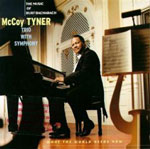 AAJ: Shifting the mood: The second is McCoy Tyner's What the World Needs Now: The Music of Burt Bacharach (Verve, 1997)
CM: I'll be honest: That CD, I'm actually not quite that fond of, because I think that was a really... It was in good faith but it was Verve's opportunity to try and make McCoy Tyner less African-rooted and make him little more mainstream. McCoy Tyner's music has always been coming out of and been influenced by Coltrane, it's been influenced by African and Indian influences, and his sound has always been about as singular as someone's sound can be.
I can remember when we all got the call, that McCoy Tyner's doing this Burt Bacharach album, we all kinda looked at each other going, 'Whaaaat? McCoy plays who?' We were all just kind of interested to see—we can't wait to see how McCoy interprets that.
Actually, the album probably could have worked had it not been with that orchestra. Had it just been the trio or small group, it might have come off a little better. But my personal opinion was that that album came out terribly schmaltzy, and I think that album should have been recorded with someone else. I think with someone else that album would have worked out perfectly. Just because of our passion and knowing McCoy Tyner's history, I personally didn't think that album worked as well as a couple of other albums I worked with him on, like Illuminations and Preludes and Sonatas. But you can't blame Verve for trying...
 AAJ: And then another shift of mood, with The Philadelphia Experiment (2001)?
CM: I have fond memories of that album mainly because it was my first time getting to play with Ahmir (Thompson) again after, probably since high school I don't think I've had a chance to play with him. And Uri Caine of course was another guy I used to work while I was still in high school; as a matter of fact, we used to play in Joe Sudler's Swing Machine together. So it was kind of like a homecoming. I just knew right off the bat that this was going to be a fun, real loose, sloppy but happening kind of jam session. And I think Aaron Levinson and Andy Hurwitz did a good job, in the post-production they did a good job putting all of the music together. It's unfortunate we didn't get the chance to do too many live concerts behind that album. We only did two, one in New York and one in Philly. But I have a lot of great memories about session and the two gigs that happened from it.
AAJ: While you're in a reflective mood let's move into your own catalog, beginning with your debut, Gettin' To It (Verve, 1994): Anything you know now that you might have done differently then?
CM: I don't think so. I think that album was a very innocent album, when I think back on it. You know, it was my first CD and it really wasn't an overly conceptualized CD. I really just figured, 'Hey, I've got a few songs, I'll call some great musicians, and we'll put together a good session.' And that's what it turned out to be and fortunately it was not only successful artistically but it was also successful commercially. I got a lot of gigs out of that CD for the entire year of '95 and most of '96.
AAJ: Next I want to ask you about A Family Affair (Verve, 1998) and in particular about producer George Duke.
CM: Hoping you would.
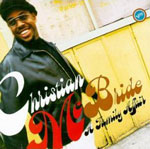 AAJ: Was George Duke a good match as a producer with the material for that record?
CM: I think he was the perfect match for me because a lot of hard core jazz fans really forget how great George Duke is. I mean, they think of 'George Duke' and they think of all of the... you know, they think of the...
AAJ: "Boogie Oogie Oogie
CM: ..."Sweet Baby and all that kind of stuff, and they never remember about the Cannonball Adderley days.
AAJ: Even the Zappa stuff!
CM: Yeah, the Zappa stuff. Well, even the jazz fans, I think, don't even recognize Zappa probably as they should. But George Duke, I think, you talk about all the great jazz pianists from the '60s, you talk about the Herbies and the Chicks and McCoys and the Keith Jarretts—I think that George Duke was right in there. He came after those guys, but just in terms of sheer harmonic palette on the piano, feel, knowledge of the history—I mean, George Duke can hold his own with any of those guys. He just made a conscious decision to kind of go the other route.
But the one thing that I remember most about A Family Affair, which was probably one of my most—I mean, in my own memory—that was probably my most romanticized recording session because secondary to making the album I got to be really really close with George and his entire family. And after we finished A Family Affair I got to stay close with George on a personal and a musical, a professional, level. A Family Affairs opened the doors to a whole lot of different things in a lot of different ways.
AAJ: Is he as nice as he seems—is he that much of a teddy bear?
CM: That he is. He is probably the nicest, sweetest man in the whole world. He's quirkless. He doesn't have many quirks. I mean, he's just a real everyday kind of regular guy.
AAJ: Your most recent studio release was Vertical Vision (Warner Bros. Jazz, 2003), and was surprised to learn that it included guitarist David Gilmore? How did that come about?
CM: Well, David was also on Sci-Fi. Actually, David Gilmore, we affectionately call him "the fifth Beatle in my band. He's worked on our last two CDs but I've never had enough money (laughs) to make him a permanent member of the band. So we call him "the fifth Beatle. I first started working with Dave, we worked together with Wayne Shorter briefly back in '97. I was familiar with his work with all the M-Base stuff with Greg Osby and Cassandra Wilson and all those guys. I love his playing so much. Unfortunately he couldn't be part of the Live at Tonic CD because he was out of town on a state department tour. But his spirit is there.
My memories of that particular session are ones of just kind of hoping that the energy that we had live could be captured in the studio. It's really hard to do that. I think we got... it was fair. I particularly like "Technicolor Nightmare and "Boogie Woogie Waltz, we were able to capture that real hardcore, and "The Ballad of Little Girl Dancer, that kind of raw energy that the band had live. It was an okay record. I think that this new CD certainly, for obvious reasons, gets that pure electricity of the group, that pure, primal feeling. It captured it much better than Vertical Vision did.
All the Way Live at Tonic
AAJ: Which brings us up to the new record: Your previous studio album was released on Warner Bros. and the one before that on Verve—How did this live album end up on Ropeadope? And as a follow-up: How was the pricing decision made for this album and by whom?
CM: First question is that this live CD was originally supposed to be on Warner Brothers but in 2003 I believe it was Warner Bros. dissolved their jazz label. So there were a lot of artists like myself, Joshua Redman, Kenny Garrett, Nicholas Payton, who got jammed up because of the fallout at Warner Brothers. As a matter of fact, Joshua Redman's Elastic CD was actually finished and was waiting for a release when Warner Brothers dissolved, so he was stuck with an album and nowhere to put it out. So Nonesuch picked it up.
 It was the same thing with my live album: We were originally supposed to record my live album at Yoshi's in Oakland and as things happened there was no more Warner Brothers Jazz and we all had to kind of scramble and start making new plans. Then of course Andy Hurwitz and I had a really good relationship from The Philadelphia Experiment and a couple of Ropeadope shows that he put together with myself and Charlie Hunter and DJ Logic. So I kind of figured, for the kind of thing that we're doing, Ropeadope probably would be the perfect place to do a live album.
And as far as the pricing is concerned, Andy decided that, 'Well, you know, we've got to think of some really good things to kind of hook people, not just musically but to give 'em something else, so how about a double CD for a list price at $15.95,' whatever it was. We thought, 'Yeah, okay, sounds good, no problem.' 'Cause it was going to be a cheap record to make, you know, low overhead. So we had a double CD but then we had so much music that I thought, 'Man, I don't know how we're gonna work this out. How are we gonna jam two sets into one CD?' So Andy said, 'Well, screw it. Let's just make it three CDs.'
AAJ: Four of these songs on the first set haven't appeared anywhere else yet—do you plan to record studio versions of these tunes?
CM: Probably not. We'll probably leave them like they are on the CD because that's how we'd probably do 'em. The way we recorded them live is how we would record them in the studio anyway, so we'll probably just leave them be.
AAJ: One of the most enjoyable things about this new record is not only that there's so much music on it, but that there's so much different music on it. It's a jazz record that has more than jazz on it. So you've got to wonder: You catching any hell for this record?
CM: I think after A Family Affair came out—which was, what, eight years ago—that I was put on the straight-ahead post office outlaw board. I think that ever since then, people don't even bother to mess with me about doing non-jazz things. I think I've been able to successfully establish myself as a musician who's rooted in jazz, but who doesn't live by the rules of 4/4 traditional swing rhythms. I like to broaden it out and do a lot of different things.
AAJ: Are you a good dancer?
CM: I don't know, I haven't done it in a long time. I used to be. I think up until the time... I don't know, maybe. I don't even know when the cutoff point was, but I used to go out dancing all the time, up until around seven, eight years ago.
AAJ: You have two additional responsibilities that I'd like to give you a chance to explain. What do you do as co-director of the Jazz Museum in Harlem?
CM: The Jazz Museum in Harlem is still a work in progress. It's a fun work in progress. I've found myself going to all these meetings with city councilmen and all these local politicians to try to get some ideas about getting a building and getting funding to open this museum officially. So part of my job is being a politician, which is interesting here in New York City (laughs). I'm hooking up with Mayor Bloomberg's cronies and things like that, sitting in these meetings going, 'I'm a bassist—what am I doing here?' But it's been fun.
Loren Schoenberg, who has been running the museum now for a couple of years, we actually work together at Jazz Aspen every summer, which is another program that I run. When he started working at the jazz museum, which he kind of inherited from Leonard Garment, the former White House lawyer... I guess he kind of figured, 'If we're going to build a museum in Harlem and we're going to get the support of the local neighborhood businesses, the citizens of Harlem, and musicians, they probably could use a little credibility.' So that's what brought me on board. I'm not sure how much credibility I brought them because I spend most of my time on the road. I'm like the co-Director-slash-world-ambassador for the Jazz Museum of Harlem, but it's been a whole lot of fun.
 AAJ: And as Creative Chair for the Los Angeles Philharmonic?
CM: And the LA Philharmonic gig, my first season as creative chair actually starts this summer, in July. This gig is really a whole of fun because now I get to dream up my favorite program series; you know, like different kinds of projects, or people I could put together, or bands that I would like to see get out there and play in some nice venues, and make it happen. I think my crowning achievement, even this is only my first year, is that I actually got James Brown to agree to do Soul on Top live. This will be his first jazz concert ever.
I will finally get to do—Oh, it's also going to be a DVD, and so I will get to record a DVD and to play and conduct—I don't know how I'm going to do that yet, all at the same time—but I'm going to be working with Mister Brown on September sixth.
AAJ: You'll be bobbin' your head a lot, that's for sure.
CM: You got that right.
Selected Discography
Christian McBride, Live at Tonic (Ropeadope, 2006)
Corea/Gadd/McBride, Super Trio (Stretch/Universal Japan, 2006)
Christian McBride, Vertical Vision (Warner, 2003)
B.W.B., Groovin', (Warner Bros., 2002)
Brown/Clayton/McBride, Super Bass 2 (Telarc, 2001)
Caine/McBride/Thompson, The Philadelphia Experiment (Ropeadope, 2001)
Christian McBride, Sci-Fi (Verve, 2000)
Christian McBride, A Family Affair (Verve, 1998)
McBride/Payton/Whitfield, Fingerpainting: The Music of Herbie Hancock (Verve, 1997)
Brown/Clayton/McBride, Super Bass (Telarc, 1997)
McCoy Tyner, What the World Needs Now: The Music of Burt Bacharach (Verve, 1997)
Chick Corea & Friends, Remembering Bud Powell (Stretch, 1997)
Joe Henderson, Joe Henderson Big Band (Verve, 1996)
Original Soundtrack: Kansas City (Verve, 1996)
Cedar Walton, Composer (Astor Place, 1996)
Christian McBride, Number Two Express (Verve, 1995)
Scott/Hargrove/McBride, Parker's Mood (Verve, 1995)
Jimmy Smith, Damn! (Verve, 1995)
Joe Henderson, Double Rainbow: The Music of Antonio Carlos Jobim (Verve, 1995)
Roy Haynes, Te Vou! (Dreyfus, 1994)
Christian McBride, Gettin' To It (Verve, 1994)
Photo Credits
Top Photo: John Abbott
Second Photo: Silvia Otte
Third Photo: Michael Kurgansky
Bottom Photo: Warner Jazz / Deborah Feingold
< Previous
Immolation / Immersion
Next >
Leaving New York
Comments

Tags
Concerts
For the Love of Jazz
 All About Jazz has been a pillar of jazz since 1995, championing it as an art form and, more importantly, supporting the musicians who create it. Our enduring commitment has made "AAJ" one of the most culturally important websites of its kind, read by hundreds of thousands of fans, musicians and industry figures every month.
You Can Help
To expand our coverage even further and develop new means to foster jazz discovery and connectivity we need your help. You can become a sustaining member for a modest $20 and in return, we'll immediately hide those pesky ads plus provide access to future articles for a full year. This winning combination will vastly improve your AAJ experience and allow us to vigorously build on the pioneering work we first started in 1995. So enjoy an ad-free AAJ experience and help us remain a positive beacon for jazz by making a donation today.

Giveaway

Days remaining: 11